Years before this book exists, Adam Grant reads a magazine profile of Silicon Valley’s best-kept secret, and the secret is a person. Bill Campbell is no hacker. He is an old football coach who went into sales, yet Steve Jobs walks with him every Sunday and the founders of Google say they could not have made it without him. Grant digs. He finds a high school football star of five feet ten who, when the track team runs short of hurdlers, volunteers, can’t jump high enough, and simply runs through the hurdles all the way to the regionals. He finds a Columbia captain who returns as head coach and loses for six straight seasons because he cares more about his players’ lives than about winning. And he finds that every generous person in the Valley credits the same man with their worldview. In 2012 a protégé named Jonathan Rosenberg copies Bill on Grant’s email, and Bill declines to be written about. Every bookstore has a self-help shelf, Grant and Sheryl Sandberg like to complain, and none has a shelf for helping others. This book, he says, belongs on that shelf.
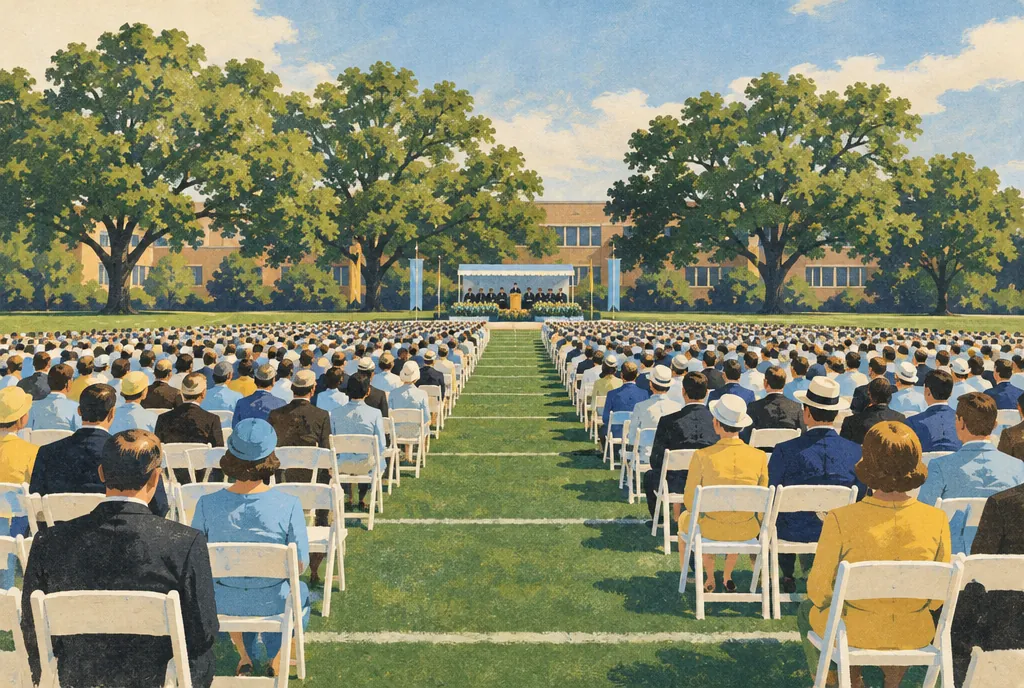
It is a warm April day in 2016, and more than a thousand people fill the football field of a school in Atherton, California, for the memorial of William Vincent Campbell Jr., dead of cancer at seventy-five. Larry Page is in the crowd. Sergey Brin, Mark Zuckerberg, Sheryl Sandberg, Tim Cook, Jeff Bezos. Even in Silicon Valley that much power is rarely seen on one lawn. Eric Schmidt and Jonathan Rosenberg sit among them in soft sunshine, talking quietly. Bill has coached them both since they came to Google, Eric as chief executive in 2001 and Jonathan to run products a year later, every week or two for fifteen years, while a strange little startup became one of the most valuable companies on earth. Without him, they think, it might not have happened. They called him Coach and they called him friend, and so, they are learning, did almost everyone around them. A startling number of the people on that field count Bill as their best friend. So which of all these best friends will give the eulogy? Which of the famous names will walk to the microphone?

Bill doesn’t get to California until his forties. He grows up in Homestead, a steel town outside Pittsburgh, where his father teaches physical education and works shifts at the mill. In 1958 he goes to Columbia to play football, a small man even for that era, and earns his place by going flat out in every drill. By his senior year he is captain, on the field almost every minute, and Columbia wins the Ivy League, the only time it ever has. After a master’s in education he becomes an assistant coach at Boston College, and one of the best in the country. In 1974 Columbia asks him home to run its football program, and loyalty wins. The program is dreadful, in a city falling apart. His teams win twelve games and lose forty-one. The best season, 1978, opens with promise and then collapses at Giants Stadium, where Rutgers wins sixty-nine to nothing. He recruits by driving to Albany and back overnight, and once he ends up in a hospital, worn out. Midway through 1979 he decides to quit, finishes the year, and walks away. Looking back, he doesn’t blame the talent. He blames his own heart. The game, he says, demands a dispassionate toughness he never had.
What you need to do is not worry about feelings. You’ve got to push everybody and everything harder and be almost insensitive about feelings. … The best players play. In my case, I worried about that. I tried to make sure the kids understood what we were doing. I just think I wasn’t hard-edged enough.
— Eric Schmidt, Jonathan Rosenberg and Alan Eagle, Trillion Dollar Coach, HarperBusiness, 2019, p. 7
Bill may be right about football, Schmidt, Rosenberg and Eagle reply, but in business the evidence now runs the other way, and the compassion that sank him on the field will carry him in the office. He starts over at thirty-nine, at the advertising agency J. Walter Thompson, on the Kraft account in Chicago and then the Kodak account in New York. Kodak likes him so much it hires him, and by 1983 he is running its consumer business in Europe out of London. Then John Sculley calls. A Columbia teammate had introduced them years earlier, when Sculley was at Pepsi; now he runs Apple, and he wants Bill and his young family in California. Bill goes, and later explains why in his own blunt terms: years as a “dumb-ass football coach” have held him back, and in the wild west he can rise on merit. Nine months later he is Apple’s head of sales and marketing, with the Macintosh launch in his hands.
Apple has bought a slot in the Super Bowl broadcast, in Tampa, on the twenty-second of January 1984. The commercial is a nod to Orwell. A young woman sprints down a dark corridor, guards behind her, into a hall where rows of gray, shaven-headed men sit hypnotized by a droning face on a giant screen. She swings a hammer, the screen explodes, and the voice-over promises that 1984 won’t be like 1984. Steve Jobs loves it. Floyd Kvamme, Bill’s boss, loves it. Bill loves it. Ten days before the game they show it to the board, and the board hates it: too expensive, too strange. Can the airtime be sold off? A couple of days later a sales executive reports that she has found a buyer. Floyd turns to Bill and asks what they should do. Bill’s answer is four words long: “Fuck it! Let’s run it.” Nobody tells the board about the buyer. The ad runs, becomes the hit of the game and then one of the most famous commercials ever made, and in 2017 a Los Angeles Times columnist calls it the only great Super Bowl commercial there has ever been. Not bad, the authors note, for a football coach five years out of his last losing season.
In 1987 Apple spins its software into a company called Claris and makes Bill the chief executive. Three years later Apple takes Claris back rather than let it go public, and Bill leaves. His staff buy a full page in the San Jose Mercury News to say goodbye, under the headline “So long, Coach.” He goes on to run GO, which tries to build a handheld computer you write on with a pen, years before anyone is ready, and closes in 1994. “GO didn’t go,” Bill likes to say afterward. By then Scott Cook, who founded Intuit, is looking for a chief executive to replace him, and John Doerr, the venture capitalist, sends Bill over. The first meeting falls flat. Months later Scott agrees to try again, on a walk through a Palo Alto neighborhood, and the talk turns from strategy to people. Every other candidate had one way of growing people, Scott says; Bill “was a technicolor rainbow.” In 1994 Bill becomes Intuit’s chief executive, and he runs it through six years of growth.
Back in 1985, when the Apple board pushed Steve Jobs out, Bill had been one of the few executives who argued to keep him. Steve doesn’t forget. When he returns to run Apple in 1997 and remakes the board, he gives Bill a seat, and the two of them spend their Sunday afternoons walking the streets of Palo Alto. When he steps down at Intuit in 2000, John Doerr invents a role for him at Kleiner Perkins, an executive in residence to guide the firm’s startups. In 2001 a local startup, run by two brash young men from Stanford, hires a grown-up chief executive, Eric Schmidt, and Doerr tells Eric that he needs Bill as his coach. Eric is insulted: he has run Novell and holds a doctorate from Berkeley, so what does a gruff ex-coach from Pennsylvania have to teach him? Plenty. Within a year Eric writes in his own review that Bill’s role was needed from day one. For fifteen years Bill sees Eric almost weekly, sits in his staff meeting, and coaches Jonathan, Larry Page and other Google leaders. He almost never says what the product or the strategy should be; he makes sure the team is talking, so that when the big calls are made everyone is behind them. In the same years he coaches the chief executives of Intuit, eBay and Twitter, Al Gore, Sheryl Sandberg, Sundar Pichai, the presidents of Stanford and Columbia, a Pittsburgh Steelers quarterback, and the flag football teams at Sacred Heart.

None of them speaks first at the memorial. The first voice belongs to Lee Black, a Columbia teammate, and it tells stories about someone called Ballsy. Bill was the smallest player on that team and the most ferocious in the hitting drills, flattened again and again and up again each time, until Lee told him on the bus one day that he had more balls than a brass monkey. The name never left him. Even as captain he was Ballsy, and inside the football world the Campbell Sports Center at Columbia is still known as Balls Hall. Nobody beyond that team has ever heard this, and Eric and Jonathan are hearing it now. Look around the field and the crowd is stranger still. Scotty Kramer, who drove Bill around New York for years. Danny Collins, a head waiter at Smith and Wollensky, one of Bill’s favorite New York restaurants. Jim Rudgers, who coached beside Bill at Columbia, hates to fly, so he has driven from Rhode Island. The Stanford players who spent summers living in the Campbell house are there, and the staff of the Old Pro, Bill’s sports bar in Palo Alto, and the friends from the yearly Super Bowl trip. These are not colleagues paying respects and collecting business cards. These are people who loved him.
One of them is Bruno Fortozo, Bill’s caddie at the El Dorado course in Cabo San Lucas, where Bill has a holiday house. With most guests, Bruno says, you never cross the line. Bill was different, kind to every single person, and he had the whole Fortozo family to stay in Palo Alto and Montana. So Bruno has come north, and the ushers seat him near the front, behind Tim Cook and Eddy Cue of Apple, beside a man whose name escapes him. “I think he runs Google,” Bruno says. Bill’s signature was the hug: not a cautious, lawyer-proof pat on the back but a bear hug that meant it. In 1994, when Microsoft announced it was buying Intuit, Bill crossed the stage and hugged Bill Gates, a man not known for hugging. As Lee Black finishes, he asks the crowd to do Bill proud and hug whoever is next to them. That is how Larry Page, cofounder of Google, ends up hugging the caddie from Cabo. Bill, Bruno says, treated everyone the same way. He had no idea who any of those people were. They were just friends of Bill’s.
Lee hands over to Pat Gallagher, thirty-three years in the San Francisco Giants’ front office and among the sharpest sports businessmen in America, and none of that is why he is standing there. He and Bill have been neighbors in Palo Alto since the mid-1980s, and their friendship was built the way neighbors build one: coaching the kids’ teams together, burgers with the families afterward, dinners that nobody planned, the kind of friendship that lasts through the bad years. Everyone, Pat tells the crowd, has a wide ring of acquaintances, a smaller ring of close friends and family, and one or two best friends, the people you can say anything to. Then he says what the whole field already knows.
Bill Campbell was my best friend. I know that there are only about two thousand other people who also considered Bill to be their best friends, too. But, I was okay with that because somehow Bill found the time for each one of us.
— Eric Schmidt, Jonathan Rosenberg and Alan Eagle, Trillion Dollar Coach, HarperBusiness, 2019, p. 21
Bill had the same twenty-four hours as anyone, Pat goes on, and somehow he was always there for every name on that list. When the service breaks up, Philipp Schindler, who runs Google’s business side, finds Eric in the crowd. A few weeks earlier Philipp had watched Bill teach his management principles to a room of Google executives, so that they could pass them on. Now the teacher is gone. Why don’t we take what he taught us, Philipp asks, and share it with the world? Otherwise all of it could be lost.
A trillion dollars, the authors say, is an understatement. Bill stood beside Steve Jobs as Apple climbed from near bankruptcy to a value of several hundred billion dollars, and beside Larry, Sergey and Eric as Google did the same from nothing, before you count the dozens of other companies he advised. And he was not an executive coach in the usual sense, because he worked on teams. The authors rule out a hagiography straight away: who, Bill would have asked in saltier words, wants to read about some dumb guy from Homestead? A company needs teams that behave like communities, each member obsessed with what is good for the whole, and left alone, high-performing teams rarely behave that way. They are packed with ambitious, strong-willed people who compete for promotion and keep score in bonuses and office size. That tension is healthy, but it makes community hard, and holding both at once takes a coach, someone who works with the team as a whole. A company can’t hire a coach for every team, though. What the authors hear from everyone is that Bill taught them to coach their own people, and that when they hit a hard problem they ask what Bill would do. The best coach for any team is its manager. So the book lays out what Bill coached and how, in four parts: the craft of management, trust, teams, and love. Yes, love.
Bill, the authors warn, was gloriously profane. The F-word, in his mouth, was a part of speech of its own. When Jonathan sent him a study showing that swearing at work lifts morale, Bill’s reply was uncharacteristically mild: “A good one for me!” Somehow, Pat Gallagher says in his eulogy, when Bill swore it never seemed like swearing; he has been in heaven a week now, and we will see whether the Lord can take his own name in vain. When Bill asked Pat to deliver that eulogy, shortly before the end, he added a warning: “Don’t fuck it up!” The authors doubt he would have wanted a book. He hid from the spotlight and turned away the writers and agents who asked. But a book that wrote down his method and carried it to other companies might have won him round. They picture him up there, leaning back, nodding, warming to the idea, then leaning in with a huge grin to give them, in that rasp, the same warning he gave Pat. They will do their best, Coach.
In July 2001 Google is about to turn three. AdWords has just launched, the advertising engine that will carry the company into orbit, and a crowd of software engineers works under Wayne Rosing, lately of Apple and Sun. Wayne thinks his managers are fine engineers and poor managers, so he, Larry and Sergey bring Eric a radical proposal: abolish the managers altogether and let every engineer report to Wayne. They call it the disorg. The founders have never worked inside a normal company, and they like the way a university runs, where nobody is managed. Bill arrives around the same time and doesn’t rush. He drops in during the evenings, when the place is relaxed, and asks people what they are doing. In one of those conversations he tells Larry that Google needs some managers. Larry is baffled; he has just removed them and could not be happier. They argue until Bill proposes doing it Larry’s way: let’s go and ask the engineers. He, Larry and Sergey walk down the hall to a couple of engineers at their desks, and Bill asks one of them whether he would like a manager. Yes, says the engineer. Why? “I want someone I can learn from, and someone to break ties.” The others say the same. Bill is right, though the founders take their time admitting it. Managers come back to Google engineering near the end of 2002.
For Bill, running a company means management: the plain work of operational excellence, knowing how to run a meeting and an operations review and how to help a person course correct. Leadership grows out of that, not out of giving orders. “If you’re a great manager, your people will make you a leader,” he liked to say. “They acclaim that, not you.” He gave Donna Dubinsky the credit for that idea, and told the story against himself. Micromanaging had served him well at Kodak and Apple, so when he became chief executive of Claris he assumed the job was to tell everyone what to do, and did. One afternoon Donna came into his office and informed him that if he carried on, the whole company would quit and go back to Apple, because nobody wanted a dictator. Her exact words became his mantra: “Bill, your title makes you a manager; your people make you a leader.” Even after three decades at Steve Jobs’s side he was suspicious of charisma dressed up as leadership: in his first run at Apple, Bill thought, Steve was not a great leader, and when he came back in 1997 Bill watched him become a great manager first. So the weekly sessions with Eric and Jonathan are about management. What are the crises? How is hiring going? What is being said in the staff meeting, and what is not?
In August 2008 the website Gawker publishes its list of the ten most terrible tyrants of tech, a spoof of Apple’s Think Different commercial that salutes the screamers and the chair-throwers. Steve Jobs is on it, Steve Ballmer, Bill Gates, and, second from last, Google’s sole representative, Jonathan Rosenberg. Jonathan is thrilled. A few days later he walks into his one-on-one and finds the article printed out on the table, and grins. Bill doesn’t grin. This is nothing to be proud of, he says, drowns Jonathan’s mumbled excuse in a flood of expletives, and finishes him with one question: “What if I were to send this to your mother?” Both agree that Rina Rosenberg would not be pleased. It is the day Bill first hands Jonathan the creed he wrote at Intuit and would recite, almost unchanged, to everyone he coached. It’s the people. A company succeeds because of its people, and a manager’s first job is to make them more effective and help them grow. Managers build the environment where good people flourish out of support, respect and trust. When Brad Smith takes over Intuit, Bill tells him he will go to sleep every night thinking about the eight thousand souls who work for him. Asked what keeps him up at night, Bill never varies his answer: his people.
The one-on-ones with Bill happen at his unmarked office off California Avenue, the quieter end of Palo Alto. For Eric there are always five words on the whiteboard, the day’s topics. When Eric says so, writing this book, Jonathan has to correct him. Bill had his five, but he kept them to himself like a card player, and after the talk about family he asked for Jonathan’s five. The asking was the coaching. It showed Bill how Jonathan was spending himself, and if Bill had gone first, Jonathan could simply have agreed. Bill prepared for these meetings with care, because a one-on-one is the best chance a manager has to make someone better. The small talk comes first and is not small; you sometimes feel the conversation about life is the real agenda. Then the job. Then the peers, who in Bill’s view matter more than the boss: when Jonathan frets that the founders never give him feedback, Bill tells him to stop looking upward and ask what his teammates think of him. Then the team. “Think that everyone who works for you is like your kids,” Bill says once. “Help them course correct, make them better.” Then innovation, and whether there is room for it beside execution. His emails are short, clear and kind: when Jonathan’s father dies, Bill writes that he is sorry never to have met him, and that he would be very proud of his son.

Decisions were Bill’s other craft. Late in Eric’s time as chief executive, two of his managers spend weeks fighting over whose team should build a mobile app, and the usual remedy, sending the two of them away to settle it together, fails. Bill’s advice is to tell them that either they break the tie or Eric will. Eric gives them a week, they fail, and he decides. Bill had no time for democracy, and he stopped Intuit taking votes in meetings. What he wanted was an ensemble, like a troupe of improv comedians who keep the scene alive together, because a company where the boss decides everything becomes a company where everyone lobbies the boss, and that is politics. He hated consensus just as much; chasing it produces groupthink. Put every view on the table, above all the dissenting ones, and let the best idea win. When no best idea emerges, the manager decides. “A manager’s job is to break ties and make their people better,” Bill said. “We’re going to do it this way. Cut the shit. Done.” Brad Smith heard the same lesson as the legend of King Arthur when he took over Intuit, and keeps a model of the round table in his office. Have the right conversation and eight times in ten the knights find the best answer themselves. The other two times someone has to decide. There is no head of that table, as the authors put it, but there is a throne behind it.
How do you make the hard call? Strip away the opinions until you reach first principles, the truths about the company that nobody in the room disputes, and say them out loud. Mike McCue meets Bill in 1999, just after raising two hundred and fifty million dollars for Tellme Networks, whose speech recognition answers the phone when you call FedEx or American Airlines. Then AT&T, Tellme’s biggest customer, offers tens of millions to license the software, on one condition: Tellme must get out of the business itself. Refuse, and AT&T walks. The company needs the money and part of the team wants to say yes. Mike disagrees, but if he simply overrules his argumentative colleagues he will win the argument and lose the team. So he calls Bill, and then walks the railroad tracks behind the office and thinks. First principle: Tellme has a business model that works, so why swap it for a new one? Second: it has the best product in the market, and AT&T is unlikely to build a better one. He puts the two principles to the team. Everyone agrees with them, because they always have, and the meeting is over in under an hour with the deal dead. In 2007, selling Tellme to Microsoft, a richer bid arrives from nowhere; Mike goes back to his principles and flies to Redmond. “Are we going to get divorced before we even get married?” Steve Ballmer asks him. No, Mike says, and the two of them close the deal as partners.

A colleague at Kodak remembers Bill arriving in 1980 like a virus, a new way of thinking loose in the building. Kodak then owns photography, nine rolls of film in ten sold in America, and its only real rival is Fuji, which soon launches a film that genuinely is better, fast enough to shoot in poor light. Bill’s suggestion to his fellow marketers is to walk over to the research lab and ask the engineers. Marketing people do not visit the lab at Kodak. Bill either doesn’t know or doesn’t care. He walks across, introduces himself, dares the scientists to beat Fuji, and sets in motion the film that becomes Kodacolor 200, a hit that beats Fuji’s on the numbers. The marketing man ends up believing that nothing in a company matters more than an empowered engineer. A company exists, he tells a conference, to take the vision for a product and bring it to life, with finance, sales and marketing arranged around that purpose. “Why is marketing losing its clout?” Bill liked to ask. “Because it forgot its first name: product.” At Intuit, when a product manager hired from banking hands his engineers a list of features, Bill tells him that if he ever does it again he will be thrown out on the street. Tell them the customer’s problem and who the customer is, and let them find the features.
Intuit is having a bad quarter, with Bill as chief executive, and the numbers are at risk. Most of the board is willing to miss them and keep investing for the long run. Bill wants to cut back and hit them, and not for the sake of a quarter: he wants a culture in which falling short of operational excellence is unthinkable. The discussion goes round the room against him until it reaches John Doerr. “You know,” John says, “I think we should back the coach.” The board may have been right, John says now, but the right answer was still to back the chief executive, and that was the day he won Bill’s trust. Trust was the foundation of everything with Bill, his superpower: quick to build and, once built, never betrayed. It meant you kept your word. It meant loyalty, like his stand for Steve Jobs in 1985. It meant integrity, and competence. And it meant discretion. When a member of Eric’s team was diagnosed with a serious illness and told nobody but Bill, Bill kept the secret even from Eric, who was glad, not angry, when he found out: here was a confidant anyone on the team could trust. Technologists usually want you to prove you are smart before they trust you; Bill started with the person. How did he build it? He coached only the coachable. Then he listened, told the truth, believed in people, and stayed loyal.
On a January day in 2002 Jonathan drives to Google in Mountain View expecting to collect a job offer to run the product team. He is shown instead into a bare conference room where a gruff older man is waiting, and it does not occur to him that this stranger is the last gate before the job. He has this. He is a senior vice president from @Home, a successful tech company. Bill studies him for what feels like minutes, then says he has spoken to @Home’s cofounder, its first chief executive and its investor John Doerr, and they agree that Jonathan is smart and works hard. Jonathan’s chest swells.
“But I don’t care about any of that,” Bill said. “I only have one question: Are you coachable?”
Jonathan instantly, and regrettably, replied: “It depends on the coach.”
Wrong answer.
“Smart alecks are not coachable,” Bill snapped.
— Eric Schmidt, Jonathan Rosenberg and Alan Eagle, Trillion Dollar Coach, HarperBusiness, 2019, pp. 85–86
Bill, the authors go on, stands up to leave, interview over, and it dawns on Jonathan that Eric Schmidt is said to have a coach and this must be the man. He drops the smart-aleck act, grovels, and asks Bill to carry on. After another long silence Bill sits down and talks about humility: leadership is service to something bigger, and it accrues to the people who want to learn. Then he asks what Jonathan wants from a coach. Jonathan has no idea, and in what football fans would call a Hail Mary he reaches for Tom Landry, who coached the Dallas Cowboys for twenty-nine years: “A coach is someone who tells you what you don’t want to hear, who has you see what you don’t want to see, so you can be who you have always known you could be.” That, Jonathan says, is what he wants. He gets the job, and the coach he hadn’t known he needed. What Bill looked for was honesty and humility, a will to work hard, and an appetite for learning. The opposite is the bullshitter. “Bill couldn’t stand BSers,” says John Hennessy, formerly president of Stanford, not for lying to others but for lying to themselves, until they believe it. In a session with Bill you were heard: no phone, no watch, no wandering eye, and question after question until, as Ben Horowitz says, the real issue showed itself. Salar Kamangar, an early Google executive, says that whatever they discussed, with Bill “I felt heard, understood, and supported.”
One day Bill drops in on Dan Rosensweig at Chegg. Dan has just told his board the good news: the company, lately close to death, is stable. Not growing, but not dying, and the office is in a party mood. Bill tours the desks in a green eyeshade, the kind accountants wore a hundred years ago, and stops at Dan’s door. Congratulations, he says: you saved the company, and you are now the most successful non-growth chief executive in the Valley. The accountants will be delighted, but “that’s not what you came here to do, is it?” He hugs Dan, throws the eyeshade at him, and leaves Dan with the slap of truth: one problem solved, the real work ahead. Bill was honest and he was blunt, and the bluntness worked because everyone knew it came from caring. When Jesse Rogers leaves his job to start Altamont Capital and sends Bill a link to the new firm’s website, expecting a word of congratulation, his phone rings within minutes. “Your website is a piece of shit!” is how Bill says hello, and the rant runs on for a couple of minutes more, because this is Silicon Valley and you cannot be a startup here with a lousy website.

The children got the same treatment. Mason Randall, quarterback of the eighth-grade team Bill coaches at Sacred Heart, throws a late interception that costs a game against the rival school and trudges off with his head down. Bill falls in beside him, pops a forefinger out of his cheek, and asks what that noise was. Mason knows the line; he has heard it before. It is the sound of his head coming out of his backside. Right, says Bill. Head up. The whole team lost that one. The odd thing, which the authors felt themselves, is that Bill’s candor made you feel better, however brutal, because you knew he was kicking you to make you better. Having listened and asked and kicked, though, Bill mostly did not tell you what to do. Don’t walk in with an idea and jam it in someone’s ear, he believed; tell a story about why the work matters. Dan Rosensweig’s version is the running back: you don’t give him a route, you show him the hole and let him run. He demanded the same honesty back. Alan Gleicher, his sales chief at Intuit, had one rule for surviving him: “Don’t dance.” If you don’t know, say so. Adam Grant has a term for people like this, disagreeable givers: rough on the surface, your interests at heart underneath, handing out the criticism nobody wants and everybody needs.
In 2014 Dick Costolo’s team at Twitter is negotiating to put tweets into Google’s search results, and their worries about the terms have shrunk the deal to a cautious trial. Bill hears the plan and dismisses it as onesy, twosy stuff. There is a big idea here, he says; find the braver path, and if the unknowns scare you, sign for a shorter term, but go big. Months later Twitter opens its data stream to Google. Pushing people past their fear is the manager’s job; Shona Brown calls it being an evangelist for courage, and Bill Gurley says Bill blew confidence into people. When Shishir Mehrotra is twenty-two and running his first company, an investor goes through the staff list and chooses whom to lay off, mostly the junior people, mostly Shishir’s cofounders, and Shishir does it. Then he calls Bill, who is furious. Where was his courage? Did he think it was right? No, Shishir admits: the cofounders care, and the senior people are mercenaries who will leave when things turn. So he rehires everyone, and they become the core of the company for years. Bill’s encouragement was not cheerleading. He knew talent, he built his praise on what you had actually done, and because he was credible you believed him, and then you believed in yourself. He set the bar higher than people set it for themselves, and they jumped.
When Google goes public in August 2004 it issues two kinds of shares: class A for the public, one vote each, and class B for insiders like Larry, Sergey and Eric, ten votes each. The founders want to keep making long-term bets without the quarterly tug of the market, and Eric argues their case to the board. Some directors, already minded to bring in an independent chairman, ask Eric to give up the chair and stay on as chief executive. Eric is wounded. Three good years, the founders’ trust, a company on the eve of its public offering, and this is the reward. He calls Bill. “What are you going to do?” Bill asks. In a moment of pride and hurt, Eric says he is going to quit Google. “Okay,” Bill says. “When?” The board meets on Thursday, two days away, and the best team in technology is about to come apart. Bill goes to work and calls back the next day. You can’t leave, he says; the team needs you. Give up the chair for now, stay as chief executive, and before long Bill will see that the chair comes back. This is not the day for this fight, and Eric’s pride is standing between him and what is best for the company and for himself. Eric sees that he is right, steps down as chairman, remains chief executive, and in 2007 is chairman again. Bill had nobody’s agreement to that when he promised it. He simply knew it was right, and that once tempers had cooled his word would carry. “You can’t get anything done without a team,” Bill liked to say.
If you run a company, Bill said, surround yourself with people who are better than you at their jobs, and get the best idea out of them. He looked for smarts, hard work, integrity and grit, and in an interview he listened for the pronouns: I or we. Sundar Pichai watches for people who give things up for the team and who cheer when something unrelated to them goes well; his image is the player on the bench, Steph Curry leaping about when Kevin Durant makes a shot, which nobody can fake. Jonathan fails that test in 2011, when Eric steps down as chief executive and the reshuffle abolishes Jonathan’s job. Offered other roles, he refuses them all as demotions, and Bill is bitterly disappointed. It is a mistake of ego and emotion, he tells him, and Jonathan might consider removing his head from a familiar place. Bill keeps meeting him, helps him find a way back in, and never lets him forget that he put himself before the team. In her first week at Google in 2001 Sheryl Sandberg, hired to manage business units that didn’t yet exist, is asked by Bill what she does here. She says she used to be at the Treasury. Okay, but what does she do here? She describes what she might do. But what does she do here? Finally she admits that so far she does nothing. The lesson stayed with her: not what you used to do or what you think, but what you do every day. Bill wanted doers.
Peer relationships, Bill thought, are the most neglected part of a team, so he looked for every chance to pair people: two who don’t usually work together, one task, no supervision. In the 1980s almost every technology executive was a man. Deb Biondolillo, who ran human resources for Apple in America, used to sit in the chairs along the wall at the chief executive’s staff meeting until Bill lost patience with her. Get to the table! One day she arrives early and takes a seat, and Al Eisenstat, Apple’s famously gruff general counsel, sits down next to her and barks at her to explain what she is doing there. Going to the meeting, she says, more bravely than she feels. Al looks at her for a few seconds, then looks across at Bill, and she knows she is safe. Bill swore, loved football, beer and dirty jokes, and perfected the boys’ trip, and he was the fiercest champion of women at the table the authors have known, for the simple reason that winning takes the best team and the strongest teams include more women. He coached the girls’ flag football team at Sacred Heart with every ounce of the energy and language he gave the boys.

Analytical people, and the authors include themselves, tend to believe that data can settle anything, and to treat the messy emotional tension of a human team as noise that a good process will cancel. It doesn’t. Tensions rise, people avoid them because they are awkward, and the avoidance makes them worse. With Bill, says Andrea Jung, formerly chief executive of Avon, “there was never an elephant in the room”; or rather there was, but it was never allowed to hide. Shona Brown calls it a football mentality: find the weakest link on the line, and fix the hardest problem first. Air the bad news fully, then stop. On the eleventh of July 2008, launch day for the iPhone 3G, Apple’s activation servers collapse, nobody can activate a new phone, and older phones that try the new software are bricked. In a Cupertino conference room, on what Eddy Cue calls his worst day at Apple, the gloom itself becomes the problem, until the team stops mourning the lost sales and starts on the fixes: pull the update, then raise the servers, which takes a couple of hours. “Don’t let bitch sessions last for very long,” Eddy says, a rule he took from Bill, who was the most positive director Apple had and the most relentless about naming what was wrong. Andrea Jung calls it learning forward: not who is to blame, but what happens next.
Here is a record to set beside any sports dynasty. Ten league titles in fourteen years, won by Bill with the middle school flag football team of Sacred Heart in Atherton, one of the richest zip codes in America. You aren’t the rich kids from Atherton, he told them; you’re the tough kids from Sacred Heart. Tuesdays and Thursdays every fall he was on that field. Now and then his phone rang in the middle of practice. He would pull it out just far enough to read the screen, and the kids would read it too, and then he would put it back and let Steve Jobs go to voicemail. For that hour, one of them says, nothing in the world mattered more to Bill than they did. The kids ran a swear jar, ten dollars a word, and it grew into the down payment on the school’s new field. Bill wanted to win, but only the right way, as a team and without cutting corners. Charlie Batch, another son of Homestead, is a Steelers quarterback, and in 2012, filling in for the injured Ben Roethlisberger, he throws three interceptions in a loss to Cleveland. The next week, at an event in Homestead, Bill lets him have it: change your attitude, step up, take responsibility, be a professional. The following Sunday Charlie brings the Steelers back from ten points down to beat Baltimore, and as he leaves the locker room a text arrives from Bill. “Told you.”
When Dan Rosensweig joins Chegg in 2010 he is told the company is six months from going public. It is three months from going broke. He saves it, takes it public in 2013, and watches the shares sink far below the offer price, and after years of grinding he begins, privately, to wonder whether he is the man to lead it. He tells no one. Then Bill calls and proposes a walk. Now? Should Dan come over? No, Bill says: a virtual one, on the phone. Dan looks past the miniature helmets on his desk to the fountain in the courtyard and asks where they are going. “Behind the woodshed,” Bill says. Leaders lead, he tells Dan. You can make mistakes, but you can’t stand half in and half out, because if you aren’t all in, nobody around you will be either. Dan never learns how Bill knew. He doesn’t quit; he rallies his team, and together they build the company. When you are losing, recommit to the cause. Nirav Tolia’s Epinions survives several near-death experiences, and when Nirav tells his team the board is seeking a merger, one of his key people, call him Bob, panics and within weeks leaves for somewhere safer. It is a body blow. Nirav calls Bill, who says he is on his way, and Nirav gathers the team.
Bill walked into the room. “I love you guys,” he said. “There’s something that’s really bothering me. Bob leaving, he betrayed us. He was disloyal. He left us in our time of need. Fuck him.” … Bill got up and walked out, not just out of the room but out of the building.
A few minutes later Nirav got a call, Bill again. “I bet no one else is going to quit on you now.”
— Eric Schmidt, Jonathan Rosenberg and Alan Eagle, Trillion Dollar Coach, HarperBusiness, 2019, p. 144
That, the authors say, is Bill filling a gap between people, which is how he once described his own work: to listen, observe, and close the gaps in communication and understanding. A coach spots the crack before it sets. Bill saw all the chess pieces, Patrick Pichette says, because he had the luxury of not playing. Bill read the people in a meeting who said nothing, and then came the quiet word afterward. Deb Biondolillo calls him “the shadow behind you”: you can hear him, but the person out front is you. Bradley Horowitz, who co-led Google Plus and then its far happier child, Google Photos, calls the whole approach the permission to be empathetic. Carving Photos out of a wreck, with a team that had never run anything so large, he spent his time on the people rather than the technology, and they rose to it. When one of his best engineers demanded more power or he would take Facebook’s offer, Bradley didn’t take long to answer. “I guess you’re going to Facebook,” he said.
In February 2003 Brad Smith joins Intuit after a fight with his former employer over a non-compete that cost time, lawyers and money. At his first leadership conference, coffee in hand, working the room, he is seized from behind in a bear hug. Bill’s opening words are that this is the son of a gun who cost him so much money, and he had better be worth it, except that Bill doesn’t say son of a gun. The authors do not recommend hugs and curses for greeting new colleagues; they still shake hands. But Bill got away with it, and people looked forward to it, because every bit of it came from love. Chaste love: he never came near a line, but he hugged almost everyone, and across a board table he would wink and blow you a kiss. Sergey Brin calls Bill a sharp mind and a warm heart. John Donahoe, with a nod to Huey Lewis, calls it the power of love: because Bill could make you feel loved, he had license to tell you that you were full of it and could do better, and it never hurt. Bill told people he loved them in his own idiom. The back of the memorial program carried his ten best lines, as collected by his Columbia teammate Ted Gregory. “You should have that shirt cleaned and burned.” “You’ve got hands like feet.” “You’d fuck up a free lunch.” And at number one, that sound was your head coming out of your ass.
To care about people, the authors say, you have to care about people: a line they heard several times and can’t find anywhere, so they are claiming it. Bill learned names, greeted everyone warmly, and took an interest in families that went well beyond asking after the kids. Sundar Pichai says every Monday meeting opened with family and weekends, and that however busy he was, it was “a lovely reset.” The habit is old. Recruiting Marc Mazur as a kicker for Columbia in the late 1970s, Bill walks into a house run by a mother and promises her he will always look after her son; when Marc wrecks his kicking knee as a freshman, Bill calls her to say the promise stands, financial aid included. When Nirav Tolia is twenty-six, Bill asks for his father’s phone number, and afterward Nirav’s father will say only that the call went fine and that Bill asked him to keep it private. When Mike Homer, his friend from Apple and GO, is struck by Creutzfeldt-Jakob disease, Bill visits constantly and learns the caregivers’ names, so that they will know how loved their patient is. When Steve Jobs is dying, Bill goes to him nearly every day. Phil Schiller draws one lesson from watching: when a friend is in trouble, you drop everything and go.
Picture yourself presenting a new product to Apple’s board in the 2000s. Steve Jobs sits on one side of the table, Al Gore on the other, Bill between them. You explain the thing, hold your breath, and start the demo, and somewhere around then the clapping begins. Bill cheered and pumped both fists, Phil Schiller remembers, an eruption where a board usually offers a dry question about revenue, and it felt, Phil says, like your dad or your uncle giving you respect. Bob Iger, who ran Disney and sat on the Apple board, noticed a second effect: once Bill started applauding, disagreement became hard, because the applause seemed to come from the whole board. Love for the team and momentum for the meeting, in one gesture. In April 2015 Clay Bavor demos a virtual reality headset to Google’s senior executives and feels faintly ridiculous until five loud claps come from the back of the room. Percussive, Clay says, like an exclamation mark made with the hands, and it settled him and gave everyone else permission to be excited. His team, hundreds strong now, learns the Bill Campbell clap in orientation, and when applause breaks out across the office people ask what the BCC was for.
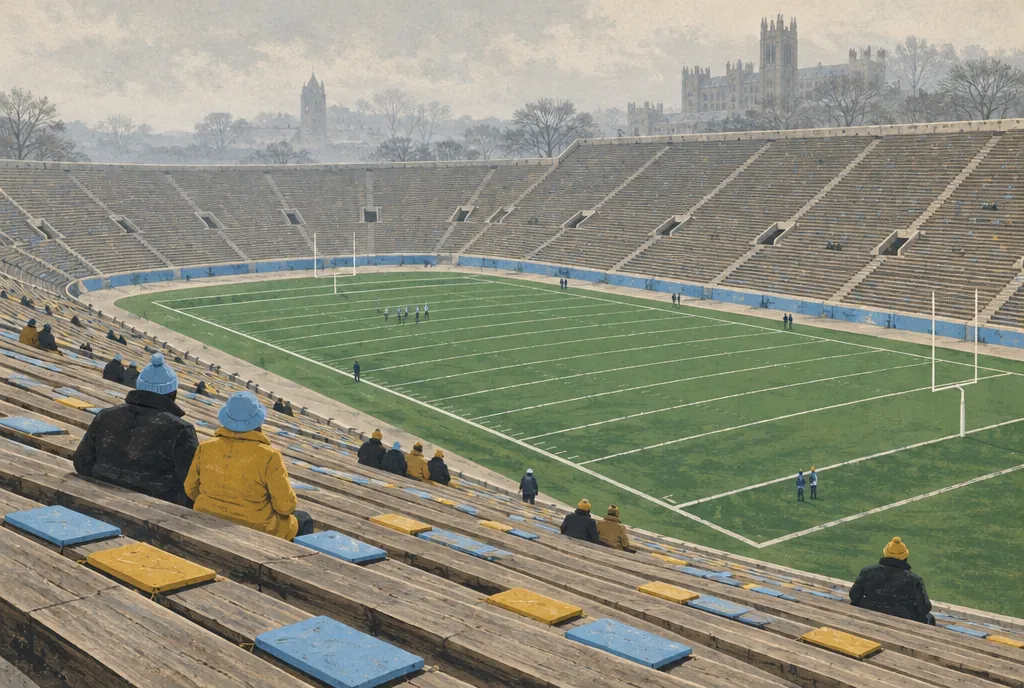
Super Bowl XIX is played in January 1985 at Stanford Stadium, a short walk from Bill’s house, in a bowl of wooden benches famous for their splinters. Bill and Apple’s marketing team cover all eighty-odd thousand seats with cushions, Apple on one side and the game on the other, and on a cool, misty afternoon Bill and a few friends stroll over, collecting Steve Jobs on the way, to watch the 49ers beat Miami. That is the first Super Bowl trip, and there is one every year after, a party of old teammates, family and friends who arrive on Thursday, pick a bar for headquarters, and fill the days with bad jokes. One year Bill gives his spare tickets to two kids haggling with a scalper, so that the kids can enjoy themselves. The game was never the point; the group was. When he dies he endows the trip for at least another decade, along with the baseball trip, the golf trip and the fishing trip, so that his friends can keep going without him. He even buys into a place to gather, the Old Pro, a sports bar where most Fridays he holds court and the one rule is no agenda. The trips were not the point of the communities, the authors realize; the communities were the point of the trips. Few people can buy a bar, but a few pitchers of beer gather people every week.
When Susan Wojcicki, by then running YouTube, can’t get into an important media conference through any of her contacts, she mentions it to Bill, who erupts: of course she should be there. The next day the invitation is in her inbox. Bill did favors. He got to know Chadé, one of Jonathan’s assistants, during the waits outside Jonathan’s office, and learned that she hoped to study law and feared telling her boss. Get to know your people, Bill told Jonathan; tell her you will survive whenever she goes, and write her a recommendation, because that is your job. Chadé went to Columbia Law School and practices in Boston. He had a special tenderness for founders, the people sane enough to see the odds and crazy enough to fight them anyway, because operators can run a company better and still lose its soul. When Dick Costolo becomes chief executive of Twitter, Bill tells him that today he is the chief executive and they are the founders, and one day he will be the former chief executive and they will still be the founders. It is not you against them; it is you and them.
One of the authors’ surprises is how often the word love came up in their interviews, not a word venture capitalists use lightly, and they think Bill learned it from football. At a conference in his honor in September 2017, Steve Young, the Hall of Fame quarterback, describes how Bill Walsh broke up the cliques in the 49ers every season, the safeties, the men from the same college, the same background, and made one team of them. Why? Young’s answer takes the room to a frozen afternoon in Green Bay.
“He wanted us to get integrated with each other so when you’re at Lambeau Field, down by four, with a minute and a half left and it’s third-and-ten, it’s sleeting, you’re soaking wet and the wind is blowing and eighty thousand people are screaming at you. …
“Why did the 49ers do so great from 1981 to 1998? It’s because we had a love for each other.”
— Eric Schmidt, Jonathan Rosenberg and Alan Eagle, Trillion Dollar Coach, HarperBusiness, 2019, pp. 183–184
The 49ers, in Young’s telling, won on love for seventeen years. In December 2017, as the authors finish their first draft, Eric decides to step down as executive chairman of Alphabet. The moment is right: the company has reinvented itself, Sundar has Google thriving, and a new generation is in charge. Eric has been there almost seventeen years, and he is successful by any measure. He also needs emotional support. Each time his role changed before, Bill tended the human side, so that the change felt right rather than merely transacted. This time there is no Bill. Everyone agrees on the steps, the result is good, the process is businesslike, and Eric, who knows exactly what Bill would have said, badly misses hearing him say it. From outside it can look absurd that a man with a title like that needs a pat on the back. But the people who perform at the highest level are often the loneliest. Their confidence comes paired with doubt, and they are surrounded by people who want their friendship for what it brings. They are human. A man stepping away from a place that has held his heart for seventeen years may need a hug and a promise that something exciting lies ahead. Bill is not there to give it.
The authors have their thesis by now, but they had not felt it until Eric faced a change without his coach. One December afternoon in 2017, hours after Eric’s email, Jonathan is out walking the dog with his wife, Beryl, and says he senses that Eric’s uncertainty is greater than his own. You have to help him, Beryl says, and the dog wags in agreement. If Bill were here, Jonathan wonders, what would he do? He would not tell Eric what to do. He would help him make his own plan, hug him, remind him how great a job he has done, and gather a small community around the things Eric loves most, big ideas and new science, and he would do it with love. So Jonathan talks to Eric and to Jared Cohen, Eric’s close friend, brings in Alan Eagle, and the group starts work on something they come to call Eric 3.0. Bill understood that the things people care about, love and family, money and attention, meaning and purpose, are in play in every business situation, and that positive human values make for positive business results. A plan takes shape. That there is a plan matters. That there is a team matters most.

Bill almost never took money for coaching. The first time he walked into Dan Rosensweig’s office he announced his terms: “I don’t take cash, I don’t take stock, and I don’t take shit.” He refused payment from Google for years, and the stock he finally accepted he gave away. He had been paid plenty in his career, he felt, and now it was his turn to give. As he told Ron Johnson after Ron left JCPenney in 2013: “If you’ve been blessed, be a blessing.” Asked about it, Bill would say he had his own yardstick. He counted the people who had worked for him or been helped by him, and he counted how many of them were great leaders now. That was his measure of success. The authors spoke with more than eighty great leaders for this book, every one of whom credits Bill with a major part in their success, and there were more they missed. By his own yardstick, the coach did pretty well. They hope the reader will become one more mark on it, because the world’s problems can only be solved by teams, and teams need coaches.