
The First Part.Of the songs, and of those who heard them.
It was predictable, in hindsight. In every age of discovery the Jesuits have been a year or two behind the first men to reach a new people, and often ahead of them. The United Nations will take years to decide whether anyone should go to the world that comes to be called Rakhat. In Rome the only questions are how soon, and whom. The Society asks no government’s leave. It goes on its own money, under Papal authority, to learn rather than to convert, for the greater glory of God. That is the whole of the history, and it ends on five words to keep hold of: “They meant no harm.”
On the seventh of December 2059, Emilio Sandoz leaves an isolation ward in the middle of the night, in a bread van, and is carried across St. Peter’s Square to the Jesuit house at Number 5 Borgo Santo Spirito. Next day a spokesman reads a statement to the mob outside. Father Sandoz is the sole survivor of the mission to Rakhat. He is too ill to question. There will be no comment on the Contact Consortium’s allegations about his conduct. This is simply to buy time. The man is bruised all over by small haemorrhages under the skin. Scurvy, anaemia, exhaustion: he sleeps twenty hours a day, curled like a fetus. Something will have to be done about his hands. Vincenzo Giuliani, the Father General, looks in each morning. They were in formation together sixty years ago, and Giuliani never understood him. He can wait. Romanità waits. Three weeks on, John Candotti, a bony, big-nosed Chicago priest who is always lost in Rome and always late, is sent to help with the hearings. Sandoz asks him for one language only, English, because the others are bleeding into each other. He has nothing to say. He will leave the Society. On the bureau lies a drawing on something like paper: alien faces, handsome and dignified, the eyes frilled with lashes. John picks it up and Sandoz is across the room in two steps. Friends of yours? Sandoz looks at him a while, and finds the precise word. “Colleagues,” he says. Downstairs, the secretary Johannes Voelker tells the Father General it would have been better for everyone if Sandoz had died with the rest. He is a whore, Voelker says, and he killed a child. Giuliani answers that he is not Emilio’s judge. Neither is the press.
Arecibo, February 2019. Jimmy Quinn, absurdly tall, red hair, always hungry, has been assigned a vulture: an AI analyst who learns your job so that a program can do it without you. Over sofrito in La Perla, the slum under the walls of Old San Juan, he asks Emilio Sandoz what to do. Sandoz runs the clinic there with Anne and George Edwards. He answers in the voices of John Wayne and a Jewish grandmother, says hold out for someone good, and falls asleep at the table. He has had a vulture himself, Sofia Mendes; an interesting experience. The man is Puerto Rican, a linguist by doctorate, and the Society has moved him around like a chess piece: Chuuk, an Inuit town, the southern Sudan, six languages in thirty-seven months. One sweltering afternoon in the Sudan a message comes from the Provincial, and Tahad Kesai watches him read it with his face in his hands, shaking. He is laughing so hard he nearly falls off the stool. He is ordered to Cleveland, to let an expert in artificial intelligence codify how he learns languages, for the greater glory of God. “It’s the punchline to a three-year joke,” he gasps. Years later, lying in the dark after the three suns of Rakhat have set, past the bleeding and the vomiting, he will wonder whether that day was only the setup for a punchline a lifetime long. “He had also discovered the outermost limit of faith and, in doing so, had located the exact boundary of despair. It was at that moment that he learned, truly, to fear God.”
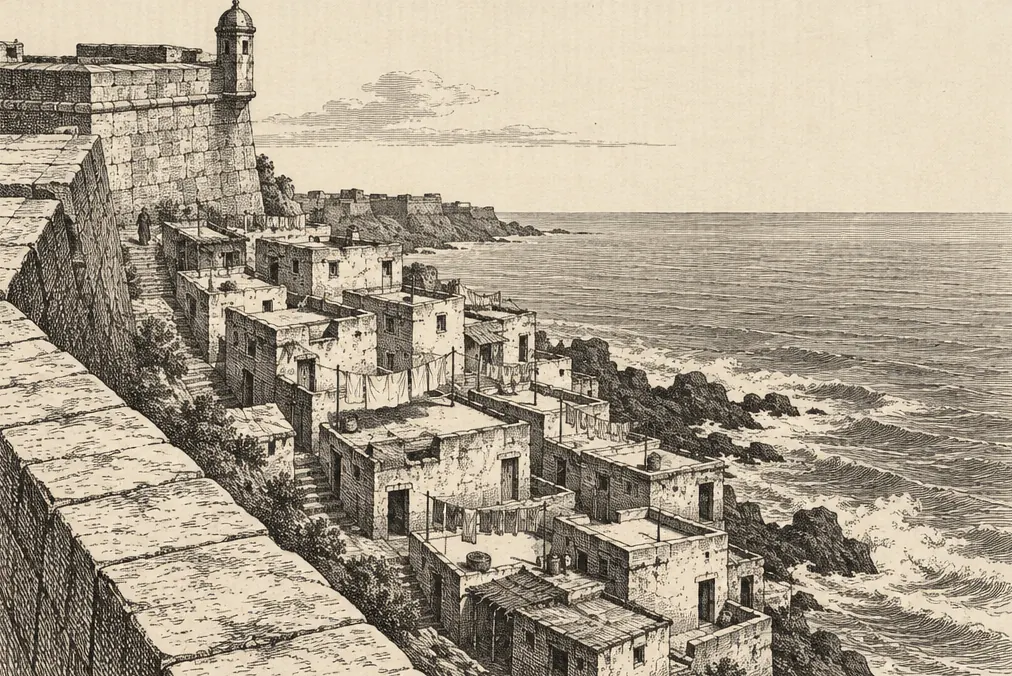
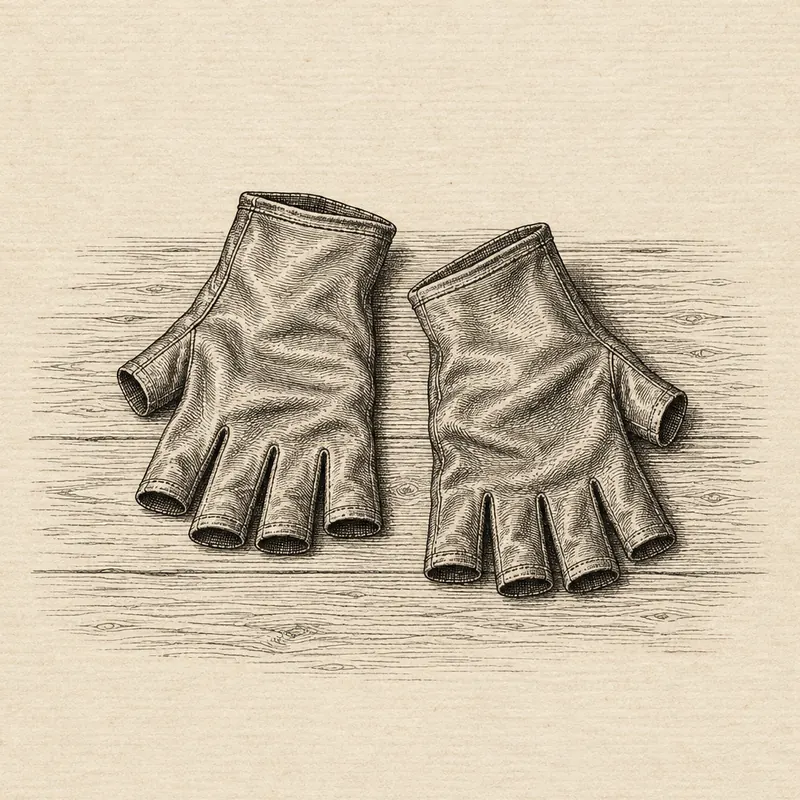
January 2060. John Candotti nearly falls into a hole where a Roman street has collapsed into a cistern, and makes a comic letter home of it. There is less comedy in the news. The Consortium released the story in episodes, and the tale of violence and murder and prostitution turned the public against the Jesuits. Only Sandoz survived to be reviled, marked like Cain. John decides, walking, that he will be the man’s friend. Sandoz has spent half an hour on a slice of toast, and is reclaiming words: invalid, he notes, has two meanings. Voelker visits and presses him to leave the Society honourably, and by the end Sandoz is standing in a corner, shaking. Then John brings what he has made: thin leather gloves with the fingers cut off and the edges hemmed, to hold things together for now. He fits them himself. The muscles of each palm were cut away from the bone, so the fingers hang twice their proper length, like a Halloween skeleton’s. He babbles about a loop for a spoon and does not see the tears until he looks up. Sandoz weeps silently, still as an icon, for perhaps five minutes. Then, the tears drying unacknowledged: “Father Candotti, if ever I should desire a confessor, I shall call upon you.”
March 2019. Jimmy cuts himself shaving on an idea. Let the institute pay Sofia Mendes to build an AI of his job, run the two side by side, and call it a doctorate. He pitches it to Masao Yanoguchi with every Japanese courtesy he knows. Yanoguchi laughs. “Mr. Quinn, your subtlety is showing.” Put it in writing.
Cleveland, August 2014, and the vulture has a red blouse, severe black hair and Turkish coffee. Sofia Mendes is tiny and formal and never calls him Father. Three mornings a week she takes his method apart, and she tells him his gentlemanly bow is tasteless. He blurts that he starts with songs. So does she: lullabies are full of commands. Anne Edwards, late fifties, silver braid, emergency physician, sits in his Latin class and invites him to dinner. George is a retired engineer who runs. Over the rum Anne asks what celibacy is like. “It’s a bitch,” he says. He admits that Mendes confuses him; Anne guesses Sephardic, and tells him that feelings are facts and what you do about them is what matters. When Mendes shows him the finished program he calls it beautiful, and she smiles, once. Then she explains the bracelet she always wears. A broker contracted her at fifteen, paid for her education and takes her fees; until she repays him it is illegal to employ her directly. This is slavery, he says. “Perhaps intellectual prostitution is nearer the mark,” she answers, gathering her things. She finds it preferable to the physical kind. “He shook her hand and watched her go. Head up, a princely posture.”
Rome, March 2060. A reporter with stolen Jesuit credentials gets into Sandoz’s room, and Brother Edward Behr tackles him on live broadcast. Surgeons will not touch the hands; the connective tissue is like spider web. Father Singh builds lacy braces with servomotors driven from the forearm, and Sandoz practises until Edward cannot bear to watch. At Easter, with a quarter of a million people in the square, John wheels him out of the plaza in a tourist jacket that reads VESUVIUS 2, POMPEII 0, and on to a retreat house north of Naples. There, by a wood fire that is against the rules, John is drinking brandy when Sandoz asks him without preamble, “Do you experience God?” Not directly, John says, not as a friend; he finds God in serving His children. Sandoz stands in the far corner, firelight glittering on the metal of his hands. “Don’t hope for more than that, John. God will break your heart.”
Puerto Rico, December 2015. Emilio asks to go back to La Perla, to put some ghosts to rest, and D. W. Yarbrough, the Provincial, a Texan with a cast eye and a twang you could hang a hat on, lets him. He calls Anne and George: come run the clinic. They move in May 2016, and once they have a bed, the first thing they look for is a big table. Emilio buys bolita tickets to find children with talent, brings Anne an assistant of eleven called Maria Lopez, and turns a foul-mouthed boy named Felipe Reyes into an altar server. George volunteers as a guide at Arecibo, where he meets Jimmy Quinn, who will lead them all to Rakhat. At Anne’s fiesta Emilio does magic tricks and George tells a five-year-old he is a hundred and sixteen. One night Emilio calls Anne down to the clinic and she sets a cracked rib. “I went to see my brother,” he says. And he said welcome back, Emilio, and beat the shit out of you? “Something like that.” He tried, he tells her; he gave it an honest try. At home Anne studies herself in the mirror and names what she feels. Like a son.
Arecibo, May 2019, and Sofia Mendes arrives as a wager: if her program wins, her broker gets triple the fee; if it loses, the institute pays nothing and her contract is extended by three times the length of the job. Her family were bankers expelled from Spain in 1492. When Istanbul tore itself to rubble she was thirteen; a mortar killed her mother, and her father vanished. By the law of her people she was already an adult, so she kept herself alive with her body for a year and a half. Jean-Claude Jaubert, a futures broker in the earnings of orphans, took her under a twenty-year contract, and she wrote the buy-out clause herself. He never touched her again. Climbing to the dish she tells herself, “I am Mendes.” George gives her the tour and falls for her mind. Jimmy explains the famous ET signal that turned out to be a school bus ignition, and is half in love by lunch. In bed after the Sunday dinner Anne counts: this girl has got to Emilio, and to Jimmy, and to George.
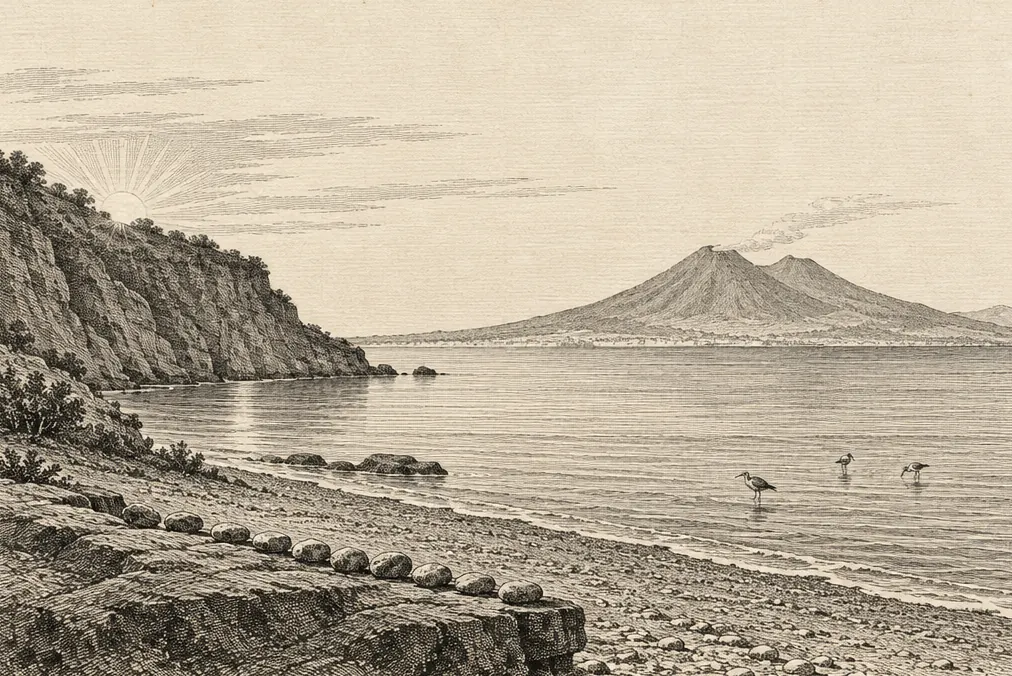
Naples, April 2060. The bed is unslept in, and John finds him on the beach at dawn and walks down with a coat. “If you come near me,” Sandoz says, “you’ll bleed for it.” Along a shelf of rock he has laid a row of fist-sized stones. He works his braced fingers around one, turns to the Mediterranean, and throws with the grace of an old ballplayer. The fingers will not loosen in time. The stone thuds into the sand. He goes back for the next. “Most of the stones, heartbreakingly, were only a few steps from where he stood to throw them.” By ten the bruises have broken into bleeding; Edward, weeping, begs him to stop, and is looked through. There is nothing to do but bear witness. By noon the stones are reaching the water, and at last he whips off a dozen in a row, well out past the shoreline. Walking past the two men, gray-faced, he speaks once. “Not Magdalene. Lazarus.” The Father General has been in the next room all along. He tells Sandoz, placing no special emphasis on any of it, that Jesuits have been hanged in London, burned alive by the Iroquois and gunned down in El Salvador. He is not the first to lose God, and this is self-pity. Then he orders food, rest, and a full account within two months.
San Juan, August 2019. On Friday Jimmy flags a signal four minutes long and shaped like a table, and dismisses it as local. On Saturday Anne cooks for the five of them. Emilio bows to Sofia with a flower, a joke on his old manners; Jimmy sings a love song at the piano and has to be rescued. Sofia plays a little Strauss, loses her way in Mozart, and then, for the man in the corner, an old Spanish melody. Emilio comes to the piano and sings it in a clear light tenor. She changes key, then tempo, and starts a second song against his, in Ladino, the Spanish of the Jews who were thrown out. And “for a little while there was no other sound in the world than the song Emilio Sandoz and Sofia Mendes sang.” The two songs diverge and weave and resolve, across the centuries, on a single word and note. Jimmy looks sick with envy, and on the steps Anne holds him and tells him that it never is fair. At home he cannot sleep, so he opens the log. At three fifty-seven in the morning on the third of August, he knows.
He phones Anne first. The music came from Alpha Centauri, four light years off. At dawn the five of them crowd into Jimmy’s cubicle, Anne bribing the guard with donuts. It is vocal, mostly, a chorus and a lead singer with percussion under them, and the voices are different in a way nobody can put into words. Each time, the signal collapses into static just as the music builds toward something wonderful. Anne starts listing: they sing in groups, so they have a society; they breathe something; they hear. Emilio is already mouthing the chorus, and Sofia hands him her notebook without a word. “I could learn this, I think,” he says to no one. Radio means electricity, metal, a theory of waves, and people with the leisure to think of one. Anne hugs him with wicked glee: whom does he suppose God loves best? “Think of the theology, Emilio!”
Somebody says asteroid. Wildcatters hollow them out and fly them home as mines; scale that up and you could cross four light years. Seventeen years would pass on Earth, and about six months aboard. Emilio, solemn, eyes alight, says, “Start planning the mission.” Science or religion, Anne asks. “Yes.” He is thinking of the order that sent him from the Sudan to Sofia, and to Anne and George, who found Jimmy, who brought them here. Anne lists the half million things that will go wrong and ends with the singers eating him. He quotes Mother Teresa at her: “God does not require us to succeed. He only requires us to try.” Then he takes her hands and goes down on one knee, playful and in earnest. Consider that we are all here, in this room, for some reason. Life is improbable; that we know each other is chance; and now there are people four light years away who sing. “They sing, Anne.” Someone will go, sometime; the music is too beautiful. Anne decided long ago that faced with a burning bush most people would get the hot dogs. She takes her cold hands out of his warm ones and goes to find coffee.
By Sunday the world has it. Goldstone confirms; two fifteen-year-olds break into Jimmy’s home system and copy the music; the institute defers to the United Nations, since such signals belong to all humankind; Emilio says Mass at eleven thirty-five. George and Anne argue, and she vows she will not go. That night, in the apartment nobody else will rent because the sea is coming for it, Emilio lies under a cracked ceiling lit by moonlight off the water and goes back over his life. At fifteen D.W. got the charges dropped and got him off the island, and he planned only to lie low until eighteen, then box, or sell again. “Just master your hands, ’mano.” A prize in Latin, for excellence; he liked the sound of that. A year of arguing with priests who dared him to find the core. One night the dream of a rose opening petal by petal from its bud, and he woke shattered, his face wet. At seventeen, the novitiate. His prayer in all those years was “Lord, I believe. Help me in my disbelief.” D.W. once told him that sometimes it is enough just to act less like a shithead. Tonight he feels no Presence and hears no Voice. But if ever a man wanted a sign from God, he was hit square in the face with one this morning at Arecibo. Just before dawn he dreams: he is sitting alone in the dark, in a small place, hearing his own breathing, and a door he never suspected begins to open on a flare of light. The dream will sustain him, and then haunt him, for years.
Anne is angry with him and feeds him leftover pasta. She believes in God, she says, the way she believes in quarks, on the word of experts, and she is good without any hope of heaven. He walks her through the plan, provisions for ten years, return fuel with a hundred per cent margin, and it comes to him that George might go and she might stay. A skeptic says hoax, Mongolian throat singers; on the thirtieth of August a second transmission retires the word. A tour bus crashes, a husband who gave his wife the window seat, and in the morning after, Anne tells George, “I’m in.” On the thirteenth of September Jaubert sells the rest of Sofia’s contract to an anonymous buyer. The note on the file reads free agent, and she weeps. D.W. comes to stay, and over Anne’s hush puppies and Carta Blanca he mentions that before Loyola’s outfit he flew Harriers for the Marines, and that landing a jump jet is much like landing an asteroid docker. “Like we say back home, when you find a turtle settin’ on top of a fencepost, you can be pretty damn sure he didn’t get there on his own.” The Father General, he says, thinks God has been going around putting turtles on fenceposts.
Sofia calls Ian Sekizawa at Ohbayashi’s asteroid division in Sydney and asks him for a used rock with its engines in place. In Jerusalem, waiting for his answer, she goes under three times in the warm water of the mikveh, saying the old blessing for reaching this season, and thinks, of all people, of Sandoz. In the beginning it took heroic self-control to work with a Spaniard dressed for mourning, heir to the Inquisition. One night at Anne’s, loosened by rum, she demanded that he explain the Mass, and he looked at the chicken bones a while before he answered.
"Consider the Star of David," he said quietly. "Two triangles, one pointing down, one pointing up. I find this a powerful image—the Divine reaching down, humanity reaching upward. And in the center, an intersection, where the Divine and human meet. The Mass takes place in that space." His eyes lifted and met hers: a look of lucid candor. "I understand it as a place where the Divine and the human are one. And as a promise, perhaps. That God will reach toward us if we reach toward Him, that we and our most ordinary human acts— like eating bread and drinking wine—can be transformed and made sacred." Then the sunrise smile appeared, transforming his dark face like dawn. "And that, Señorita Mendes, is the best I can do, after three shots of rum at the end of a long day."
— Mary Doria Russell, The Sparrow, Villard, 1996, chapter 13
It is possible, Sofia admits to herself, that one has misjudged. She calls San Juan and asks, plainly, to be made a member of the crew, and D.W. says yes. From Sydney the answer comes in one word: “Done.” In Rome, quietly, the Society begins to sell art.
Naples, May 2060. Emilio is asleep on a rock in the sun when a farmer’s boy wakes him in Italian he cannot follow. Up the stone stairs waits a bearded man in a skull cap whom he takes for a rabbi. It is Felipe Reyes, fifty-one now, a Jesuit teaching at a Jewish seminary in Los Angeles, with mechanical hands of his own from a letter bomb. He brings La Perla news in Spanish: Emilio’s brother is dead, the scholarship fund still runs. Then Emilio understands why he was sent, and erupts. “You can’t imagine the truth. I lived it, Felipe.” None of them will ever know what it was like, and he promises they don’t want to. Giuliani, hearing of the fiasco, thinks of Isaac Jogues, who went back to the Mohawks after they cut off his fingers, and of how survival can be harder than martyrdom. John gets the first laugh out of him with a story about his father and a bathroom. There are three ways out of this, John says, and Emilio names the third himself. He’d have done it months ago, he says lightly, but he still has enough pride to deny God the punchline. “A little bit of pride is all I’ve got left.”
The Second Part.Of the voyage, and of what passed among the Runa.
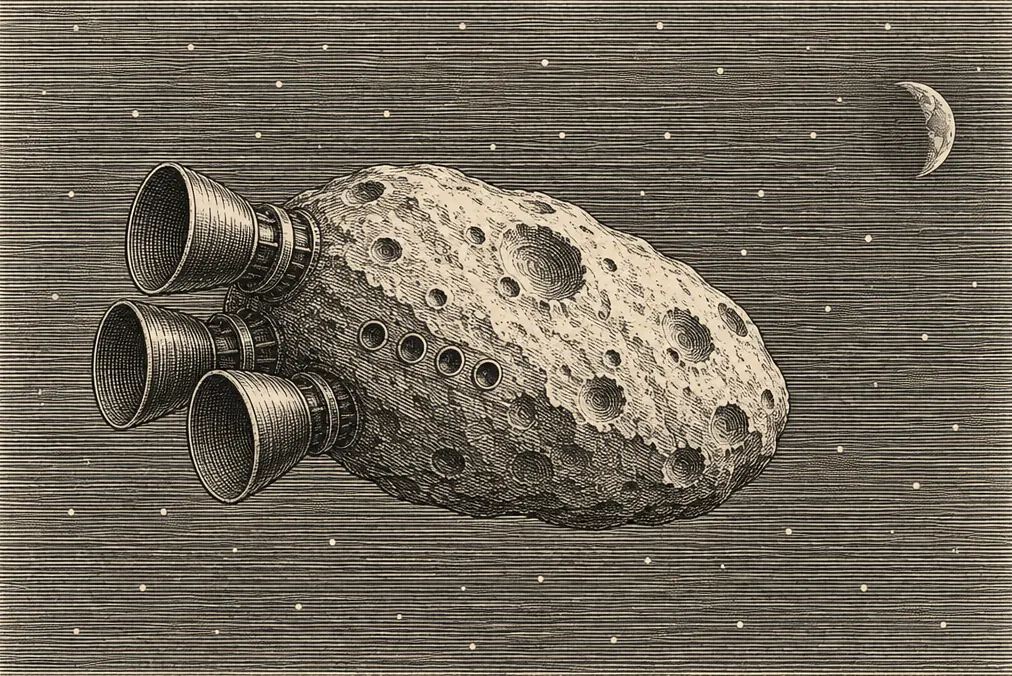
George comes back from orbit and describes the ship to Anne as a potato: cameras recessed into the rock, light panels like shoji screens, a stone bath, room for eight. The dice keep coming up. One rock has a fault line, the next too much iron, and then a Jesuit physicist at his evening prayers rethinks the shape, and a third turns up. A cancelled Indonesian spaceplane frees the cladding they need. Marc Robichaux says Deus vult, and Emilio has begun to say it too. Floating free after the four Gs of liftoff, Anne is for one instant utterly certain that God is real. She turns to Emilio, shaken, and is infuriated to find him asleep. The crew: Marc, forty-three, a Canadian naturalist; Jimmy, twenty-eight; Alan Pace, thirty-nine, an English musicologist; Anne and George, sixty-four; D.W.; Sofia; Emilio, forty. The songs keep arriving, and one voice recurs. “This was the voice of Hlavin Kitheri, the Reshtar of Galatna, who would one day destroy Emilio Sandoz.” On the first day under way Alan belittles the linguist’s role and Sofia bets on him. Emilio thanks her with a joke in Hebrew, and then he and Sofia do not sit beside each other for nearly a year.
Five months out Jimmy knocks on Emilio’s door, where the light is kept bright and a crucifix hangs, and admits that he is going crazy; Sofia has made herself plain. Celibacy is chosen, Emilio tells him, not a lack of offers, and after twenty-five years the need does not go away; even priests have private lives. Jimmy remembers Anne saying that she has been married four times, to four different George Edwardses, and that always and forever are not human words. Not even stones are always and forever. Emilio and Sofia now call each other Sandoz and Mendes. He cannot feel God as a friend. What he has is endurance, and nobody knows what it costs him.
Naples, June 2060, the first day of the hearings, and Voelker watches him come in and hates him. This is neither a trial nor an inquisition, Giuliani says. The United Nations licensed a Contact Consortium to follow in its own ship, the Magellan, three years behind, with two diplomats aboard, Wu Xing-Ren and Trevor Isley, and Sandoz is handed their allegations. A child named Askama met the Magellan party in English and asked whether they had come for Meelo. She took them downriver by barge to a merchant, Supaari VaGayjur. There had been unrest among the Runa villagers. They found Father Sandoz in a brothel, working as a prostitute, and watched him kill the child. Voelker shouts about the ruin of the Society, fourteen novitiates left in the world; John shouts back. Giuliani cuts through it. Emilio, is there any truth in this? “It’s all true, I suppose,” he says, and nobody hears the rest. “But it’s all wrong.” Edward gets him into the stone hallway before the migraine makes him sick. In the corridor the Father General asks what, in God’s name, the man is. “A soul,” says Edward Behr, “looking for God.” At midnight Giuliani comes to apologise for condemning him in absentia, and is told to get out. He stays in the hall with his head against the door, and learns the sound of desolation.

Eight months aboard, they play poker for peanuts, and Emilio bluffs with nothing and laughs at every hand. Jimmy finds a planet in the orbit frames; Marc finds the bigger one with two moons and says that is how God likes it. In the low gravity Emilio faints and is carried to his cabin like a rag doll, and there he tells Anne the truth. He has never felt God, only argued Him. At first the whole thing was a game that refused to stop, turtle after turtle on fencepost after fencepost, and he lay awake thinking that God doesn’t talk to punks from Puerto Rico. One night he let himself consider that this is what it seems to be. When he lets himself believe, everything in his life makes sense, and it frightens him. Anne takes a shot in the dark: the terrifying thing about being in love is that you are naked, no clothes, no weapons, nowhere to hide. “Yes. Exactly.” That is how it feels when he lets himself believe: “Like I am falling in love and like I am naked before God.” Is it arrogant to think God loves him, personally? Anne shrugs. “You’re very easy to love.” “Madre de mi corazón,” he says. “Hijo de mi alma,” she answers, and opens the door. Somebody get this man a sandwich. D.W. chooses an empty place to land with a month’s supplies, and when Emilio speaks of a leap of faith the room agrees. Only Anne notices that the faith has conditions.
The night before, each of them makes peace: Sofia with the days before Jaubert, Jimmy with leaving his mother, Marc and Alan with the hope that their art was prayer, Anne and George and D.W. and Emilio with every fork in their lives that led here. I would do it all again, each of them thinks. The plane shakes and burns through an atmosphere whose name they do not know, and each thinks, I am where I want to be. For a moment they all fall in love with God.
But Emilio Sandoz fell hardest of all, letting his fear and doubt go almost physically, his hands opening as everyone else clutched at controls or straps or armrests or someone else’s hand. And when the mind-numbing scream of the engines diminished and then fell off to a silence almost as deafening, it seemed only natural that he should move into the airlock and open the hatch and step out alone, into the sunlight of stars he’d never noticed while on Earth, and fill his lungs with the exhalation of unknown plants and fall to his knees weeping with the joy of it when, after a long courtship, he felt the void fill and believed with all his heart that his love affair with God had been consummated.
— Mary Doria Russell, The Sparrow, Villard, 1996, chapter 19
Those who see his face when he turns back to them, incandescent, arms flung wide, will remember it for the rest of their lives. Days of rapture follow. Children on a field trip to Eden, they name everything: eat-me’s and hoppers, all-black Jesuits and all-brown Franciscans, Richard Nixons that walk bent over looking for food. Three dawns and three dusks; they nap in the warmth like dogs by firelight. Jimmy takes the first tiny bites of local food, and the little green guy tastes like chicken. Some weeks in, Alan Pace does not wake up. Anne pumps his chest while D.W. anoints him, and afterwards she opens the body and finds nothing: no clot, no bleed, no stroke. People are mortal, okay? D.W. says there has to be a reason. “You want a reason?” she rounds on him. “Deus vult, pater. God wanted him dead, okay?” Why does God get the credit when the patient lives, and the doctor the blame when he dies? Alan came all this way for the music and never heard it once; what kind of trick is that for God to play? Marc, who had leukaemia at five and keeps his grandmother’s rosary, says the Requiem. We are clever tailless primates, he tells them, who may all have to own up to being agnostic. But the sages say that God dances when His children defeat Him in argument. So keep asking, “and we shall dance with God.”
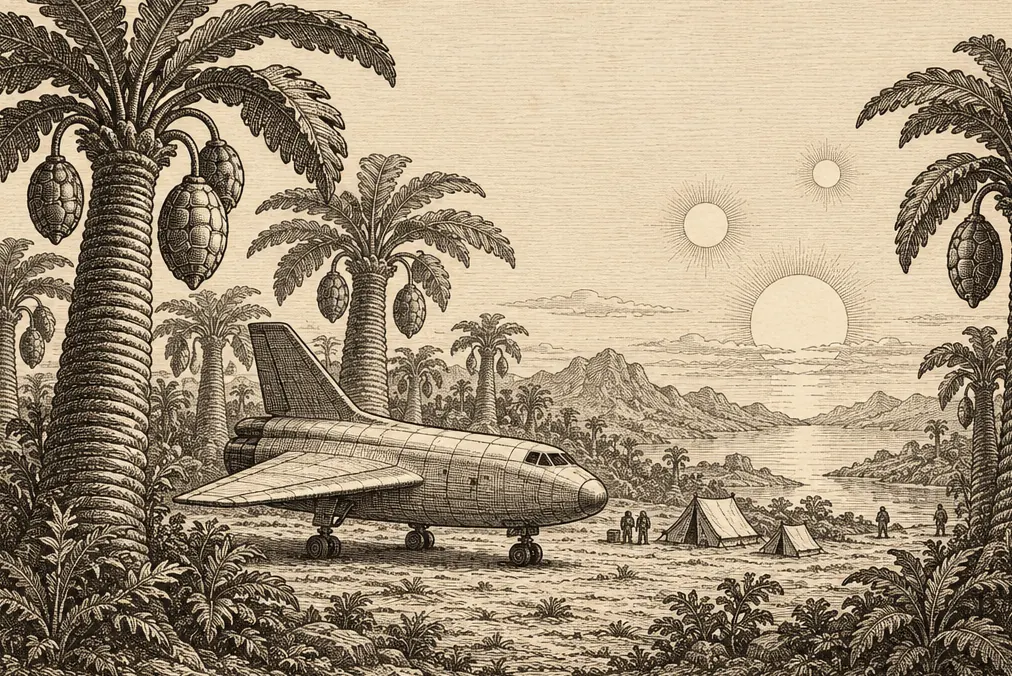
On Giuliani’s sailboat Felipe Reyes works the tiller with his upper arm and tells the Father General about the parish priest. Felipe got his first shoes at ten, from Emilio, and would have been a thief; Emilio would have dealt heroin, the family trade. Giuliani’s own cousins, he admits, are fishermen who do not fish, and their money pays for Emilio’s guards. In the grape arbor John is making a new pair of gloves when Emilio explains the word for what was done to his hands: hasta’akala, done, he believes, as an honour, and Marc bled to death from it. John asks whether Marc might already have had scurvy, and Emilio walks a few steps into the sunlight and stops with a cry. Then, in the even voice of a professor: sta’aka is an ivy that climbs stronger plants and hangs its branches like a willow. Hasta’akala, to be made like sta’aka. To be made visibly and physically dependent on someone stronger. Supaari showed him the ivy in the garden, and he did not make the connection. “He asked my consent and I gave it. And I thanked him.” He gave consent for Marc as well. There is a difference, John says, holding him up, between being responsible and being culpable. It is a fine distinction and not much comfort. Some nights later Giuliani sits through a nightmare and hears him say that he is God’s whore, and ruined. “Don’t go,” Emilio says. A dare, or a plea. Old men do not need much sleep.
Month two. The Ultra-Light finds an empty cliff village a week’s walk to the east, and Emilio says go there; Marc asks whether this is a turtle on a fencepost. The village is sparse and finely joined, with the shelves too high, and George radios from the rim that a crowd of several hundred is walking in. Emilio picks small blossoms from the vines as he goes out and starts down the path without hurry. “I don’t think I’m givin’ the orders anymore,” D.W. says. Marc answers in Latin: God who has begun this will bring it to perfection. They come with baskets of white flowers and ribbons fluttering at their necks, sleek as Siamese cats, with dark markings around the eyes like Cleopatra’s kohl. The eyes are doubled, two pupils in a figure eight, violet as the glass at Chartres. Someone speaks, in a lilting language with nothing in it of the songs, and Anne’s heart sinks. George whispers that on Star Trek everybody spoke English. “I don’t understand,” says Emilio Sandoz, “but I can learn if you will teach me.” Interpreters are called forward one by one, and to each he says the same. After a long discussion an adult brings forward someone much smaller.
She was a weedy child, spindly and unpromising. Seeing her advance, scared but determined, Emilio slowly dropped to his knees, so he would not loom over her, as the adult had loomed over him. They were, for the moment, all alone together, the others of their kinds forgotten, their whole attention absorbed. As the little one came closer, Emilio held out one hand, palm up, and said, "Hello." She faltered only an instant before putting her hand, long-fingered and warm, in his. She repeated, "Hello." Then she said, in a voice as clear and soft as Emilio’s, "Challalla khaeri." And leaned forward to put her head next to his neck. He could hear the slight intake of breath as she did this.
— Mary Doria Russell, The Sparrow, Villard, 1996, chapter 21
He gives the greeting back with exactitude. He draws her hand to his chest: Emilio. The vowels defeat her and it comes out Meelo. Close enough, chiquitita. She draws his hand to her forehead: Askama. He sits in the ochre dust and finds a flower behind her ear, and she cries si zhao; two flowers, sa zhay, and he has his first plural. The two crowds merge around a man making pebbles vanish and return, and Askama settles into his lap with her tail curled around her. He feels like a prism, taking in God’s love as white light and scattering it. D.W.’s eyes are brimming. George shouts across the heads that if anybody asks, he is a hundred and sixteen. Emilio throws back his head. “God!” he shouts into the sunshine, and then, with the child on his hip, “I was born for this!” It is the simple truth. Nothing else explains his life.
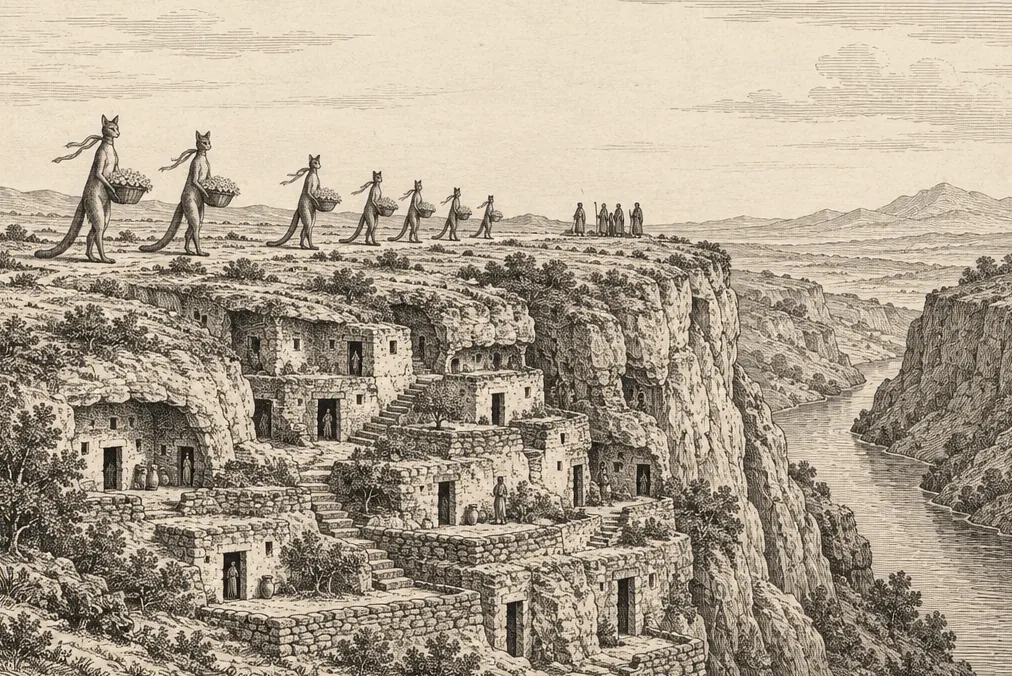
June rain in Naples, and the questions are about the child. The Runa trade children between households as language partners, he explains; Askama seemed about five. She was his teacher and his pupil and a huge pain in the neck. “I loved her without reservation.” And did this child love you, Voelker asks, since the man has admitted killing her. That morning the doctor has said the hands cannot be fixed, and when Voelker needles him the coffee cup shatters in his grip. Then the Father General opens a locked file. After the first contact, D. W. Yarbrough wrote for the Father General’s eyes only: I believe that he was inspired by the Holy Spirit. Today I may have looked upon the face of a saint. “Stop it,” Sandoz says, trembling. “Leave me something. Don’t pick over my bones, Vince.” How can he explain what he does not understand himself? “Do you know what the worst of it is? I loved God.” He stares at the rain. “It’s all ashes now. All ashes.” And then he laughs. Comedy or tragedy, Giuliani asks; it would help to know. “If I knew that, I don’t suppose I’d need the help.” Giuliani, who distrusts mysticism although his order was founded on it, makes himself consider that Voelker may be right. Patience; one tack and then another. “Come on, Emilio. I’ll buy you a beer.”
In the city of Gayjur a merchant named Supaari VaGayjur, a third-born with no right to children, sees a village woman wearing ribbons in a new way and corners the ribbon market by morning. Chaypas gives him seven roasted beans from the foreigners lodged in her household, and the smell of kafay makes him think at once of the Reshtar of Galatna. Seven weeks into contact, in Kashan, Emilio and Sofia argue over a rule of Ruanja with Askama asleep across his lap, and Sofia’s own counterexample proves him right. On the rim of the gorge Anne says what she has guessed, and D.W. confirms that he is gay, that Emilio does not know and need not, and that he has reported a mystic to Rome. If Emilio chooses God, D.W. says, Sofia will be hurt. Emilio himself is happy in a way that wants a beer and a ball game. Drunk on God, Sofia calls him, and he is starved for touch. At dinner everyone agrees that coffee is the trade good. Then D.W. doubles over at the table.
He gets worse. Manuzhai says his heart desires something he cannot have, and Askama asks whether Dee will be gone by morning. The medical supplies are back at the lander; Sofia offers to fly at night, and Emilio gives the first order of his life: nobody flies in the dark. That night D.W. soils himself and weeps with humiliation, and Emilio cleans him, talking softly in Spanish, and thirty years of never touching anyone end that night. By morning D.W. is better. Now the poet. Hlavin Kitheri, Reshtar of Galatna, a prince’s third son barred from heirs, has made a life of singing what nobody sang: the reek of the quarries and the dockyards, the smell of a storm coming. His concerts were the first non-military broadcasts in his world’s history. “Hlavin Kitheri’s life was a triumph of art over fate.” A generation of poets followed him, and their songs went out on unseen waves to a world they could not imagine, and changed lives there. To this man Supaari sends seven beans in a crystal flask. Kitheri opens it to basil and chocolate and nutmeg and, over all of it, the salt of an alien ocean, “sweat from the fingers of Emilio Sandoz.” He knows only that he must know more. Lives are changed again.
July. The others hear Sandoz shouting down the corridor: his published work was suppressed, all but the astronomy and the botany. Giuliani turns the subject to Sofia’s childhood, and Emilio, white, remembers the Hebrew she wrote into her program years ago: live, and remember. Why should he stay, Emilio asks. Why did you go, Giuliani answers; your superiors believe you saw the face of God. A touch on the arm makes him flinch. Ask God, he says. On the stairs Edward tells him about his wife, killed in a car, and how the grief comes round on anniversaries. Emilio asks whether Edward has ever wondered about Cain. Why did God refuse his offering? He goes on down to the beach, and Brother Edward stands on the steps working out what he has just been told.
Anne finds him at night at the radio monitor, typing, juggling four languages and losing Polish. She presses him on the why. He has seen with his own eyes what God has done, he says, and she has seen what human beings can do. All right, he says, try this: “the poetry is in the why.” What sticks in her throat is that God gets the credit and never the blame. What did he do when the babies died? “I cried. I think sometimes that God needs us to cry His tears.” Can he find any poetry in it now? “No,” he says at last. Then: “Not yet.” Well then, since this is all that holds her back: blame God whenever you think it’s appropriate. Anne grins. Marc and Sofia have in fact crashed, into vines that grew over the runway, and she wakes to him dressing her scalp and asks whether he has baptised her. Later she takes the lander up for a short test, forgets to radio, and brings it thundering down into a celebration, and D.W. asks, when the hugging stops, how much fuel is left. Nobody has done the sum. There is no way off Rakhat. Jimmy, his wet red hair in comic spirals, gets her to look at him. “We have everyone we care about, right here. Welcome home, Sofia.” D.W. sits down in the mud and tells God that this is as fine a bunch of tailless primates as the universe has to offer.
George says an engineer’s rosary of calculations and the odds come out eight to one that they are stuck; maybe the Singers can make fuel. In a week of rest, Emilio thinks back to Sofia in Jimmy’s arms in the rain, and the cold wash of jealousy he felt. What is dying in him, he understands, is the possibility of himself as a husband and a father. Sofia’s husband. Before she turns to anyone else she will look to him for a sign, and if he gives one he must meet it wholly. Now he must keep the vow he made as a boy, or break it.
He did not flinch from the knife. He cut the thread cleanly, a priest in perpetuity. God had been generous with him. He could not stint in return. It did not occur to him to wonder then if Sofia Mendes had been as much a gift from God as all the rest of the love he’d been offered, or if he had been God’s gift to her. Two thousand years of theology spoke, five hundred years of Jesuit tradition spoke, his own life to that moment spoke.
God was silent on the matter.
— Mary Doria Russell, The Sparrow, Villard, 1996, chapter 27
Emilio proposes a feast. D.W. drops a piyanot at three hundred yards, and they eat meat for the first time in months with the lander’s speakers playing the music George has chosen. Alan Pace had planned Bach and Beethoven for the Singers. What Rakhat gets first is Van Halen, and the track is “Best of Both Worlds.” Emilio has his back to the plain, shouting the chorus, and is the last to see what the others are staring at. He turns in time. He drops under the sweep of the arm, drives his shoulder up into the belly, rides the body down and lays his forearm across the throat like a bar. “I stopped taking crap like that when I was fourteen,” he says in Spanish, for himself. In Ruanja: if someone lets you up, will your heart be quiet? The stranger gets his breath back and stares at the thing crouched over him. “What are you?” “Foreigners.” Supaari VaGayjur, rubbing his throat, says that must be the understatement of all time, and the monster laughs. Sofia brings him coffee. Anne takes in the claws and the carnassial teeth and thinks: a tactful carnivore. Are all these your children, he asks Jimmy. “This one is the youngest.” D.W. is introduced as the Elder, first-born of the Yarbrough lineage, whose landname is VaWaco, and takes the long upturned claws in his fingers with a look that says the rest. Supaari stays to eat. All in all, it was quite a day.
The Third Part.Of what he told them in August.
August in Naples, and John follows a hum down to the cellar laundry, where Emilio is hanging sheets. He has new braces from a Milanese bioengineer named Paola Marino, with a switch that lets him open and close them alone. “I can do it all by myself,” he says in a three-year-old’s lisp, and then in his own voice: you cannot imagine what a difference that makes. They trade lines from The Princess Bride over the clothespins, and he stops, sheet in hand, shocked to find that he is enjoying himself. The old reflex, to thank God, rises, and he puts it down. Paola Marino is responsible, not God. His curiosity is tapped out, he tells John; he would like nothing new ever to happen to him again. Giuliani releases Yarbrough’s and Robichaux’s reports to the four of them and sets rules: Emilio may end any session when he likes, and nobody is to call him a malingerer. He comes back to the table as a Spaniard, as Mephistopheles, as Dr. Sandoz, linguist, and lays it out like a lecture. The Jana’ata evolved as predators of the Runa, mimicking the shape of their prey, with a foot that locks around an ankle. The Runa serve them, as concubines among other things, and consent is not the issue. “The Jana’ata breed them, as we breed dogs.”
Year two. Supaari comes and goes as their informant, and Anne, whom he calls Ha’an, loves him; D.W. never warms to him. Anne notes, in the passive voice, that Runa mates are chosen by separate criteria from the ones used to choose a spouse. Marc plants a garden. The Runa laugh at the digging, then copy it, and gardens spread from village to village along the river. The villagers grow plump. The plump come into season, new households form, and the humans, with nobody to tell them what it means, rejoice. On the fifth of Stan’ja, about the twenty-sixth of November 2041, on the lavender and blue and green planet of Rakhat, Jimmy Quinn and Sofia Mendes are married under a chuppah. Marc ends the service with the Shehecheyanu, the blessing for reaching this season. Sofia is pregnant.
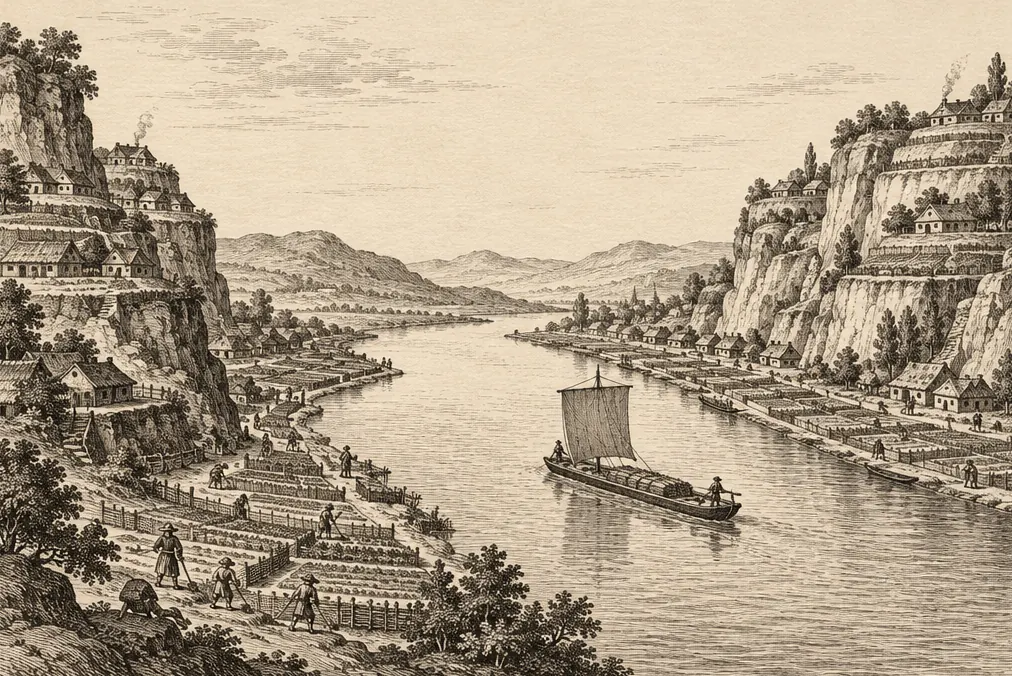
Year three. D.W. sits in a hammock chair, Anne’s cures all failed, and she walks him out to their old spot on the ledge above the gorge. “When I am gone, and I expect that’s three, four days off now,” he says, and shuts her up with a look. Marc is a good man but not a leader; Emilio is off in his own world. Anne feels too much and Sofia thinks too fast. Jimmy is bedrock: let him decide. She says she will midwife it, and he puts his hand over hers and looks at the sky, talked out. He means to tell her about his grandmother, who lived to ninety-four and did not recommend it. He means to warn her about Supaari, and to say how happy he has been, even now. “But death has its own agenda and its own logic, and it caught them both unaware, with less warning than they expected.” Marc, Jimmy and George are in Gayjur with Supaari, where there are no beggars and a chemist says the lander’s fuel can be made. Marc, taken in disguise to a ceremony, afterwards sees three Runa with their throats cut in a square, and cannot be sure he saw it. They come home to Sofia and Emilio waiting at the dock.
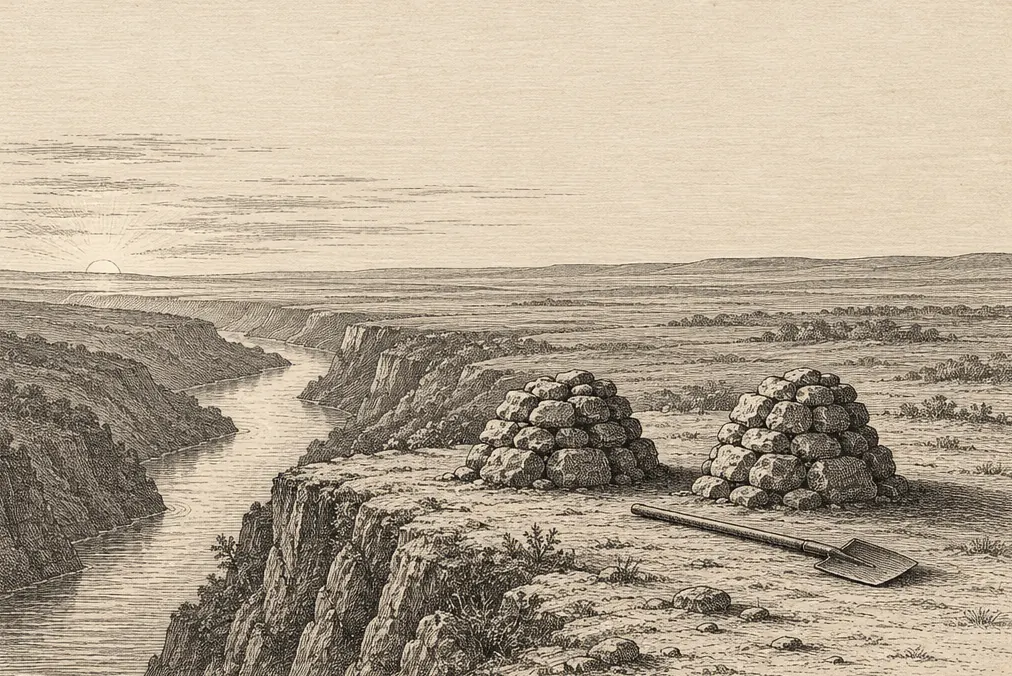
Sofia has heard something. She wakes him, and he drawls, squinting like a cowboy, that it is quiet out there, too quiet, to make her laugh. Then the wind shifts and brings the smell of blood. He takes the Winchester from the lander and tells her to lock herself in, and she follows him anyway. Whatever he meant to do with the rifle, it is too late. A VaHaptaa hunter, Supaari will tell them, of the old kind. Emilio lays out what is left of the father of his soul and the mother of his heart, and closes their eyes. He digs in stony ground until past midnight, in gloves she fetches because his hands are not hardened to a shovel. At dawn, by the two cairns, she looks into his eyes and is appalled. Ten years, and she has never once used his given name. “Emilio, I am your sister and we are orphaned.” She takes him down to the river and washes him, and makes him eat; it is a Jewish law, she tells him, life goes on. She puts him to bed in Jimmy’s place and lies down beside him, and feels the baby move for the first time, and puts his hand on her belly so that he will feel it too. He comes apart. She holds him until the shaking stops, and they sleep, bereaved and exhausted, with mourning as their chaperone.
The headaches come in clusters after that, and Askama lies beside him in the dark and watches his face. “Meelo,” she says one morning in English, “can you not be glad again? I am very worried you might die.” It is a lifeline. In Naples, John mentions that Robichaux’s last report was full of babies, and Emilio looks at Johannes Voelker. “It was the gardens.” The mistake Voelker has been waiting for. They breed to their feed. Village Runa walk far for wild food and stay lean, and lean, they feel no desire; when a village earns enough, the Jana’ata send extra rations and the females come into season, with mates chosen for them by Jana’ata geneticists. Anything below standard is removed before an attachment can form. A sort of veal, Emilio says. Quite a humane system, compared with the way we breed meat animals. Two days after Anne and D.W. died, Emilio himself translated Supaari’s word as poacher, and it occurred to none of them that a poacher implies a legal use for the meat. It would have made no difference. The gardens were planted. The babies were conceived, everywhere.
They hear the singing first, martial and measured, from the plain. The village goes up to meet the patrol and circles, the infants and children and fathers in the centre, and waits. The officer orders the babies brought forward, and they are, in near silence, and the patrol begins to kill them. There is a phrase in Hebrew, Emilio tells the room: eshet chayil, woman of valour. Sofia understands first. He hears her say it and the village takes it up as a chant: “We are many. They are few.” She walks forward, head up, a princely posture, and lifts a baby from the ground. The commander cannot move; the village surges; the patrol falls on them. A third of Kashan dies. And Sofia. And Jimmy. And George. Chaypas, Askama’s mother, is killed shielding Emilio and the child. Felipe, aghast, cannot believe he is defending them, and Emilio turns on him. There are no beggars on Rakhat and no starvation, and the coin Earth pays for its own system is the suffering of children; how many starved this afternoon while we sat here? He and Marc are taken with the patrol, village to village, the gardens burned in each and the infants killed, and offered meat every morning before the march. Marc will not eat it. He murmurs French, which Emilio reads but cannot hear: ils sont les innocents. Emilio eats. He tries to explain.
"There was a time in the British military when it was possible to punish a man with as many as eight hundred lashes. Have you read of such things? Some men actually survived this, and they reported that after a time, they no longer felt any pain. They felt only a sort of hammering. It was like that, in my soul. Do you understand? To watch the children killed, to eat the meat. After a time, it felt only like hammering."
— Mary Doria Russell, The Sparrow, Villard, 1996, chapter 31
Supaari catches up with the patrol, he goes on, bribes its commander, takes them to his own compound in Gayjur, and shows them the ivy. He goes into shock halfway through the left hand. For days afterwards someone comes to stretch the fingers flat, so that nothing will spoil the line of their fall from the wrist, and because that is necessary, they let him scream. When he can sit up he asks for Marc, and is carried to him. Marc is the colour of rain. Emilio says the absolution and sleeps on the floor with his head beside Marc’s seeping hand. In the night something brushes his hair, and a voice says Deus vult. It might have been a dream. In the morning he cannot make anyone understand that the bleeding has to be stopped. Marc Robichaux dies two hours later. “And then you were alone,” the Father General says. “Oh, no,” says Emilio softly. “Oh, no. I believed that God was with me.” It is impossible to tell whether he means it. “Do you believe that? Was God with me?” At the door he pauses, struck by a thought. Not comedy, he says. Not tragedy. “Perhaps farce?”
Next day he is bright and brittle. Six or eight months with Supaari, he thinks; he taught the merchant English and learned K’San, the hardest language of his life, part of the joke. When the Magellan party asked for him, Supaari told them he had made other arrangements, more suited to his nature. Did you do nothing to cause your removal, Giuliani asks. “Even now? After all this?” His preferences, he says with his hands rigid in his lap, were not inquired into at any time. They take him in his sleep, just past dawn, beat him, and walk him uphill to Galatna Palace, where nothing straight is left uncurved and nothing white unjewelled, the most spectacularly vulgar place he has ever been. He is kept with other beautiful, bred creatures in a cushioned cage and fitted with a jewelled collar: a capuchin monkey on a golden chain. The languages begin to go. He can no longer tell Spanish from Ruanja; he cannot recall the name of his own neighbourhood. I am losing my mind, he thinks, one word at a time. I thought I had been sold as a zoological specimen, he tells the room, trembling. It was a harem. Like Clytemnestra, he was compelled to master submission.
After a month a robe is made for him and he is taken to a plain white room, and when he hears Supaari’s voice his heart lifts: it has all been a mistake. Then he sees the other one, of medium height and vast dignity, with violet eyes, and understands. Hlavin Kitheri, the poet whose songs brought them here. Suddenly everything makes sense, and the joy takes his breath away. He has been led, step by step, to the one man on Rakhat who might know his God. He will say: I am here to learn your poetry, and perhaps to teach you ours. He thanks God with all his soul for letting him understand at last. The robe is taken off him; what educated man would not be curious about a new species? Supaari is made the Founder of a new lineage for his service, and leaves. Language, his life’s work, deserts him. What happens then is rape. Ten minutes later he is in another room, bleeding, and by the time a servant comes to take him to the baths his life is divided into before and after.
In the Father General’s office only Voelker speaks: what did the Reshtar want with him? The answer comes soft and musical and empty: the same thing a pederast wants with a little boy. Giuliani thinks, Romanità. Know the moment and move. You are many things, he says, but you are not a coward. Face it. Tell us. “I did not sell myself,” Sandoz whispers. “I was sold.” Not good enough. Say it. He puts a foot to the edge of the eighteenth-century table and sends it over, and the room scatters to the walls, and in the silence there is only the clock and his breathing. “I gave no consent.” Make us hear it. “I was not a prostitute.” No. Then what were you? Say it, Emilio. Each word separate, the voice breaking on the last: “I was raped.” John breathes, my God. Emilio turns to him with terrifying gentleness and asks whether it was John’s God. Then he sets out the problem, as a scholar would.
"You see, that is my dilemma. Because if I was led by God to love God, step by step, as it seemed, if I accept that the beauty and the rapture were real and true, then the rest of it was God’s will too, and that, gentlemen, is cause for bitterness. But if I am simply a deluded ape who took a lot of old folktales far too seriously, then I brought all this on myself and my companions and the whole business becomes farcical, doesn’t it. The problem with atheism, I find, under these circumstances," he continued with academic exactitude, each word etched on the air with acid, "is that I have no one to despise but myself. If, however, I choose to believe that God is vicious, then at least I have the solace of hating God."
— Mary Doria Russell, The Sparrow, Villard, 1996, chapter 32
And he tells them what he thought just before it began. I am in God’s hands. He had laid down every defence, with nothing between him and what happened but the love of God. “I was naked before God and I was raped.” His voice falls away into grief as he hears it, and he does not die, and Giuliani, who will not look away, says two words: tell us. So he gives them detail, merciless now. It went on for months. He was shared with the Reshtar’s friends; it became a fashion; sometimes there was an audience. Songs were written about it and broadcast, like the songs that brought them, and Arecibo may be collecting them still. Not prayer. Pornography. Voelker goes to the door, and Sandoz calls after him not to be ashamed; it happens to me all the time. Voelker wanted it to be some mistake he would not have made, so that it could never happen to him. “But it wasn’t my fault.” It was blind dumb luck from start to finish, or it was a God he cannot worship. It was my body, he says, choking. It was my blood. “And it was my love.” John stays. Everyone else, get out.
Alone with John, pacing, he gives the rest. When the novelty wore off it was mostly the guards, and they kept him in a stone room without light because the screaming disturbed the others. Someone slipped the drawing in with his food one day; God had left him, but someone remembered where he was. He decided to kill the next one through the door. If he was too dangerous they would leave him alone, or they would kill him; either way. He waited in the far corner for the momentum. The door opened on a silhouette, his body fired before his eyes could stop it, and he heard the bones in her chest snap. Askama smiled up at him with blood at the corner of her mouth. “You see, Meelo? Your family came for you. I found you for them.” In the doorway, in the light of second dawn, two men with single-irised eyes took in the collar and the ribbons and the blood. Wu Xing-Ren and Trevor Isley, United Nations. “You must be Father Sandoz.” What came out of him began as laughter and ended as something harder to listen to. Now, on the floor, he reckons it up for John. Twenty-nine years celibate, because he thought he understood; it was a path to God. If God did this, it is a hell of a trick to pull on a celibate, and if God didn’t, what does that make him? “An unemployed linguist, with a lot of dead friends.” So many dead, because he believed. Who can forgive him? John takes him in his arms and they cry together, and he begins the old words, absolvo te, and cannot finish them.
In the garden Felipe Reyes calls it an abuse of power. It was necessary, the Father General says: if he were an artist I would have ordered him to paint it, and because he is who he is, I made him speak. Sunflowers, daylilies, the scent of roses, swallows coming out as evening nears. Have you been to Florence, Reyes? Michelangelo’s Captives, figures straining out of unfinished stone. “There are souls like that, Reyes. There are souls that try to carve themselves from their own formlessness.” Emilio is still trying to find God in what happened to him. He is the genuine article, Giuliani says, closer to God right now than I have ever been, and I do not have the courage to envy him. John comes and lies flat on the ground across the path. He meant to kill, John says, in self-defence; that it was Askama was the accident. Giuliani puts his hands to his mouth. “What a wilderness, to believe you have been seduced and raped by God.” Felipe offers an old Jewish story: in the beginning God was everything, and to make room for creation He breathed in, and where He withdrew, creation exists. He watches; He weeps; He remembers. Giuliani quotes Matthew: “Not one sparrow can fall to the ground without your Father knowing it.” “But the sparrow still falls,” Felipe says. He remembers Emilio in the years before the mission, when something in his face would ignite, as if he had fallen in love with God. The Father General, in a voice dry as August grass: “I’d say the honeymoon is over.”
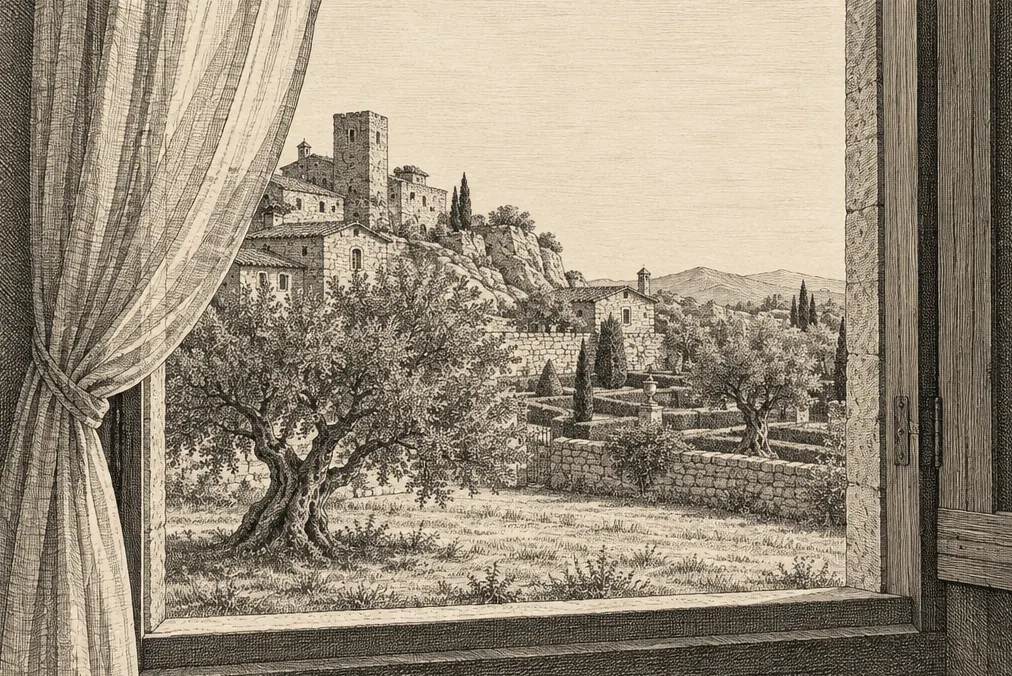
The sun is well up when Edward wakes, stiff in a wooden chair, to the rattle of a cup on a saucer. Emilio is setting a coffee down on the night table, and the servos let go of the cup almost as fast as a hand would. He did not crush it; he only spilled a little. He ran half a kilometre this morning and walked most of it. It’s a start. It isn’t over, Edward warns him. I know, Emilio says, and asks what Edward was before. A stockbroker, in undervalued companies: it involved recognising the worth of things other people discounted. At ten there is a metallic rap on the Father General’s door. Emilio has come to thank him; it was like vomiting poison, and he has heard somewhere that confession is good for the soul. Sorry about the table. Was it valuable? “Priceless.” “Figures.” He dreamed last night that he was alone on a road and said, I don’t understand, but I can learn if you will teach me. Do you suppose anyone was listening? Giuliani takes down a small cracked volume of Aeschylus and points, and Emilio translates the Greek aloud: “In our sleep, pain which cannot forget falls drop by drop upon the heart, until, in our own despair, against our will, comes wisdom through the awful grace of God.” “Show-off,” says the Father General. Emilio asks whether he might stay a while longer. He does not know if he is a priest. He does not know anything with certainty, or whether certainty is what he should want. Stay as long as you like. At the door, with the braced fingers on the lever, he hears his name. “I’m sending another group out. To Rakhat. I thought you ought to know that. We could use your help. With the languages.” It’s too soon, Vince. Of course. Giuliani watches him go and then, from old habit, rises and goes to the window. He stands looking out for he does not know how long, across a grassy courtyard to medieval masonry and jumbled rock, formal garden and gnarled trees: “a scene of great and beautiful antiquity.”
Finis.
Outside the Relation
Mary Doria Russell was a palaeoanthropologist before she was a novelist. The idea came to her, she has said, in the summer of 1992, amid the arguments over the five hundredth anniversary of Columbus. Asked why the book had to end as it does, she said she needed to ask her questions in their starkest terms: what happens to Emilio Sandoz is “a holocaust writ small”, and he has to live afterwards. A sequel, Children of God, published in 1998, sends him back to Rakhat.