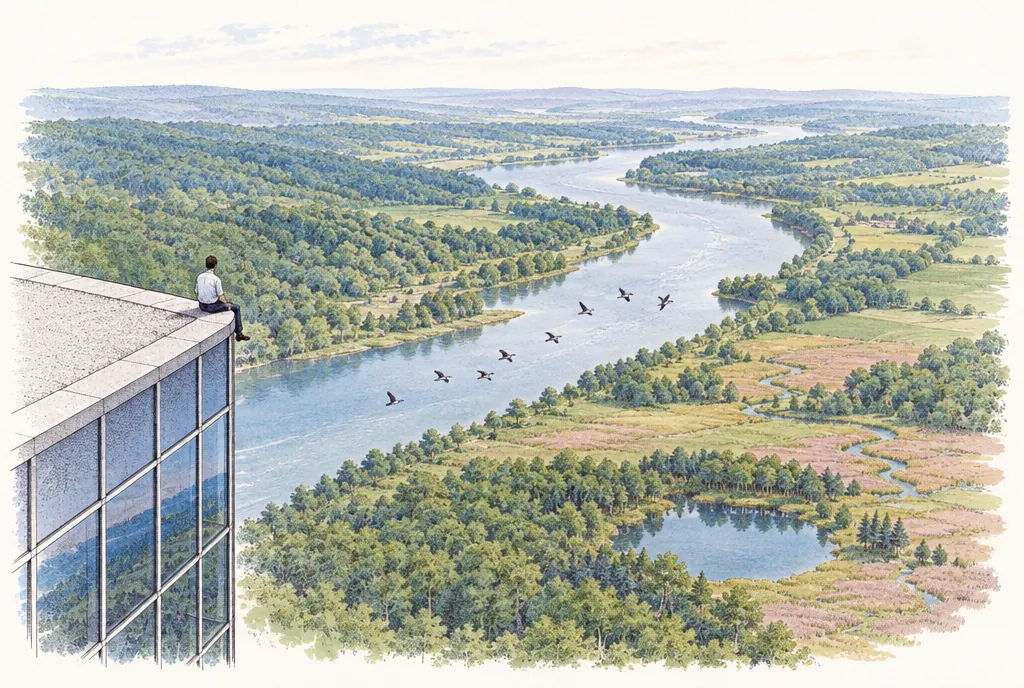
From his towers of glass and steel, Modern Man is said to have cut himself loose from nature. He looks down at the squirming life of the planet as if he were its great destroyer and the earth a fragile film of bubbles on a pond. Lewis Thomas, a physician who watches biology, thinks the picture is upside down. The life of the earth is the toughest skin in the universe, and the fragile part is us. Inside each of his cells, burning the oxygen that gets him out of bed, are mitochondria, and strictly speaking they are not his. They descend from bacteria that swam into the ancestors of our cells long ago and never left, and they still copy themselves on their own schedule, with DNA unlike ours. Without these lodgers he could not lift a finger or think a thought. Other small tenants keep his cells in order too, so that each cell is an ecosystem busier than Jamaica Bay. Perhaps, he muses, it is they who take his morning walk in the park and listen to his music. Green plants share the predicament, since the chloroplasts that make their oxygen are separate creatures with genomes of their own.
The sameness of life, he thinks, is stranger than its variety. Everything probably descends from one cell, sparked by lightning as the earth cooled, which is why the enzymes of grass resemble the enzymes of whales: it is a family face. Viruses begin to look less like agents of death and more like genes on the move, darting like bees from plants to insects to mammals and out into the sea, handing scraps of heredity from guest to guest as if at an enormous party, so that the occasional virus disease looks like something dropped by accident. He has tried to picture the earth as an organism and cannot; it is too vast, its parts too loosely joined. Then one night, driving through the wooded hills of southern New England, an answer arrives that satisfies him, at least for the moment. What the earth most resembles is a single cell.
When astronauts come home from the moon, they do not kneel to kiss the deck of the carrier. They put on surgical masks, walk with their arms raised into a sealed box, and wave to the President through glass. Then they wait out a quarantine in Houston while inoculated animals are watched for omens, and only after that comes the parade up Broadway. To Thomas the ritual shows the century’s obsession with disease: anything foreign must be locked up, and the only debate is how to kill it. The evidence points the other way. Most relations between living things are cooperative, and it takes a long, close history before one creature can make another sick, so any life from the moon would wait a lonely time for membership here. Most microbes cannot even be grown alone. Root-nodule bacteria look like invaders but build, together with the bean plant, the earth’s chief organ for fixing nitrogen. A crab recognizes its own anemone and fixes it to its shell like an ornament. Sea slugs that eat Portuguese men-of-war move the stinging cells into their own skin. When two corals of one species are pressed together, the smaller quietly dismantles itself, not beaten, simply bowing out. Without immunity to keep us apart, he suggests, life might have run together into one flowing sheet over the earth. Perhaps we could make room for visitors after all, on a planet where windstorms lift enough vitamin B12 into the clouds that the rain could turn a pond green.
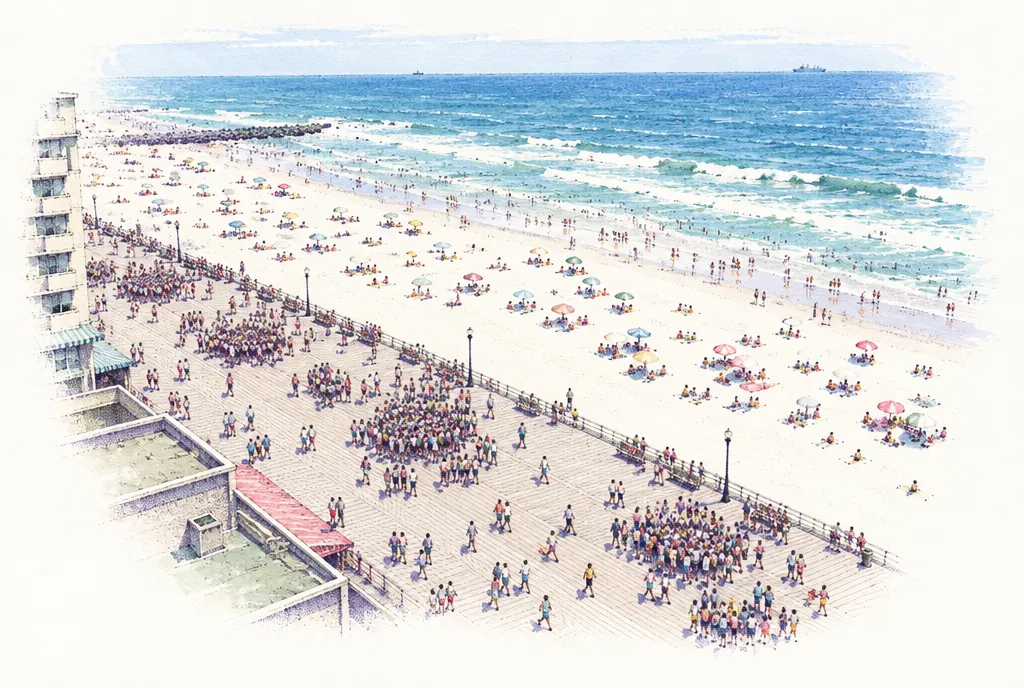
Seen from high enough, the medical scientists crowding the boardwalk at Atlantic City for their annual meetings look like social insects, touching antennae and swapping scraps of news. That comparison is allowed; finding anything human in an ant colony is bad form among biologists. Yet ants farm fungi, herd aphids, fight wars and take slaves. What unsettles us is that they live two lives at once, each a separate creature and each a cell in the larger animal of the Hill. One ant has nothing that could be called a thought. A few around a dead moth begin to resemble an idea. Thousands around the Hill make a mind, a living computer whose parts crawl. Two or three termites just shuffle pellets around, but once enough gather, as if a quorum has been reached, they raise columns and curving arches that meet without a flaw. A swarming beehive divides like a cell. Slime-mold cells roam alone until a chemical signal calls them together into a slug that raises a stalk and fruits. Humans, the most social of all, rarely feel their joined intelligence, but perhaps our work is to build a Hill of information. Science shows how. John Ziman argued in Nature that publishing small pieces of work in journals, each a fragment of a larger jigsaw, was the key event in modern science, and his passage could almost describe a termite nest. Even the word explore, Thomas notes, comes from the cries we make while doing it.
Then an uncomfortable question: what if humans have pheromones, the airborne chemical signals that insects use? Alex Comfort has listed parts of our anatomy that make sense only as scent glands, from tufts of hair to folds of skin that seem built for farming bacteria. A pheromone needs only a chain of eight or ten carbon atoms. A female moth releases a puff of bombykol, and a male miles away simply finds that it has turned into a lovely day for a brisk flight upwind; on arrival he thinks it the luckiest coincidence of his life. A catfish who loses his place as a local leader starts to smell like it. The human hints are slight but odd. Young women sharing dormitories find their cycles falling into step. A British scientist alone on an island weighed the stubble from his razor and found his beard grew faster whenever he came back to the mainland and met women. Thomas imagines perfume companies, chemical plants on the Jersey flats making sprays to mask it all, and worried meetings at the Pentagon. He proposes, straight-faced, a National Institute of Human Fragrance, which might start with how a tracking dog tells one person from another. Kept busy and well funded at this level, he suggests, we might just stay out of trouble.
The more crowded we get, the more noise we make, and music is the one thing that keeps the small talk from burying us. Animals chatter too, but under the chatter Thomas hears a constant music. Termites drum their heads on the floors of their dark galleries in organized rhythms, like a timpani section. Bats hanging at rest in the woods make lonely notes like bells. Beetles tap, fish drum on their air bladders, leeches tap on leaves and are tapped back, and toads sing in answering choirs. The thrush in his backyard practises like a virtuoso, breaking off in the middle of a phrase to start again, and Thomas cannot believe it is only announcing itself. If we could hear the whole orchestra at once, crickets and earthworms, seabirds, midges humming over a sunny meadow, it might sweep us off our feet. Humpback whales sing long, ornamented songs, then leap clear of the sea and crash down on their backs, looking jubilant. A visitor from space might take Beethoven’s fourteenth quartet for a signal saying only that Beethoven is here, answered a century later by Bartók. Having no explanation for music, Thomas invents one. Harold Morowitz has shown that a constant stream of solar energy, passing through the earth on its way out into space, must push matter into ever more ordered arrangements, held taut against the drift back into chaos. Music may be a memory of that, the score of random matter learning to dance. To Thomas it would sound like the Brandenburg Concertos.
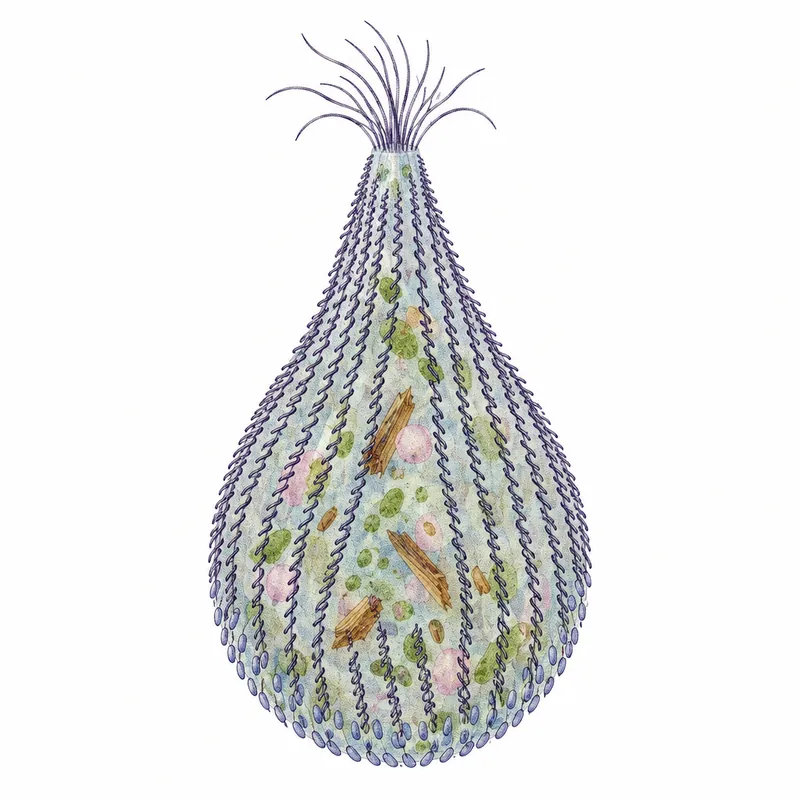
An advertisement in the London Observer offers to sort a lonely reader into a computer of fifty thousand names and return, within seconds, friends. Thomas does not fear the dating machine. He fears the larger ones that will advise nations, if they are loaded with today’s view of nature as a war of all against all. On that view we have planted missiles like bulbs in the soil of Russia, China and the American Midwest, enough to kill the green cells of the sea and turn off the oxygen. So he makes an earnest proposal. Wait ten years, and in that time let the nations work together to understand one living thing completely. He nominates Myxotricha paradoxa, a single-celled creature in the gut of Australian termites that digests their wood; without it there would be no termites, and no dead trees turned into soil. Under the electron microscope its beating hairs turn out to be whole spirochete bacteria, fastened in rows over its surface, with more bacteria beside them. It is a company caught halfway to becoming one creature, and a model of how our own cells were made. Lynn Margulis has gathered the evidence that blue-green algae became chloroplasts, oxygen-burning bacteria became mitochondria, and spirochetes became cilia. If some force drives living things together, then immunity and aggression may be later inventions, there to keep the joining from getting out of hand. When the ten years are up, Thomas predicts, the computer will whir for a few seconds and print its reply. It wants more data, it asks how the spirochetes are attached, and it says, “Do not fire.”
No one has yet weighed the technology of medicine, for all its eighty-odd billion dollars a year, and when the analysts arrive, Thomas warns, they must keep three things apart. The first is nontechnology: caring for patients and standing by them through illnesses no one understands. It was all doctors could offer for polio and meningitis, and it is what they offer now for most cancers, for stroke and for much mental illness. It is indispensable and exhausting. The second is halfway technology, everything done after the fact to make up for a disease or put off death: transplants, artificial organs, coronary-care units, most cancer surgery and radiation. The newspapers hail each one as a breakthrough. It is at once highly sophisticated and deeply primitive, and it costs more every year. The third is the real high technology, such as vaccines and antibiotics, which comes from truly understanding a disease and turns out cheap and simple. Typhoid nursed by the methods of 1935 meant some fifty days in hospital; now a course of chloramphenicol ends it, with the fever gone in a couple of days. Tuberculosis hospitals were planning costly surgical wings when two new drugs arrived, and the hospitals themselves closed. A prudent policy-maker, he concludes, would put far more into basic biology, even if that sounds like asking for the moon.
We leave ourselves on everything we touch. Two pebbles struck together give off a smoky smell that disappears when they are scrubbed and comes back once a hand has touched them. A good dog can follow one man’s track across a crowded field and pick out a glass slide he touched six weeks before, and yet it treats identical twins as one person. Our scent marks us as personally as the markers on our tissues that make grafts fail. A rose owes its smell to geraniol, a ten-carbon molecule, and what seems to matter is the molecule’s shape. Salmon remember the water they hatched in and find their way back by it from the open sea. We treat the smelling parts of our brains as dotty old relatives in need of hobbies, yet we are better at it than we think. The crab and its anemone know each other by molecular shape, and Thomas suspects that antibodies grew out of these older systems for recognizing partners. Robert Whittaker calls the whole web of chemical messages between species allelochemics: every living thing announcing itself, warning off or welcoming, keeping the earth in balance. Kepler once thought the earth itself a living round beast. In that animal such signals would be hormones, carrying news from the meadows of the Alps to the eels of the Sargasso Sea.
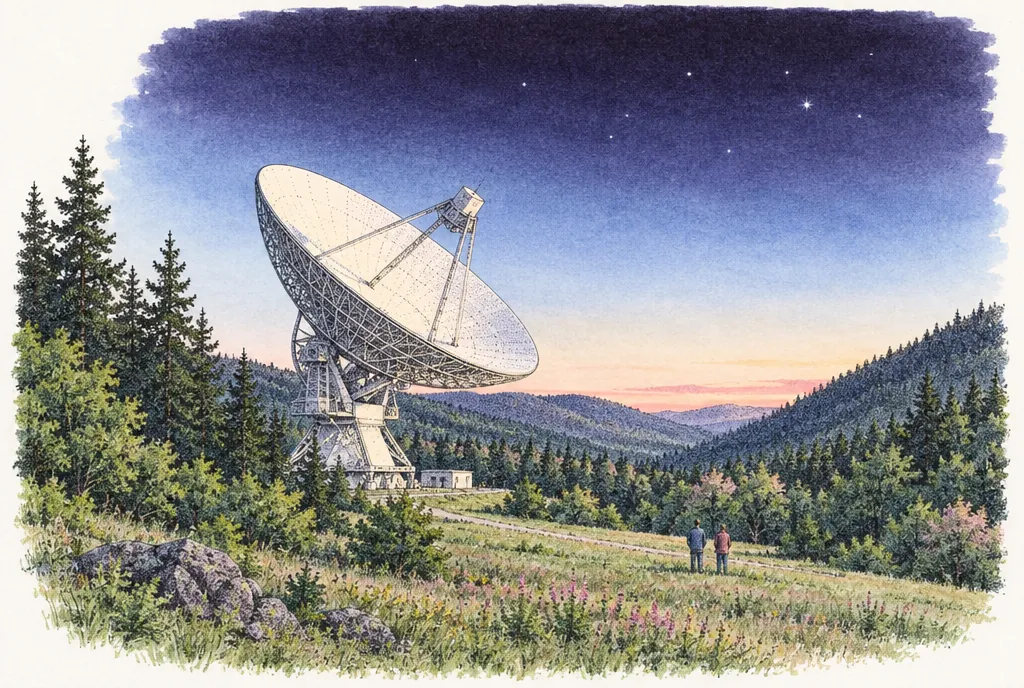
Tau Ceti is a nearby star much like the sun, and CETI is also the name of a 1972 conference in Soviet Armenia on talking with intelligence elsewhere, whose astronomers propose giant radio telescopes to listen in. The earth has lately come to feel small. The blue sky has turned out to be a finite roof, a membrane a few miles overhead, tough enough that things hitting it from outside catch fire. We live inside a bubble of air we blew ourselves, and beyond it the black sky is open country. An embryologist from elsewhere might say the earth is developing nicely, with cities for ganglia and new dish-shaped sense organs miles across. After the first nods and smiles at contact, Thomas suspects, we will be in shock, made to feel no bigger than a single cell in a universe that sprouts life wherever it can. The practical problem is conversation. With a partner a hundred light years away, a greeting and its reply take two centuries. Send music, he says, all of Bach, over and over. It would be showing off, but it is a truer picture of us than news magazines or Presidential speeches, and our science would only make us wince when the polite replies arrived. Perhaps Cézanne too, showing that an apple is partly fruit and partly earth. Questions can wait. The first is the only one that matters: Hello, are you there? If the answer comes back yes, we might pause there and ponder it for a long time.
Death in large numbers we discuss over dinner; it is the near death, above all our own, that we cannot mention. Thomas Browne wrote that the long habit of living unfits us for dying, and now, Thomas says, we are hooked. Even without cancer, strokes and heart disease we might still stop on schedule, like cell lines that divide a fixed number of times and quit, and at the very end simply dry out and blow away on a breeze. Flies do not die of a succession of diseases; they grow old and die. Doctors once sat with the dying at home. Now dying happens out of sight in hospitals, and the fear has grown. William Osler said there was no such thing as an agony of death. David Livingstone, crushed in a lion’s jaws until a friend’s lucky shot saved him, remembered only calm, and decided that creatures carry a mechanism that switches on at the edge of death. Thomas has seen agony once, in a man dying of rabies, as though the disease had jammed the switch. Patients revived after their hearts have stopped remember no fear, only quiet, and an elderly woman with lung disease said the only painful part of dying was being interrupted. So perhaps dying is an all-right thing to do, as carefully worked out as any act of living. That leaves consciousness. He would like to think it is drawn back, like an easy breath, into the membrane it came from, a new memory for a nervous system of the whole living world. But he has no data. His European friends’ aunts receive Communications from beyond; he had the wrong aunts.
Insects again. A lone locust is quiet; packed among others it changes colour, and the swarm hums like a jet airliner and takes off. Grouped termites grow friendly and busy because they are constantly touched; isolated in pairs they turn surly and bite off each other’s antennae. Alone, a bee or an ant simply dies. The anthill meets every test of an organism. Now ants are art as well. A New York gallery shows two million live army ants from Central America on sand in a huge plastic-walled bin, the artist moving their food so that they flow into long black ropes and crescents, while New Yorkers in winter coats line up to look down at them, a crowd as remarkable as the ants. By the time Thomas has prepared to go downtown, the ants are dead. A cold draft over a weekend, perhaps. On Monday they are sluggish, and within a day all two million are swept into plastic bags for the sanitation truck. He blames the plastic and the distance from the earth, like the giant of Greek myth who lost his strength whenever he was lifted off the ground, and Manhattan itself sits on a concrete platform propped on pipes and wires. Uneasy, he takes down a book that assures him ants and human societies cannot be compared, since insect behaviour is fixed by instinct. It comforts him only partly. For full effect, he thinks, it needs to be recited in chorus by a group, all their lips moving together.
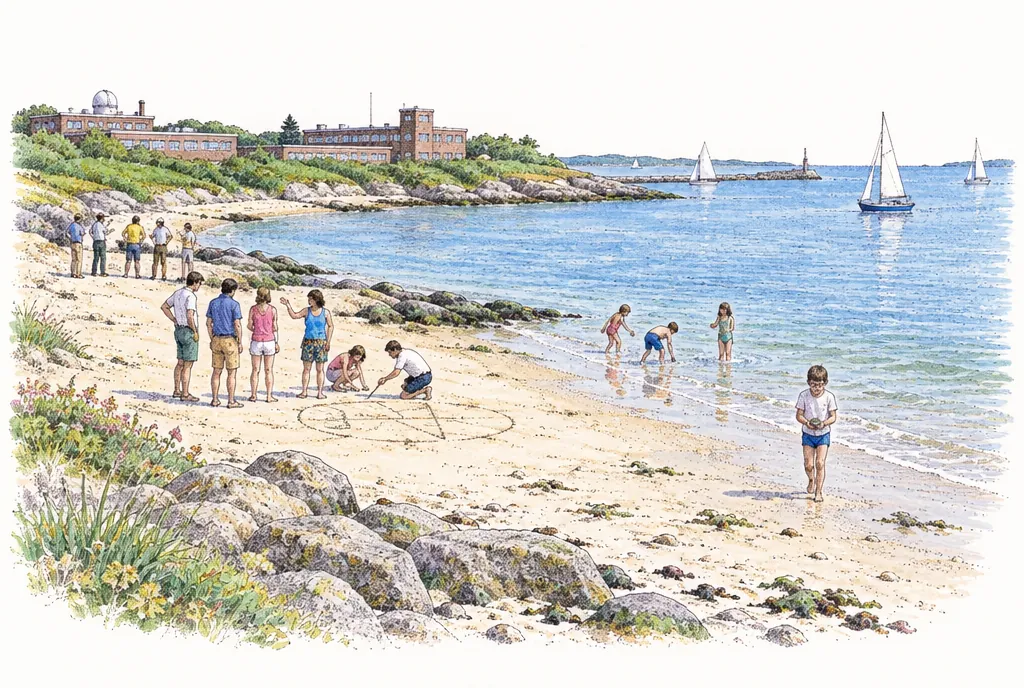
Startled for good to learn that we are a social species, Thomas looks for signs that it is good for us, and finds them in small things, like the Marine Biological Laboratory at Woods Hole. It began in 1871, when Woods Hole was chosen for a fisheries station because the Gulf Stream collides there with northern currents and brings every kind of sea life. Academics drifted down from Boston, started explaining things to each other, and the laboratory was chartered in 1888. No director, committee or trustee has ever held more than the lightest reins. It has a mind of its own, draws biologists each summer the way plants turn to light, and thirty Nobel laureates have worked there. The giant nerve fibre of the local squid founded neurobiology, and sea-urchin eggs started developmental biology. The best place to watch it working is Stony Beach, a scrap of sand laid over painful stones by a committee urged on by footsore wives. A small boy of about five comes out of the water with dripping hair and perfectly dry glasses, holding something brown and jellylike, and walks past his mother, who is explaining DNA in chloroplasts, saying, “That is very interesting water.” Biologists stand around drawing diagrams in the sand, and by evening the beach is covered with graphs. You hear it before you see it, the half-shout, half-song of many people explaining things at once. Perhaps, he thinks, this is how we build language.
Typing by touch or riding a bicycle goes best without thinking; attend to each muscle and you freeze. Our insides run themselves altogether, the heart, glands and hormones working without a word from us. Now psychologists report that organs can be trained. Rats rewarded through the brain’s pleasure centres learn to slow their hearts or widen the blood vessels of one ear, and headsets for training your own brain waves are advertised in literary magazines. Thomas wants none of it. Put in charge of his liver, he would be depressed. He would sooner be handed the controls of the 747 he is riding in, high over Denver in a coach seat, since at least he could hunt for a parachute. His liver is cleverer than he is. He is tempted, briefly, to run his brain: delete some memories, stop the thoughts that go round in circles like this one, get a little more respect. But herding white blood cells all day would leave time for nothing else. Since every technology gets used, he proposes using this one backward: learn to disconnect and float free, minding which end you let go of. Zen archery may be about exactly this. After months with a master you learn to let the arrow go without releasing it yourself, the fingers opening on their own like a flower, and then, wherever the arrow lands, you can step outside and look around.
The biological revolution is arriving peacefully, with new blocks of knowledge set into empty spaces almost daily. Thomas finds his own trouble in the organelles. He grew up thinking of them as private little engines, his own flesh, and now some of the most important turn out to be strangers. The membranes, DNA and ribosomes of mitochondria are bacterial, and mitochondria arise only from other mitochondria, passing down mostly in the mother’s egg. Chloroplasts look like blue-green algae. He only hopes he can keep the deed to his nuclei. Biologists call the organelles enslaved, but from their side the arrangement is ideal: stay small, stick to one trade, and get inside everyone else. Between them, mitochondria and chloroplasts make the earth’s oxygen and use it, and they are, in effect, in charge. By bulk, Thomas might be taken for a large, mobile colony of breathing bacteria that operates nuclei and neurons for its families and is, at this moment, typing. As a Welshman he never minded descending from hairy apes, and was pleased to have risen above them, but descent from cells without nuclei is harder. Worse, he has not descended at all. He has brought them along, or they have brought him. The same creatures live in seagulls, whales, dune grass, the beech in his backyard and the fly on his window, so he has relatives once removed everywhere. When he concentrates he can almost feel a tingle. If he knew how they keep in step, he might understand music in a new way.
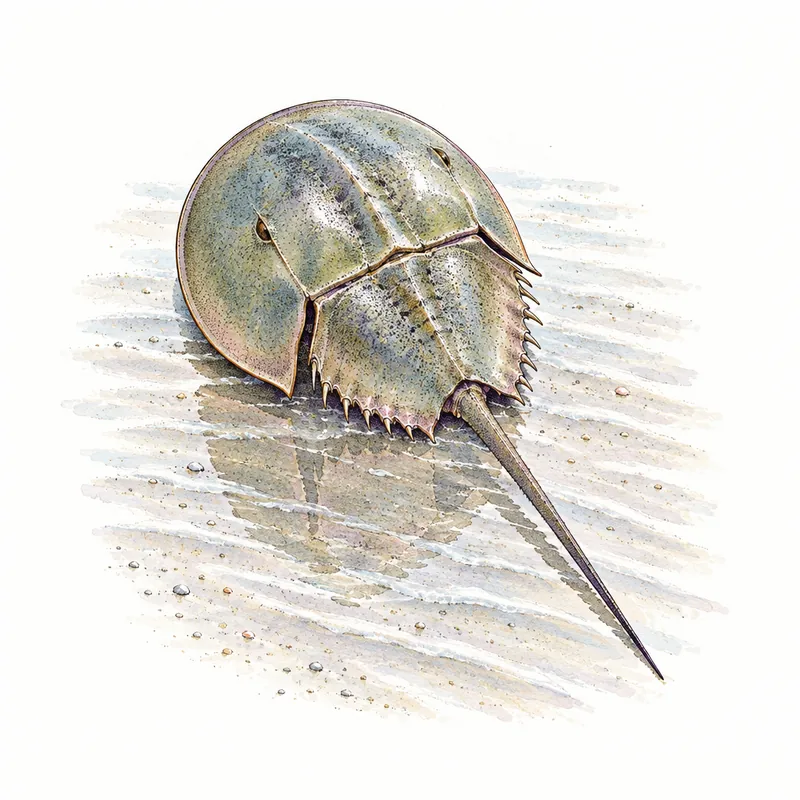
Television says we live under siege, kept alive only by sprays, with hotel glasses wrapped in plastic and toilet seats sealed like state secrets. Thomas calls this paranoia on a social scale, born of our need for enemies and our memory of a time, a few decades back, when families moved in and out of death with pneumonia, diphtheria and, everywhere, tuberculosis. But disease is rare in the microbial world, almost freakish. It comes from failed negotiations over living together, one side misreading the border. Diphtheria bacteria make their toxin only when they are themselves infected by a virus, so when we catch diphtheria we are bystanders stumbling into another creature’s mishap. The meningococcus that catches a man is in worse trouble than the man. Most bacteria simply browse, recycling molecules for the rest of life. The ones that seem to hate us are mostly strays in from the cold, and the disease is our own response, for our defences are so powerful that we live among explosives of our own. What we cannot stand is information. When our tissues read the endotoxin on certain bacteria, they bomb and blockade everything nearby, with clotting, fever and shock. The horseshoe crab does the same. A small injection makes its blood cells clump solid and it destroys itself, a defence built for one bacterium thrown into panic by a flood of signals. We tear ourselves apart over symbols, at the mercy of our own generals.
The country spends eighty billion dollars a year on health, or is it ninety? Medicine has been renamed the health industry, and the new Health Maintenance Organizations spread like post offices, as if to hand out health in neat parcels. Thomas fears the word is being stretched to hide what we have agreed not to mention: illness and death are still loose among us, and most major diseases are blind accidents no one yet knows how to prevent. Meanwhile we forget how sturdy the human body is. To picture it as a rickety machine always about to fly apart is almost disloyal. He has a way to find out what people really need from medicine: ask the families of experienced internists, who have every service at hand. His soft survey of friends finds no routine physicals since military service, few x-rays outside the dentist’s chair, plenty of aspirin and hardly any antibiotics for a feverish child, with the same colds and stomach upsets as everyone else. The secret these doctors know, and their wives learn early in marriage, is that most things mend on their own, and many are gone by the next morning. A sound system, like a sound court, should presume people healthy until proven otherwise.
Social animals differ in how committed they are. Insects live as a tissue, so that a beehive is a round animal, while other creatures merely meet in committees or nod in passing. Humans manage every arrangement. We depend on each other in cities like bees, yet could go and live in the woods. News of a scientific finding travels through laboratories like a scent that lifts the hairs of workers at the ends of the earth, yet each of us hoards private knowledge. No one wants to think the three billion of us make one huge animal, and in most ways we do not, for we are not bound to a single task. In the twelfth century we spread across Europe raising cathedrals and thought it would go on forever; then we stopped. Behaviour we can switch on and off is not written in our genes. Except for one thing: speech. Language may be the one trait our genes give every human, done communally, compulsively and automatically, the way bees build combs, and deprived of it our minds would perish, like a bee strayed from its hive. Noam Chomsky argues that grammar is born in us, as a chick is born able to read the shadow of a hawk. Yet no one controls language. It behaves like a living creature, sprouting words and dropping others, and languages die leaving descendants or fuse into new tongues. If that makes us like ants, Thomas says, he does not mind, or rather we do not mind.
If we are born with genes for grammar, Thomas reasons, the mind is set up for more than parts of speech. We start life with templates and throw off guesses about the world, and when one meets a matching fact there is a kind of detonation in the mind; the idea swells and begins to copy itself. Animals without speech get one thud per idea. The wasp Sphex leaves her paralysed caterpillar at the door of her burrow and goes in to inspect. Move the caterpillar a little and she drags it back and goes in to inspect again, as often as you have the patience for. Lymphocytes, the white cells of immunity, each carry one idea too, a receptor asking whether its particular shape exists anywhere. When one finds its match it multiplies into a colony carrying the same question, which is a memory. Such cells must stick exactly to the point. Language is the opposite. Meaning needs some ambiguity, a faint sense of strangeness. A bee steering by polarized light never wanders off to find an unimaginable flower, and only the human mind drifts away from fixed information in search of a better point. Without that gift we might have learned small talk, but we would never have travelled from words as far as Bach. The great virtue of language is that it keeps us from sticking to the subject.
In the country the dead animals on the highway are wild things, glimpsed in fragments from a car window, woodchucks, skunks, sometimes a deer. Each one is a shock, part grief and part astonishment, because animals are supposed to die out of sight. Stand at the edge of a meadow and almost everything you see is dying, and only constant renewal keeps the ground from turning to stone and sand. Some creatures never seem to die at all: one cell becomes two, two become four, and the first simply disappears into its descendants. Who ever sees a dead bird? Birds die under things and behind things, never on the wing. When elephants find an old skeleton, they scatter its bones over the neighbouring acres. Thomas has lived his whole life with too many squirrels in his backyard and has never seen a dead one. Perhaps that is as well, but it makes dying seem exceptional, and harder to face when our own turn comes. People die in secret too. Three billion of us are alive, and every one will be gone within a lifetime, some fifty million a year, yet we see only our own dead and speak of them in low voices as struck down, as if death needed a cause. Within half a century the numbers will double, and the secret will be hard to keep. We will have to learn our place in the cycle where each new life is paid for with a death, one cell for another. There may be comfort in that. We all go under together, and the company could not be better.
Science is wilder than its managers suppose. Planners in Washington want it cheaper and more businesslike, but hard problems are solved only after passing through a turbulent zone of plain astonishment, so any system for science should be built to provoke disbelief and celebrate surprise. The deepest mystery is that scientists do it at all, and under such compulsion. Near an answer their hair stands up, like young animals at rough play, and getting there first matters more than food. It looks lonely and is the reverse: a busy field is an anthill of minds. Some news acts like a chemical lure, and minds converge from everywhere, flying upwind along a gradient of surprise, swarming around the source like cells at an inflammation. Out of what looks like total disorder, like bees in a hive someone has kicked, a single new truth emerges, pure as a slow phrase of music. It cannot be done by lining minds up in rows with printed instructions. You get honey from bees not by teaching them navigation but by putting them together, quickly, since a solitary bee dies, and tending the air around the hive. Nothing is hurt in the chase, and its end is a sigh. If the atmosphere is right, the sigh is cut short by a loud new question, and the whole wild chase begins again.
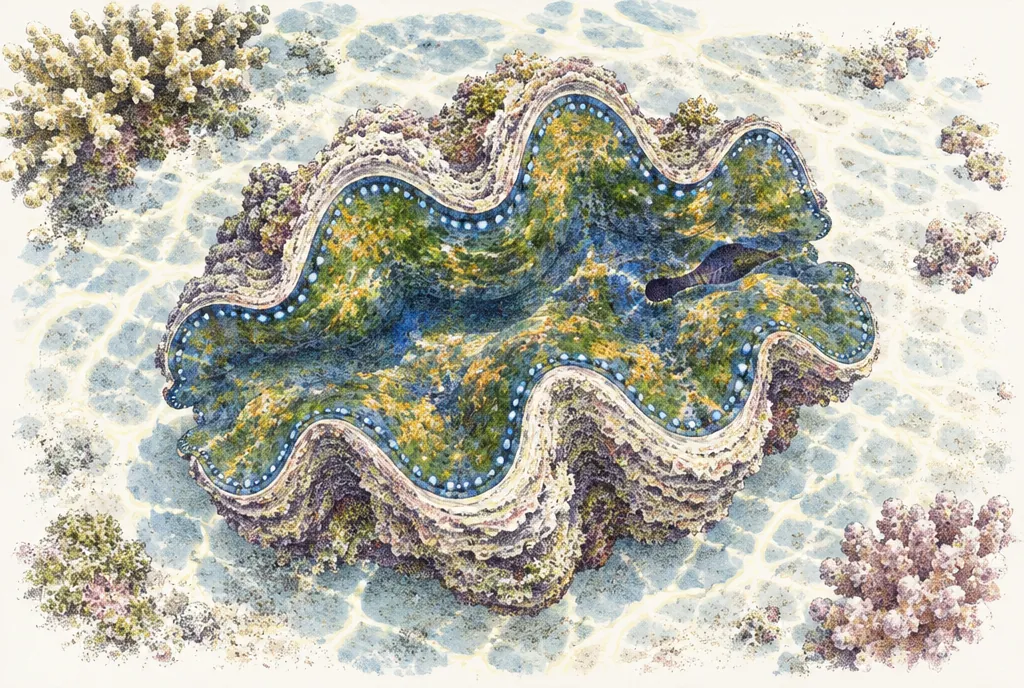
Economists now put prices on lakes, meadows and nesting gannets. Our thinking about nature has already been through revolutions. First the earth was our property: garden, zoo, bank vault and fuel supply. Then we agreed that we belong to the system, the earth a loosely formed round organism and we perhaps its nervous system. Now comes a worse wrench. We are the masters after all, like it or not. We carry a twenty-first-century sense of kinship with all life and walk in nineteenth-century boots over the face of nature, and we cannot stop controlling it short of vanishing ourselves. We have grown over the whole surface and become nature itself, in charge of everything, for good or ill. Or perhaps it is the other way round, and we are the ones taken over. The giant clam farms algae in its tissues and even grows small lenses to focus sunlight for them; the clam might feel guilty about enslaving plants, while the algae think they have captured the clam. Perhaps the earth, in this phase of its development, needs something like us for a while, to fetch and carry energy, tend new partnerships, store information, do some ornamenting, maybe even ferry seeds across the solar system: the earth’s handyman. Thomas would much prefer that job to the unearthly creature we are becoming. We might even start campaigning to protect ourselves as an endangered species. We could not lose.
The Iks, a small people of the mountain valleys of northern Uganda, were nomadic hunters until a new national park forced them onto poor hillsides to farm. Then an anthropologist who loathed them lived among them for two years and wrote a book. Its message is that, stripped of their culture, the Iks became selfish and loveless, and that the rest of us are the same underneath. In the book they share nothing, never sing, abandon the old and laugh only at their neighbours’ bad luck. Thomas finds it depressing, and too narrow. In all his life he has known difficult, grabby people, but never one consistently detestable human being, so he has a theory: the Iks have gone crazy. Each Ik, in the ruins of a shattered culture, has become a group of one, a one-man tribe. And now they look familiar, because that is exactly how committees, cities and nations behave. Cities dump into their rivers and build places to put their elders out of sight. No nation has ever loved another; nations shout insults from their doorsteps and celebrate each other’s misfortunes. So the book does not prove that people are empty at the core. Man is all right. We simply have not yet learned to remain human once we are gathered into great masses, and the Iks act out that failure for us to watch.
Computers can already outplay most people at chess, and someday a machine might do everything human. Even so, a machine the size of Texas would be one individual. To match us there would have to be three billion of them, wired together and talking incessantly. Our real mystery is collective. We spend our lives sending messages, and information is our energy. Telephones, radios, satellites and words got in edgewise are joining us into one circuit around the earth. A word spoken this afternoon goes around the world by Tuesday, changing as it goes, and comes out as a Hungarian joke, a jolt in the money markets, a poem, or a pause in a conversation in Brazil. Without voting, we change our language, music and clothes around the globe in a year. Computers cannot handle such improbability, which is lucky, for otherwise some clever group might plan society for the next five hundred years and stall us in today’s rut. The more fallible we stay, the better. Information flows into the mind of mankind but little comes back out, and Thomas admits he understands the mind of mankind no better than the mind of an ant, which might be where to begin.
Biology is booming while medicine feels slow, and Washington’s fashionable answer is targeting: mission-oriented research, better management, perhaps less basic science. Thomas thinks this credits biology with far more usable knowledge than it has. Medicine has always tried anything on the thinnest hope, bleeding, cupping and purging. The control of infection did not drop from the sky with penicillin. It rested on decades of painstaking work from the 1870s on, and our grasp of schizophrenia, cancer or stroke may stand where infection stood in 1875. Applied science works when the facts are ready. Once basic research showed that the polio virus came in three types and could be grown in tissue culture, a vaccine was a sure thing. The difference is surprise. Applied work needs certainty, schedules and hard facts. Basic research needs uncertainty; its quality is measured by astonishment, and whether the prediction comes true or something wholly unexpected turns up, you win. Most of what needs doing is basic, a formless, confusing and excellent time, full of blind alleys, and the investigators’ normal state of mind must be a nagging sense of being wrong. The best gauge is to eavesdrop in the corridors. When someone shouts “Impossible!” and then laughs, the research is going well.
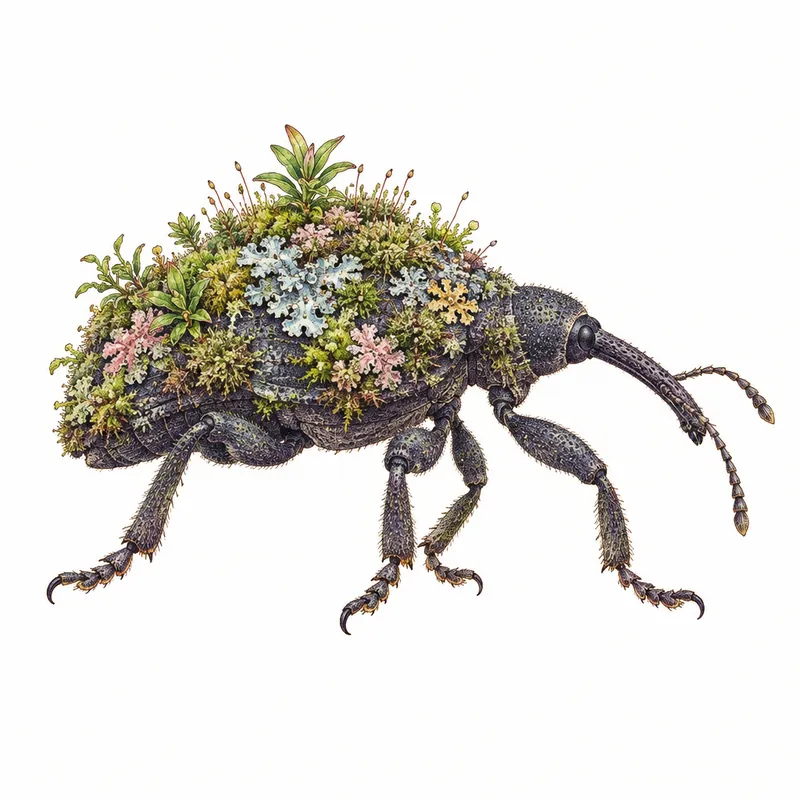
The bestiaries of the world, the griffon, phoenix, sphinx, manticore and ch’i-lin, seem like nonsense a scientific age has outgrown. Thomas suspects we need them as we need myth. The beasts are all unbiological in the same way. They are made not of new parts but of familiar parts from different species, mixed, which is what offends a mind raised on evolution. The phoenix, in the oldest version, wraps itself in an egg-shaped cocoon from which a worm grows into the new bird, a story surely first told by a biologist. The manticore has a lion’s body and three rows of teeth, yet sounds like a silver flute. A Levantine libation vase of about 2000 BC shows two snakes twined around one another in a double helix. A Peruvian farm god painted around AD 300 has plants growing out of his body, and he has a real counterpart: a weevil in the mountains of New Guinea that carries a garden of plants rooted in its shell, with mites and worms living among them, and that nothing will eat. Thomas proposes a new microbestiary. Myxotricha returns, not an animal but a company still being assembled. Blepharisma makes a pink pigment that kills it if it swims into sunlight, and in famine it eats its neighbours and swells into a cannibal giant out of a Norse saga. The green paramecium, when food runs out, just sits in the sun and lets its algae feed it. The lesson is the bestiary’s own: living things tend to join up. In the laboratory any cell can be fused with any other, becoming for a while one cell with two foreign genomes. It is a living chimera, a griffon or a sphinx, and Thomas reads it as a good omen and a wish for the whole world.
From 1911 into the 1950s, entomologists took seriously William Morton Wheeler’s idea that an ant colony is a superorganism, with an intelligence greater than its members. Then the idea vanished. It was never disproved. It simply suggested no experiments, so it sat in the way until it was buried under leaves and papers. If an idea cannot move by itself, Thomas says, pushing it does not help, but perhaps it should be tried on a social species easier to observe: us. Picture a million ants building a Hill, each perfecting its own patch with no notion of the whole, a generation vanishing in a month while the Hill lasts sixty years. Only one human activity is like that, and it is language. The old words carry layers of meaning, each a little poem in one word. Articulated first meant jointed, then spoken, and love-did wore down into loved. Holism hides holy, because its ancient root also gave hail, hale, health, whole and heal. Two great roots, gene and bheu, together make up everything. Gene became kin, kind, gentle, genius and nature; bheu became build, then the Greek word for nature, then physic, which meant medicine, and finally physics. So kind means both a relation and a nature, and physics is a kind of nature. The fourteenth-century hermit Julian of Norwich reached the same place by other words. She was shown a little round thing the size of a hazelnut lying in her palm, and told that it was all that is made.
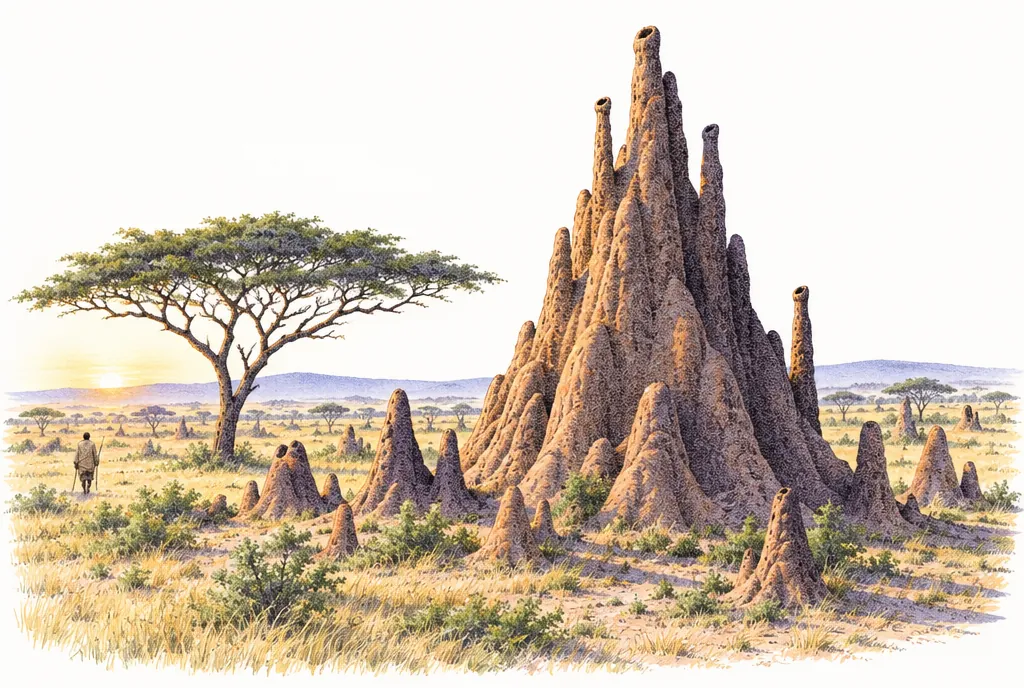
The French zoologist Pierre-Paul Grassé coined the word stigmergy, from Greek roots for stirring up work, for the way termites build: the work itself tells them what to do next. Their mounds in Africa can stand twelve feet high and a hundred across, with smaller mounds clustered around them like suburbs, and inside is a maze of galleries, air-conditioned vaults and fungus gardens, all built on the arch. Grassé put a few termites in a dish of soil and pellets. Nobody gave orders. They wandered, picking pellets up and dropping them, until by chance two or three landed on top of each other, and then everyone took an obsessive interest in this beginning of a column. When another column rose nearby, the two curved toward each other into an arch. Language might grow like that, Thomas muses, but more likely it is simply alive, and words are its cells. Words mutate, fuse and breed hybrids, and the Indo-European languages split as their speakers scattered, the way Darwin’s island creatures became separate species. Trace words through a dictionary of roots and they behave like animals. A word for seeing becomes wit, wisdom, vision and veda; a word for waking becomes Buddha. Leech once meant both the doctor and the worm he used, until the worm kept the word. One word for man grew from a root meaning earth and gave both human and humus, while an old word for man turned into world. Speaking with all the roots running past like subtitles, he admits, you would fall off the bicycle. Even so he cannot stop, one tangle leading to the next, until he remarks how easily one loses the thread, a word that may share its root with termite, and asks, “Are you there?”
The odds against any one of us existing are so huge that we ought to live in a daze of surprise. Matter drifts toward a random muddle, yet we are intricately organized, catching electrons as sunlight excites them and storing their energy, and life has held out against randomness for billions of years. Each of us is one in three billion, marked by the proteins on our cells, by our fingerprints, perhaps by our scent. You would think we would never stop dancing. But we are born into improbability and grow used to it, like people native to the high Andes. Besides, there is slippage. The brain is the least private organ there is: hidden in bone, yet nearly all its business comes from thinking already done in other minds, and the dear old idea of the Self as a free, independent island is a myth. Perhaps we are just beginning. Today’s thoughts, the jokes that turn up the same week in Hong Kong and Boston, the love songs, may be like the first simple cells drifting in shallow pools, waiting for fusion to produce complex thought, coral reefs of thought. Now and then a mutant sweeps across like a comet. Bach was one, and his Art of Fugue and St Matthew Passion did for human thought what feathers and opposable thumbs did for bodies. What we need, he says, is more crowding, more talk and open channels, even more noise. Taking part is not optional. As bystanders, Thomas advises, we should step back and give it room.
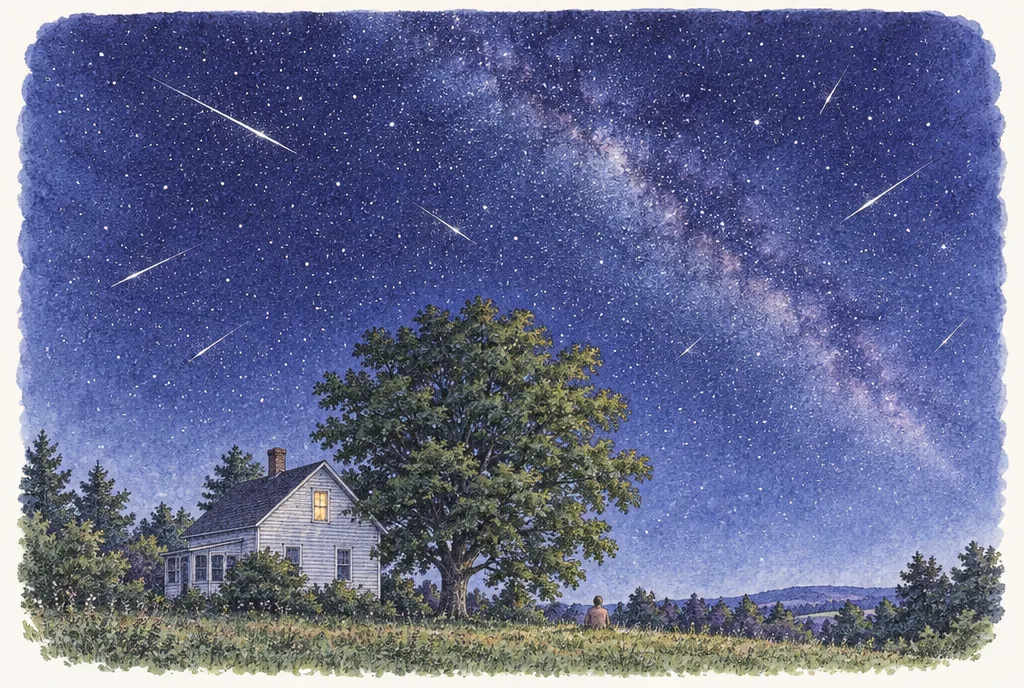
Seen from the moon, what takes the breath away is that the earth is alive. The photographs put the moon’s battered surface up front, lifeless as a bleached bone, and above it the earth rises under its moist, shining blue sky, the only exuberant thing anywhere near. Watch long enough and the clouds swirl; watch for geologic ages and the continents drift. It looks like a self-contained creature, expert at handling the sun. Life needs membranes to trap energy and keep it against the slide toward equilibrium, and the earth, coming alive, built one for itself to edit the sunlight. The first atmosphere held almost no oxygen, so the first green cells must have lived some ten metres down in still ponds, deep enough to escape the ultraviolet and shallow enough for light. You can say oxygen came from evolution or evolution from oxygen. At one percent of today’s level, about six hundred million years ago, life could move into surface waters; at ten percent, about four hundred million years ago, it could crawl onto land. By luck, oxygen blocks exactly the ultraviolet that wrecks nucleic acids and lets through the light green cells need. The earth even breathes, and the great reptiles may have run out of air. It is hard to love the atmosphere, yet it is as much a product of life as bread or wine; once chloroplasts existed, there was no other way for the sky to go. It is the grandest piece of collaboration in nature. It does our breathing for us, and one thing more. Every day millions of meteorites strike its outer edge and burn to nothing, and without it our ground would long ago have been pounded to moon dust. We cannot hear them, but it is a comfort to know the sound is up there, like rain drumming on a roof in the night.
Thomas wrote these twenty-nine essays between 1971 and 1973 as a monthly column, Notes of a Biology Watcher, in the New England Journal of Medicine, which he began while at Yale. Collected in 1974, they won the National Book Award in 1975 in two categories, Arts and Letters and The Sciences. He led Memorial Sloan-Kettering Cancer Center in New York from 1973 and wrote several more collections of essays. The idea that unsettled him most, that mitochondria and chloroplasts descend from free-living bacteria, is now textbook biology. He died in Manhattan on December 3, 1993.