Seven years after this book appeared, Ursula K. Le Guin wrote a note for it, because science fiction keeps being asked to tell the newspapers what the twenty-first century will be like. She will not. Science fiction, she says, is not predictive; it is descriptive. The book is a thought-experiment, in the way Mary Shelley’s young doctor or Philip K. Dick’s lost war is a thought-experiment. Let us say that this or that is so, and see what happens. Yes, the people in it are androgynous, but that is no prophecy. She is only observing that if you look at us at certain odd times of day, in certain weathers, we already are. Her own words for it are plain: “I am not predicting, or prescribing. I am describing.” The describing is done the novelist’s way, by inventing elaborately circumstantial lies. Then she gives up the desk to a man named Genly Ai, who, she says, sat down at it and used up her ink and her typewriter ribbon.
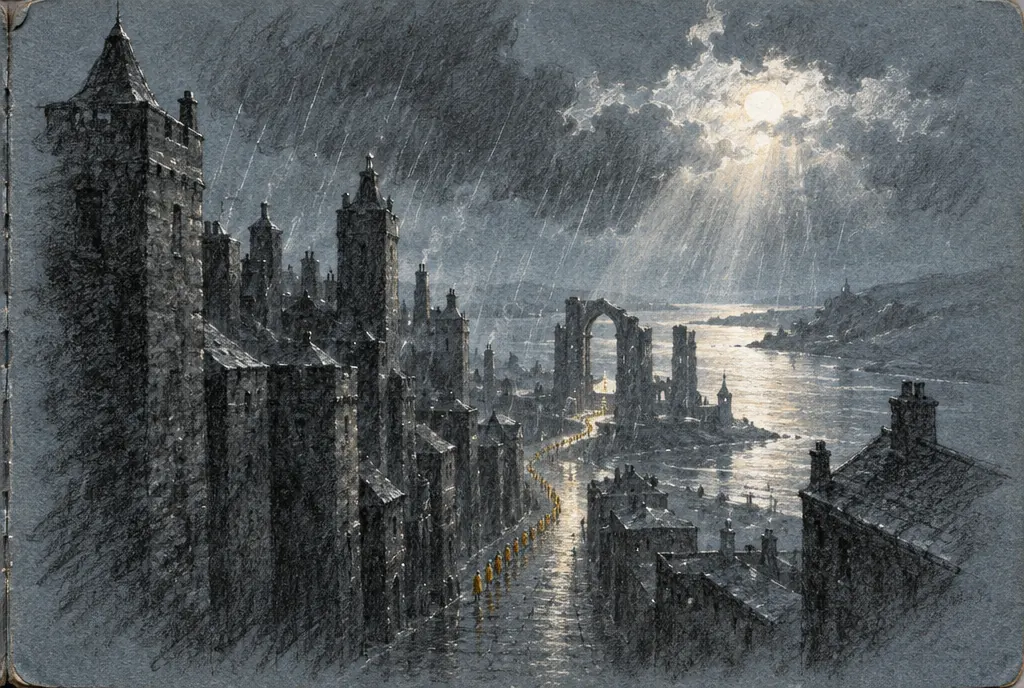
Genly Ai makes his report as if he told a story, because he was taught as a child on his homeworld that Truth is a matter of the imagination. It begins in the spring of the Year One in Erhenrang, capital of Karhide, on the planet its people call Gethen and the Ekumen calls Winter. He is in peril of his life and does not know it. He is in a parade. He walks just behind the gossiwors and just before the king, and it is raining. Rainclouds over dark towers, a storm-beaten city of stone, and through it one vein of gold winding slowly. Merchants and artisans rank on rank. Lords and mayors under tangled banners. Jugglers whose gold spheres blaze as the sun breaks through. Then forty men in yellow playing the gossiwor, a horn with so preposterous a bellow that Genly thinks, if this is the Royal Music, no wonder the kings of Karhide are all mad. Then King Argaven the Fifteenth, in white and saffron, with one gold ring for all his office, and behind him eight guards with foray guns loaded with soft iron. Death walks behind the king. It is a parade with no soldiers. On a timber platform by the unfinished Arch of the River Gate, under the traitorous sun of Winter, Genly watches the king kneel and mortar the keystone in with his own trowel. The cement is pink. He asks the sweating man on his left why. Very-long-ago, the man tells him, a keystone was always set in with a mortar of ground bones mixed with blood. “Human bones, human blood. Without the blood bond the arch would fall, you see.” These days they use the blood of animals.
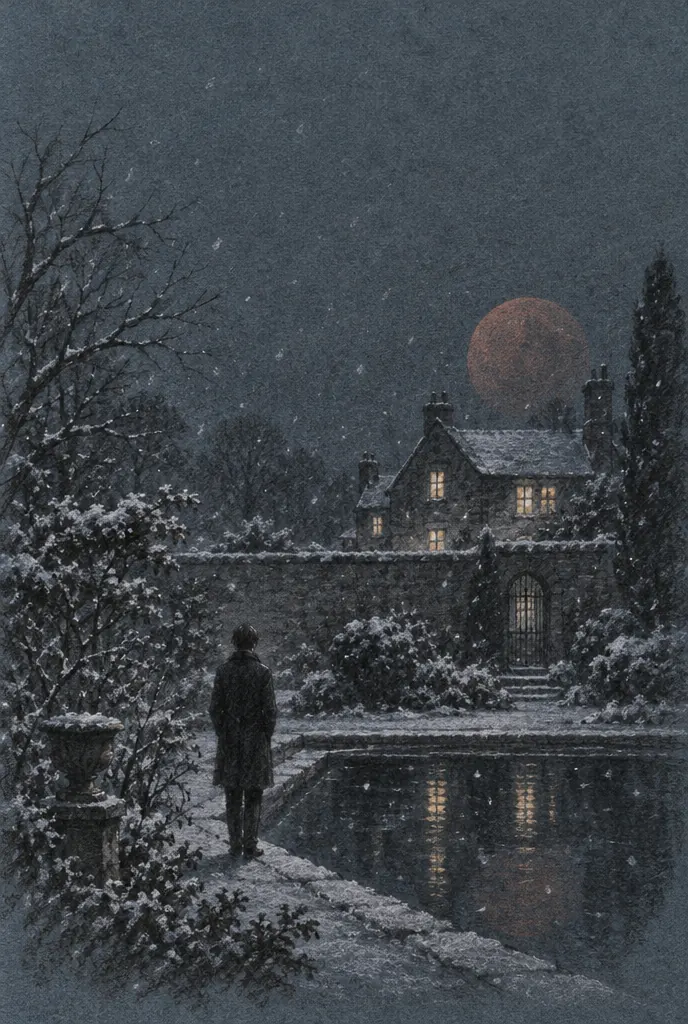
The man is Therem Harth rem ir Estraven, Lord of Estre in Kerm Land, the King’s Ear, prime minister of Karhide, and for the last six or eight months he has been Genly’s way to the king. Genly is alone on this world, the First Mobile of the Ekumen of Known Worlds, sent with empty hands to invite a planet into a league of eighty-three worlds. Estraven tells him, in a sentence Genly hears as a joke and is not, that Karhide is not a nation but a family quarrel. That night snow falls, in spring, and Estraven stands bareheaded in it by the pool of his garden, waiting. At supper, over hot beer, Genly keeps trying to see his host as a man and then as a woman, and fails at both. The news is bad, and told so obliquely that Genly misreads it. Estraven will no longer speak for the Envoy to the king. He has moved Karhidish farmers out of the Sinoth Valley, the strip of land Karhide and Orgoreyn have quarrelled over for years, and in doing so he has impugned the king’s shifgrethor. Shifgrethor is the word Genly cannot translate: prestige, face, place, the pride-relationship, the untranslatable and all-important principle of social authority in Karhide. Genly hears betrayal. He hears a politician dropping an embarrassment. He does not hear the warning. He writes down, without believing it, Estraven’s remark that when he says patriotism he does not mean love. “I mean fear. The fear of the other.” By the fire, before the gongs strike the Sixth Hour, midnight, Estraven says one more thing: “A man must cast his own shadow.” Genly walks home under Gethen’s big, dull, rufous moon, cold as he has been ever since he came to this world, past the keystone set in blood, obsessed by perfidy, and solitude, and fear.
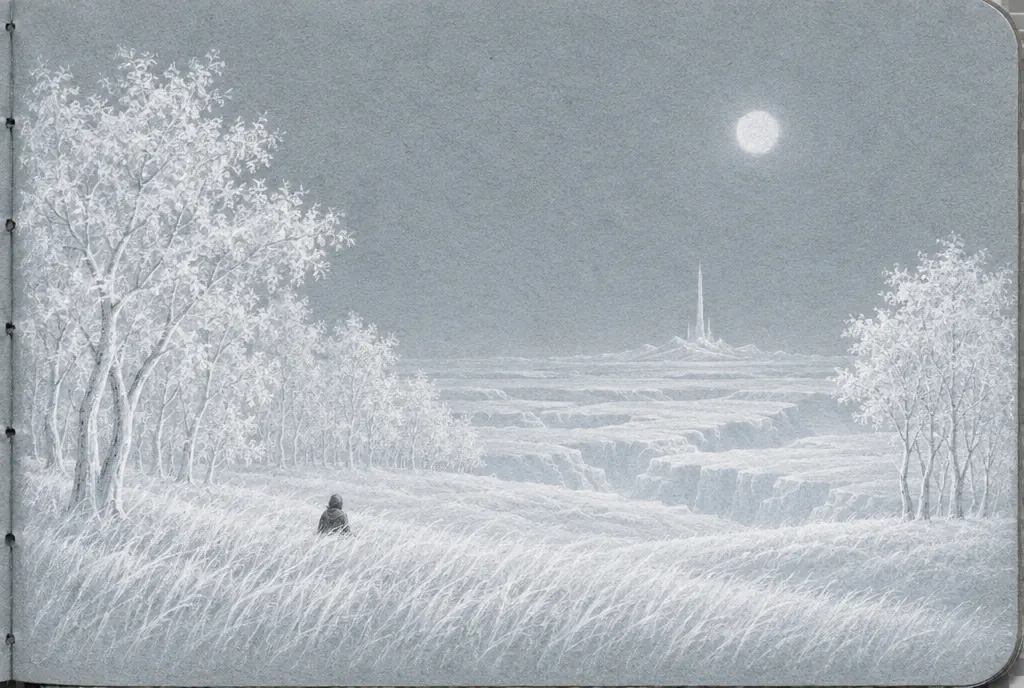
There is a hearth-tale told in North Karhide, taped from a narrator whose name nobody kept. About two hundred years ago in the Hearth of Shath, in the Pering Storm-border, two brothers vowed kemmering to each other for life, which brothers may not do. When a child was conceived the Lord of Shath ordered them parted, and the one who bore the child took poison. The Hearth laid the shame of the suicide on the other brother, Getheren, and drove him out, and no door in the land would keep him past the three days’ guesting. So he came back and stood in the doorway of the Outer Hearth and said, “I am without a face among men. I am not seen.” He laid his name on the Hearth as a curse, and went north onto the Ice to die. Two days without food, then frostbite, then crawling on knees and elbows. Then the storm stopped, and the snow grew up like white grass, and white trees stood in a windless sun, and his hands were white and whole. From a white tower a naked white man came walking. It was Hode, the brother who had killed himself, with no life in his belly and a voice like creaking ice. “This is the place inside the blizzard,” Hode said. “We who kill ourselves dwell here.” He reached for Getheren and seized him by the left hand, and Getheren broke free and ran south into the wall of snow. On the ninth day the people of Orhoch found him crawling, snowblind, and the left hand had to come off. He lived out his life under another name. Only as an old man, hearing that Shath was blighted, did he send word: “Tell them at Shath that I take back my name and my shadow.” He died not many days after, and Shath prospered.
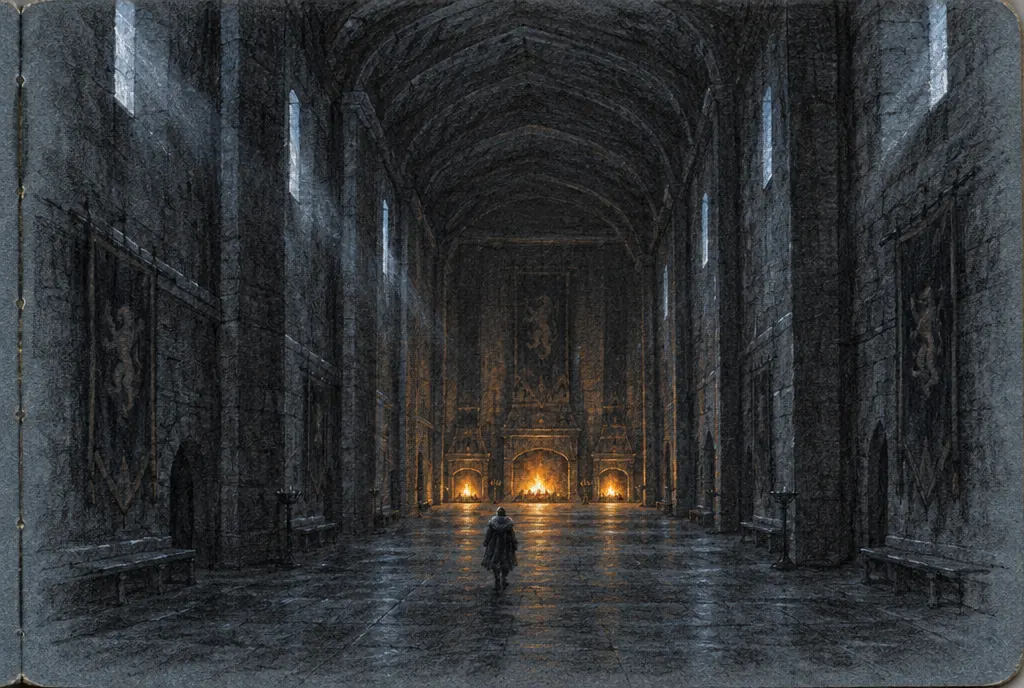
By morning it has all gone wrong. The anteroom radio, inlaid with silver and bone, is reading a proclamation. Therem Harth rem ir Estraven is exiled from Karhide for treason, with three days to leave and death if he returns, and the union of worlds he spoke for is a baseless fiction. Genly is announced into the Red Hall as Genry Ai, in the Karhidish way. He walks half a mile down it with his new boots going eck, eck on the stone, towards a king whose face is as flat and cruel as the moon. Argaven kicks the fire into sparks. Estraven told him to pack the Envoy off, he says, and it is Estraven who got packed off. He gives Genly the first advice anyone has offered him in two years on this world: trust no one. Genly makes his case anyway. Eighty-three worlds, three thousand nations, all of them peopled from Hain long ago, and a journey of seventeen years each way to the nearest of them. No conquest, because across such distances there is nothing worth conquering; the Ekumen wants trade, knowledge, curiosity, delight. Argaven wants to know whether they are all as black as Genly, and what a female is, permanently, and whether the Ekumen is a society of perverts, as Lord Tibe put it.
Then Genly hands over the ansible, the device that speaks across the void with no lag at all, and lets the king ask Hain a question. Argaven asks what makes a man a traitor. The letters burn across the small screen and fade, from a world seventy-two light-years away. The Stabiles do not know, and no man considers himself a traitor, which makes it hard to find out. The king calls it a bag of tricks and a trickster. Then he turns his shadow-scarred face and says the true thing. He fears the Envoy. He fears those who sent him. He fears liars and tricksters, and worst of all the bitter truth, and that is how he rules his country well, because only fear rules men. “But I am already afraid, and I am the king. Fear is king!” He gives Genly the freedom of Karhide, which is a dismissal. Out on the pink-brick paths of the Palace, Genly understands that someone else is the King’s Ear now, and that the gates of the Corner Red Dwelling stand open. The man he mistrusted at supper is walking into exile with three days’ grace. When action grows unprofitable, the Ekumenical School teaches, gather information. He will go east, to the Fastnesses, and not yet to Orgoreyn.
Another tale, from East Karhide, is about asking. Berosty rem ir Ipe paid forty beryls and half a year’s orchards to the Weaver Odren at Thangering Fastness to learn the day of his death, and was told: on Odstreth, the nineteenth day of any month. He shut himself in the highest rooms of his tower and fasted every eighteenth and nineteenth day of every month. His kemmering Herbor, who loved him, went to the Foretellers with nothing to pay but his own life, and asked how long Berosty would live. The Weaver cried out as if burning: longer than Herbor. Herbor came home through the snows and told it. Berosty, mad at being given the length of his lover’s life and not his own, lifted the red stone table as if it were a sheet of tin and crushed him under it. Then he lay down beside the body as in kemmer. On Odstreth, the nineteenth day of Thern, he hanged himself. “There is always a price,” the Weaver had said. “The asker pays what he has to pay.”
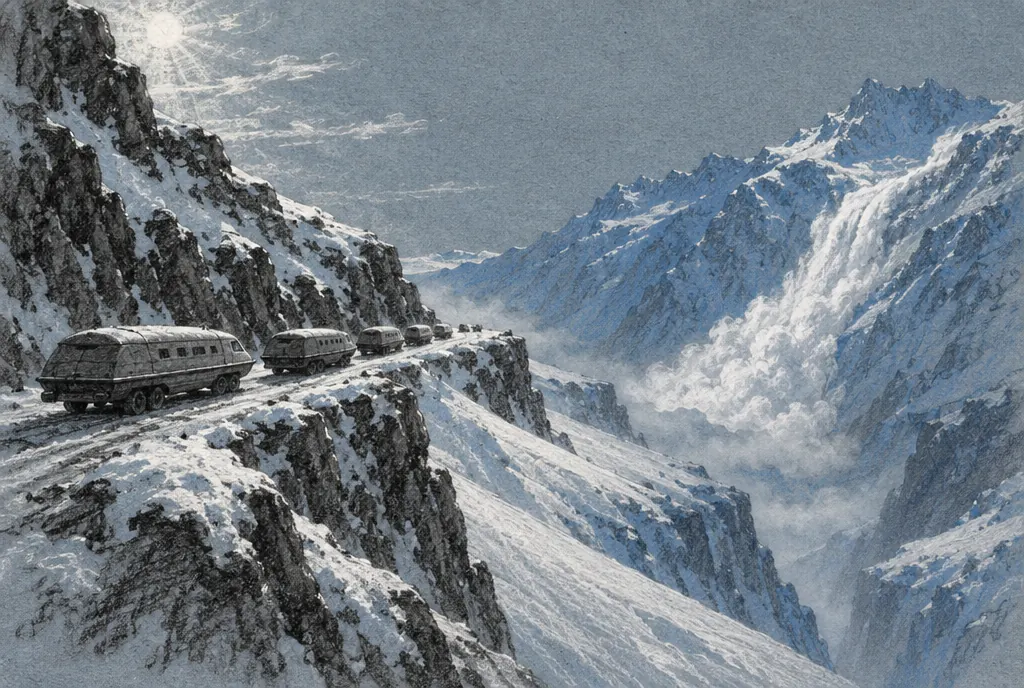
Summer comes, and Genly goes east over the Kargav in a caravan of twenty landboats at twenty-five miles an hour, which is as fast as Karhide goes. Its Machine Age is three thousand years old and has never once hurried; progress, Genly notes, is less important here than presence. In the passes of Wehoth, fourteen thousand feet up, it is eighty-two degrees in the noon sun and thirteen in the shade, and avalanches are heard grumbling down slopes across twenty-mile chasms. Below the pass lies Rer, the old King’s City, with no streets at all, only tunnels and bloodred windowless towers. Beyond it is Otherhord, a Fastness of the Handdara in a forest that smells of frying fish. The Handdara is the old religion of Karhide, and has no institution, no priests and no creed. It is built out of negatives: nusuth, no matter, unlearning, untrance. When Genly tells a young Indweller named Goss that he is exceedingly ignorant, Goss bows and says he is honoured. The Weaver is Faxe, who practises Presence in a scarlet hieb and does not hear Genly when Genly mindspeaks him. The Foretellers of the Handdara answer questions, for a price, and Genly, who doubts there is anything in the stories, has come to ask one. Why does the king never ask them, he wonders. Because, Faxe tells him afterwards, walking in the rain, the Handdara perfected and practise their craft “to exhibit the perfect uselessness of knowing the answer to the wrong question.”
The circle sits in the hall at night: nine, hooded like dolmens, the Weaver at the centre. Two Zanies, five Celibates, one of them in kemmer, and the Pervert, a person stuck in one sex, who touches the kemmerer and sets the current running. “Would you cure a singer of his voice?” Goss had said when Genly asked whether the Zanies could not be cured. Genly asks his question: will this world, Gethen, be a member of the Ekumen of Known Worlds, five years from now? The web of minds pulls him in. His barrier fails into a chaos of lust and violence. Hours and seconds pass, the moonlight shines on the wrong wall, and at the centre of all darkness is Faxe: a woman, a woman dressed in light, in silver armour, with a sword, screaming in terror and pain, “Yes, yes, yes!” A log on the fire. Light. The Weaver asks if the Asker is answered, and he is, with no hedge on it, with the imperative clarity of a hunch. There were ten in the circle, not nine; Faxe served as the filament, and Genly, the stranger with no barrier, was the tenth. Faxe, quenched in a white hood in the rain, declines to learn mindspeech, because his business is unlearning. Then he says what a lifetime of answering has taught him, in the lines that end the chapter.
“The unknown,” said Faxe’s soft voice in the forest, “the unforetold, the unproven, that is what life is based on. Ignorance is the ground of thought. Unproof is the ground of action. If it were proven that there is no God there would be no religion. No Handdara, no Yomesh, no hearthgods, nothing. But also if it were proven that there is a God, there would be no religion…. Tell me, Genry, what is known? What is sure, predictable, inevitable—the one certain thing you know concerning your future, and mine?”
“That we shall die.”
“Yes. There’s really only one question that can be answered, Genry, and we already know the answer…. The only thing that makes life possible is permanent, intolerable uncertainty: not knowing what comes next.”
Ursula K. Le Guin, The Left Hand of Darkness, Ace, 2019, p. 75
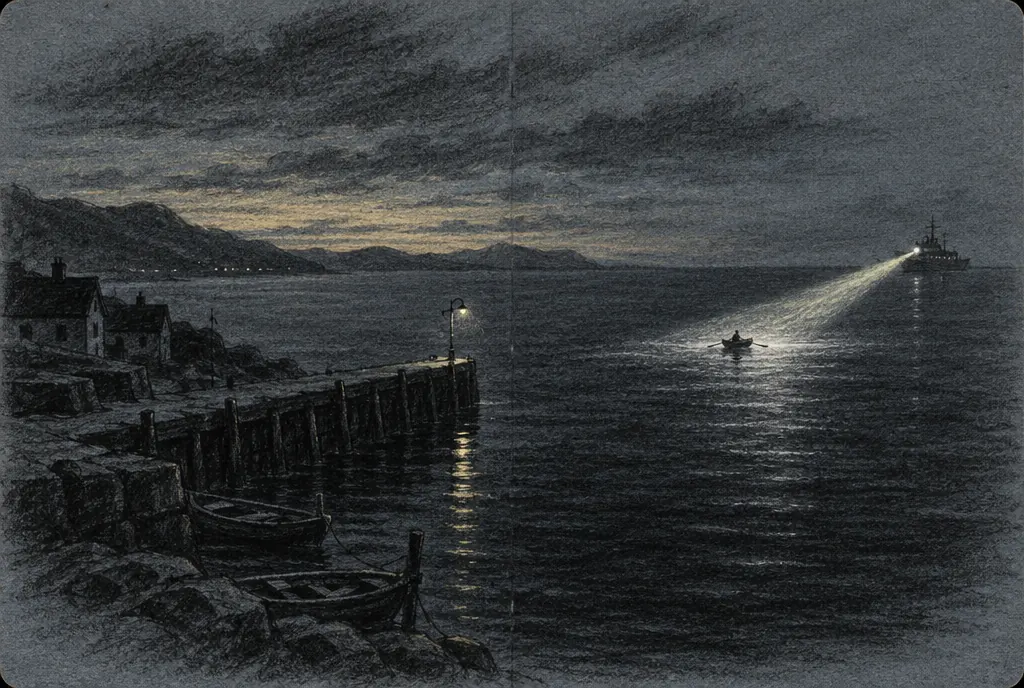
Estraven, meanwhile, has been woken by his cook and a runner nailing the Order of Exile to his door, and goes into exile, he writes, stark naked and stupid as a newborn child. By the Ninth Hour he is gone from the Palace; he has three days to be out of Karhide. No shipmaster dares carry a man Tibe has named traitor, though Estraven built them their Port. It is hard, he finds, to be called traitor: an easy name to call another man, a name that sticks, that fits, that convinces. He walks eighty-five miles west to Kuseben on the Gulf of Charisune. At the gate his old kemmering, Ashe, with whom he kept seven years and had two sons, waits with money. Estraven is deliberately cruel to him, calling theirs a false vow, a second vow. The only true vow of his life was never spoken, to someone now dead, whose shadow follows him down to the harbour. No Orgota ship will take him. At dusk on the third day, with the Sixth Hour coming and his execution lawful past it, he steals a rowboat. A sonic gun from the pier doubles him up like a baby with colic, and a patrol boat’s sweeplight picks him off the water like a snowflake on soot. The patrol master obeys the king’s order and not Tibe’s: it is not Sixth Hour yet. He lands Estraven in Orgoreyn. Why he did it, Estraven never learns, and sets down the saying: the admirable is inexplicable.
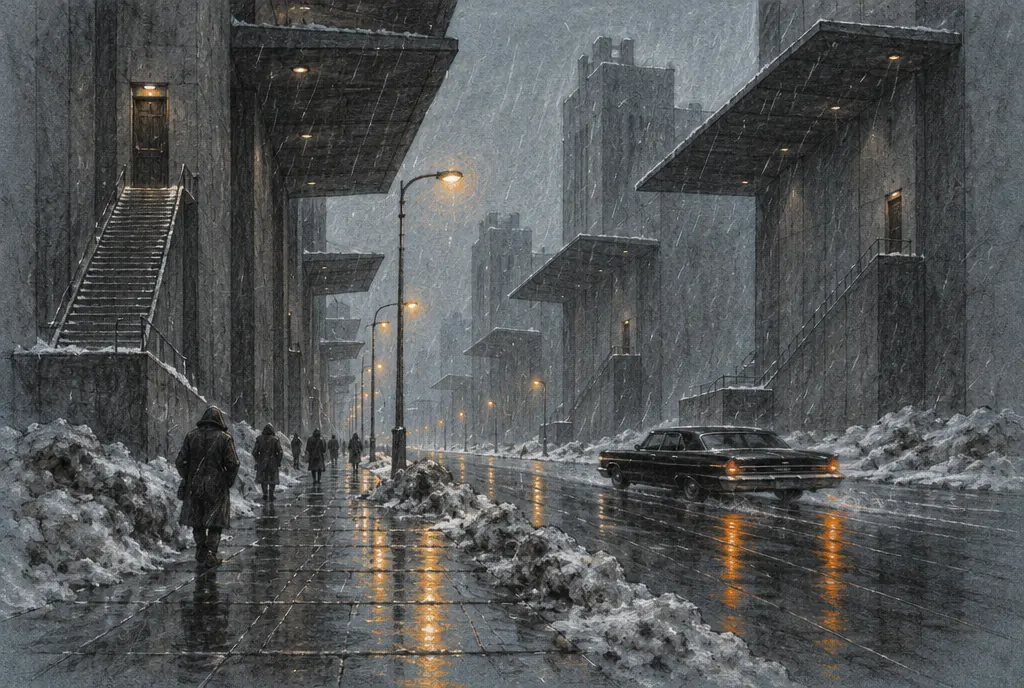
He wakes in a hospital where every object down to his bedshirt is embroidered with the name of its Commensality. In Orgoreyn nobody has a land-name and everybody has papers, and “Behind every man in Orgoreyn comes the Inspector.” Without papers he is nobody. With them he is a digit, a registered unit, and the Inspector’s words for his future, permanent residence, sound to him like skull-words. He loads landboats to Mishnory, works in an ice-house, and sleeps on stinking Fish Island through a summer when the heat never drops below sixty. At last he makes the calls he has put off for three months. The Commensal Yegey, one of the Thirty-Three who rule Orgoreyn, finds him shirtless in a wash-house, and a month later, on the rainy evening of the last day of summer, sits him down with fat Obsle, a needle hidden in a heap of grease. They want to know why he did what he did in Sassinoth, and he tells them he had his eyes on the stars and did not watch the mud he walked in. They fear Tibe, who will make Karhide a second Orgoreyn within a year, and Obsle sweats at night over a foray of fifty million souls. The Envoy, Estraven tells them, brings the end of kingdom and commensality alike in his empty hands. How can Gethen treat with a union of eighty worlds, he asks, except as a world? Lines drawn on the earth make no boundaries now; the border is the line the planet makes in circling its sun. The Envoy has asked leave to enter Orgoreyn. Yegey, biting a fingernail delicately, says the request is under consideration.
Before Genly, before any of this, there were the Investigators, who came quietly and reported. One of them, Ong Tot Oppong, a woman of Chiffewar, wrote the field note on which everything else rests. Gethenians, she thinks, were an experiment of the old Hainish colonisers, abandoned in an interglacial. For twenty-one or twenty-two days of a twenty-six-day cycle a Gethenian is in somer: latent, a perfect androgyne, neither one thing nor the other. Then comes kemmer. In its first phase the drive controls the whole personality and yet cannot act alone. In the second, the touch of a partner in kemmer tips one of them towards male and the other towards female, and nobody chooses which. For two to five days they are wholly one sex, and then, unless a child is conceived, they are nobody’s sex again. The mother of several children may be the father of several more. So everyone between seventeen and thirty-five may be tied down to childbearing, which means nobody is tied down by it the way women are elsewhere; and, she adds, nobody here is quite so free as a free male anywhere else. She writes the rest as things to consider. There is no Oedipus on Winter. There is no rape, because coitus is possible only by mutual invitation. There is no division of humanity into strong and weak halves, owner and chattel, and the whole tendency to dualism may be lessened here. There has never been a war, though Gethenians kill one another readily by ones and twos and never by thousands. Whether that is the sex or the cold she cannot say, only that here man has a crueler enemy even than himself. Her warning to the Mobile who would come after her is the part Genly should have read twice.
They are not neuters. They are potentials, or integrals. Lacking the Karhidish “human pronoun” used for persons in somer, I must say “he,” for the same reasons as we used the masculine pronoun in referring to a transcendent god: it is less defined, less specific, than the neuter or the feminine. But the very use of the pronoun in my thoughts leads me continually to forget that the Karhider I am with is not a man, but a manwoman. The First Mobile, if one is sent, must be warned that unless he is very self-assured, or senile, his pride will suffer. A man wants his virility regarded, a woman wants her femininity appreciated, however indirect and subtle the indications of regard and appreciation. On Winter they will not exist. One is respected and judged only as a human being. It is an appalling experience.
Ursula K. Le Guin, The Left Hand of Darkness, Ace, 2019, p. 101
Genly spends the summer in the east doing an Investigator’s work, at a Clan-Hearth called Gorinhering that has stood four thousand years above the fogs of the Hodomin Ocean. The stranger who comes unknown is a guest here; your enemy is your neighbour. He never sees a Karhider strike a child. Then the Palace Bulletin announces that Argaven expects an heir of the body, and the old men cackle, because the king is too old for it. The king was pregnant. Genly decides that the Domains are Karhide and nothing could ever unite them, and he is, he says, wrong. Back in Erhenrang the king is in seclusion and Pemmer Harge rem ir Tibe is Regent, orating on the radio about Truth and the veneer of civilisation, throwing shifgrethor away on purpose to rouse fear. There is no veneer, Genly thinks. Civilisation and primitiveness are degrees of the same thing, and “If civilization has an opposite, it is war.” Tibe, lacking a new religion, needs a war to make a nation out of a family quarrel. A foray at Sassinoth kills nine, and the bodies go into the river Ey, and a new look of anxiety appears on faces in the street. Estraven’s old kemmering, Foreth rem ir Osboth, asks Genly to carry Estraven’s money to him, and corners him with the charge that his mission is immoral. Genly answers that “the shortcomings are in the messenger, not the message,” and takes the money.
Permission to enter Orgoreyn arrives suspiciously fast. He crosses the Ey at Siuwensin, where an Inspector takes his passport and issues him a permiso for a supper of kadik-porridge, and wakes to the village burning around him in a foray from across the river. Barefoot in the stubble with the ansible in his pack, he is herded with the refugees into a stone barn by farm-police with sonic guns. Better to be naked, he learns, than to lack papers in Orgoreyn. Then a hurried person in red says, “Please come this way, Mr. Ai,” and he exists again. A car, a new passport, and three days at twenty-five miles an hour through fenceless grainlands bring him to Mishnory, a city built for winter and not for sunlight. Its people seem to him colourless, steady, subdued. He likes them. His host, Uth Shusgis, grabs both his hands and shouts Ambassador and runs him a hot shower, his first on this world, and Genly, in gaudy red Orgota finery, thinks: long live comfort. Here is a country ready to enter the Ekumenical Age. At supper at the Commensal Slose’s he finds that he is a key, and that the Commensals are deciding which door he opens. Saying the word ghost, he looks to his right and sees one: dark, in dark clothing, still and shadowy, Estraven at his elbow, “the specter at the feast.” The thought comes to him that Estraven brought him here. He had.
At Gorinhering they tell the story of Estraven the Traitor, and in it the name Therem comes back and back. Before Karhide was one kingdom the Domains of Stok and Estre fought three generations over the scarce land around Icefoot Lake in Kerm. One thaw Arek, heir of Estre, went through rotten ice hunting pesthry, and strayed in glacier fog to a lone house in the thore-trees. There a stranger stripped his ice-stiff clothes and warmed him naked between furs with his own body. “Did you warm me back to life in order to kill me, Stokven?” Arek asked, for the stranger was Therem of Stok, and the answer was no. They laid their hands together and the palms matched finger by finger, like the two hands of one man. They were mortal enemies, and they vowed kemmering, which in Kerm Land is a vow never broken. Men of Stok came and stabbed Arek dead across the hearth. In deep winter a skier left a fur bundle with the warder of Estre, saying only that this was Therem, the son’s son of Estre, and was gone like a rock skipping over water. The old lord saw Arek in the child and raised him and named him Therem, a name Estre had never used. Grown, and named heir, that Therem was ambushed on the lake by his hearth-brothers, killed three of them, and crawled bleeding to a hut on the east shore. A man came in and bound his wounds and said that he was Therem of Stok. The same question was asked, and the same answer given, and the palms matched. When he became Lord of Estre he ended the feud by giving half the disputed land to Stok. For that, and for the deaths of his hearth-brothers, he was called Estraven the Traitor. “Yet his name, Therem, is still given to children of that Domain.”
On the morning of the first real snow the house-phone bleats and a voice says, “Therem Harth here.” Genly hands over the money standing up, will not meet his eyes, fiddles with the radio, and knows it for a humiliation while he does it. Estraven answers in Orgota, because banished men should never speak their native tongue; it comes bitter from their mouths. He says one thing before he goes: that Genly is the tool of a faction, and should find out what the enemy faction is. From the window Genly watches him walk coatless down the street, in that minute the only thing alive in all Mishnory. At lunch at Yegey’s, over eighteen dishes of sube-eggs and breadapple, Obsle names the company for him. Mersen is Tibe’s spy, Gaum is an agent of the Sarf, and Genly has no idea what the Sarf is. The news is that Argaven’s child was born this morning and died within the hour. They ask what the Ekumen is, and he tells them: not a kingdom, not an empire, a Household, a very large school, co-ordination without laws. Then Gaum, handsome as either sex, asks where his ship is. Genly tells them the thing he kept even from Estraven: the Star Ship is in orbit now, with eleven more of his people asleep in it, days away if he calls. Obsle and Yegey want it brought down here, in Orgoreyn, so that Orgoreyn drives the sledge. Riding home through rain that melts the snow, Genly asks Shusgis what the Sarf is. It is a bureau of the Internal Administration, which is to say police; and Harth, as they call Estraven here, is Yegey’s dependent, pulled out of a fish cannery, a traitor pure and simple. The Orgota seem to Genly insulated, not cold, insipid, a little unreal. “It was, I thought, as if they did not cast shadows.”
Estraven counts votes for Obsle through the freezing nights of Susmy and writes to himself at the day’s end. He works mornings in a plastics factory, making boxes of a use he never learns. He takes up again the disciplines of the Handdara, the untrance and the dothe, and fasts badly, and writes to his son, and feels his dead brother Arek near him. Of the Envoy he writes: “His obtuseness is ignorance. His arrogance is ignorance.” On the Mishnory road he works out that to oppose a thing is to maintain it, and that the Handdara break the circle instead. The Sarf owns every ear in Orgoreyn, the Commensals hide the Envoy by showing him, and Obsle is afraid. Gaum, in a kemmer the Sarf induced for the purpose, asks Estraven to be his kemmering, and is sent next door to the public kemmerhouse. Genly’s speech to the Thirty-Three is played on tape and heckled as the work of a Karhidish agent and a sexual deviant. Estraven, who threw away power and money and friends for this, writes: “What a fool you are, Therem.” The ansible proves nothing to men who have decided not to believe. In the street he stops the Envoy and tells him to call his ship down now, and Genly says he cannot rely on what Estraven says. To learn which questions are unanswerable, and not to answer them, Estraven writes, is the skill most needed in times of stress and darkness. He closes the entry on two sentences: it is my fault; he has done nothing right.
The Orgota have a newer faith, and its scripture is short. Meshe is the Centre of Time. He saw everything at once, when he was thirty and thirty years after and ten thousand years on. He saw a man kill his hearth-brother for one carven stone, and the grave where the murdered man would lie, every raindrop and every star and the darknesses between them, all of it bright in his Eye. A poor man dug up a king’s hoard and Meshe wept. A hemmen-tree with a thousand twigs hides one leaf in its own darkness, and Meshe plucked it. Answering the Question of the Lord of Shorth, he saw all the sky as if it were one sun, with no darkness in it. “Darkness is only in the mortal eye, that thinks it sees, but sees not,” the Sayings run, and those who call upon the darkness are spat out of the mouth of Meshe. “One center, one seeing, one law, one light.” The Handdara, who praise darkness, are the people these Sayings were written against.
Obsle, Yegey and Slose are all out of reach at the temples for a Yomesh Solemnity on the night the Sarf comes for Genly. He is taken before dawn to Kundershaden, the old prison of Mishnory, where the thing behind the words is in front of him at last. He is strapped down, stripped, and injected, and four or five days go out of his life. He wakes naked in a windowless steel truck with twenty-five strangers, going west. A man who was clubbed in the belly dies that night with his head on Genly’s knees, and the blood dries on Genly into a stiff brown garment that he wears for clothing. At dawn they scream out of the slit that there is a dead body, and pound the walls, and nobody comes; the corpse rides with them to the end. One jug of water a day comes in through the slot. At night, by the mesh, snow is falling, and to stay sane Genly draws up lists of the Karhidish words for snow, sixty-two of them, putting each one he remembers in its alphabetical place. Each night the twenty-five press into one entity for warmth, and Genly, with an old man and one with a cough, is put at the centre without asking, because they are the weakest. He has the words for what that is.
There was kindness. I and certain others, an old man and one with a bad cough, were recognized as being least resistant to the cold, and each night we were at the center of the group, the entity of twenty-five, where it was warmest. We did not struggle for the warm place, we simply were in it each night. It is a terrible thing, this kindness that human beings do not lose. Terrible, because when we are finally naked in the dark and cold, it is all we have. We who are so rich, so full of strength, we end up with that small change. We have nothing else to give.
Ursula K. Le Guin, The Left Hand of Darkness, Ace, 2019, pp. 182–183
Then the truck climbs passes nine thousand feet up, where lips freeze to the mesh, and a man who gets no water for two days dies. On the fifth morning twenty-four crawl out into the glare, weeping, and drink from a wash-trough. This is Pulefen Commensality Third Voluntary Farm, in a thore-forest on the northwest edge of the inhabited world, where nothing is wasted and the lights never go off. The prisoners are drugged out of kemmer, sexless as steers, and Genly’s report says of them: “They were without shame and without desire, like the angels. But it is not human to be without shame and without desire.” Every fifth day he is questioned under drugs that build up in him like a poison, and between sessions he plans speeches in which the Inspector turns into Faxe. Left on a shelf beside a dying carpenter named Asra, he tells him of a world where people fly, and are in kemmer all the time. Asra says one is born into one’s world and things are as they are. Genly says he was not born into it; he came to it; he chose it. We none of us choose, Asra says, and dies. Then they carry Genly to be examined, and the dark comes down.
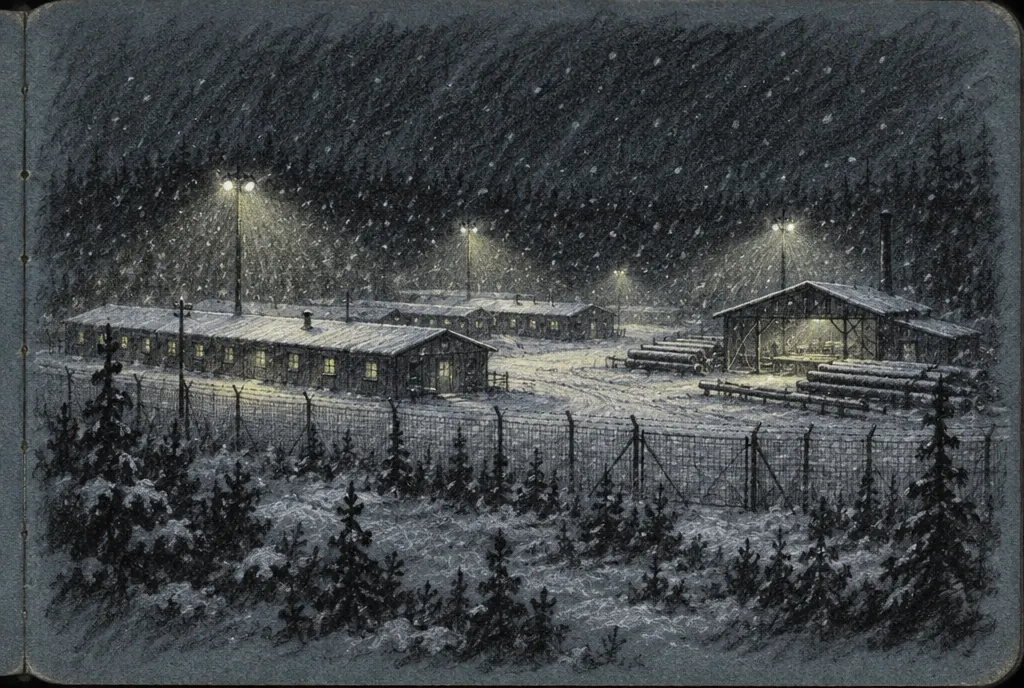
Estraven’s friends are gone from Mishnory, and the Envoy with them, so he goes to Shusgis and, trading on his own traitor’s name, frightens out of him where Genly is. He leaves the city on altered papers as a loader on a caravan going north and west. He has seen a Voluntary Farm, and what he saw lies heavy on him: the Envoy, who wore a coat when the weather was in the thirties, will not survive a winter in Pulefen. At Ethwen he buys a trapper’s licence, skis, snowshoes and traps, and goes upriver with an old hunter named Mavriva. He drops out at Turuf, caches the gear, buys furs and a tent and a sledge and a Chabe stove, and waits for the snow. Then he walks in through the front gate of the Farm as Thener Benth, a paroled guard. “Nothing easier than getting into prison,” he writes. From behind the bake-ovens he steals the cook’s gun, which stuns and does not kill. On the barracks shelves he finds the one body too long to hide, a dark face like a skull, with a mat of fibrous hair. The luck that turned at Ethwen turns the world under his hand. He never had a gift but one, to know when the great wheel gives to a touch.
On the late watch he summons the dothe, the strength of the Handdara that is paid for afterwards in sleep, stuns the Envoy for a hundredth of a second, and carries him out past the guards as one more corpse. He cuts the fence at a switch, and when the floodlights come on he is up the unfrozen stream with Genly strapped under the sledge-load like cargo. Two skiers accept the Mavriva story; one of them was his own watch-mate. He holds the dothe far past its hour, to the cache, to the tent, to broth and the cleaning of Genly’s sores. Then the thangen takes him, the dark sleep that pays for it, under the first great snow. Genly wakes in terror and fights him, babbling in a tongue from no world here, and then says, in a weak, amazed whisper, “Estraven?” When they are both awake, Genly asks by the ice-knife what all this was for. Estraven tells him the whole of last spring: Tibe, the king, the Commensals who sold the Envoy to the Sarf; that he was after what Genly was after, the alliance, all along. And he says the thing that cuts deepest. “I am the only man in all Gethen that has trusted you entirely, and I am the only man in Gethen that you have refused to trust.” Genly says he is sorry. Then Estraven asks to be taught the thing Faxe refused: mindspeech.
Genly wakes at peace in a tent half buried in snow and watches Estraven asleep, and for the first time sees him as he is. They have two choices: hide in the forest till spring, or go home to Karhide over the Gobrin Ice, eight hundred miles with winter coming down. Genly privately calls it perfectly insane, and would rather die attempting it than go back. Nusuth. Estraven comes back at nightfall next day like Father Christmas with a huge sooty sack, having stolen food in Turuf, and rations it by the pound, a pound a day apiece, and does the sums in his sleep. They cannot call the ship: Obsle holds the ansible, and the nearest big transmitter is four hundred miles south. If only he had known, Genly writes of the night of his arrest, that the game was already over. Day one: fifteen miles with a three-hundred-pound sledge over soft bessa snow, and Genly believes. In the tent Estraven asks what love of one’s country is, and whether it is hate of one’s uncountry. He knows people, towns, farms, how the autumn sun falls on a certain plowland in the hills, and sees no sense in drawing a line around that and ceasing to love where the name stops. He says Harth, and Genly says Ai, and they agree that first names are for hearth-brothers, or friends, which is not what they are. Not lovers, either.
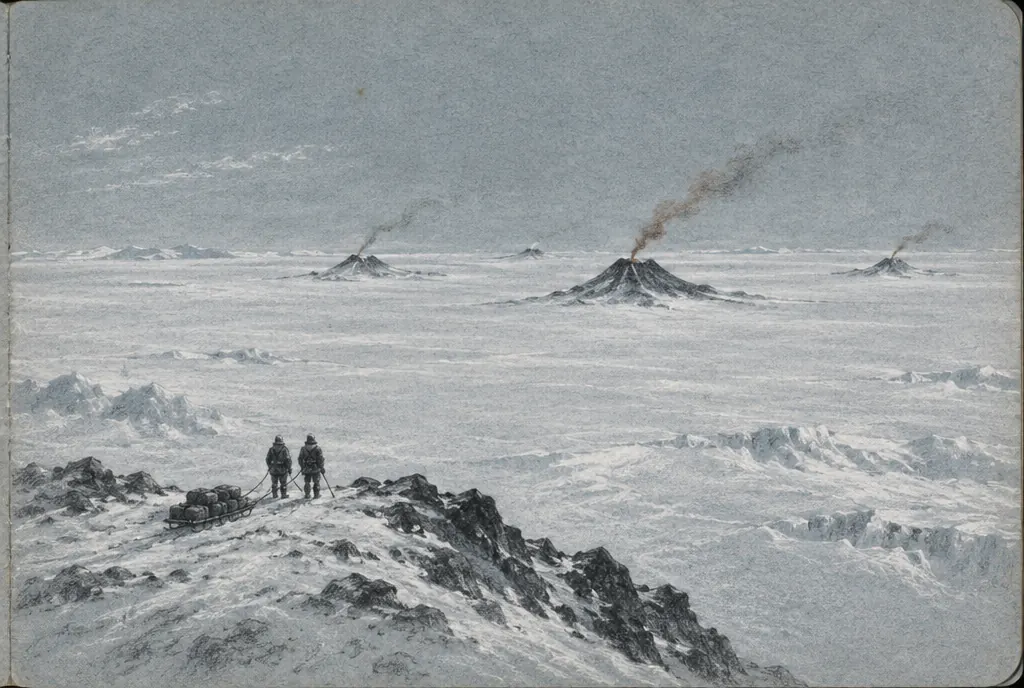
Through the Tarrenpeth forest they make twenty miles a day in bright winter. Estraven snares pesthry and comes back with blood on his hands, saying only that they need protein. Then rain, wheels on the sledge, nine miles, six miles, and Genly’s gut gives out, and Estraven orders him to lie down. Hauling together, Genly has to hold in his strength: a stallion in harness with a mule, he thinks. That night he decides to drop his manly pride as Estraven has dropped his shifgrethor. On the ninth day they climb out of the rain into a pass of the Fire-Hills, and the Gobrin Ice opens below them, white to every horizon with cindercones smoking on it. It is a desolation that says in enormous letters of black and white, death, death, right across a continent. Estraven stands in harness beside him and says, “I’m glad I have lived to see this.” Genly feels the same, and writes the line the whole journey rests on: “It is good to have an end to journey towards; but it is the journey that matters, in the end.” They stow the wheels, put on their skis, and take off down into it. The sledge pulls like a feather, and they laugh with joy.
Light is the left hand of darkness
and darkness the right hand of lightTormer’s Lay · the Ice from here on
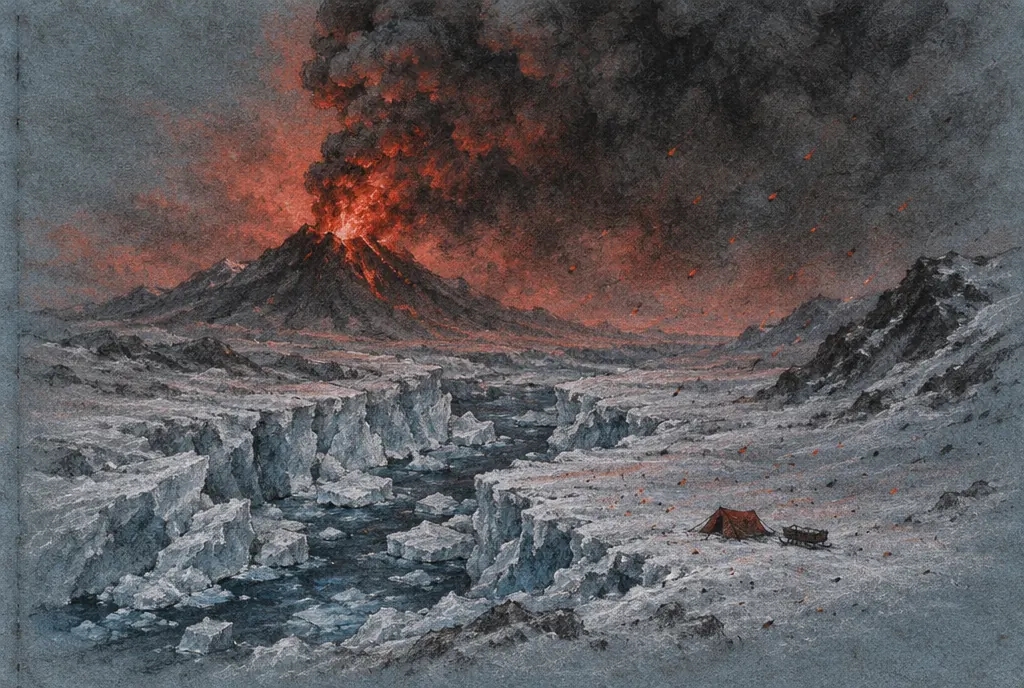
Odyrny Thern, three days down from the pass, and Estraven writes in the tent while the Envoy asks what he writes. Genly’s own parents, it comes out, are seventy years dead; he is a timejumper, born on Earth a hundred and twenty years ago. Genly says he thought himself an exile. “You for my sake—I for yours,” Estraven says, and laughs, a slight cheerful sound in the heavy silence. They lose three days on a basalt spur among fumaroles and valleys of stone, and choose the glacier between the two volcanoes, Drumner and Dremegole. Genly teaches him go with moraine pebbles while a blizzard buries the tent. Sixty pounds of food are gone in fifteen days, the Orgota map is wrong, Estraven wrenches a heel, and the sledge’s axle bends on the ice. Then Drumner erupts and the whole world goes dull red, and sleet falls that tastes of smoke, and cinders patter down with the snow. “Praise then Creation unfinished!” Estraven writes, the Handdara’s grace. He looks at the Envoy, frail and frostbitten and twice as strong as any Gethenian, ready to stake his life on a precipice, and sets down a fierce impatient courage, and an old saying: “Fire and fear, good servants, bad lords.” Three climbs fail and a quake nearly drops them. On the twenty-third day a cinder-paved road opens onto the Gobrin, the plateau itself, and they turn east, homeward. Estraven bellyslides fifteen feet on the ice while Genly laughs in harness under a moon dull as dry blood.
Two hundred and fifty-four miles logged and little nearer Karhide, and now Estraven is in kemmer. The Envoy, he has learned, is always in kemmer, as all his race are, and “We are equals at last, equal, alien, alone.” Tormer’s Lay has been in Estraven’s head all day, and that night in the tent he says it aloud.
Tormer’s Lay had been all day in my mind, and I said the words,
Light is the left hand of darkness and darkness the right hand of light. Two are one, life and death, lying together like lovers in kemmer, like hands joined together, like the end and the way.
My voice shook as I said the lines, for I remembered as I said them that in the letter my brother wrote me before his death he had quoted the same words.
Ursula K. Le Guin, The Left Hand of Darkness, Ace, 2019, pp. 251–252
The Orgota have a creation myth that was old before Meshe. In the beginning there was nothing but ice and the sun. The sun melted a crevasse in the ice, and in it three shapes of ice said I bleed, I weep, I sweat. They made the earth and the seas and the beasts and thirty-nine men asleep, and then melted into the milk that woke them. Edondurath woke first, and his head split the sky, and in his fear he killed his brothers, all but one. He built a house of their frozen bodies and waited inside it for the last brother, who had escaped. Each day one of the corpses asked, does he burn, and the others answered with frozen tongues, no, no. Then Edondurath went into kemmer in his sleep, and the corpses cried, he burns, and the youngest brother came into the house of bodies and lay with him, and from Edondurath’s womb the nations were born. Each of them trailed a piece of darkness behind it, because they were born in the house of flesh, and death follows at their heels. They are in the middle of time, the myth says, and at the end shadow eats light.
Genly still falls asleep, long afterwards, inside the memory of that tent, the Chabe stove a heart of warmth between them. Not happiness, which is earned; the thing you cannot earn and cannot keep and often do not recognise at the time, joy. The days are hunger and cold perpetually incredible. The needle falls eighty degrees in a minute and stops somewhere between zero and sixty below. Buckles burn like red-hot metal. An eye freezes shut and is thawed by Estraven’s breath and tongue; a gasp of air is a lungful of razors; the sastrugi stand four feet high. They do it over for fifty days. Genly hates Estraven’s methodical demands, made in the name of life, and warms to him, and sees for good one night that the person beside him is a woman as well as a man, and accepts it. Estraven’s kemmer comes. “I must not touch you,” he says, with extreme constraint, and Genly understands, and agrees completely. Out of that tension admitted and not assuaged rises a friendship so needed and so proved that it might as well be called love. It comes, Genly writes, not from their likeness but from their difference, which is itself the bridge, the only bridge, across what divides them. They touched in the only way they could. He does not know if they were right.
Over sugared kadik-porridge he offers to break the Law of Cultural Embargo and teach Estraven mindspeech, as a gift and not a debt. Estraven cannot learn it. Sending to a man who cannot receive, Genly begins to feel like an atheist praying. Then one night, half asleep, he bespeaks him by his name, Therem, and Estraven sits bolt upright in the dark and cries out, “Arek! is that you?” The voice he heard inside his skull was his dead brother’s. Arek Harth rem ir Estraven, his full brother, a year older, who would have been Lord of Estre, dead fourteen years: the one Estraven left home for, the vow that was never spoken. This is more terrible, he says, than he had thought. When Estraven bespeaks him in his turn, the bond is austere, and shows them the extent of the darkness between them rather than crossing it. Genry, the inner voice says, because that is how it comes out. In an east blizzard Genly turns his back to get his breath, and when he turns again Estraven and the sledge are gone. He is deaf and alone in a universe of stinging grey, and he mindcalls frantically, and from right under his hand, kneeling, Estraven says, “Come on, give me a hand with the tent.” Genly never mentions his minute of panic. No need to.
“With luck we shall make it, and without luck we shall not,” Estraven says, smiling with a mouth sorely chapped and cracked, as he said at the start. He has thought out the ending. When they reach Karhide the Envoy must call his ship down at once, before Argaven’s shifgrethor can turn against it, and Estraven himself must stay what he is, Estraven the Traitor. He asks why one man was sent and not a fleet, and Genly answers: not We and They, not I and It, but I and Thou. The Ekumen is not a body politic but a body mystic, and it works one person at a time. In the Unshadow, the white weather that casts no shadow and leaves no track, they ski blind with their eyes open and fall over snow they cannot see. On the sixty-first day the Esherhoth Crags loom out of the void, and they turn south of east, towards the sea.
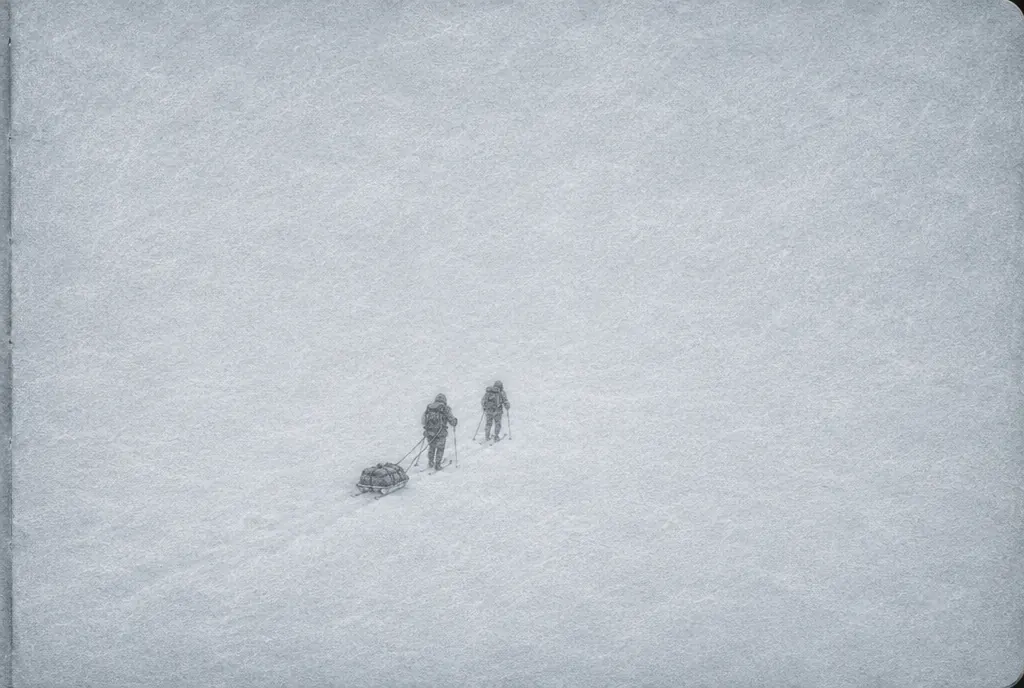
Off the plateau the ice is rotten. In sunlight they haul over blue abysses while bits of ice fall below them with a vast, faint, delicate music. In white weather a snow-bridge gives and Estraven drops into a crevasse, and Genly’s weight alone holds the sledge. Hauled up, he whispers that it was blue, all blue, towers in the depths. They probe forward step by step through nothing, and Genly’s tears freeze his eyelids together, and he says he is afraid of falling, and they camp early. They turn east for Guthen Bay, to come down into Karhide on the sea-ice. Fear, Estraven says, is useful, like darkness, like shadows; and then he says the thing that makes Genly reach for his notebook.
“It’s queer that daylight’s not enough. We need the shadows, in order to walk.”
“Give me your notebook a moment.”
He had just noted down our day’s journey and done some calculation of mileage and rations. He pushed the little tablet and carbon-pencil around the Chabe stove to me. On the blank leaf glued to the inner back cover I drew the double curve within the circle, and blacked the yin half of the symbol, then pushed it back to my companion. “Do you know that sign?”
He looked at it a long time with a strange look, but he said, “No.”
“It’s found on Earth, and on Hain-Davenant, and on Chiffewar. It is yin and yang. Light is the left hand of darkness…how did it go? Light, dark. Fear, courage. Cold, warmth. Female, male. It is yourself, Therem. Both and one. A shadow on snow.”
Ursula K. Le Guin, The Left Hand of Darkness, Ace, 2019, pp. 286–287
Estraven goes on with his sums: two-thirds rations, a three-day blizzard, mindspeech in the tent that will not listen. Then full rations, seven days’ food left, and they go off the edge of the world onto the frozen Bay and leave the sledge behind, a bit of refuse in the torment of ice. “It did well,” Estraven says. At forty below, flattened by a gale off the valleys, they make landfall. On the eighty-first day, eight hundred and forty miles from the tent in the forest, they walk into the hot-shop at Kurkurast and ask the hospitality of the Domain, and it is Estraven who says, “Will you look to my friend?” The villagers give with both hands, no doling out, no counting. Honesty, at the edge of the habitable, is as needed as food, and they do not lie; and the king, Estraven tells the cook, shortens no man’s shadow, though he may try. He sits barefoot by the peat fire, gaunt and scarred, and lays the plan. South to Sassinoth, where there is a transmitter; the Envoy calls his ship; Estraven goes back into hiding, or into Orgoreyn. Genly wants one condition first, that Argaven revoke the exile. Tell your ship to come down, Estraven says. The easy days on the road are the hardest, because the saga belonged to the Ice. At Sassinoth a farmer named Thessicher, whose farm Estraven once bought for him, says stay with me, and sells the Chabe stove for them. In ten minutes at the College transmitter the ship is signalled.
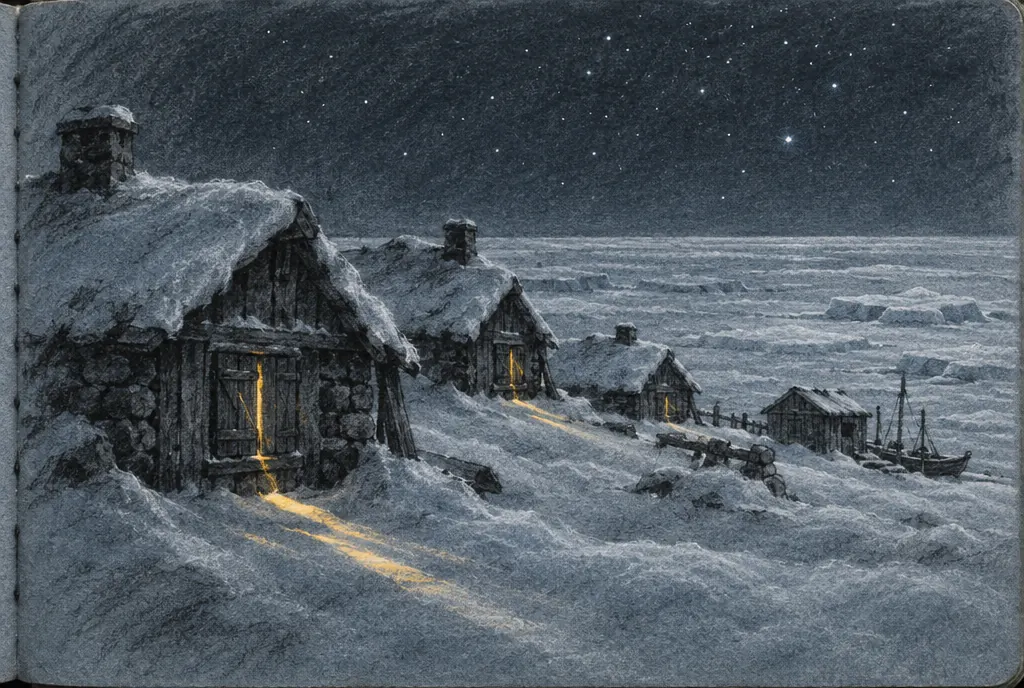
At dawn Estraven comes skiing hard towards him: Thessicher has used his wireless, and Tibe has put a price on Estraven. He asked too much of the man, Estraven says, and “strained a small spirit too far.” They flee for the Orgota border, two strokes of shadow on a sunlit white world. They lie a day in a dell of hemmen-trees for warmth, and Genly says the lay over in his head. At twilight, with the red-topped poles of the fence in sight and nothing moving at it, Genly sees too late where Estraven is going. Therem, wait. He skis straight into the foray guns.
He was dying when I got to him, sprawled and twisted away from his skis that stuck up out of the snow, his chest half shot away. I took his head in my arms and spoke to him, but he never answered me; only in a way he answered my love for him, crying out through the silent wreck and tumult of his mind as consciousness lapsed, in the unspoken tongue, once, clearly, “Arek!” Then no more. I held him, crouching there in the snow, while he died. They let me do that. Then they made me get up, and took me off one way and him another, I going to prison and he into the dark.
Ursula K. Le Guin, The Left Hand of Darkness, Ace, 2019, p. 305
Genly is held at Sassinoth in the Tower of the Lords-Elect, with a fire and a radio and a door he cannot get up to shut. A maternal young physician tells him to lie down like the rivers frozen in the valleys in winter, and lie still, and wait. In fever he is back in the truck, and the cold one by the door is the traitor who deserted him. Then he knows that Estraven could have stopped, that he saw the guards and ran right into the guns. When he says it the physician will not hear it, because to Karhide suicide is the one unforgivable crime. The agreed silence does its work. Genly’s coded message goes to the king, Estraven’s part in it is known without being said, and in ten days two governments fall. Obsle’s Open Traders take the Thirty-Three in Mishnory, and in Erhenrang Tibe resigns on the news of Estraven’s death. Argaven summons him. Faxe is a councillor now, in silver. “It had taken Estraven six months to arrange my first audience,” Genly writes. “It had taken the rest of his life to arrange this second one.” The king is old, like a man who has lost his son, and no longer afraid of the Envoy, and wants to know why the devil Estraven cheated him. He served mankind, Genly says, which is a partial truth. Karhide first, the king says, Karhide first; and the ship was signalled before the king was asked precisely to force his hand. Even I betrayed him, Genly thinks. The exile is not revoked yet.
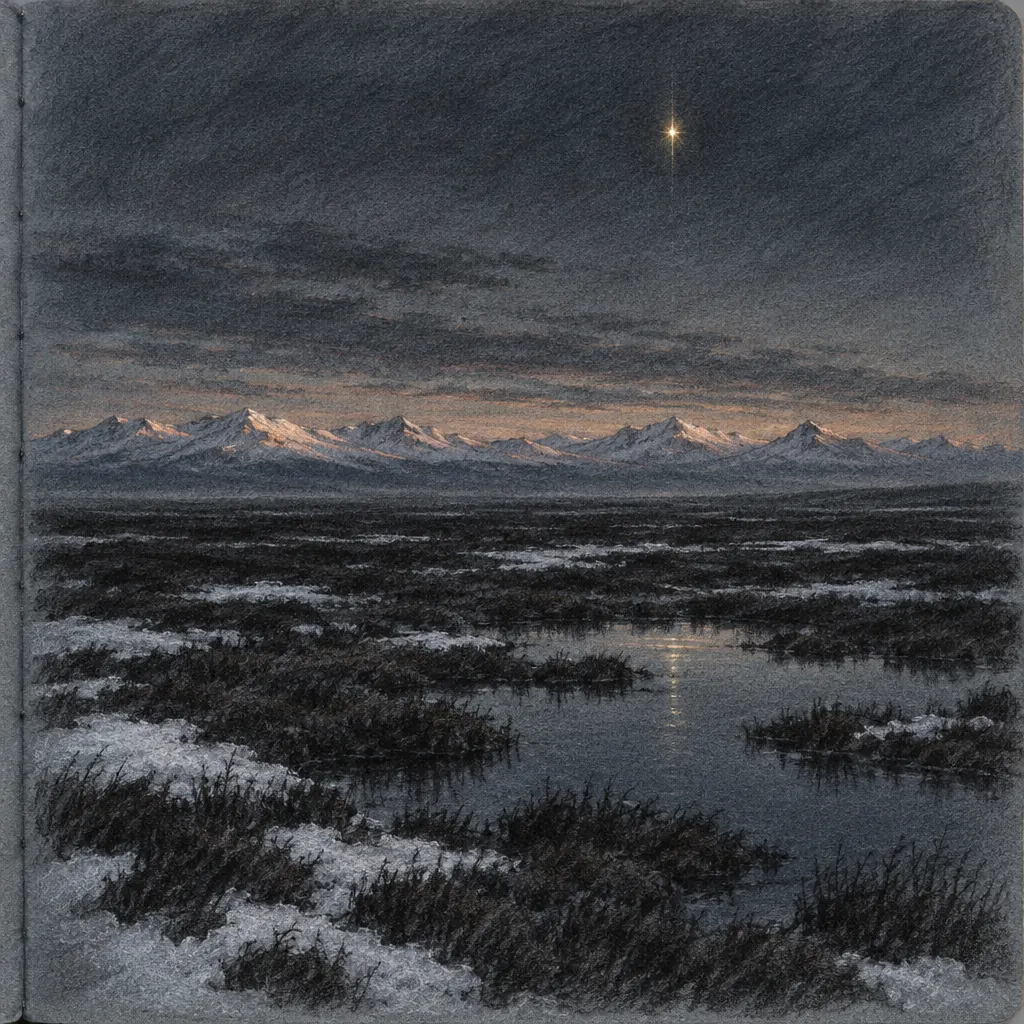
At twilight on Athten Fen the crew, coming in, must see the terminator lying clear across the Great Continent and the peaks of the Kargav still in sunlight, a chain of stars. From the bog, looking up, Genly and Faxe see the one star descending. The ship comes down in a roar and glory and sits cooling over the lake it has melted, which is already refreezing, a great, delicate fish balanced on its tail, dark silver in the twilight of Winter. Faxe says that he is glad he has lived to see this, which is what Estraven said when he looked at the Ice. Out of the ship come Genly’s own people, a woman’s voice first. After so long they look to him like great strange animals, apes with intelligent eyes, all of them in rut, in kemmer; it is the young Karhidish physician, coming into his room afterwards, whose face looks human. In spring, with no hurry, there being seventeen years to any other ally, he walks east and south into Kerm Land, to Estre, a hearth of grey stone in the wind above Icefoot Lake, with the glare of the glacier high on the hills to the south. The door is opened by a grave young man of nineteen or twenty, and Genly tells him he was a friend of Therem of Estre. Children play hide-and-seek in the long corridors, and a fat little one of five or six, hiding, grabs the young man’s hand and squeaks his name: Sorve. Esvans, the old lord, erect in a rolling-chair, has a face worn down by time like a rock in a torrent. He takes the journals, and names the young man who let Genly in: Sorve Harth, heir of Estre, his son’s son. Genly says the king will recant, that Therem was no traitor, and asks what it matters what fools call him. “It matters,” the old lord says. And the boy, Therem’s son, stammers out the two questions the whole report has been trying to answer: “Will you tell us how he died?—Will you tell us about the other worlds out among the stars—the other kinds of men, the other lives?”
The Left Hand of Darkness was published in 1969 and won both the Hugo and the Nebula, the first of Le Guin’s novels to take both and not the last. Readers argued from the start about the pronoun. Le Guin wrote he for people who are neither, and said later that she felt justice was on the side of those who objected. In 1975 she reprinted a short story set on Gethen with every pronoun changed to she, and she went back to Gethen once more, in Coming of Age in Karhide, for the domestic life the novel never showed. She died in 2018.