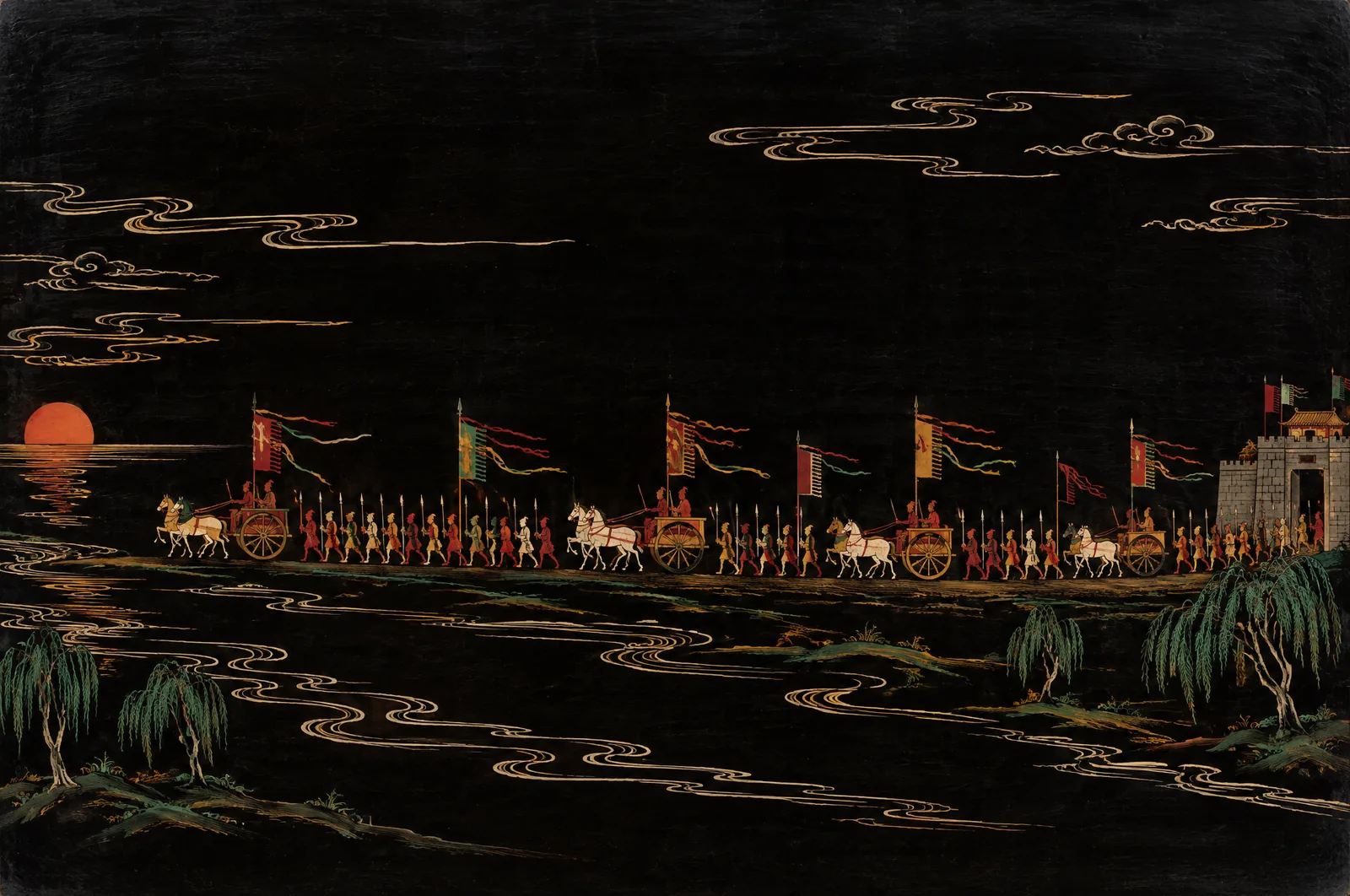
Before anything else there is a dedication. Lionel Giles offers his translation to his brother, Captain Valentine Giles of the Royal Engineers, in the hope that a work two thousand four hundred years old may still hold lessons worth a modern soldier’s consideration.
John Minford opens the 2008 edition by placing the book. It is one of the oldest, shortest and most translated of all Chinese classics, a companion to the Book of Changes and the Daodejing, and a key text of Chinese strategic thought since about the fifth century BC. Napoleon is said to have owned the first French version, made by the Jesuit Amiot in 1782. Mao quoted it in December 1936 on knowing the enemy and knowing yourself. The Royal Air Force was issued a version during the Second World War with a warning not to be misled by Master Sun’s simplicity, and American soldiers in Iraq and Afghanistan are given a copy. Liddell Hart built his doctrine of the indirect approach on it, and the founder of Panasonic ordered all his staff to read it. A Japanese warrior of the eleventh century, Minamoto Yoshiie, saw wild geese rise in disorder from a forest on his line of march, remembered his Sun Tzu, and led his army around the ambush waiting there. Gordon Gekko quotes it in Wall Street. The cult continues.
But what sort of book is it, Minford asks, and who wrote it? Ancient Chinese thinkers did not write books; they jotted sayings on bamboo strips, tied the strips into sheets and rolled them into scrolls. The Art of War is no orderly treatise but a run of gnomic sayings on survival, an ancient book of life, and its author may never have existed. Yet the text is old. In the 1970s bundles of bamboo and wooden strips were dug up at two sites far apart, in Shandong and Qinghai, one of them from the second century BC, and they matched the text handed down across two thousand years. The style belongs to the early Warring States, the killing fields of ancient China, when wandering philosopher-statesmen such as Confucius and Master Sun offered rulers advice. The book has two faces. One is the benign proto-Taoist counsel to move with the energy of a situation rather than against the grain, the principle of the martial arts. The other is colder, close to the Legalists: the way of war is a way of deception. Xunzi protested that a benevolent ruler’s troops cannot be fought with deceit, and a historian of Japan called it the dirtiest form of statecraft. Each reader must find a way through, and Minford offers a Ming writer’s advice: emerge from the mud untainted; understand cunning, but do not use it.
Then he turns to the translator. Lionel Giles was born on 29 December 1875 at Sutton in Surrey, the fourth son of the more famous Herbert Giles, and read Classics at Oxford. He was self-effacing, a backroom boy who quietly wrote his father’s 1910 Britannica entries on China. He entered the British Museum in 1900 and rose to be Keeper of Oriental Printed Books and Manuscripts in 1936. A friend remembered a slight, mild man with a rapt expression who confessed to being a Taoist at heart and liked to sit in his small garden at Abbot’s Langley. His life’s work was the catalogue of some seven thousand manuscripts that Aurel Stein had carried back from the cave library at Dunhuang; the sheets he unrolled and rolled up again, he reckoned, stretched to somewhere between ten and twenty miles. The catalogue appeared in 1957, and he died on 22 January 1958. His Art of War was published in 1910 by Luzac, the old London Orientalist house, ten years after the Boxer siege of the Peking legations, in which his brother Lancelot was decorated for gallantry. This edition prints his work entire for the first time, Chinese text and commentary included, with names in modern pinyin except for Sun Tzu himself. Its one blemish, Minford admits, is Giles’s running, ill-tempered broadside against Captain Calthrop and his flawed translation.
Giles’s own preface, written in 1910, comes next, and the bludgeon is already in hand. Amiot’s so-called translation, set beside the original, is little better than an imposture: it contains a great deal Sun Tzu did not write and very little that he did. The first English version, Captain E. F. Calthrop’s, appeared in Tokyo in 1905 under the Japanese title Sonshi, confessedly impossible without two Japanese gentlemen, and yet excessively bad: omissions, hard passages distorted or slurred over, offences that would not be tolerated in a Greek or Latin classic. Giles explains his method, the text cut into numbered paragraphs and the cream of the native commentary beneath it, and then squares up. Having chosen to wield a bludgeon, he will not cry out at a rap over the knuckles; he has put a sword into his opponents’ hands by giving a reference for every passage; and the worst fate he fears is the one that befell George’s ingenious paradoxes in The Vicar of Wakefield.
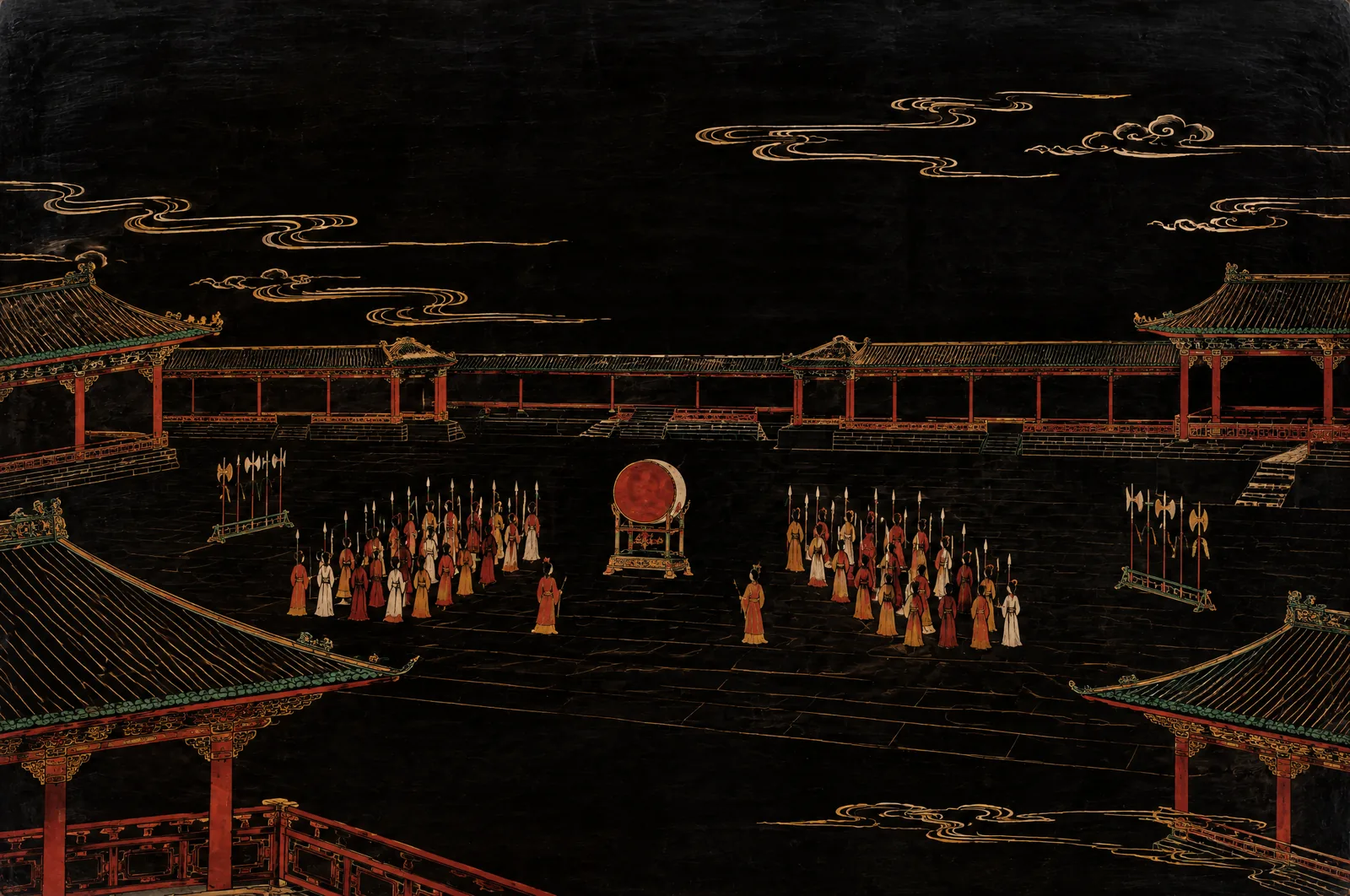
The introduction begins with the historian Sima Qian’s biography. Sun Wu is a native of Qi whose Art of War brings him to the notice of He Lu, King of Wu. The king has read the thirteen chapters and asks for a small test. May it be made on women? It may. A hundred and eighty ladies are brought out of the palace and divided into two companies, each led by one of the king’s favourite concubines, each woman holding a spear. Sun Tzu explains front, back, left and right, sets up the halberds and axes, and to the sound of drums orders a right turn. The girls burst out laughing. If orders are not clear, he says, the general is to blame, and he explains them again. Left turn. More laughter. If orders are clear and the soldiers still disobey, the fault lies with their officers, and he orders the two company leaders beheaded. The king, watching from a raised pavilion, sends down word that he is quite satisfied and that without these two his meat and drink will lose their savour. There are commands a general in the field cannot accept, Sun Tzu replies, has the two beheaded, and installs the next pair. The drum sounds, and the women turn, march, wheel and kneel with perfect precision, not venturing a sound. The king declines to come down and inspect them. The king is fond of words, says Sun Tzu, and cannot translate them into deeds. He is made general all the same, and the historian credits the reign with defeating Chu, entering its capital Ying, and putting fear into Qi and Jin.
Giles then sifts the evidence like a judge. Sima Qian mentions Sun Wu twice more: in 512 BC advising He Lu that the army is exhausted and the descent on Ying must wait, and in 506 advising him to win over the princes of Tang and Cai before the grand attack, after which Wu wins five pitched battles and marches into Ying. He Lu dies of a wound in 496. A descendant, Sun Bin, who had his feet cut off and went on discussing the art of war, crushed his treacherous rival Pang Juan a century later. Cao Cao’s preface to his own edition calls Sun Wu’s the profoundest of all the books on war he has read. The real trouble is the Zuozhuan, the great contemporary chronicle, which never mentions Sun Wu at all, though it records hireling ruffians and his supposed colleagues in detail; a Song scholar concluded that the man was a fabrication and the harem story utterly preposterous. Giles half agrees and adds an argument of his own. The book twice names Yue as the enemy and never names Chu, yet in 512 Chu was Wu’s hereditary foe and Yue a sideshow. So the thirteen chapters were written after the humiliation of Chu in 506, probably in the lull before He Lu’s death, by a seasoned soldier of no great eminence, a subordinate at the taking of Ying rather than its architect, around whom the fame of the book later gathered a legend. There is an irony, he notes, in China’s most illustrious man of peace being contemporary with her greatest writer on war.
The text has its own history. Under the Qin and Han, commanders treated the book as a work of mysterious import and declined to expound it, so Cao Cao’s was the first commentary. In the Song, Ji Tianbao gathered the commentaries of ten writers, and that compilation, long lost, became the ancestor of every text in circulation, until Sun Xingyan, an eighteenth-century antiquarian who claimed descent from Sun Wu, found a copy in the library of a temple at Huayin and produced the standard text that Giles works from. Eleven commentators ride with him. Cao Cao, so famed for the speed of his marches that people still say talk of Cao Cao and Cao Cao will appear, writes notes of such austere brevity that they need a commentary of their own. Li Quan of the eighth century illustrates with anecdotes. Du Mu, a bright star among the Tang poets, had no experience of war but loved discussing it, and summed up the book as practising benevolence and justice while making full use of artifice. Mei Yaochen, a Song poet, is praised for seeing that the sayings were meant for states at war with each other. He Yanxi quotes copiously from the histories, and Zhang Yu, last and lucid, expands Cao Cao so that his terse notes can be understood at all. Four of them flourished within a few years of each other, because after a long Song peace the frontier generals were beaten time after time in the rebellion of 1038, and the court went looking for men who knew war.
Giles collects the book’s admirers, the generals Han Xin and Yue Fei among them, and a critic who ranked its terse, practical sayings above the Analects and Mencius, which the great Zhu Xi half allowed while warning that such talk feeds a ruler’s appetite for reckless militarism. Then come the apologies for war. China built the Great Wall and kept a standing army on its frontier centuries before the first Roman legionary reached the Danube, yet its literature from Laozi down is intensely pacific, so Giles translates the rare voices for the other side. Sima Qian says that every animal with blood in its veins and horns on its head fights when attacked, how much more man, and that scholars barking stale formulas about virtue will bring invasion and dishonour. Du Mu calls war a form of punishment, with no intrinsic difference between flogging in the marketplace and cutting off heads in the field. Zhu Xi notes that Confucius said he had never studied armies, yet used force at the meeting at Jiagu and once declared that if he fought, he conquered. Sun Xingyan adds that Confucius himself broke an extorted oath and left Song in disguise, so who will arraign Sun Tzu for a want of honesty? A bibliography of the other old treatises closes the front matter, with the warning that only the oldest keep to things strictly military before the science of war is blended with divination and magic.
The thirteen chapters open in the temple, before a single chariot has moved. War is of vital importance to the state, a matter of life and death, a road to safety or to ruin. Five constant factors govern it. The Moral Law, which Giles reads as something like the Tao in its moral aspect, puts the people in complete accord with their ruler so that they will follow him regardless of their lives. Heaven is night and day, cold and heat, times and seasons. Earth is distances, dangers, open ground and narrow passes, the chances of life and death. The Commander stands for wisdom, sincerity, benevolence, courage and strictness. Method and discipline are the army’s subdivisions, the ranks of officers, the roads by which supplies arrive and the control of spending. From these come seven comparisons, from which sovereign has the Moral Law to which army is more constant in reward and punishment, and by them Sun Tzu can forecast victory or defeat. He tells the king plainly that a general who heeds this counsel should be kept and one who ignores it dismissed. Then the knife turns. All warfare is based on deception. When able to attack, seem unable; when near, seem far; hold out baits; feign disorder; irritate a choleric opponent; pretend weakness so that he grows arrogant; attack where he is unprepared and appear where he is not expected. The general who wins makes many calculations in his temple before the battle is fought; the general who loses makes few. Giles’s notes bring the first of his witnesses. On the eve of Waterloo Lord Uxbridge asked Wellington for his plans in case he should suddenly find himself in command; the Duke asked who would attack first tomorrow, he or Bonaparte, and since Bonaparte had not shared his projects, how could Wellington share his?
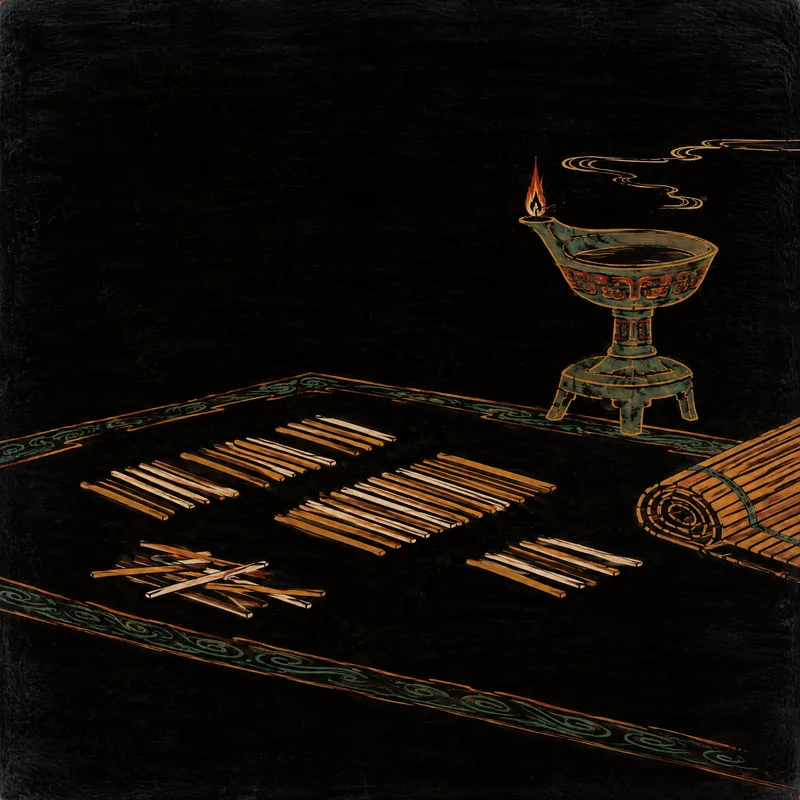
Next comes the cost, because, as Cao Cao says, whoever wishes to fight must first count it. Picture a thousand swift chariots, as many heavy ones, a hundred thousand mail-clad soldiers and provisions for a thousand li, with the entertainment of guests and small items such as glue and paint, and the bill comes to a thousand ounces of silver a day. Giles fills in the picture: seventy-five footmen to each swift chariot, twenty-five to each heavy one, and about two and three-quarter li to the mile. If victory is long in coming, weapons grow dull and ardour is damped; a siege exhausts the state; and once treasure is spent other chieftains rise to take advantage. Stupid haste has been heard of in war, cleverness never in company with long delays, and no country has ever benefited from prolonged warfare. The skilful soldier raises no second levy and loads his wagons at most twice. He forages on the enemy: one cartload of the enemy’s provisions is worth twenty of his own, because twenty are eaten on the road that brings one to the front. An army near home drives prices up and drains the people, while the revenue goes on broken chariots, worn-out horses, breastplates, bows, spears, draught oxen and heavy wagons. To make men kill they must be angered; to make them take spoils they must be rewarded. When ten chariots are captured, reward the man who took the first, change their flags for yours, mingle them with your own and treat the prisoners kindly: this is using the conquered foe to augment your strength. Let the great object be victory and not lengthy campaigns, for the leader of armies is the arbiter of the people’s fate.
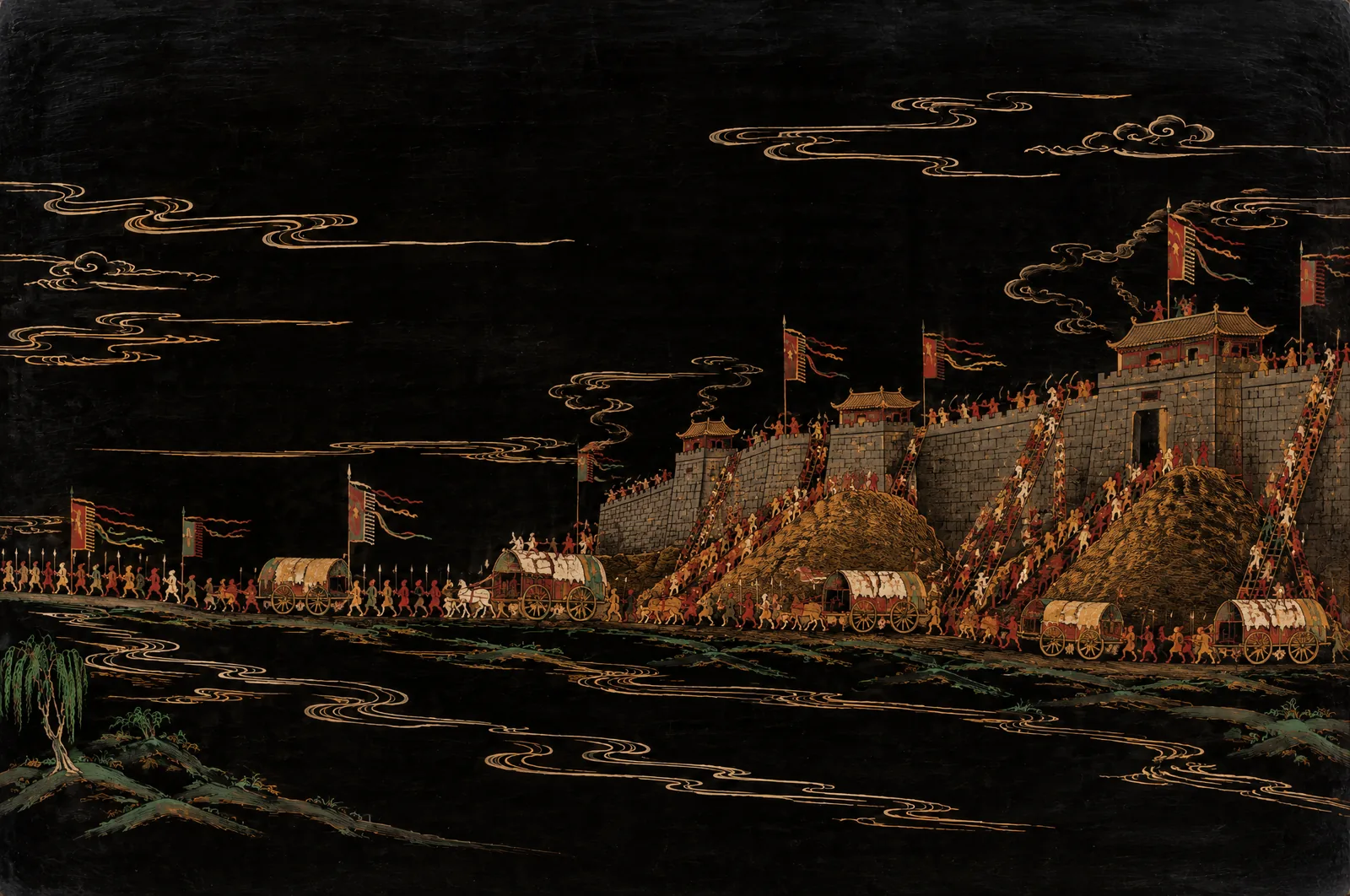
Sun Tzu would rather not fight at all. The best thing is to take the enemy’s country whole and intact, to capture an army, a regiment, a company entire rather than destroy it. To fight and win in every battle is not supreme excellence; supreme excellence is breaking the enemy’s resistance without fighting. The highest generalship baulks his plans in their inception, the next prevents him joining his allies, the next attacks his army in the field, and the worst of all is to besiege a walled city: three months for the mantlets and the hide-covered shelters the commentators call wooden donkeys, three more for the earth mounds, and then a general who cannot control his irritation sends his men swarming up the walls like ants, loses a third of them, and the city still stands. Giles thinks of Moltke taking the French army at Sedan almost without blood, and of the Boers wasting themselves before Kimberley, Mafeking and Ladysmith. The arithmetic follows: ten to one, surround him; five to one, attack; two to one, divide your army; equal, offer battle; fewer, avoid him; outmatched in every way, flee. The general is the bulwark of the state. A ruler can ruin his army in three ways: by ordering it to advance or retreat when it cannot, which is hobbling it, like tying a thoroughbred’s legs; by governing it as he governs his kingdom, for you cannot handle an army in kid gloves; and by posting officers without regard to the men they are. Five things bring victory: knowing when to fight and when not, handling both superior and inferior forces, an army animated by one spirit in all ranks, being prepared and waiting for an unprepared enemy, and a capable general whom the sovereign does not interfere with, as Napoleon, being sovereign and general in one, was never interfered with. Hence the most famous sentence in the book: know the enemy and know yourself and you need not fear the result of a hundred battles; know yourself but not the enemy and every victory will be matched by a defeat; know neither and you will succumb every time.
The good fighters of old first put themselves beyond the possibility of defeat and then waited for an opportunity to defeat the enemy. Security against defeat lies in our own hands; the chance of defeating him is provided by the enemy himself. One may know how to conquer without being able to do it. The general skilled in defence hides in the most secret recesses of the earth, and the one skilled in attack flashes from the topmost heights of heaven. To see victory only when the common herd can see it is no mark of excellence, nor is winning when the whole empire says well done. To lift an autumn hair is no sign of strength, to see the sun and moon no sign of sharp sight, to hear thunder no sign of a quick ear. The clever fighter wins with ease and so earns no reputation for wisdom and no credit for courage. He wins by making no mistakes, which means conquering an enemy who is already defeated. The victorious strategist seeks battle only after the victory has been won; the man destined to lose fights first and then looks for victory. Han Xin, about to attack a far larger army entrenched at Cheng’an, told his doubtful officers that they would annihilate the enemy and meet again at dinner, and so it fell out. From the ground come measurement, from measurement estimation, then calculation, then the balancing of chances, then victory. A victorious army set against a routed one is a pound’s weight against a grain, and its onrush is the bursting of pent-up waters into a chasm a thousand fathoms deep.
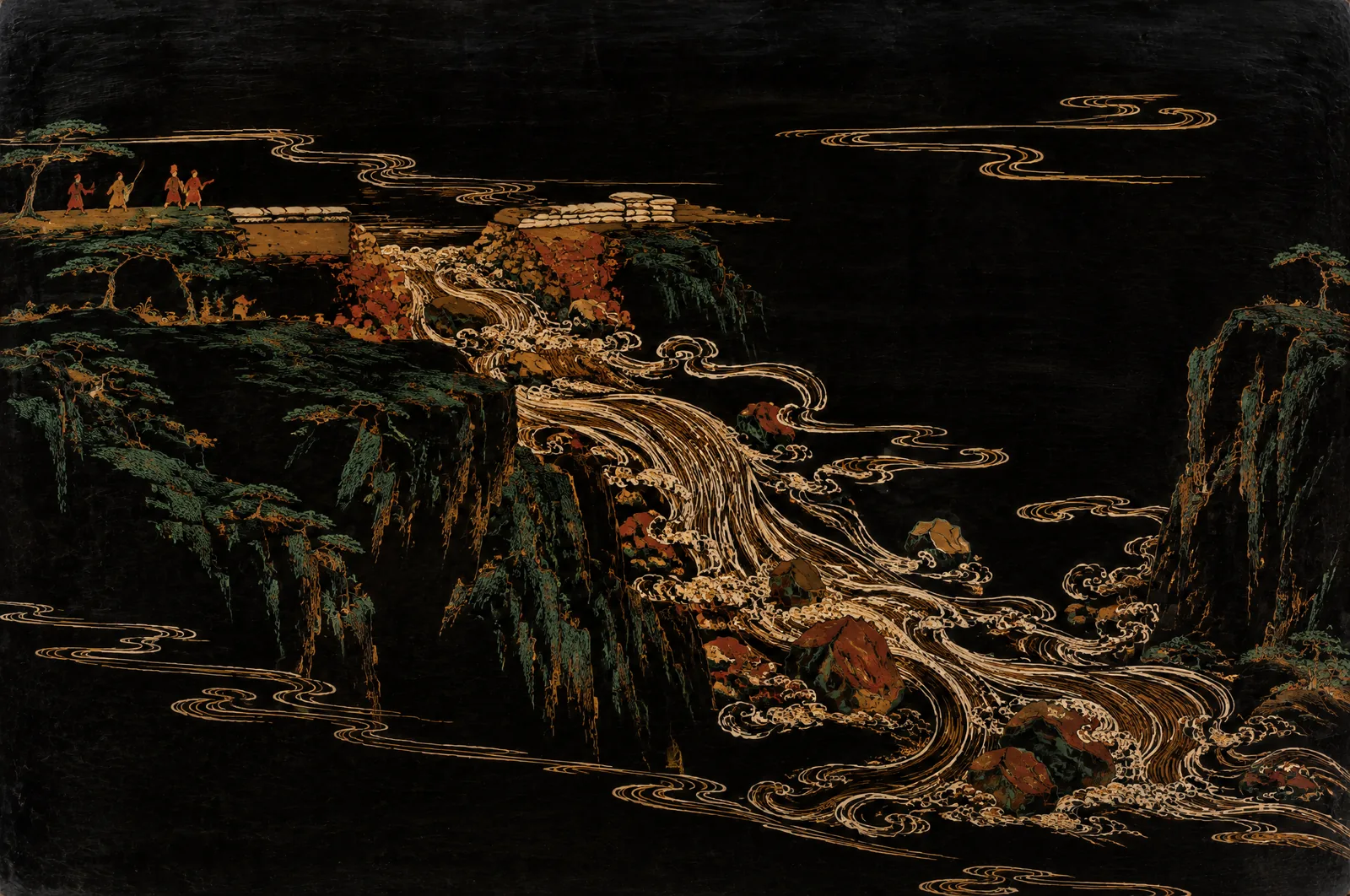
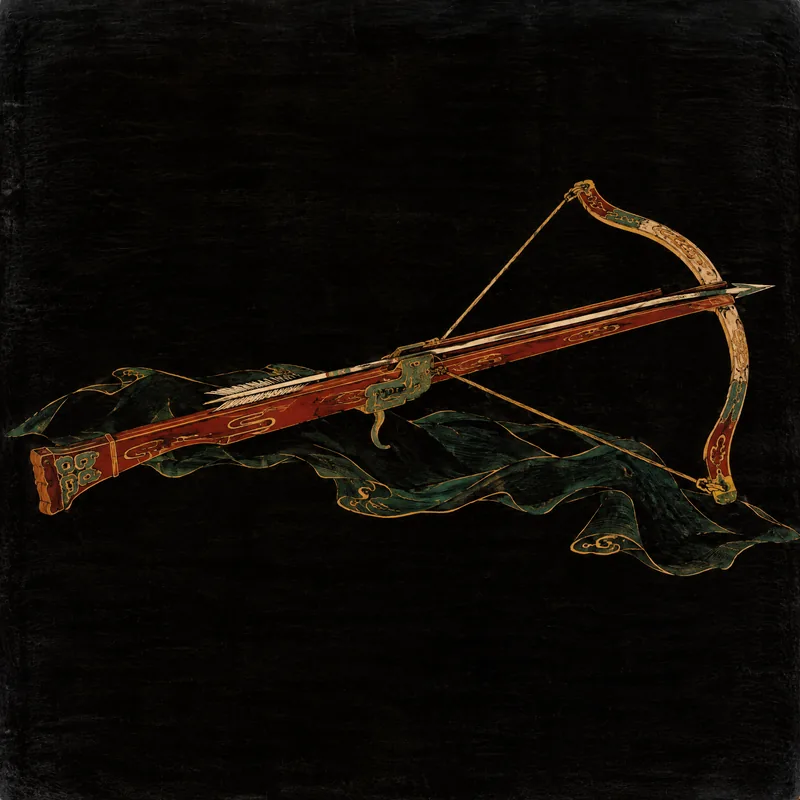
Then energy. Controlling many men is the same as controlling a few, a matter of dividing their numbers, which is why Han Xin, asked by the first Han emperor how many men he could lead, answered the more the better. Fighting with a large army is the same as with a small one, a matter of signs and signals, flags and banners, drums and gongs. Two methods exist in battle, the direct and the indirect, zheng and qi: join battle by the direct, win by the indirect. The Tang emperor Taizong settles what the words mean: whatever the enemy has fixed his attention on is direct, whatever surprises him is indirect, and the whole secret is confusing him so that he cannot tell which is which. There are only five musical notes, five colours, five tastes, yet their combinations can never be exhausted, and direct and indirect lead on to each other like moving in a circle. The onset of troops is a torrent that rolls stones along; the quality of decision is the falcon’s well-timed swoop. Energy is the bending of a crossbow, decision the releasing of the trigger, and Giles thinks of Nelson letting the Victory drift under fire at Trafalgar for several minutes before answering with a broadside. Amid the turmoil of battle there may be seeming disorder and no real disorder; but simulated disorder postulates perfect discipline, simulated fear postulates courage, simulated weakness postulates strength. The skilful commander keeps the enemy on the move with appearances and baits and waits with picked men. Sun Bin, in 341 BC, knowing that his enemy Pang Juan despised the men of Qi as cowards, had his army light a hundred thousand fires the first night, fifty thousand the next and twenty thousand the third; Pang Juan pursued hotly, sure that half the cowards had deserted, and in Du Mu’s telling reached after dark a defile where a tree had been stripped of its bark and inscribed, struck a light to read it, and was riddled by the archers waiting for that light. Look to the effect of combined energy and do not ask too much of individuals; good fighting men are like round stones rolled down a mountain thousands of feet high.
Whoever is first in the field and waits for the enemy is fresh; whoever is second and hurries to battle is exhausted. The clever combatant imposes his will on the enemy and does not have the enemy’s will imposed on him. Entice him with advantages, or damage him so he cannot approach; harass him when he rests, starve him when he is fed, force him to move when he is camped. Appear at points he must hasten to defend; march to places where you are not expected; attack only what is undefended and hold only what cannot be attacked. Then the famous apostrophe to the divine art of subtlety and secrecy, by which we become invisible and inaudible and hold the enemy’s fate in our hands. If we wish to fight, he can be forced to it behind his ramparts by attacking something he must relieve. If we do not, we can stop him even with our camp merely traced on the ground, by throwing something odd and unaccountable in his way; Du Mu’s example is Zhuge Liang at Yangping, who struck his colours, silenced his drums, flung open the gates and showed a few men sweeping, so that Sima Yi, suspecting an ambush, withdrew. Bluff. Discover the enemy’s dispositions and stay formless yourself, and he must divide while you concentrate: strengthen his van and he weakens his rear, reinforce everywhere and he is weak everywhere. Though by my estimate the soldiers of Yue exceed our own, says Sun Tzu, that shall avail them nothing, and Giles sighs in a footnote: alas for these brave words, Wu was wiped out by Yue in 473 BC. Rouse the enemy and learn his habits; make him reveal himself; conceal your own dispositions from the subtlest spies. All men can see the tactics by which I conquer, but none can see the strategy out of which victory is evolved, and winning tactics should never be repeated. Military tactics are like water, which runs from high places and hastens downward: avoid the strong, strike the weak, shape yourself to the enemy as water shapes itself to the ground. There are no constant conditions in war, as the seasons give way, the days lengthen and shorten and the moon waxes and wanes.
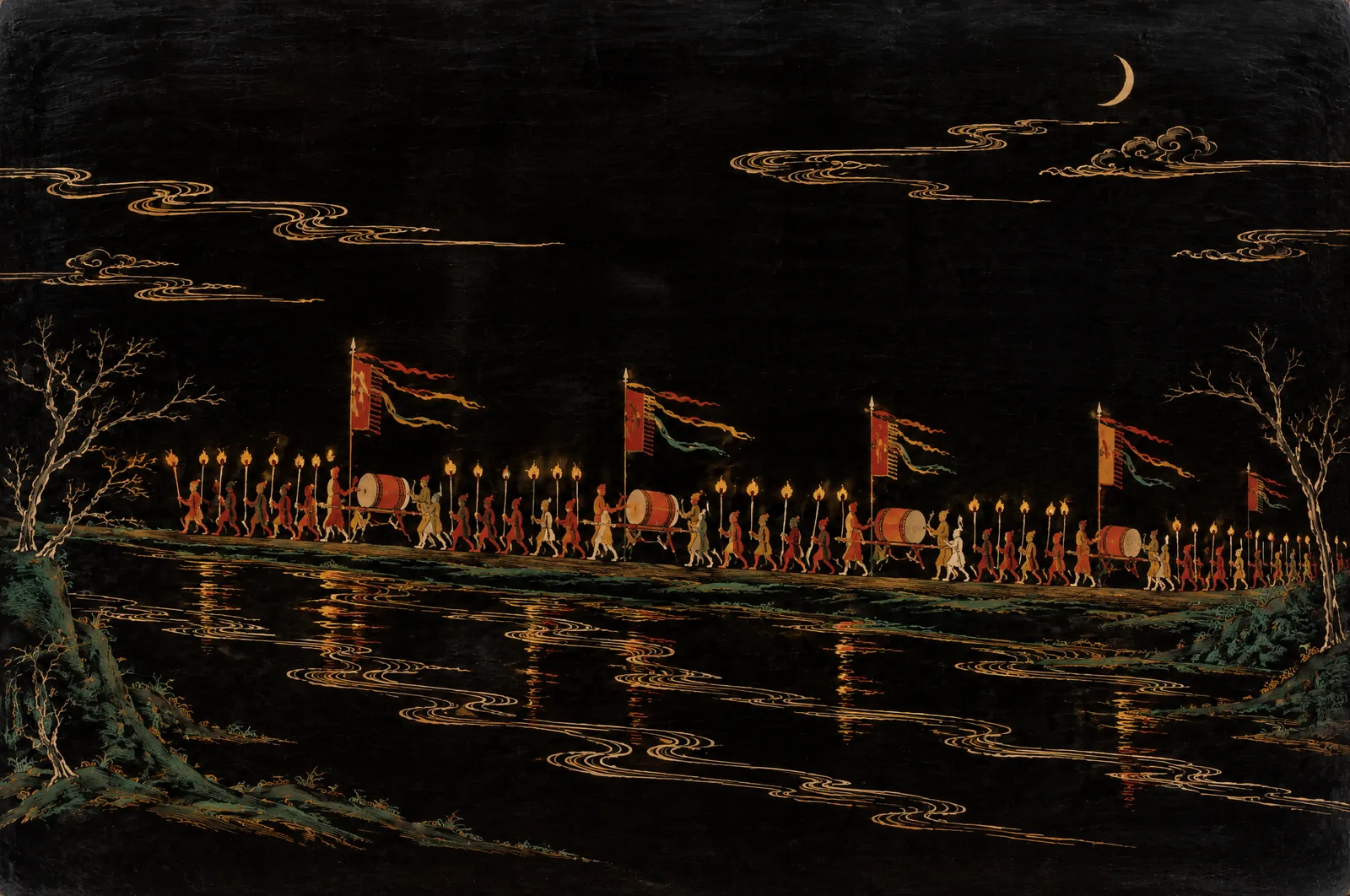
Now the army is in the field. The general receives his commands from the sovereign, collects and harmonizes his forces, pitches camp, and then comes the hardest thing of all, tactical manoeuvring, whose difficulty is turning the devious into the direct and misfortune into gain: taking the long way round, enticing the enemy aside, starting after him and arriving first. Du You tells of Zhao She in 270 BC, sent to relieve a besieged town, who marched thirty li from the capital, dug in for twenty-eight days while spies carried news of his timidity to the enemy, and then, the spies gone, made a forced march of two days and a night and seized the commanding hill before the besiegers knew he had moved. Forced marches have their price. Order men to roll up their buff-coats and march day and night for a hundred li and the leaders of all three divisions will be captured, the strong in front, the jaded behind, one man in ten arriving; fifty li costs the leader of the first division and half the force; thirty li costs a third of it. An army without its baggage train is lost, without provisions lost, without depots lost. Do not make alliances until you know your neighbours’ designs; do not march until you know the mountains, forests, pitfalls, precipices, marshes and swamps; use local guides. Let your rapidity be the wind’s, your compactness the forest’s; raid like fire, stand like a mountain, keep your plans as dark as night and fall like a thunderbolt. Then Sun Tzu quotes an older, lost Book of Army Management: on the field the spoken word does not carry, hence gongs and drums, banners and flags, which fix the eyes and ears of the host on one point so that the brave cannot advance alone nor the cowardly retreat alone. Use fires and drums by night, flags by day. A whole army may be robbed of its spirit and a commander of his presence of mind. Spirit is keenest in the morning, flags by noon, and in the evening the soldier thinks only of camp. Be calm and wait for their disorder; be near, rested and fed while they are far, toiling and famished; do not intercept an enemy whose banners are in perfect order. Do not advance uphill against him, do not pursue a feigned flight, do not swallow a bait, and do not bar an army on its way home. When you surround an army, leave an outlet, so that, as Du Mu puts it, he believes there is a road to safety and does not fight with the courage of despair; after that you may crush him. Do not press a desperate foe.
A short chapter follows, so short and so odd that Giles suspects it is defective and out of place. Do not camp in difficult country; join hands with allies where high roads cross; do not linger in isolated positions; hemmed in, resort to stratagem; in a desperate position, fight. There are roads that must not be followed, armies that must not be attacked, towns that must not be besieged, positions not to be contested, and commands of the sovereign that must not be obeyed, a hard saying for a people with such reverence for authority. Cao Cao, invading Xuzhou, ignored a city in his path, pressed into the heart of the country and took fourteen district cities; Turenne said it is a great mistake to waste men taking a town when the same men would gain a province. The general who grasps these variations can use his troops; the one who knows every feature of the country but not how to vary his plans cannot turn his knowledge to account. In the wise leader’s plans advantage and disadvantage are blended. Rely not on the chance of the enemy not coming but on your readiness to receive him, the maxim Lord Roberts, who read the proofs, said his countrymen would do well to take to heart. Five faults ruin a general: recklessness, which leads to destruction; cowardice, which leads to capture, like Huan Xuan in 404, who kept a light boat tied to his war-junk for escape and so quenched his men’s fighting spirit before the fire-ships came; a hasty temper that insults can provoke; a delicacy of honour too sensitive to shame; and over-solicitude for his men, which exposes him to worry and trouble. Giles ends the chapter in South Africa: the repeated efforts to relieve Ladysmith were blunders that defeated their own purpose, and an old soldier who once defended a failed general to him on the ground that he was always so good to his men was, without knowing it, condemning him out of Sun Tzu’s mouth.
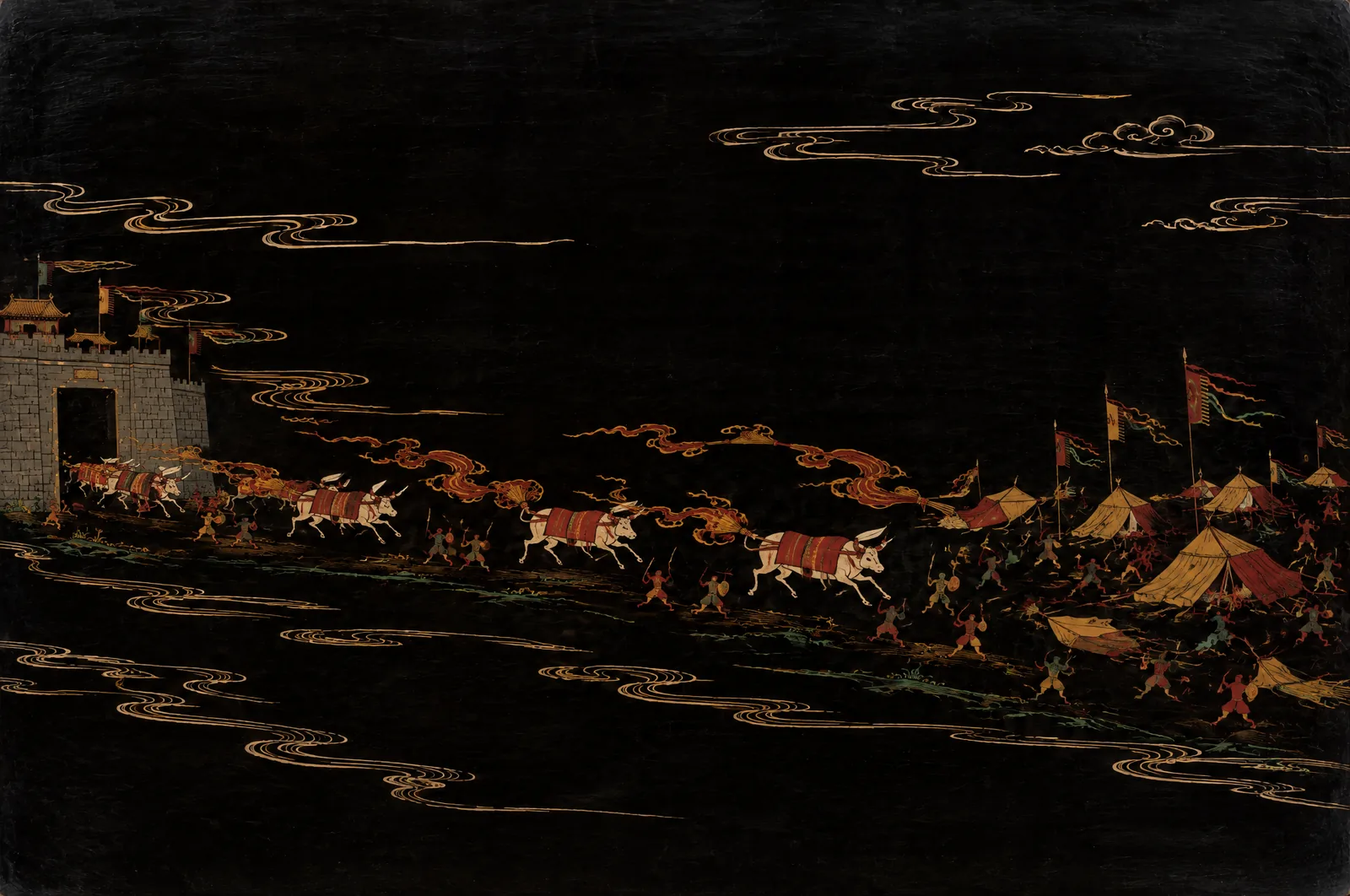
Then the march itself, and the reading of signs, a stretch Giles says could go straight into Baden-Powell’s Aids to Scouting. Pass quickly over mountains and keep near the valleys. Camp high, facing the sun, and do not climb to fight. After crossing a river, get well away from it; when an invader is crossing, do not meet him midstream but let half his army over and then strike. Han Xin, facing Long Ju across the Wei, had ten thousand sandbags dam the river upstream in the night, crossed with half his men, pretended to fail and fled back, and when Long Ju, crowing that he had always known Han Xin was a coward, followed him into the stream, had the sandbags cut; the flood split the pursuing army and Long Ju died with the half that had crossed. Cross salt marshes quickly, and in flat country take a position with rising ground to the right and rear. All armies prefer high ground to low and sunny places to dark; camp on hard ground and there will be no disease. When rain upcountry has swollen a river and flecked it with foam, wait. Leave at speed any country of cliffs and torrents, natural hollows, confined places, tangled thickets, quagmires and crevasses, and let the enemy have them at his back. Then the signs. An enemy close at hand and quiet relies on his position; aloof and provoking, he wants you to advance; camped where he is easy to reach, he offers a bait. Movement among the trees means he is advancing. Birds rising mean an ambush, startled beasts a sudden attack. Dust high and sharp is chariots; low and wide is infantry; branching, parties gathering firewood; drifting clouds of it, an army making camp. Humble words with increased preparation mean he will advance, violent language and a show of driving forward mean he will retreat. The example is Tian Dan’s defence of Jimo in 279 BC: he let the besiegers hear that he feared only two things, that they would cut off the noses of their prisoners and dig up the tombs outside the walls; they did both, and the city burned with fury. Then he sent envoys to arrange surrender and silver from the rich begging that their homes be spared, until the Yan army grew slack with joy; and at night he loosed a thousand oxen through holes in the walls, dressed in red silk, painted like dragons, blades on their horns and greased rushes burning on their tails, with five thousand picked men behind them and every drum and bronze vessel in the city sounding, and the Yan general died in the rout. Soldiers leaning on their spears are hungry; water-carriers who drink first are thirsty; clamour at night means nerves; shifting banners mean sedition. When horses are fed on grain, cattle killed for meat and cooking pots not hung over the fires, the men mean to fight to the death. Soldiers must be treated with humanity first and held by iron discipline; punish them before they are attached to you and they will not submit, fail to punish them once they are, and they are useless.
Six kinds of terrain come next: accessible ground, which both sides can cross freely, where you should be first on the sunny heights and guard your line of supplies, for Napoleon said the secret of war lies in the communications; entangling ground, easy to leave and hard to re-occupy; temporizing ground, where neither side gains by moving first, so retreat and lure him out; narrow passes, to be garrisoned first and not forced if the enemy holds them; precipitous heights, to be occupied before him on the sunny side; and positions far from the enemy, where provoking a battle only exhausts you. Pei Xingjian, on campaign against the Turks, moved his fortified camp to a nearby hill one night over his officers’ loud protests, and the storm that followed flooded their old ground twelve feet deep; asked how he knew, he told them to obey orders in future without asking unnecessary questions. Then six calamities for which the general, not nature, is to blame: flight, when one force is hurled at ten; insubordination, when soldiers are strong and officers weak; collapse, when officers are strong and men weak; ruin, when angry officers fight on their own account; disorganization, when the general is weak and his orders unclear, which is where Baden-Powell’s secret of getting good work from trained men comes in, the clearness of the instructions; and rout, when a general cannot estimate the enemy and leaves his picked men out of the front rank. The ground is the soldier’s best ally, but estimating the enemy and calculating difficulties, dangers and distances is the test of a great general. If fighting is sure to win, fight though the ruler forbids it; if not, refuse though he commands it. The general who advances without coveting fame and retreats without fearing disgrace, whose only thought is to protect his country, is the jewel of the kingdom. Regard your soldiers as your children and they will follow you into the deepest valleys; look on them as your own beloved sons and they will stand by you unto death. Du Mu gives Wu Qi, who ate what the meanest soldier ate and sucked the poison from a soldier’s abscess, at which the soldier’s mother wept, because the general had once done the same for her husband, and her husband had never left him and had died in battle, and now her son would too. But kind and unable to command, your soldiers are spoilt children and useless; Lu Meng beheaded a fellow-townsman who had taken a bamboo hat from a villager to keep the rain off his helmet, with the tears rolling down his face, and after that nothing dropped in the road was picked up. Know the enemy and yourself and victory is not in doubt; know heaven and earth as well and it is complete.
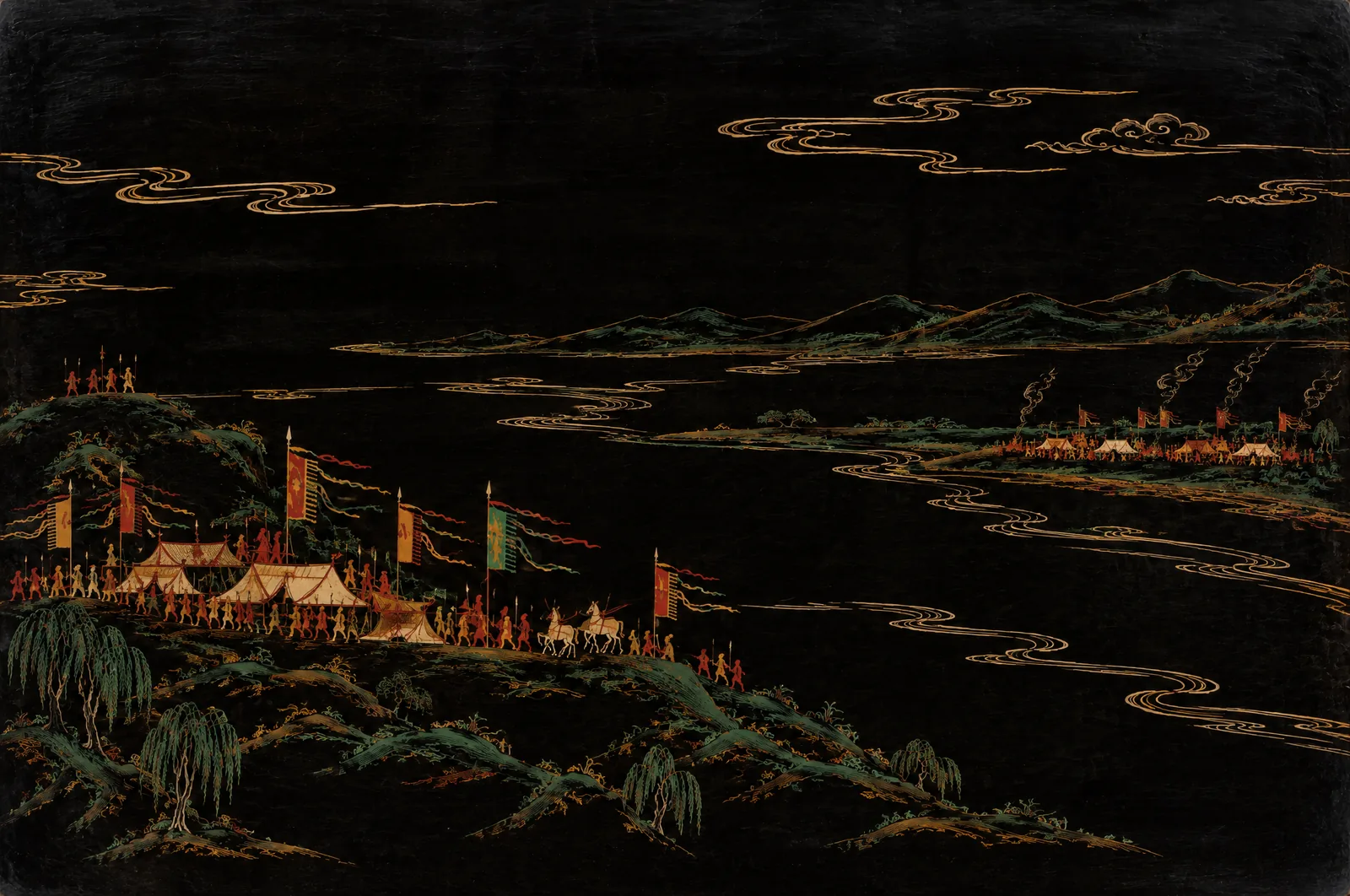
The longest chapter sets out the nine situations, and they mark how deep an invading army has gone. Fighting in his own territory a chieftain is on dispersive ground, where men near their homes will scatter. Just across the border is facile ground, where Du Mu would burn the boats and bridges. Ground that gives great advantage to whoever holds it is contentious, the neck of a pass, Thermopylae. Ground where each side moves freely is open. The ground that is the key to three neighbouring states, so that whoever holds it first commands most of the empire, is the ground of intersecting highways. Deep in hostile country with fortified cities behind you is serious ground. Forests, steeps and marshes are difficult ground, Zhuge Liang’s earth-hells. Ground entered through narrow gorges and left by tortuous paths, where a few can crush many, is hemmed-in ground. And ground where only immediate battle can save you is desperate ground, which Chen Hao likens to sitting in a leaking boat or crouching in a burning house. The rules are brisk: on dispersive ground fight not, on facile halt not, on contentious attack not, on open ground do not block the enemy, at the crossroads join your allies, on serious ground plunder, on difficult ground keep moving, hemmed in use stratagem, desperate, fight. The skilful leaders of old drove wedges between the enemy’s front and rear and kept his scattered men from concentrating. Asked how to meet a great host in orderly array, Sun Tzu answers: begin by seizing something your opponent holds dear, and he will be amenable. Rapidity is the essence of war. Sima Yi, hearing in 227 that a governor was about to defect, marched by forced marches and stood under the walls of Xincheng in eight days, when the traitor had counted on a month.
The invader’s principles follow. The deeper you penetrate, the greater your soldiers’ solidarity. Forage in fertile country; study your men’s wellbeing and do not overtax them; hoard your strength and devise unfathomable plans. Wang Jian, invading Chu in 224 BC and doubtful of his men’s temper, refused every challenge, shared his meals with his soldiers and waited, until spies reported the men amusing themselves with putting the weight and the long jump, at which he knew they were ready, followed the retiring Chu army and destroyed it. Throw your soldiers where there is no escape and they will prefer death to flight; in desperate straits they lose their fear, stand firm, and without being marshalled are alert, without being asked do your will, without orders can be trusted. Forbid omens and superstitious doubts. If soldiers are not rich, it is not that they dislike riches; if their lives are not long, it is not that they dislike long life. On the day they are ordered out they may weep, those sitting up wetting their garments, those lying down with tears running down their cheeks, yet brought to bay they show the courage of the famous assassins. The skilful tactician is like the shuairan, the snake of the Chang mountains: strike its head and the tail attacks, strike its tail and the head attacks, strike its middle and both do. Can an army imitate it? Yes. The men of Wu and the men of Yue are enemies, yet caught by a storm while crossing a river in the same boat they help each other like the left hand and the right. It is not enough to tether the horses and bury the chariot wheels. Set one standard of courage for all; make strong and weak serviceable by the use of ground; lead the army as though leading a single man by the hand. The general must be quiet and so secret, upright and so orderly, and able to mystify his own officers and men by false reports, which Giles backs with Stonewall Jackson’s concealment of his plans from his own staff. At the critical moment the leader climbs the height and kicks away the ladder; he burns his boats and breaks his cooking pots, and like a shepherd driving sheep he drives his men this way and that, and none knows where he is going.
Sun Tzu runs through the nine grounds once more, now in the first person. On dispersive ground I would inspire unity; on facile ground keep the parts of the army in close touch; on contentious ground hurry up the rear; on open ground watch my defences; at the crossroads consolidate alliances; on serious ground keep the supplies flowing; on difficult ground push on along the road; hemmed in, I would block my own way of retreat, as Gao Huan did in 532, surrounded by a far larger army, when he drove roped oxen and donkeys into the gaps the enemy had left so that his men saw it was conquer or die and charged with a ferocity that broke the opposing ranks; on desperate ground I would tell my soldiers plainly that their lives cannot be saved, for the only chance of life lies in giving up all hope of it. Here Giles stops to complain that the grounds are defined twice over in a chapter twice the length of any other, and concludes that the text cannot have come down in the shape in which it left its author’s hands. Confront your soldiers with the deed itself and never tell them the design; show them the outlook when it is bright and nothing when it is gloomy. Place your army in deadly peril and it will survive; plunge it into desperate straits and it will come off safe. Han Xin quoted those very words after his battle at the Jingxing pass in 204 BC, where he sent two thousand horsemen with red flags into the hills by night, drew up ten thousand men with their backs to the river while the whole army of Zhao laughed, marched out with drums beating, fled to the river division, and when the Zhao army poured out after him, had the horsemen tear down the standards on the emptied walls and run up the red flags, so that the men of Zhao, turning back, took their own city for lost and broke. Asked by his officers why he had flouted the rule about keeping hills behind and rivers in front, he asked whether they had read the Art of War with sufficient care. On the day you take command, block the frontier passes, destroy the official tallies and stop every emissary; be stern in the council chamber. If the enemy leaves a door open, rush in. Walk by rule until the decisive battle: at first the coyness of a maiden, until he gives you an opening; afterwards the speed of a running hare, and Giles notes that it cannot be Calthrop’s rabbit, since there were no rabbits in China in the sixth century BC.
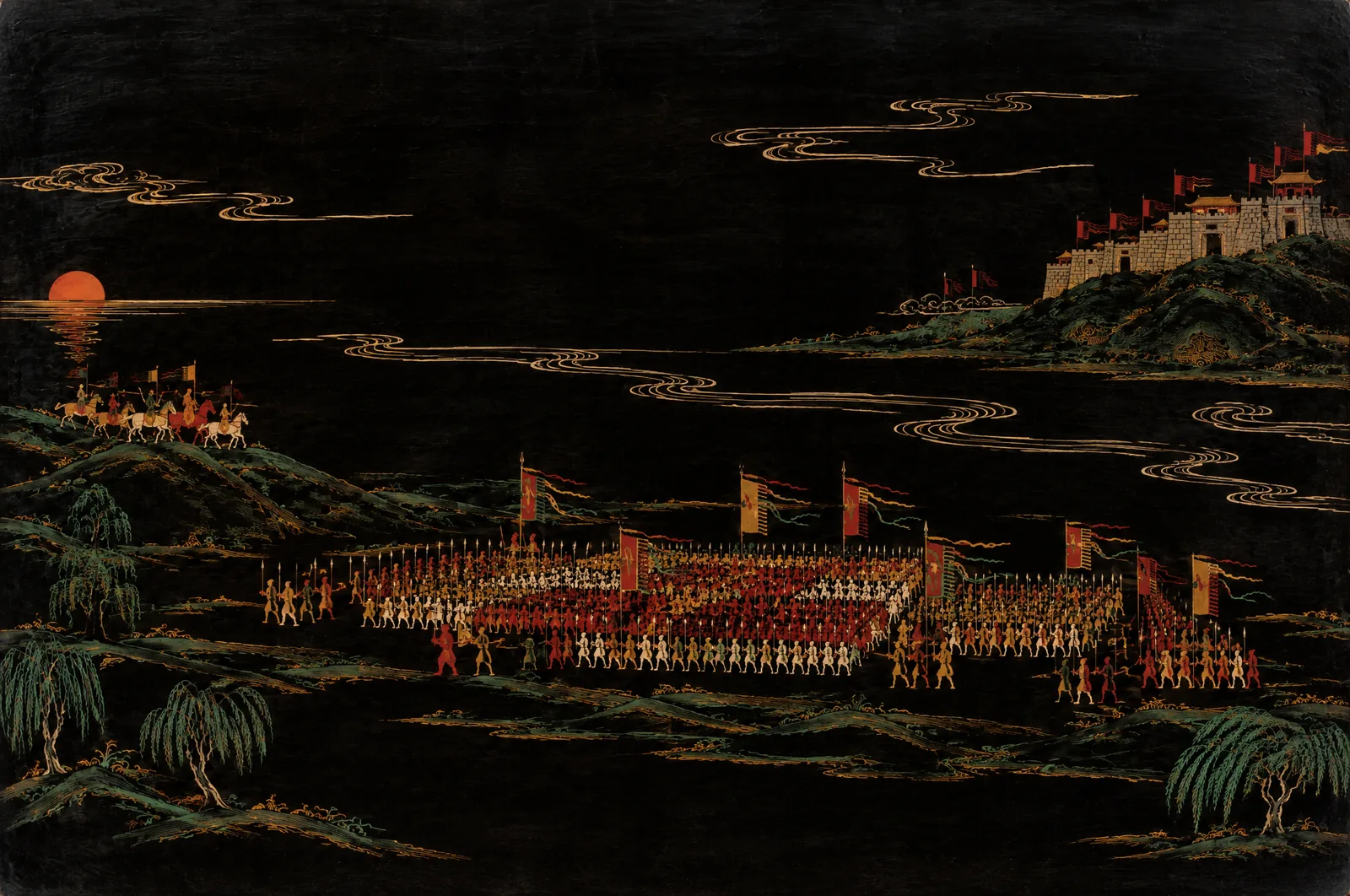
Fire comes near the end. There are five ways to attack with it: burn the soldiers in their camp, burn the stores, burn the baggage trains, as Cao Cao burned Yuan Shao’s wagons in the year 200, burn the arsenals and magazines, and hurl dropping fire among the enemy, which Du You explains as arrow-tips lit in a brazier and shot from crossbows. The materials must be kept ready. There is a season for fire, when the weather is dry, and there are days, when the moon is in the mansions of the Sieve, the Wall, the Wing or the Crossbar, which Giles places roughly in Sagittarius, Pegasus, Crater and Corvus, for those are days of rising wind. Five developments must be met. When fire breaks out inside the enemy’s camp, attack from outside at once; if fire breaks out and his soldiers stay quiet, wait; when the flames are at their height, follow up if you can; if fire can be set from outside, do not wait for it to start within. Ban Chao, caught at Shanshan by a Xiongnu embassy that was turning his host against him, told his thirty-six officers that those who never venture never win, hid ten men with drums behind the barbarian barracks, posted his archers at the gate, set fire to the camp from windward, and showed the king the envoy’s head in the morning. Be to windward of your fire. A wind that rises by day lasts long; a night breeze soon falls. Those who use fire show intelligence; those who use water gain strength, but water can only cut an enemy off, not strip him of everything. Unhappy, says Sun Tzu, is the one who wins battles and takes cities without cultivating the spirit of enterprise, for the result is waste and stagnation. The chapter ends in restraint. Move only for advantage, fight only when the position is critical. No ruler should send troops out to gratify his spleen, no general fight out of pique. Anger may in time turn to gladness and vexation to content, but a kingdom once destroyed can never come again into being, nor can the dead be brought back to life. The enlightened ruler is heedful and the good general full of caution; this is the way to keep a country at peace and an army intact. Wu, Giles notes once more, was to be a melancholy example.
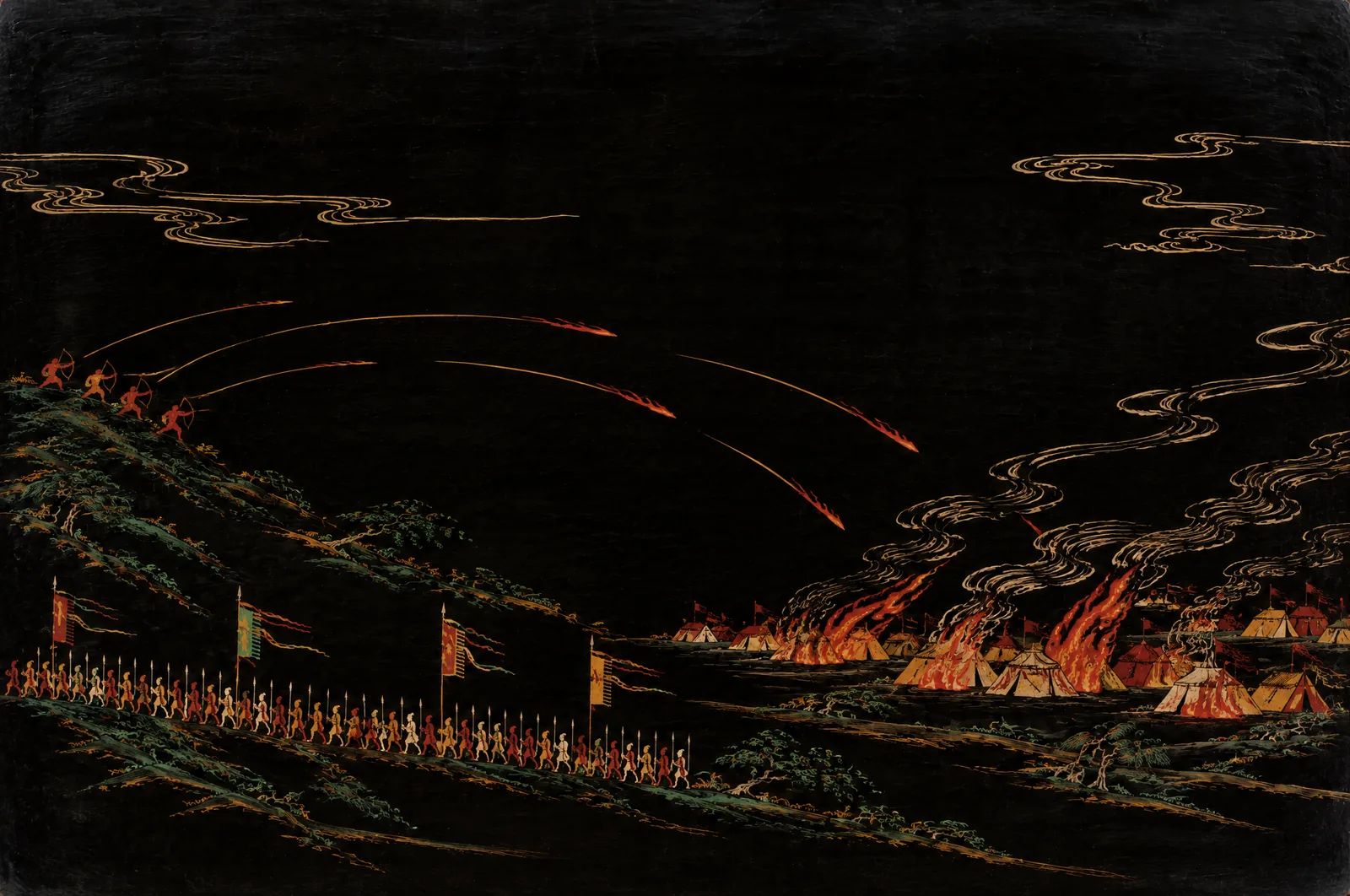
Last come the spies, and Sun Tzu reaches them by way of the cost he began with. Raising a hundred thousand men and marching them great distances drains the people: a thousand ounces of silver a day, commotion at home and abroad, men dropping exhausted on the highways, and seven hundred thousand families hindered in their farming, because under the old land system one household in eight went to war and the other seven fed it. Hostile armies may face each other for years for a victory decided in a single day. To stay ignorant of the enemy’s condition because one grudges a hundred ounces of silver in honours and pay is therefore the height of inhumanity; such a man is no leader, no help to his sovereign, no master of victory. Foreknowledge cannot be got from spirits, nor by reasoning from experience, nor by calculation; it comes only from other men, which Mei Yaochen neatly sorts: divination for the spirit world, induction for nature, mathematics for the heavens, spies alone for the enemy. There are five kinds. Local spies are inhabitants of a district. Inward spies are the enemy’s officials, degraded worthies, concubines greedy for gold and turncoats with a foot in each boat. Converted spies are the enemy’s own spies, sought out, bribed, led away and comfortably housed; Fan Ju bought the King of Zhao’s spies in 260 BC and had them report that Qin feared only the young Zhao Gua, who was duly made general over the cautious Lian Po against his own mother’s protests, had his army cut in two by Bo Qi, held out forty-six days while his starving men ate one another, and died with four hundred thousand. Doomed spies are our own men to whom we let false plans leak so that they carry them, sincerely, to the enemy and are killed when the truth comes out. Surviving spies bring news back from the enemy’s camp, men of keen intellect behind a fool’s face, shabby, iron-willed, inured to dirty work. With none in the whole army should relations be more intimate, none more liberally rewarded, nothing kept more secret; everything passes mouth to ear, and Giles sets Turenne and Frederick the Great beside Sun Tzu on paying spies generously. Be subtle, be subtle, and use them for every kind of business. If a secret leaks before its time, the spy and the man he told must both die. The converted spy is the hinge on which all the others turn, so treat him with the utmost liberality. Only the enlightened ruler and the wise general put the highest intelligence of the army to spying, and on spies depends its ability to move. Du Mu closes with a warning, that the water which carries a boat across may also sink it, and Giles, in his own last note, traces the character for spy to a shut door at night and the moonlight showing through the chink.
One last thing, from outside the thirteen chapters. The book that brags of beating Yue lost its argument with history: in 473 BC Gou Jian of Yue destroyed Wu and absorbed it, long after Sun Wu, if he lived, was dead. Giles braced in 1910 for a scathing review; what came instead was a century of reprinting, usually in truncated form, and this bilingual edition of 2008 is the first to carry his translation whole, with the Chinese text and his notes. He did not live to see the bamboo strips come out of the ground in the 1970s and vindicate the age of the text he had defended on internal evidence alone. He died in January 1958, keeper of ten to twenty miles of scrolls.