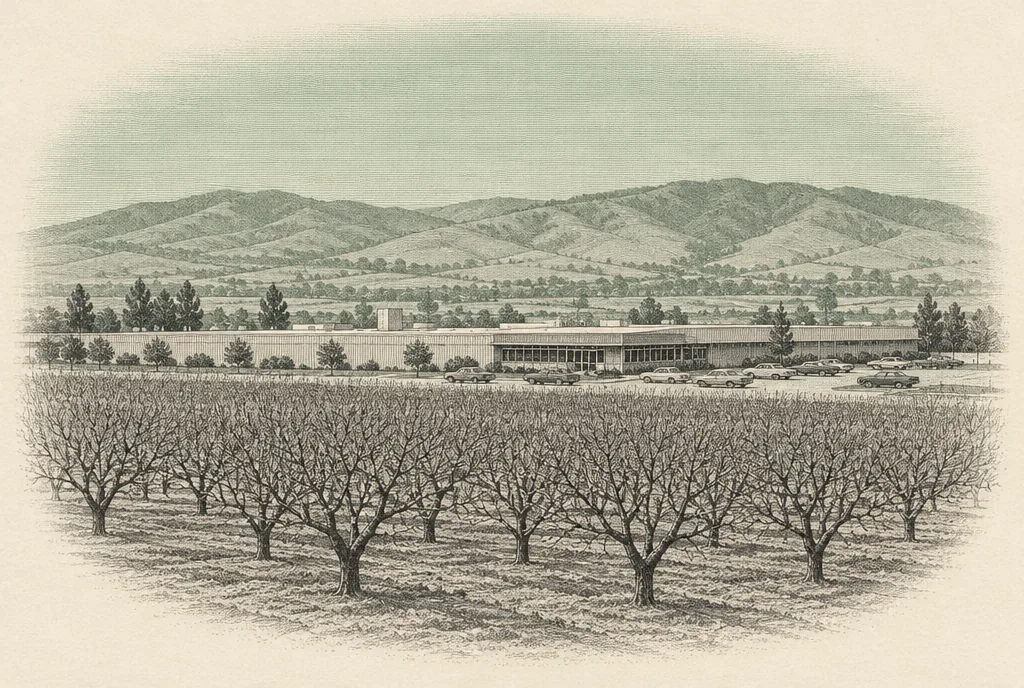
The book opens with a dedication to the author’s mother, Carlota Arenas, a painter whose joy in her work fed her daughter’s own. Two epigraphs then set the terms. Nietzsche, in 1873, observes that every concept is made by treating unequal things as equal: no leaf is quite like another, and the idea of “leaf” exists only by forgetting the differences. Hyman Minsky, in 1986, warns that a theory which blames bad times on outside shocks, such as an oil crisis, gives politicians a villain but offers no cure. Chris Freeman’s preface recalls a young Venezuelan researcher in the 1970s, studying the oil industry at home, who became convinced that the 1973 OPEC shock marked the start of a long passage from an economy built on cheap oil to one built on cheap microelectronics. Her 1983 paper gave the world the phrase “techno-economic paradigm”, which Alan Greenspan would borrow in the 1990s. Freeman notes that Schumpeter’s Business Cycles gave more pages to finance than to technology, yet his followers dropped that thread. This book picks it up. He closes with Goethe’s grey theory and green tree, and the thought that a bare tree in winter shows its structure best.

Perez sets out her interpretation. The last quarter of the twentieth century watched two forces rise together, the information revolution and the financial markets, until a “new economy” of endless growth was proclaimed. The Internet bubble has just burst and the confidence has gone with it. Her claim is that productivity explosions and financial manias have always arrived together, share one root cause, and belong to the nature of the system. Technology advances by revolutions, roughly every half century. The full fruits of each are reaped only after two or three decades of turbulent adjustment, in which the new industries grow, finance runs wild, income gaps widen, and a crash arrives. Only then, if the right institutions are built, does a golden age follow. She notes that students of finance ignore the real economy and students of technology ignore finance, though Schumpeter saw the entrepreneur and the financier as the two wheels of innovation. The book is a think-piece, told as a stylised narrative in three parts.
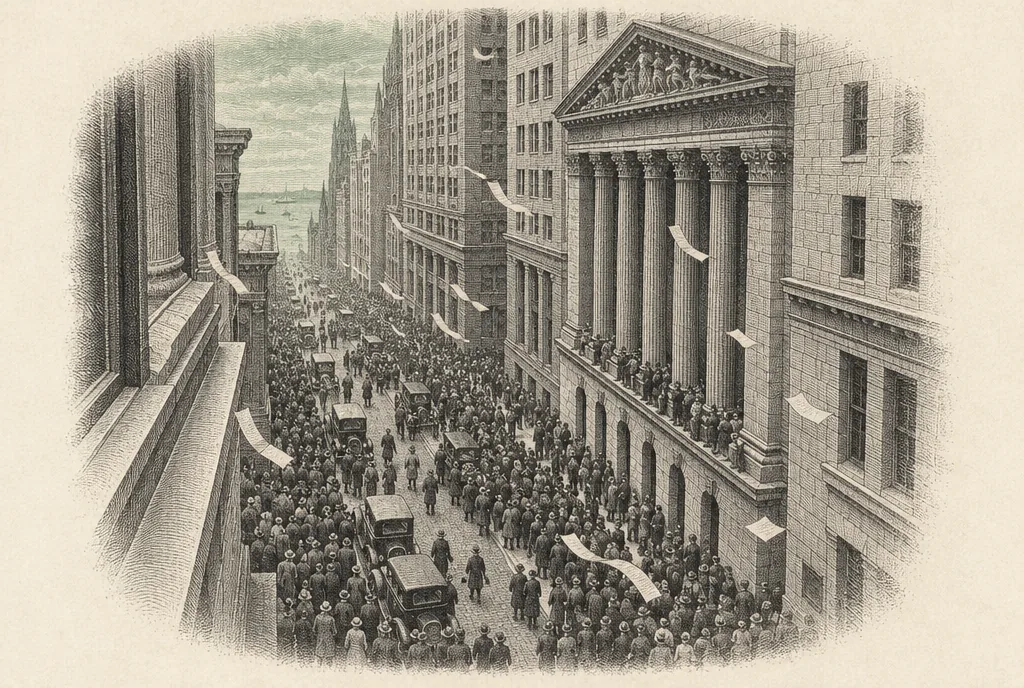
On an ordinary day in November 1971, in Santa Clara, California, Bob Noyce and Gordon Moore launch Intel’s first microprocessor, a computer on a chip, powerful and cheap. Few people then have heard of venture capital or angels. The word derivative belongs to mathematics. Middle-class families keep their money in the bank or the savings and loan. Three decades later even modest salaries have turned into hopeful investors. Perez lays the parallel beside it: Henry Ford’s cheap Model-T in 1908, the New York stock market by the mid-1920s treated as the engine of the world, financial geniuses by the dozen, widows, small farmers and shoe-shine boys in the casino, then the crash. The same thing happened three times before: canal mania and panic a decade after Arkwright’s mechanised mill, railway mania ending in the panic of 1847, and after Carnegie’s Bessemer steel plant in 1875 a wave of crashes from the United States to Argentina, Italy and France. Each revolution is a habit-breaking hurricane. Young newcomers burst in, a whirlpool of money sucks in the world’s wealth, assets inflate, and when the bubble collapses the changeover has already been made. New industries stand, a new infrastructure is in place, the new way of doing things is common sense. One thing is missing: the rules and institutions to make the new economy work for everyone. This is capitalism’s ugliest face, the world of Dickens, Upton Sinclair, Engels and Veblen, a two-faced society where the poor can see the rich but the rich do not see the poor. Today that cleavage runs between nations, visible only through satellite television and illegal migration. After the crash, sobered financiers accept rules, and what follows may be a golden age: full employment, production at centre stage, finance retreating into boardrooms, prosperity trickling down. The sequence, revolution, bubble, collapse, golden age, political unrest, rests on three features of the system: technology changes in clusters, finance and production are separate kinds of capital, and institutions change far more slowly than the economy. Pigou once caught the rhythm in the changing metaphors for money, a mere veil before 1914, an evil genius between the wars, a trifle again by 1945. The world, Perez says, stands once more at a crossroads, and it can become a world for the few or a world for the many.
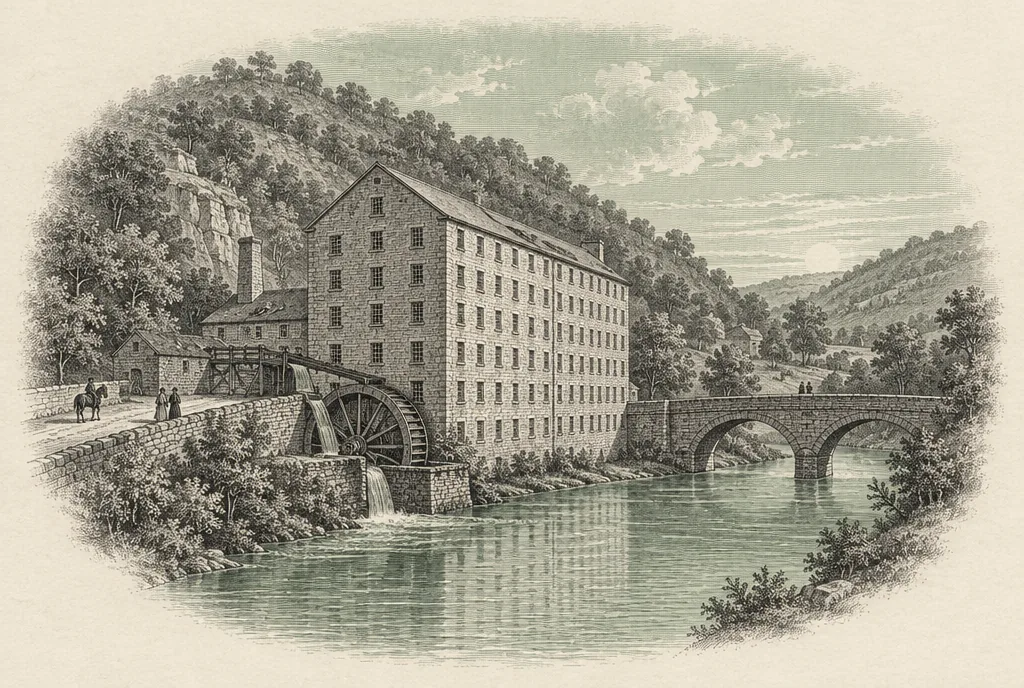
She defines her terms. A technological revolution is a cluster of new technologies, products and industries, usually built around a cheap all-pervasive input such as coal, steel, oil or chips, plus a new infrastructure that cuts the cost of moving goods and messages. Its double nature matters: it adds new industries, and it hands every old industry a set of generic tools for renewal. The techno-economic paradigm is that toolkit turned into best practice, a model for normal innovation in Kuhn’s sense. Kuznets had spoken of epochal innovations. Perez names five: the Industrial Revolution of 1771, when Arkwright’s mill opens at Cromford; the Age of Steam and Railways from 1829, when Stephenson’s Rocket wins the Liverpool to Manchester trial; the Age of Steel, Electricity and Heavy Engineering from Carnegie’s plant in 1875, with the United States and Germany overtaking Britain in an uneasy triple core; the Age of Oil, the Automobile and Mass Production from the first Model-T in 1908; and the Age of Information from the Intel chip in 1971. Each has a cradle, Lancashire then as Silicon Valley now. Each has a big-bang, a visible attractor that is not only a breakthrough but cheap. Revolutions have no end date; they end with a whimper while the next installs itself. Coal and iron were old before steam made them central. Oil and the combustion engine lived in luxury cars before mass production. Electronics existed from the 1900s. Biotechnology and nanotechnology, she suspects, now sit where oil sat in the 1890s, waiting for their cheap breakthrough. A paradigm is also organisational common sense: the centralised pyramid of the mass-production era, copied by corporations, hospitals, universities and parties in West and East alike, now giving way to the flexible network. The paradigm is both propeller and brake, since its success makes the next revolution harder to see. A great surge of development is the whole process by which a revolution and its paradigm spread from a few sectors to the bulk of a core economy and outward to the peripheries. Progress, she argues, is not a smooth line but a staircase of leaps every five or six decades, in which accumulation sometimes requires disaccumulation and learning requires unlearning.
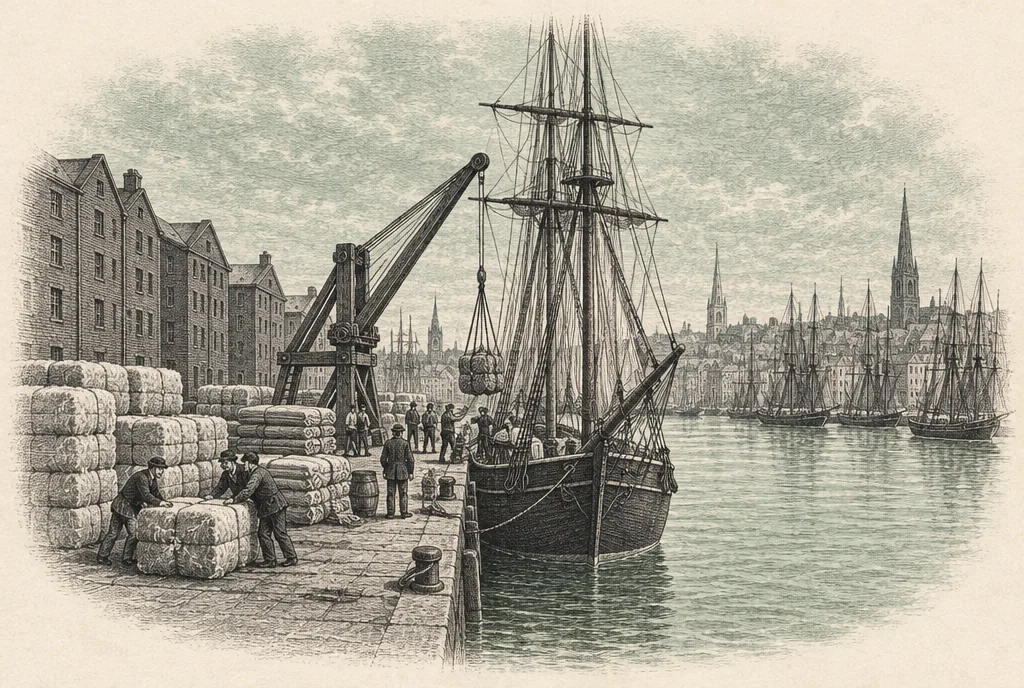
Why does society resist? Perez goes back through Nietzsche and Werner Sombart to Schumpeter’s creative destruction, and to his long waves of forty-five to sixty years. She prefers “great surges”, measured peak to peak, so that each covers one revolution’s full life. The Victorian boom came two decades after the Rocket, only after a railway network, a mania and a panic, and after new institutions ordered national markets and banking. The belle époque needed the Gold Standard and worldwide agreements on patents, measures and shipping, plus educational reform. The mass-production golden age needed institutions for mass consumption, and Fascism, Soviet socialism and Keynesian democracy were three very different ways of providing them. The information age will need a global network of institutions. Each revolution thus produces a new mode of growth. The first twenty or thirty years bring a widening mismatch between a fast-changing economy and slow-moving institutions, and the protests take many forms: the revolutions of 1848, the coups of the 1930s, the Seattle demonstrations of November 1999. The financial collapse is the final persuader. Then she asks why change comes by revolutions at all. Talent is always there; it surges when an opportunity explosion makes a new design space visible. Once a paradigm is accepted, an inclusion-exclusion mechanism lets compatible innovations through, a thousand plastics, dozens of appliances for the wired house, generation after generation of personal computer, while it filters out the incompatible or shrinks them into minor uses. Railways began hauling coal out of mines. Transistors made radios portable before anyone imagined a microcomputer. Edison thought his phonograph would record the wills of the dying, and the boss of IBM in the 1950s thought a handful of computers would serve the world. War spending is the one great exception, the Space Race of the 1960s above all. Each revolution follows a logistic curve, and in its last phase the giant core firms, locked into huge fixed investment, try radical novelties as stretching devices: high-pressure engines for textile mills, Taylor’s time studies in the steel yards, automation in Detroit in the early 1960s. The breakthroughs tend to come from outsiders, Carnegie, Bell, Edison, Ford, Noyce, Jobs, Gates. And here finance enters. Established firms will not fund true outsiders. Money in the hands of non-producers will, and it is readiest to do so when the old paradigm has run dry and idle capital is piling up.
The surge itself divides into two periods of about three decades each. In the installation period the new technologies advance like a bulldozer through a maturing economy. In the deployment period the whole fabric is rewoven by the triumphant paradigm. Between them lies the turning point, usually a serious recession. Arkwright’s water frame threatened hand spinners in England and India. The Liverpool to Manchester line doomed the long-distance coach, though horse numbers rose for fifty more years, much as the paperless office never came. The Suez Canal cut the passage to India from three months to one and made England’s great cargo depots obsolete. Refrigerated steel steamships opened northern meat markets to the southern hemisphere. Old giants rejuvenate: railways switched to steel rails in the 1870s, and the car industry of the 1980s took on chips, computer-controlled plants and Japanese flexible organisation. The economy splits along seven lines, new industries against old, modern firms against laggards, dynamic regions against declining ones, new skills against obsolete ones, the employed against the threatened, thriving industries against stale regulation, and winning nations against losers. The old sectors suffer deflation in the 1870s or inflation in the 1970s, depending on the institutions of the day. A Business Week chart from 1997 shows the high-tech sector pulling away from the rest of America through the early 1990s. Legitimacy comes into question, and the responses range from Roosevelt’s New Deal to Hitler. Diffusion runs through feedback loops: no cars without petrol stations and mechanics, no stations without cars. It needs cultural learning, the sequence from desktop to laptop to palmtop understood as normal, and institutional enablers such as the traffic code and consumer credit. Installation is a tense coexistence of two paradigms, driven by a financial frenzy that overinvests in infrastructure and exaggerates the superiority of the new. Two imbalances build: demand concentrated at the top cannot absorb the potential supply, and paper values drift from real ones. Deployment, when it comes, makes the surge visible across the whole economy. Chandler’s list of the ten largest American firms shows steel and meatpacking in 1917 giving way to oil, cars and appliances by 1948. Then maturity shortens product lives and the strike waves come, as among British engine drivers and Yorkshire miners around 1870 and again on the eve of the First World War.

Perez now draws the four phases within those two periods, and warns that this is a heuristic device, not a straitjacket: wars, droughts and gold rushes are left out of the clean model. Irruption, as in Britain in the 1830s and 1870s or America in the 1970s, is a time for technology. Young entrepreneurs explore a new universe while old industries stagnate, unemployment rises, prices misbehave, and inside every party modernisers split from the nostalgic. Frenzy, the 1880s and 1890s, the 1920s, the 1990s, is a time for finance. Paper decouples from production, Veblen’s leisure class flaunts itself, migrants move from poor regions to rich, and the fitting name is Twain and Warner’s Gilded Age, a shine of gold over base metal. Yet frenzy is also the period of intense trial-and-error exploration that firmly installs the paradigm, and of fierce free competition that ends in oligopoly. Excess wealth pours into the infrastructure, canals, railways, the Internet, and late frenzy is bubble time. The turning point is neither an event nor a phase but a process of change in the rules, marked sometimes by the repeal of the Corn Laws or the Bretton Woods meetings. It swings the pendulum from extreme individualism towards collective wellbeing, not out of ideology but because the structural tensions cannot be borne. It is a time of indetermination, when the mode of growth for the next two or three decades is chosen, and the result can be a golden age or merely a tempered gilded one. Synergy is a time for production: Victorian England after the Great Exhibition, America after the Second World War, full employment, labour laws, the reign of the middle class, finance in a supporting role. Maturity is the twilight, bright with false splendour. Jevons worried about cheap coal in the 1860s; the Limits to Growth report of 1972 worried about everything. The complacent proclaim unstoppable progress, a “Great Society syndrome”, while the young and the marginalised rebel, the Luddites and Peterloo in the 1810s, the hippies and May 1968 a century and a half later. Big firms merge, export and migrate, and the ban on truly new technologies quietly lifts. Perez then dates the phases on a chart. The first surge runs from the 1770s through a panic of 1793 to 1797 and a synergy that coincides with the Napoleonic Wars. The second runs from the 1830s through the crash of 1847 and the revolutions of 1848 to the Victorian boom and the maturity of 1857 to 1873. The third runs from 1875 through the 1893 panic to the belle époque and a maturity ending in 1918. The fourth runs from 1908 through the 1929 crash, with a turning point lasting until 1933 in Europe and 1943 in America, to the post-war golden age and a maturity from 1960 to 1974. The fifth runs from 1971, with frenzy from 1987 and a turning point beginning in 2001. The third surge is the odd one: Britain, queen of the seas and banker to the world, built transcontinental railways and telegraphs abroad and neglected steel, electricity and chemicals at home, so that by 1907 Wall Street could challenge Lombard Street. Japan in the fifth surge ran ahead, had an early and extreme frenzy, and collapsed from 1990 while America’s frenzy was just beginning.
Before turning to finance, Perez answers the long-wave sceptics. Their research has chased three illusions: purely economic causes, neat swings in aggregate output, and worldwide simultaneity. She expects none of these. Installation brings divergence inside the economy, not a uniform downswing, and whether the sum looks like decline depends on relative weights and rates. Worse, installation creates two moneys under the guise of one: money buying electronics is not the same money that buys furniture, and steel fell in price through productivity while iron fell through competition. Constant-price series spanning two paradigms are, she says, senseless. Surges spread like ripples, sector to sector and core to periphery. In synergy investment concentrates at home and the periphery supplies cotton, metals, grain, meat and oil. In maturity growth moves outward. By 1840, 71 per cent of British textiles went to the periphery. Properly counted, a surge has six phases, gestation before the big-bang and outspreading after the next one, and those two overlap with the first two of the following surge. The mass-production paradigm expanded in America in the 1950s, produced miracles in Germany, Italy and Japan in the 1960s, passed the baton to Brazil, Taiwan and Korea in the 1970s, and let oil states try aluminium and petrochemicals after 1975, just as the information revolution took hold in the core. This surge, globalised from the start, may behave differently.
Perez now makes her definitions explicit. Financial capital is not money but the agents and motives of those who hold wealth as paper and want it to grow, whatever the instrument. Production capital is the agents who build, who want ever greater capacity to produce, usually with borrowed money, which for Schumpeter is the very definition of capitalism. Finance is footloose; it can invest without knowing what a firm does and flees danger. Production is rooted in competence and place and must weather every storm. Ironically, incumbent production capital turns conservative in the face of radical change, so it falls to finance, family, banks or angels, to raise the new entrepreneurs. The relationship then follows the phases. Irruption is a love affair, finance rushing to the new sectors and fleeing the old; the stagflation of the 1980s was this split. Frenzy is decoupling, finance convinced it can thrive alone, production reduced to an object of speculation, every manager watching the share price more than the profits. Collapse brings paper back to reality. Synergy is a happy marriage with production recognised as the wealth creator and finance as the facilitator. Maturity brings trouble again, as idle money looks for distant loans and radical technologies, the first leading to debt crises and the second to the next revolution. A chart places the major crises of two centuries on the parallel surges, from the canal panic of 1793 to the NASDAQ collapse of 2000, and shows that the biggest bubbles bear the name of the new infrastructure, canal mania, railway mania, Internet mania.
She begins the detailed story not at the big-bang but a decade earlier, in maturity, where the seeds are sown. After years of happy cooperation, finance accompanies the blue-chip giants as they confront exhaustion by seeking market control: the railway amalgamations of the 1860s, the American conglomerate wave of the 1960s. War comes to the rescue of profits, the First World War for the third surge, Vietnam and the Space Race for the fourth. Firms redeploy abroad, and finance follows. British capital poured into post-Civil War America in the 1860s. A table of British foreign investment pulses with the phases, under thirty per cent of capital formation in synergy and irruption, over fifty in frenzy and maturity, though in maturity the money is tied to production and in frenzy it is purely speculative. As good borrowers dwindle, idle money finds bad ones. Sovereign debt balloons. British loans to American states for canals defaulted in 1837, loans for railways defaulted in 1873, and the development loans and petrodollars of the 1960s and 1970s became the Third World debt crisis of the 1980s. Latin America shows the cycle in full: loan fever every fifty or sixty years in maturity, from the independence loans of the 1820s to the development loans of the 1970s, and default in each installation period. Financiers also learn new tricks, leads and lags in payments, currency raids that toppled the Canadian, Italian, British and French currencies in the 1960s, tax havens. But the dispersal has one great benefit. Precisely because the old paths are exhausted, finance grows willing to risk money on the strange new technologies, as it did on steamships after Suez, on mass-production methods after Ford’s assembly line, and on electronics and computers from the mid-1960s.
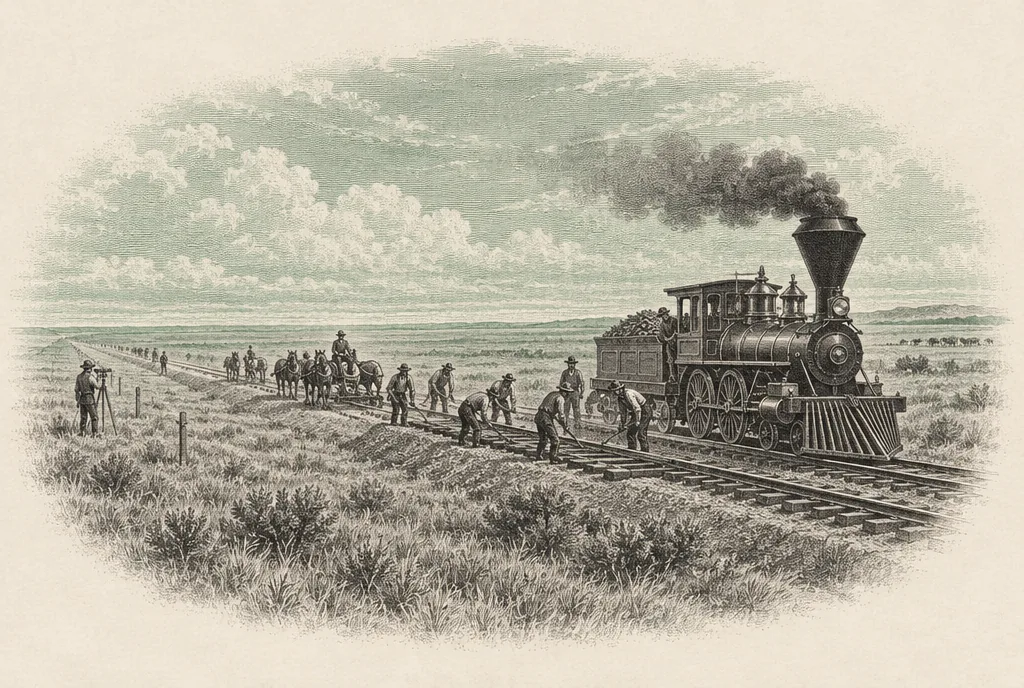
Then comes irruption, and with it the infatuation. The new revolution is a glittering minority of the economy while the bulk creaks with maturity, so aggregate figures deceive. Finance invents risk instruments to suit the moment. Cotton mills needed little fixed capital, so family money and the fortunes of returning nabobs sufficed. Railways needed sums no single firm could raise, so the joint-stock company spread. The third surge institutionalised investment banking: Carnegie’s plant was still funded by fellow capitalists, but by 1878 Edison was banked by the young Morgan, and by century’s end finance in Germany and America was taking control of heavy industry. The fifth surge brought venture capital in small quantities. States help too, Japan’s ministries, the German states, American state governments that supplied 40 per cent of railway funding, all behind tariff walls. Trade credit adapts: ninety-day revolving credit for cotton, small short-term instruments for the small traders that fast steamships made possible, hire-purchase after 1918 so that refrigerators and cars could be bought from monthly wages, plastic money since the 1970s. The wounded giants of the old paradigm pay for the new technologies as medicine, which is how railways went to steel and how Detroit, squeezed by saturation and then by the 1974 oil price, rebuilt itself with Japanese organisation, chips and global networks in little more than a decade. The financial world is itself the most eager customer, first to adopt the penny post, the telegraph, the telephone and the ticker tape, and since the mid-1970s digital networks, prefiguring the organisational scale of the firms to come. Towards the end of irruption, though, finance becomes inebriated. It has learned to expect the profit rates of the new industries from everything, while the old industries turn risky and whole trades vanish, as when coal-tar dyes from two or three German and English works wiped out the thousands of acres of madder root grown across Europe. There is not enough revolution to absorb the money, so finance turns to making money from money. A mid-installation crash can mark the passage, England in 1836, France in 1882, 1920, 1987. With or without it, frenzy arrives as the triumph of financial capital, and the seeds of chaos are sown in the wind.

Frenzy is the casino, Susan Strange’s phrase, worsened in her later book to mad money. The gap between modern and old becomes a chasm, and finance accelerates the centrifugal forces. Idle money grows again, now in the hands of the nouveaux riches, who want to multiply it as fast as they made it. Speculation inflates old assets: inverted pyramids of holdings, leveraged buyouts, a hedge fund that began 1998 with under five billion of capital and borrowed a hundred and twenty, derivatives and junk bonds that make everybody an investor. Real estate is the favourite target. In 1980s Tokyo the grounds of the Imperial Palace were priced at the value of all the land in California, and in 1880s Chicago people bought at prices they knew were fictitious, trusting a greater fool. Fundamentals are forgotten and anything can list. The weak nodes crack first: the Third World debt crisis and the American savings and loan collapse of the 1980s, the American state defaults of the 1830s and 1870s, the privatisations and swaps that followed, and the birth of United Fruit out of Central American debt. Yet a paradigm shift also opens windows for catching up and forging ahead, Belgium and the United States in the second surge, Germany and America in the third, Europe and Japan in the fourth. Argentina in the 1880s, flush with British and German money for railways and ports and refrigerated ships, was talked of in London as the next United States, until the Baring crisis of 1890, when the Bank of England bailed out Baring and Argentina took a decade to recover. The Asian Tigers a century later, floated on Cold War investment and then on Japanese and Western money for anything from factories to jewels, collapsed in 1997 with Mexico, Russia and Brazil in their wake. Chastened abroad, finance comes home to the hyperactive core industries and repeats the one recipe until it becomes delirium: canals from any river to any river, railway shares unloaded at a premium, and by 2001 a trillion-dollar scrap heap of fibre optic cable of which only one or two per cent had ever been lit. In 1929 ordinary Americans borrowed to buy shares. In the 1790s French wealth fleeing the Revolution ended up in English canals, and in the 1990s the savings of the rich in poor countries flowed into the stock markets of the core. Wasteful and painful as it is, the mania does the job of installing the infrastructure. Accelerating change makes equipment obsolete before it is paid for, steamers of 1873 sold for half price by 1876, and price wars drive firms into cartels and mergers, the Sherman Act of 1890 turning collusion into consolidation, the mega-mergers of the late 1990s forming global networks. Ethics soften. Being rich is being good, and the opacity suits swindlers, Ponzi in 1920s Florida, the money-launderers of the 1990s, and the Enron revelations of 2001, which may become the emblem of this frenzy. The Dow pulls away from American output through the 1990s. By 1995 the notional value of derivatives, sixty-four trillion dollars, nearly equalled all the bonds, shares and bank assets of the rich world. Two moneys again: five cars for one computer in the 1960s, twenty computers for one car in the 1990s, and a virtual company called Yahoo worth more than Eastman Kodak. The condition for synergy, Perez insists, is adaptive regulation of finance, and as George Soros argues, national rules cannot govern a global casino.
The turning point follows. By now the paradigm has triumphed: dominant designs chosen, infrastructure laid, consumption patterns set, common sense installed. What it needs is expanding markets and control by production capital, with profit expectations brought back to earth. Finance resists, since its genius has been proven for years, and accepts rules only after its gains evaporate and the recession shows the casino cannot be revived. Three structural tensions make every late-frenzy bubble unsustainable. Paper wealth cannot grow faster than real wealth forever, as a Fortune article warned in 1999 about an earnings chasm, and as a French newspaper noted in 2001 when firms were freed from the dogma of fifteen per cent returns. Income concentrated at the top cannot buy the output that economies of scale now require: halve the price of a computer and most of those who could not afford it still cannot, whereas lifting a dozen developing countries out of crisis would dwarf present sales. And the excluded grow angry. The ratio of the richest fifth of humanity to the poorest rose from thirty to one in 1960 to seventy-four to one by 1999. The NASDAQ implodes in the spring of 2000 like a plug pulled from a bath. Recession threatens by January 2001, deepens Japan’s decade-long stagnation, reaches Europe, and is sharpened by the attacks of September 11th. A Silicon Valley venture capitalist calls 2001 a nuclear winter. The warnings had been there, from Freeman, from The Economist, from Greenspan’s own phrase about irrational exuberance, as Warburg and Babson had warned in early 1929 and were shouted down. Investment firms had taken centre stage, rising from two per cent of new issues in 1926 to over a third in 1929, and attracting up to forty-eight billion dollars of venture money in 1999. Crashes are the door to regulation, but only if there are real bankruptcies, not bailouts; Perez raises the 1998 rescue of Long-Term Capital as the hard dilemma of the lender of last resort. Lessons fade, but many rules remain. The historical record complicates the model: Britain in the 1890s had its frenzies abroad and no crash at home, while America’s true madness came during its synergy, between 1903 and 1907, under a J. P. Morgan with almost as much power as the President. Handing power to production capital is a political act. Keynes worried in the 1930s about owners who neither manage nor understand, and Drucker snapped in the 1990s that analysts think companies make money when companies make shoes. Why did the American depression last so long? Germany under Hitler and the Soviet Union each found a mode of growth for mass production in the 1930s, while Britain and France recovered without the installed base to lead. In America the New Deal was fought as creeping socialism, by production capital as much as by finance, and it took the wartime military-industrial partnership to show that business could live with an active state. The war itself, Perez suggests, was the beginning of deployment and a dress rehearsal for the post-war order.
Synergy opens with confident optimism in place of cunning speculation, and with the only kind of statistics an economist can safely extrapolate. America’s two synergies differed: in the Progressive Era financiers sat on the boards and ruled, which Chandler called financial capitalism, whereas after 1945 professional managers ruled, managerial capitalism, so completely that Wall Street failed to reflect the boom of 1947 and firms financed three-quarters of their investment from their own earnings. Rules are accepted or demanded. The suspension of the pound’s convertibility shielded the first revolution. Joint-stock banks, the Bank Act of 1844, factory and mine laws, and the repeal of the Corn Laws in 1846 opened the Victorian boom. The Gold Standard, the Paris patent convention of 1883, universal standards and Bismarck’s social insurance underpinned the belle époque. The IMF, the World Bank, the Marshall Plan, the dollar’s reserve role, GATT, Keynesian policy, deposit insurance, the SEC and the separation of savings from investment banking underpinned the post-war age; after Enron there are calls to separate auditing from consultancy. Finance innovates adaptively: country banks, cheques, preference shares, the Crédit Mobilier, German medium-term export loans, personal banking and home mortgages made safe by unemployment insurance. Prosperity spreads downward, to the middle classes in the nineteenth century and the working classes after 1945, through infrastructure, education and cheaper popular versions of the new way of living, and through induced branches such as the service economy. Technology shifts from exploration to build-out, Brian Arthur’s thousand small arrangements for use, and from creaming the luxury end to cash cows at the bottom. Cheaper steel and transport, then cheaper oil and electricity, and now cheaper chips and bandwidth drive a virtuous cycle. Then momentum fades, in a mid-life crisis like 1857 in Britain or 1960 in America, and maturity returns with its mergers, its protests and its complacency. Two mirages recur, the new economy of frenzy and the ever-improving society of synergy, the first broken by the bubble and the second by discontent.
Perez then sorts financial innovations into a ladder, from instruments that give life to new products at the top, through those that fund growth, modernise finance itself, spread risk, or shuffle existing assets, down to the questionable arts of loopholes, arbitrage and swindle. Irruption produces the widest crop of all kinds. Frenzy tilts to the bottom rungs. Synergy returns to basics. Maturity turns to concentration, foreign loans and opacity. Wall Street took the ticker tape and the telephone at once, while the London Exchange, owned by a few, delayed five years to keep outsiders away. Each paradigm reshapes finance: the local banks of the first surge could never have built railways, and the great houses that financed US Steel and Siemens could not have imagined the millions of instalment contracts the car age required. Mass production turned the family home into a set of capital goods bought from wages and made government a central economic actor. The information age poses harder questions: how to measure knowledge, whether it can be collateral, what a product costs that can be copied for nothing. Institutions must match: without welfare and unions there would have been no mass demand, without compartmentalised banking no stable fourth surge, and the old compartments may now be impractical. Every revolution yields a new economy, but never one without cycles. Keynes built a new economics for the last paradigm; stagflation broke it, monetarism and the laissez-faire of Thatcher and Reagan rode the installation period, and the recession now creates the conditions for the next new economics.
The model is gathered up. Each surge has installation, turning point and deployment, four phases of roughly a decade each, and raises the whole economy to a higher plateau of productivity. Production capital ensures full deployment; financial capital enables the succession of surges, breaking loose at the end of each to back the next. Three spheres interact, technology, the economy and institutions. Technology is the fuel, and the relative autonomy of science keeps a pool of radical ideas waiting, which is why academic freedom belongs to the system’s dynamics. The common sense of each paradigm spreads like a virus from firms to schools, hospitals and parties, which is the source both of inertia at the end and of the capacity to redesign at the turning point. Inertia is not always bad; it lets each revolution bear its full fruit. Capitalism manages a constant tension between private and social interest, and Keynes said in the 1920s that nothing guarantees they coincide from above or below. Perhaps the system advances by swinging to extremes, from the unleashed self-interest of installation to the moderated order of deployment, a vision Perez finds already in Edwin Gay, the founding dean of Harvard Business School.
Finally she weighs what such a model can and cannot do. Reading accounts of the 1870s one is struck by how compound engines and steamships rhyme with chips and computers, and how the telegraph’s world economy rhymes with the Internet’s. History became her laboratory, a model built on four and a half cases, and the anomalies, Britain’s missing crash, America’s financial Progressive Era, the long American depression, reshaped the hypotheses. The dating is a working approximation; the model explains long dynamics, not single crises, for which Minsky and Kindleberger serve better; it is a bird’s-eye view, a blunt instrument that depends on flexible use. It may explain the ebb and flow of economic thought: the literature on crises is anticyclical, Greenspan’s late claim of a cycle-free new economy echoed Irving Fisher’s permanently high plateau of 1929, the historical school lost to the neoclassicals during the third installation as the Keynesians lost to the monetarists during the fifth, and Ricardo the stockbroker, Veblen in the savage 1890s and Keynes in the sick 1930s each wrote the economics of their phase. For policy the lesson is that the near future is rarely an extrapolation of the near past. Who in 1930 imagined full-employment policy, who in 1925 imagined strict financial regulation and recognised unions, who in 1965 imagined the end of Bretton Woods, stagflation and deregulation? Each paradigm shift splits politics anew, between those looking forward and those looking back, cutting across the old line between individualism and solidarity. The wise course is to design the needed institutions during frenzy so they are ready when, in Triffin’s phrase, the necessary catastrophe makes them acceptable. Whether the bubble, the recession and the pain could ever be engineered away, or whether a more humane stage of capitalism lies ahead in the spirit of Polanyi and Beveridge, she leaves as open questions.
The epilogue is dated Caracas, June 2002. The world, Perez writes, is at the turning point. Installation ended when the NASDAQ drained in March 2000; the recession spread through 2001 and deepened after the World Trade Center fell. Whether the markets have seen the worst she does not know, but the structural problems are there to be solved and the information revolution is waiting to deliver its second half. This is a time for institutional imagination at every level from local to global. In 1930 Keynes warned that there could be no real recovery until lenders and productive borrowers were brought together again, and that the slump would otherwise become a depression. Blaming September 11th now is like blaming OPEC in the 1970s. Finance has done its job of installing the paradigm; it is production capital’s turn to lead, though the collapse may not have been spectacular enough to humble finance. Three tensions demand action: enforced regulation to bring profit expectations down to earth, since the Enron and WorldCom scandals are not a sudden epidemic of dishonesty but the result of impossible demands, and during frenzy crime paid well; policies to activate demand for chips, computers, software and networks, at home and above all by bringing the big developing countries, China, Russia and Eastern Europe into global growth, remembering that in 1929 only a third of American adults had a car and by 1970 more than seventy per cent did; and decisive action across the world divide, without which migration, violence and crises like Argentina’s threaten the prosperous too. No idea is too bold if it fits the common sense of the new paradigm. The forces that will fight these battles are gathering now, and those who arrive with viable proposals will shape the next two or three decades. A golden age of worldwide expansion is possible, she ends, if people think big, decide wisely and act boldly.
Perez’s forecast of a turning point in 2002 did not play out as she hoped. In later interviews she has treated the 2008 financial crisis as part of the same turning point, called this the longest installation period on record, and argued that the golden age remains possible but still depends on the kind of concerted institutional effort that followed the Second World War.