Five readings, for people who judge things and make things. They span two and a half centuries, and they circle one old proverb: there is no disputing about taste. Two philosophers of the eighteenth century take it on first. A French sociologist answers them two hundred years later. Then a New York critic, and last a programmer who once studied painting. Each one is asked the same question. Is good taste real, or is it only opinion that sounds sure of itself?
It is 1757, and David Hume begins with a puzzle hidden in plain sight. In every language, he notes, people praise “elegance, propriety, simplicity, spirit in writing” and blame “fustian, affectation, coldness”. The agreement looks complete. But when critics come to particular books, Hume says, “this seeming unanimity vanishes”. The words were never doing the work. They praise by their very meaning, as “virtue” praises and “vice” blames. Everyone applauds prudence, and Homer gives his hero Ulysses plenty of it. Yet Homer’s Ulysses “seems to delight in lies and fictions”, often for no reason at all. In François Fénelon’s French epic, Ulysses’s son would sooner face mortal danger than depart from “the exactest line of truth”. Hume makes the same point about the moral teaching of the Koran: the Arabic words for justice and charity are words of praise, so to praise them proves nothing. One word, two very different men. The quarrel was there all along, waiting in the particulars.
So it is natural, Hume says, to seek a standard of taste: a rule to reconcile people’s feelings, or at least to confirm one and condemn another. A whole school of philosophy says no such rule can exist. A judgement about a fact can be wrong, because it points at something outside itself. A feeling points at nothing but itself, so every feeling is right. In this view, beauty “exists merely in the mind which contemplates them”. To seek real beauty is as pointless as seeking “the real sweet or real bitter”. One tongue finds a dish sweet, another bitter, and both are telling the truth. Here, for once, the sceptics and common sense agree. Hence the proverb.
But there is another kind of common sense, Hume says, and it pushes back. Try saying that John Ogilby, a translator of Homer and Virgil, writes as well as John Milton. Or that John Bunyan is as elegant as Joseph Addison. Anyone who claimed that, Hume writes, would sound like a man who held “a molehill to be as high as Teneriffe”, the great peak of the Canaries. When two works are close, we let people prefer either. When they are this far apart, the principle that all tastes are equal is simply forgotten.
Where, then, do the rules of art come from? Not from reasoning, Hume says, but from experience: from what has been found to please in every country and every age. Poetry runs on metaphor and exaggeration, so the rules can’t be geometry. The Italian poet Ludovico Ariosto pleases, but not by his wild plots or his jumble of the comic and the serious. He pleases by the force and clearness of his expression, and his faults only dim it. Our finer feelings are delicate machinery, and they need the right conditions: “A perfect serenity of mind, a recollection of thought, a due attention to the object.” Lacking those, a single reading proves little. The true test is time. “The same Homer,” Hume writes, “who pleased at Athens and Rome two thousand years ago, is still admired at Paris and at London.” Fashion can lift a bad poet for a season. Once strangers and later ages read him, the spell breaks.
Behind all the variety, then, lie general principles of approval, built into the structure of the mind. When they fail, something is wrong with the organ. A man in a fever doesn’t trust his palate on flavours. A man with jaundice doesn’t give verdicts on colours. Colour itself may be only an appearance. Yet the colour a healthy eye sees in daylight is the one we call true. In the same way, the feelings of a sound mind give us the standard of beauty.
The first thing that fails in most people, Hume says, is delicacy. Everyone claims it, and everyone talks about it, so he means to define it properly. And he goes, of all places, to Don Quixote.
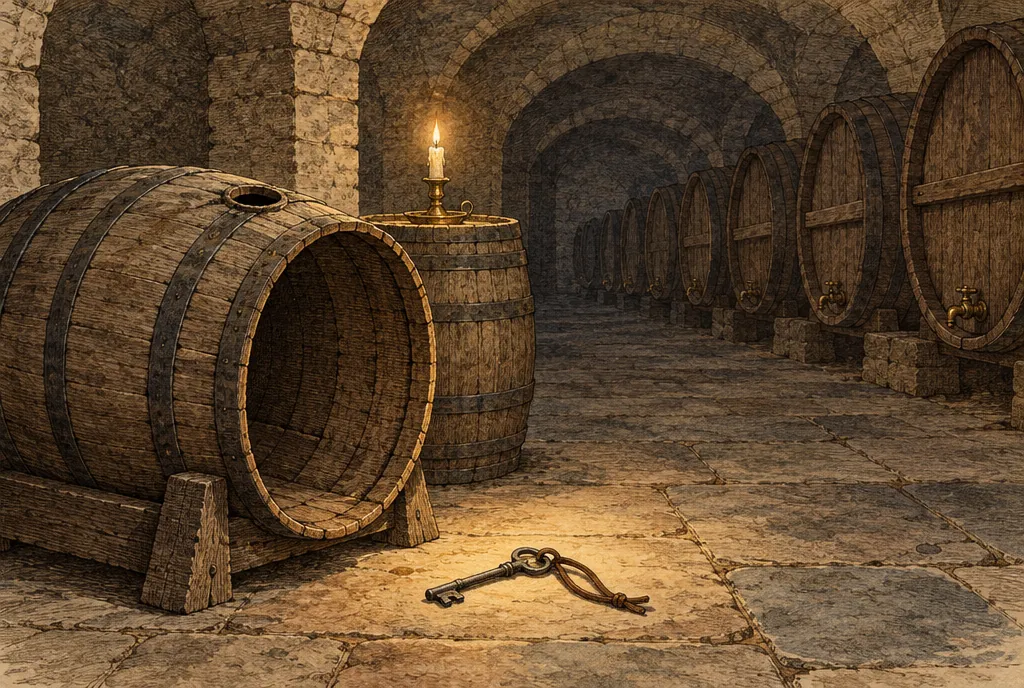
’Tis with good reason, says Sancho to the squire with the great nose, that I pretend to have a judgment in wine: This is a quality hereditary in our family. Two of my kinsmen were once called to give their opinion of a hogshead, which was supposed to be excellent, being old and of a good vintage. One of them tastes it; considers it, and after mature reflection pronounces the wine to be good, were it not for a small taste of leather, which he perceived in it. The other, after using the same precautions, gives also his verdict in favour of the wine; but with the reserve of a taste of iron, which he could easily distinguish. You cannot imagine how much they were both ridiculed for their judgment. But who laughed in the end? On emptying the hogshead, there was found at the bottom, an old key with a leathern thong tied to it.
— David Hume, Of the Standard of Taste, in Four Dissertations, 1757
That is delicacy, Hume explains: a taste so fine that nothing escapes it, and so exact that it picks out every ingredient. The key at the bottom of the cask is what the general rules of art are for. The two kinsmen were right before the cask was emptied. But only the key could prove it to the people laughing at them. In the same way, an agreed principle, shown at work in examples the doubter already admires, can convince him that the fault lies in himself. A good palate, Hume adds, is not tested by strong flavours. It is tested by a mixture of small ones, where it can still taste each part. That is the perfection of the mind’s taste too.
Delicacy can be grown, and the way to grow it is practice. The first time we look at any work, Hume says, our feeling is “obscure and confused”. We might manage to call the whole thing beautiful or ugly, and even that with hesitation. With experience, we see each part and name the kind of each merit. “The mist dissipates, which seemed formerly to hang over the object.” So an important work must be read more than once. A first reading comes with “a flutter or hurry of thought” that confuses the true feeling. And some beauty is florid and on the surface: it pleases at first, then palls.
Practice brings comparison, and without it no one can judge at all. The coarsest painted sign-post has some brightness of colour, and the roughest ballad has some music. To someone who has seen nothing better, they look like wonders. Only a person who knows the higher examples feels their weakness. So only someone who has weighed the works admired in many ages and nations can give a new work its proper rank.
Even then, a judge has to clear the mind of prejudice. Every work is made for a certain audience and has to be seen from that audience’s place. Hume’s example is an orator, who speaks to particular listeners, with their interests and their passions. A critic from another age must stand among those listeners in imagination before judging the speech. And if the critic happens to be the author’s friend or rival, they must forget it, and think of themselves as “a man in general”. Whoever won’t step out of their own position, Hume says, loses all authority as a judge.
Last comes good sense. Every work has parts that must hang together, and a purpose it is built for. Eloquence must persuade, history must instruct, and poetry must please through the passions. To see whether the means fit the end takes reason as well as feeling. Hume is blunt about it. A sensible person who knows an art can almost always judge it. And it is just as rare to find good taste in someone without a sound understanding.
So the principles of taste are the same in everyone, yet few can judge. Hume lists the ways a critic falls short. Without delicacy, the finer touches pass unseen. Without practice, the verdict comes out confused. Without comparison, the shallowest beauties win admiration. Under prejudice, every natural feeling is bent. And without good sense, the beauties of design and reasoning go unnoticed, though they are the highest of all. Then, in one sentence, the whole essay arrives. “Strong sense, united to delicate sentiment, improved by practice, perfected by comparison, and cleared of all prejudice, can alone entitle critics to this valuable character; and the joint verdict of such, where-ever they are to be found, is the true standard of taste and beauty.”
But where are such critics to be found, and how do we tell them from pretenders? Hume admits the question seems to drop us back into the doubt we started from. His answer is that it is a question of fact, not of feeling. People may argue over whether a given man has good sense and a delicate imagination. Everyone agrees that such a man is worth listening to. And in practice the standard is easier to find than theory suggests. Systems of philosophy and theology rise in one age and are thrown out in the next. Poetry doesn’t fall the same way. As Hume puts it, “Aristotle and Plato, and Epicurus and Descartes, may successively yield to each other: But Terence and Virgil maintain an universal, undisputed empire over the minds of men.” Cicero’s philosophy has lost its credit, while his oratory is still admired. Good judges stand out in company. Each person they convert to a true poet converts someone else.
Even so, two kinds of difference remain that no standard can settle, and Hume calls them blameless. The first is temperament. “At twenty, Ovid may be the favourite author; Horace at forty; and perhaps Tacitus at fifty.” We choose a favourite author, Hume says, as we choose a friend, for the likeness of temper. One reader loves the sublime, another the tender, another wit. The second is the customs of our own time and place. It takes some effort to watch princesses drawing water from a spring, or kings cooking their own dinners. Comedy, especially, travels badly between ages and nations.
Customs and morals, though, are not the same thing. We must make allowance for old manners, Hume says. “Must we throw aside the pictures of our ancestors, because of their ruffs and fardingales?” But where a work shows vice without blaming it, no excuse from its age can save it. Errors of belief, even about religion, are forgivable in a poet. Bigotry is not. Hume takes the French theatre to task for a zeal that crowds out humanity. Superstition fares no better, when it intrudes into every feeling. Hume closes on two poets. “It must be for ever ridiculous in Petrarch to compare his mistress, Laura, to Jesus Christ. Nor is it less ridiculous in that agreeable libertine, Boccace, very seriously to give thanks to God Almighty, and the ladies, for their assistance in defending him against his enemies.”
Thirty-three years later, in 1790, Immanuel Kant comes at the same question from the inside. He asks what we are actually doing when we say that something is beautiful. His first answer is that a judgement of taste is not knowledge. When I know something, I relate an image to the object. When I find something beautiful, I relate it to myself, to my own feeling of pleasure. That makes the judgement aesthetic, not logical. Kant’s next step is the one everything else rests on.
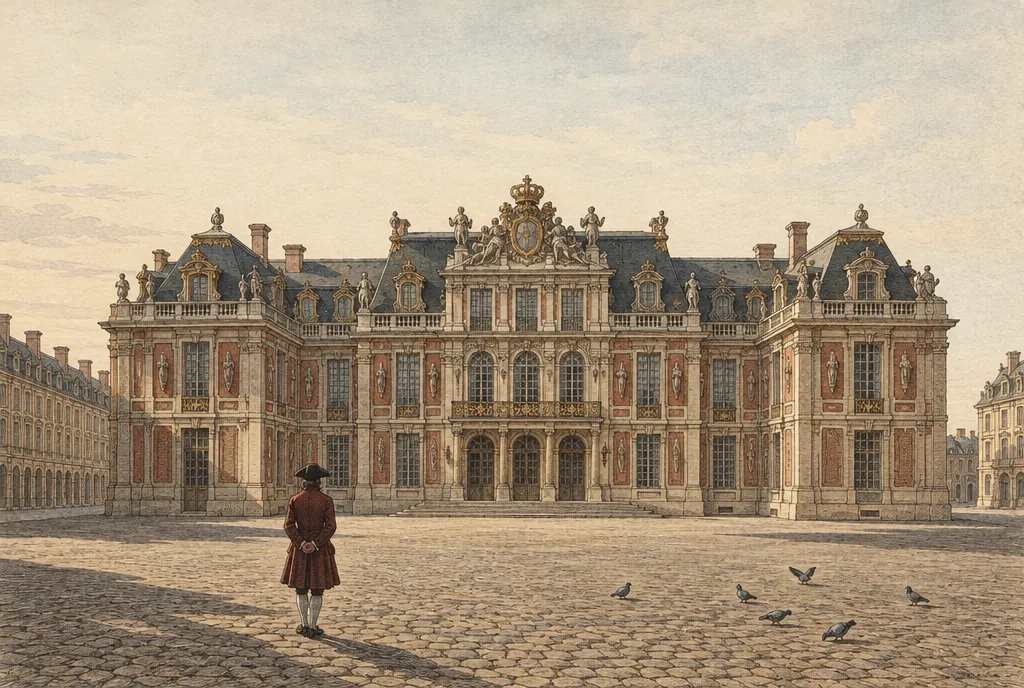
Imagine standing before a palace and being asked whether you find it beautiful. Kant lists the answers that miss the point. You might say: “I do not like things of that kind which are made merely to be stared at.” You might answer like the Iroquois sachem who, in all of Paris, liked nothing so much as the cook-shops. You might follow Rousseau and scold the great, who waste the sweat of the people on such things. Or you might decide that on a desert island, able to conjure such a building with a wish, you wouldn’t bother if you had a comfortable enough hut. Kant’s reply is brisk: “This may all be admitted and approved; but we are not now talking of this.” The only question is whether the bare sight of the palace pleases you, however indifferent you are to whether it exists. Any interest in owning it, using it or condemning it spoils the judgement. To judge taste, you must not care whether the thing is real at all.
That is what Kant means by disinterested, and it separates three kinds of liking. The pleasant gratifies: it rouses a desire, and wants the thing itself. The good is judged by a concept, because to call something good I must know what it ought to be. The beautiful needs neither. “Flowers, free delineations, outlines intertwined with one another without design and called foliage,” Kant writes, “have no meaning, depend on no definite concept, and yet they please.” Then he gives his first definition. “Taste is the faculty of judging of an object or a method of representing it by an entirely disinterested satisfaction or dissatisfaction. The object of such satisfaction is called beautiful.”
From disinterest, something surprising follows. If my pleasure doesn’t depend on anything private to me, I assume it should hold for everyone. Kant shows the difference with a glass of Canary wine. If I call it pleasant, I’m happy for someone to correct me: I should have said that it is pleasant to me. One person finds violet soft and lovely, another finds it faded and dead. For the pleasant, everyone does have their own taste. Then Kant turns the knife.
The case is quite different with the Beautiful. It would (on the contrary) be laughable if a man who imagined anything to his own taste, thought to justify himself by saying: “This object (the house we see, the coat that person wears, the concert we hear, the poem submitted to our judgement) is beautiful for me.” For he must not call it beautiful if it merely pleases himself. Many things may have for him charm and pleasantness; no one troubles himself at that; but if he gives out anything as beautiful, he supposes in others the same satisfaction—he judges not merely for himself, but for every one, and speaks of beauty as if it were a property of things.
— Immanuel Kant, Critique of Judgement, translated by J. H. Bernard, 1914, §7
Kant goes on to say that the speaker doesn’t count on others agreeing; he demands it. Yet no concept backs the demand. There is no rule we could prove it by. What we share, Kant argues, is a state of mind. In the presence of beauty, imagination and understanding are in “free play”, because no concept ties them down. That free play can be felt by anyone, and it is what we expect others to feel too. So comes the second definition. “The beautiful is that which pleases universally, without a concept.”
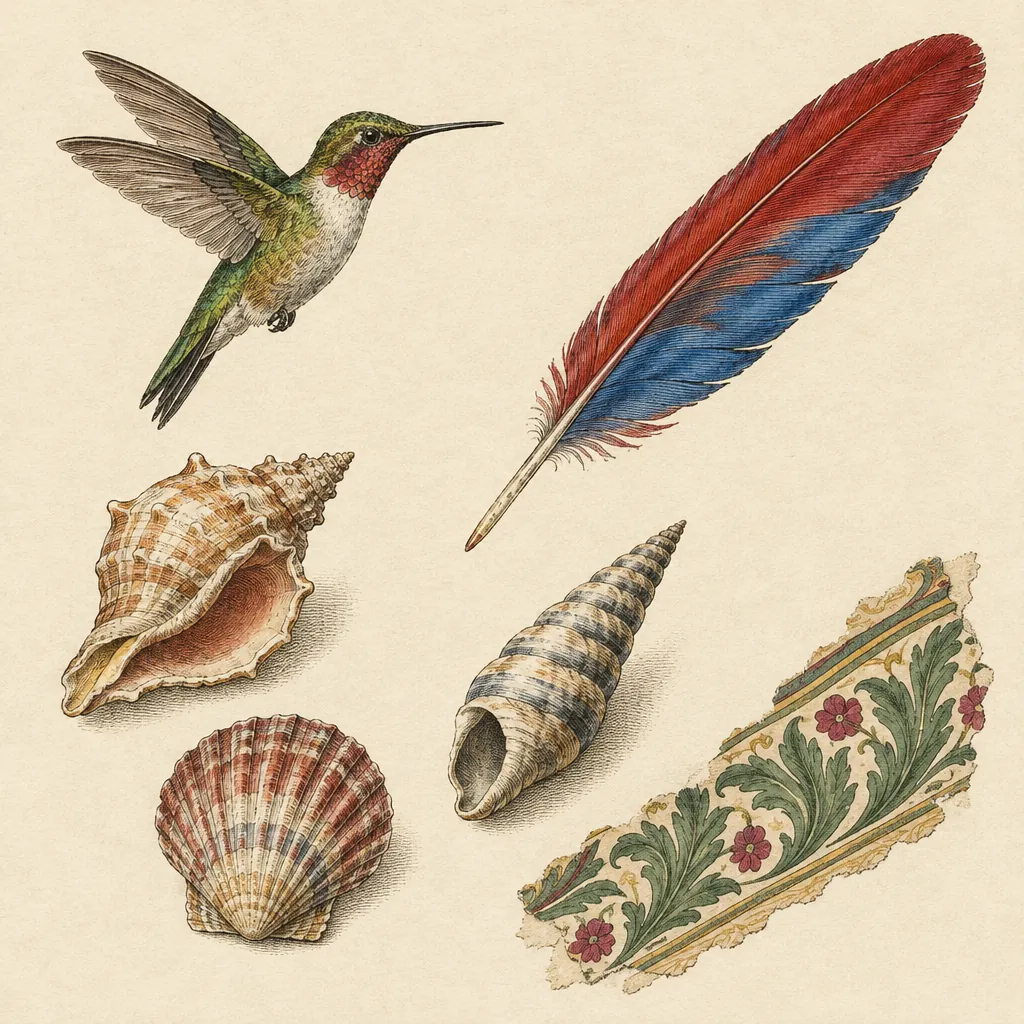
What is it in the object that pleases? Its form, Kant says, the way it seems designed to suit our minds, though for no purpose we could name. He calls this purposiveness without a purpose. Charm and emotion have no part in it. In painting, “the delineation is the essential thing”, and colour is charm. A gilt frame used only to show off a picture is “finery”, and it injures true beauty. Kant then separates two kinds of beauty. Free beauty means nothing and serves nothing: flowers, the parrot, the humming bird, the bird of paradise, sea shells, foliage on wallpaper, music without words. Dependent beauty belongs to things with a purpose, such as a man, a horse or a church. “We could add much to a building which would immediately please the eye, if only it were not to be a church.” We could cover a figure with spirals and fine lines, “as the New Zealanders do with their tattooing”, if only it were not a human figure. Many quarrels about beauty end here. One judge is looking at free beauty, the other at dependent beauty, and both are right.
Is there, then, a model of perfect beauty to copy? No rule could produce one, Kant says. Some works are exemplary, Kant allows, and he adds a warning. “Not that taste can be acquired by imitating others; for it must be an original faculty.” The highest model is an idea each of us must form for ourselves. It can only be pictured for the human figure, and Kant explains how the imagination finds its outline. “Every one has seen a thousand full-grown men.” Without our noticing, the imagination lays all those images over one another, and the average stands out where most of them overlap. That average figure is the normal idea of a man. The ideal adds something more: the visible expression of moral qualities, such as goodness of heart, purity, strength and peace. The third definition gathers it up. “Beauty is the form of the purposiveness of an object, so far as this is perceived in it without any representation of a purpose.”
The fourth asks how firmly the claim binds. Calling a thing beautiful, Kant says, carries a peculiar kind of necessity. I put my judgement forward as an example of a rule that no one can state. For that to make sense, we must assume a common sense, a feeling we all share rather than a private one. Kant’s line is exact. “It does not say that every one will agree with my judgement, but that he ought.” So the last definition. “The beautiful is that which without any concept is cognised as the object of a necessary satisfaction.”
Kant ends with a general remark that brings all this down to earth. Taste is “a conformity to law without a law”: order the imagination finds on its own, not order imposed on it. Critics praise the circle and the square, but Kant says that pleasure belongs to the understanding. All stiff regularity, he writes, “has something in it repugnant to taste.” It tires us quickly. Then he tells a story from William Marsden’s account of Sumatra. Marsden finds nature’s free beauties all around him, so many that they lose their pull. Then, in the middle of the forest, he comes on a pepper-garden. The stakes stand in straight parallel rows, with the vines twining up them, and he is charmed. Marsden concludes that wild beauty pleases only as a change from order. Kant disagrees. Spend one day in the pepper-garden, he says, and its order would become a burden. Nature, lavish and unruled, feeds taste without end. Even birdsong, which no musical rule can capture, seems freer than human song. But here Kant catches himself. We may be mixing the song with our fondness for the little singer. If a man imitated the nightingale exactly, it would seem to us “quite devoid of taste”. Last come the fire in the hearth and the rippling brook. Neither is beautiful, Kant says. They simply keep the imagination at play.

Nearly two centuries later, Pierre Bourdieu, a French sociologist, takes the philosophers' question out of the study and into people’s homes. His book is Distinction, published in 1979. Its claim is that taste is not a private gift. It is learned, and learned unevenly. Bourdieu built the case from surveys of French households in the 1960s. He asked people about their music and their meals, their furniture and their photographs, their clothes and their films. The answers lined up closely with their class, their schooling and their upbringing. What people find beautiful, tasteful or vulgar, he argues, follows where they come from.
To explain how, Bourdieu widens the idea of capital. Money is economic capital. Cultural capital is ease with what counts as high culture. It means knowing how to look at a painting, which composers matter and how to talk about wine. It is passed down at home and certified by schools, and it can be traded for status and, in time, for money. Bourdieu adds a second term, habitus. Habitus is the set of habits a class forms so deeply that they feel like nature. It shapes what a person notices, what they like and what makes them wince. Because it feels natural, people experience their tastes as personal, and their judgements as simply correct.
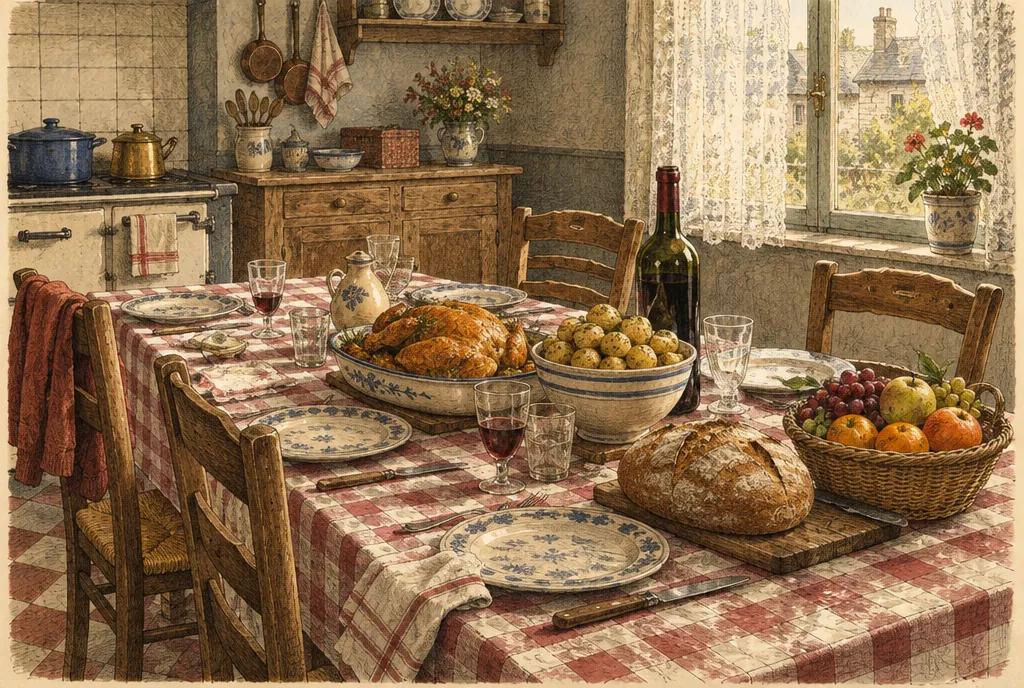
Here Bourdieu turns on Kant. The dominant classes, he finds, favour a pure aesthetic, putting form above function and cool distance above pleasure. Working-class taste leans to a popular aesthetic of use, plenty, plain enjoyment and taking part. Kant’s disinterested judgement, in this reading, is not a universal law of the mind. It is the taste of one class, polished into philosophy. And taste is a weapon. It sorts things, and in sorting them it sorts the person doing it. To like the right things marks you as one of us. To dislike the wrong ones marks your distance from those below. The middle classes, anxious about their place, show what Bourdieu calls cultural goodwill: an earnest effort to like the proper things, which gives them away. For anyone who makes things, he leaves one hard question. Do you like this thing, or do you like what liking it says about you?
Susan Sontag, writing in New York in 1964, comes at taste from a direction none of the others expect. Her essay is Notes on “Camp”, published in Partisan Review. She writes it not as an argument but in fifty-eight numbered notes, because, she says, a sensibility, unlike an idea, slips out of any system. And she writes from a divided heart. She is strongly drawn to camp, and almost as strongly offended by it.
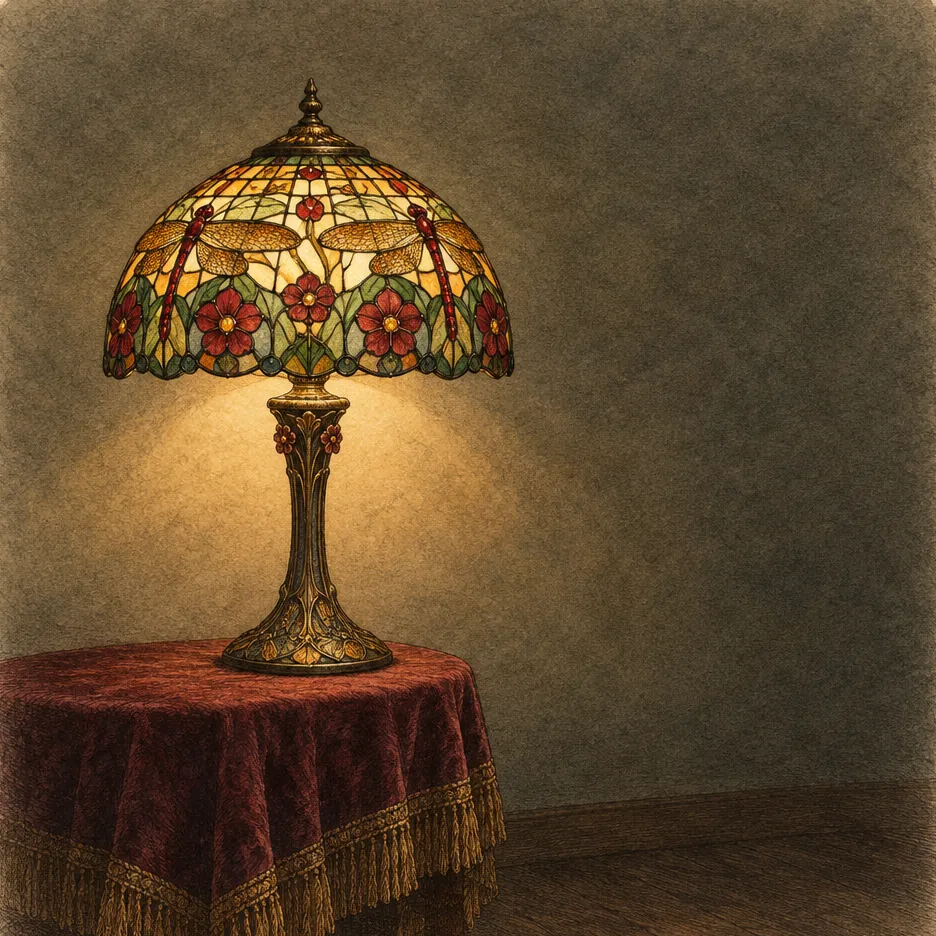
Camp, for Sontag, is a way of seeing the world as a matter of style. It is measured not by beauty but by artifice. It loves the unnatural, the exaggerated, the slightly off. It sees everything in quotation marks: not a lamp but a “lamp”. Her list of examples runs from Tiffany lamps and Art Nouveau to Swan Lake and the old Flash Gordon comics. None of these is simply bad, and none is simply good. Each one is too much, and knows it, or doesn’t.
The purest camp, Sontag argues, doesn’t know it. It is made in dead earnest, and it fails grandly. The key ingredient is seriousness that fails, joined to passion and ambition. A merely bad thing is not camp. A bad thing that reached for too much, with complete conviction, can be. Camp that sets out to be camp is usually less satisfying. And camp taste is generous. It dethrones the serious and puts style above content. It enjoys rather than judges, and it is fond of what it laughs at, never contemptuous. Sontag traces it back to the dandy, and in part to the urban gay culture of her day, where it gave outsiders their own place in the world of taste. Hume ranked works on one ladder. Sontag shows there is more than one way to love a thing, and that a brave failure can be more alive than a safe success.
In February 2002, Paul Graham, a programmer and essayist who trained as a painter, brings the question back to the workbench. His essay is Taste for Makers. It opens with a friend at MIT, who reads applications from would-be graduate students every year. Many seem smart, the friend says, but he can’t tell whether they have taste. Graham wants to treat beauty as a practical question: how do you make good things? He starts with the proverb Hume began with. Most of us are taught as children that taste is personal, to stop us squabbling. Then we are taken to a museum and told that Leonardo is a great artist. Graham’s point is simple. If taste were just preference, a designer could never get better, because everyone’s taste would already be perfect. But designers do get better, and they know it. Their old taste wasn’t merely different. It was worse.
Once you admit good design exists, Graham says, the same principles turn up in every field. He gives fourteen. Good design is simple. In maths a shorter proof is usually a better one, and in writing it means saying what you mean, briefly. When you can’t hide behind ornament, you have to face the real problem. Good design solves the right problem. A stove has four burners in a square. The simplest layout for the dials is a row. But that answers the wrong question, because the person cooking has to stop and work out which dial is which. Put the dials in a square, like the burners.
Good design looks easy, Graham goes on, and the ease is mostly an illusion. The relaxed, conversational tone of good writing comes only on the eighth rewrite. Some of Leonardo’s heads are a few lines. All you need is eight or ten lines in the right place, Graham says, but they have to be in exactly the right place. Good design is redesign. Leonardo’s drawings often show five or six tries at a single line. Frank Lloyd Wright’s early plans for the Guggenheim had a ziggurat on the right side, and he turned it upside down to get the shape we know. And good design happens in chunks. Fifteenth-century Florence had Brunelleschi, Donatello, Botticelli, Leonardo and Michelangelo. Milan was as big, and how many Milanese painters of the time can you name? Inborn talent was surely spread evenly. To make a Leonardo, Graham writes, “You also need Florence in 1450.” The rest of the list moves quickly. Good design is timeless, and suggestive, and often slightly funny. It is hard. It uses symmetry, it resembles nature and it can copy. It is often strange, and often daring.

Graham ends where taste meets work. It is easier, he thinks, to see ugliness than to imagine beauty. Most beautiful things were made by someone fixing what they found ugly. Giotto looked at Byzantine Madonnas, painted to a formula that had satisfied everyone for centuries, and found them wooden. Copernicus couldn’t live with a fix that all his colleagues accepted. Intolerance of ugliness isn’t enough, Graham warns: you have to know a field well before your nose for what needs fixing can be trusted. But as you learn it, you start to hear a small voice saying there must be a better way. Don’t ignore it, he says. Cultivate it. The recipe for great work, in Graham’s last words, is “very exacting taste, plus the ability to gratify it.”