It is the end of a long week, and Eric Ries is sitting in a parked car with earbuds pressed into his ears, trying to hear a frightened man over the traffic. He calls the man The Professor. The Professor’s lab has built something like a ChatGPT for biology, an AI that could design medicines for cancer or the next pandemic, and could just as easily design a perfect poison. The scientists he is trying to recruit keep asking what happens when investors demand short-term profits, or fire him and install someone who does not care how the technology is used. The Professor gives the answer every founder gives: he will be CEO, he knows his own values, he will have control. Ries has heard this many times, from people who turned out to be wrong, and he counts himself among them. Through the windshield he watches nearly a thousand people arrive at a venue, employees and ex-employees flown in from across the country to honor a founder and the company they built with him. The board has not been invited. The Professor brightens; that is exactly the kind of company he wants to build. Ries has to explain that the founder no longer works there. After years of pressure to chase the stock price over product and customers, he was pushed out, billions in returns having not been enough. This is not a party. It is a wake. Ries wrote The Lean Startup, which taught a generation how to build fast and scale, and he now sees that he taught people to build something worth protecting and never how to protect it.

He has his own version of The Professor’s fear. Having watched so many companies surgically deboned after going public, Ries did something all of Silicon Valley considered crazy: he founded a new stock exchange, the Long-Term Stock Exchange, as a sanctuary from short-term thinking. A banker offered a quiet deal to write loopholes into its rules. A big customer attacked its systems “by accident” and used the chaos to extract concessions. Then a coalition of hedge funds and governance experts made an offer in the middle of the night, while Ries was thousands of miles from his team: adopt the same “best practices” as everyone else and your troubles vanish; refuse, and we will see that you fail. On the call he asks each person to vote, and one by one every voice says no. Partners walk away. At 3:15 that morning Ries is curled on a bathroom floor, cool tile against the heat of humiliation, convinced they have chosen to die for a principle. He is wrong; the guardrails built to protect other companies save his own first, and LTSE becomes the first new exchange to list and trade multiple stocks since NASDAQ. He gives the thing he has been fighting an old name, corruption, in the Latin sense of breaking something completely, and argues that a force nobody controls but everybody obeys bends organizations toward betrayal. Yet in nearly every industry a few giants, Costco, Patagonia, Vanguard, have stayed true for decades while making enormous profits, and they violate nearly every “best practice” he used to teach. From them he draws a blueprint in two parts: create something worth protecting, then build it with structural integrity, because profits attract predators. The book will travel in three movements: down into the shape of the abyss, out to escape velocity, and far enough to bend the light.
Part I: The Shape of the Abyss
San Diego, December 1975. Sol Price, fifty-nine, walks into a board meeting and is blindsided. A former lawyer who took the word fiduciary to heart, he opened a no-frills, members-only warehouse near Harbor Drive in 1954 called FedMart, with his duties ranked in the open: customers first, employees second, stockholders third. He capped margins because a fiduciary for the customer should not make too much money, paid a dollar an hour when competitors paid fifty cents, and once sent a buyer back to a hosiery supplier to return the fifty cents it had given up for a price cut that failed. By 1975 FedMart has forty stores and sales above $350 million without a dollar of advertising, but his investors see only money left on the table. He is voted out of the company he built, and that night the locks on his office are changed. FedMart spends $150 million turning itself into a conventional retailer and by 1982 has closed all forty-six stores and put eight thousand people out of work. About a week after the lockout, Price asks about Suite 729, directly above his old office, signs the lease that day, buys furniture and orders a sign for the door. It reads Price Club. Ries grows up a few miles away, making his family’s back-to-school pilgrimage there every year without knowing Price was a man.
Scotland, New Year’s Day 1800. Robert Owen takes over the unprofitable New Lanark cotton mills and two thousand workers, five hundred of them children from the poorhouses, convinced that a factory’s “vital machines” deserve the same care as its iron ones. He adds free medical care, childcare and schooling, cuts the day to ten and a half hours, refuses children under ten, and rates conduct with a painted block at each station turned daily to white, yellow, blue or black. Profits and quality climb, the firm’s value doubles by 1813, and when an embargo idles other mills in 1806 New Lanark keeps paying wages. Owen expects every industrialist to copy methods that return fifty or a hundred percent. Instead his partners try to remove him in 1809, again in 1813, and a third set takes the mill in 1828 and ends the reforms. He dies nearly bankrupt, and when Emerson asks how many men in his position would follow his example he answers, “Not one.” Ries calls the pattern enlightened capitalism: prove that treating people well creates value, assume the market will protect it, and watch it dismantled at the very moment it is thriving. Sears, Polaroid, Cadbury, Toys “R” Us; the table runs for two centuries. He defines corruption from first principles: a voluntary, informed exchange creates new value, and anything that breaks those conditions, fraud, coercion or extraction dressed as investment, destroys it whether or not it is illegal. Then he confesses a sleight of hand. Each dead company has a living twin that survived the same dangers: Costco, Mondragon, the John Lewis Partnership, Zeiss, Vanguard, Hershey, REI.

And one more. In 1922 a Danish physician named Marie Krogh, newly diagnosed with an incurable illness, follows her Nobel-laureate husband on an American lecture tour, hears at dinner of a miracle being tested in Toronto, and insists they go. The illness is diabetes; the miracle is insulin; she lives another twenty-one years. The Kroghs found a company to make it at home, place it under a non-profit foundation, and rank its duties forever: patients, then science, then shareholders. It is Novo Nordisk, and the foundation still holds seventy-seven percent of the votes. Before anyone takes a banker’s advice on structure, Ries asks whether they are sure they are smarter than a Nobel laureate. When a bridge falls, engineers do not blame gravity; they ask why it was built too weak. What organizations need is not better intentions but better architecture.
The CEO of a multibillion-dollar company comes to Ries baffled. He personally built a new AI product that customers love, handed it to his organization, and watched it go nowhere for six months; nobody is visibly blocking it, yet sales will not sell it and engineers will not touch it. He founded the company fifteen years ago over everyone’s objections, and now the same people resist him in the name of not risking what he built. Who is the other authority they answer to? Ries borrows Aristotle’s word ethos, a person’s settled character, and applies it to a creature that breathes profits instead of air. At the Weizmann Institute, ants given the piano-mover puzzle, steering a T-shaped object through narrow slits, fail alone but succeed as a swarm, remembering failures and persisting, sometimes beating individual humans. Human groups develop the same emergent character, and it outlasts their leaders. Steinbeck’s evicted farmers ask who is deciding this and are passed up a chain in which nobody is in charge. Who is the bank? A superorganism, Ries answers, as alive as you or me.
Sometimes that life defends the mission: when 3M hired James McNerney, a Jack Welch protégé, as its first outside CEO in 2001, he cut eight thousand jobs and made scientists justify every experiment in red books, but the company had long tracked the share of sales from products under five years old, and when it fell from a third to a fifth the board could see the treatment killing the patient and replaced him with an engineer. McNerney went on to Boeing, where a merger had already softened the ground, and a company that once called itself an association of engineers returned $68 billion to shareholders while its own engineers documented a dangerous airplane and shipped it anyway. On 29 October 2018 Lion Air Flight 610 fell into the Java Sea with 189 people aboard; on 10 March 2019 Ethiopian Airlines Flight 302 fell with 157. Ries draws the consequence that matters most: no replaceable person can make a promise on behalf of a superorganism, which is why corporate apologies ring hollow and why trust has collapsed as company lifespans shrink from sixty-one years to eighteen. The baffled CEO goes into founder mode, pushing every day, and within two years resigns from a job he had vowed to hold for life. We birth organizations, Ries writes; we do not own them. And if nearly all of them drift to the same place, something must be pulling.
Newton did not discover gravity; everyone had always felt it. He wrote down its laws, and that is what eventually made flight possible. Ries names the organizational equivalent financial gravity: the pressure that shapes behavior, and in time values, according to the wish to succeed at future transactions. It flows one way, from those who control capital to those who do not, until a line worker who has never met a trader believes the stock price is the score. It overrides authority: seventy-eight percent of chief financial officers in one study would cancel profitable projects to hit analyst targets. It works through perception: a team that saved its company $900,000 every time it killed a bad idea got poor reviews for “failure,” and everyone learned the real rule. It grows with size imbalance: a client worth forty percent of revenue need only suggest. At a hotel bar a trader describes his best day, a short that dropped a stock eighteen percent in two hours, and when Ries points out the chaos inside that company he shrugs that when he shorts cattle futures the cows don’t care, and being made of humans is a company’s design flaw.
Then Whole Foods. John Mackey opens a natural foods store in Austin in 1978 with $45,000 borrowed from friends, lives in it after being evicted and bathes with the dishwasher hose. When a Memorial Day flood in 1981 puts eight feet of mud through the store, neighbors arrive with buckets and mops, suppliers extend credit, and the banker personally guarantees the loan. Venture capitalists arrive in 1988 as hitchhikers with credit cards; the 1992 IPO buys them out. After the 2008 crash cuts the stock by ninety percent, Mackey, who has already cut his salary to a dollar and given his options to charity, drives it back up tenfold while defending thirty-five percent margins, when the obvious cure for the “Whole Paycheck” reputation was to lower prices. He calls not doing so the biggest regret of his career; thousands of employees held options, and every missed quarter brought the sharks closer. Governance raters gave Whole Foods their best possible score the whole time, which meant it could not resist. In 2017 Jana Partners buys 8.3 percent, Mackey learns his own board is more loyal to future board seats than to him, and he ends up in a boathouse with Jeff Bezos choosing not whether to sell but to whom. The day the deal closes, Amazon cuts prices up to forty-three percent. Jana makes about $300 million in six months. If a founder who fought for forty years still lost, Ries concludes, fighting harder is not the answer. Building differently is.

Ries has run one quiz on hundreds of people with real companies. Name the most evil company you can think of; he uses Philip Morris. Now it offers a dollar a share more than your company is worth. Would you sell? Nobody has ever said yes. Then he tells them that under governance “best practice” their own charter obliges them to, through fiduciary duty, the same duty that made Twitter’s board sue Elon Musk to force a sale it had misgivings about. In 2021 the quiz came true in Bath, England. Vectura, spun out of the university to make inhaled medicines for asthma, had two bidders: a private equity firm at 155 pence a share and Philip Morris International at 165. Health charities begged the board to refuse. It accepted unanimously, citing its duty, for ten pence a share. Partners fled, executives quit, and within three years PMI wrote down $680 million and sold the remains for £150 million. A company that helped people breathe, sold to one that profits when they cannot.
Governance seems boring, Ries says, which is the problem; most founders have never read their own charter, and he has watched lawyers pull the document from Delaware so a founder could see the signature with their own eyes. Purpose is not a slogan but the legal statement of what a company must maximize, and the standard phrase, any lawful business or purpose, is now read as an order to maximize shareholder returns. It was not always so. For most of corporate history a charter named a specific public benefit and the board owed a positive duty to that mission. General incorporation, reaching Delaware in 1899, kicked out that leg of the stool; courts blended the trustee’s duty to preserve with the agent’s duty to deliver; finance grew, the agent won, Friedman declared it in the 1960s and Delaware’s courts wrote it into law in the 1980s, and no legislature ever voted on it. Ries dismantles the case for shareholder primacy point by point, notes that managing to the quarter underperforms even for shareholders, and imagines a startup that controls the weather whose board, bound by its duty, offers every town a choice: pay us for rain or watch it fall on your neighbor. Nothing in current governance forbids it. His alternative is to complete governance, with four load-bearing duties, compliance, purpose, coherence and integrity, so that boards become guardians rather than liquidators. And a reminder as the descent ends: gravity is the weakest force in physics. Every time you stand up, you overcome the pull of a planet.
Part II: Escape Velocity
A woman named Dwuane calls her health insurance representative her guardian angel. The representative, Amanda, found that toxic mold in Dwuane’s apartment was undermining her treatment and helped her move. Her employer, Devoted Health, knows that avoiding $15,000 hospitalizations is good business, but that is not why she did it; the mission is to treat every member like family. Its founder, Todd Park, fresh from serving as the United States’ chief technology officer, once sat in Ries’s living room describing a plan to build a Medicare insurer, a healthcare operating system called Orinoco, and a medical practice that sends doctors into homes, all at once. Ries asked why make it so hard. Park said he had it backward: it only works because it is so hard. Devoted has since raised $2.2 billion, and asked what makes it possible, Park says one word: love. It is an operating framework. Every employee is told to picture their own family’s faces before any decision and do what they would do for them, and it works only because Devoted profits when members stay healthy, so care and business logic point the same way. A competitor calling Dwuane at open enrollment is asking her to leave her guardian angel.
Ries then gives the reader the exercise he gave The Professor. A Ponzi scheme makes money; is it profitable? A chemical plant with a secret toxic dump, its profit borrowed from the future? A factory poisoning a river downstream? A marketplace for hit men, if it made enough money to get itself legalized? Nobody wants to call these profitable, yet revenue minus costs does. Can a human life be an input to production? He proposes a new definition: profit is the surplus of human flourishing an organization creates, counted across everyone it touches. Devoted’s engine, the virtuous performance cycle, runs on trust: ninety-four percent of members say they trust the company to get them the care they need, ninety-nine after seeing its clinicians, so they accept help, stay healthier, and make it the lowest-cost insurer in its industry. One Houston member has referred three hundred seniors and prays for the company at church every Sunday. By the new definition the Smithsonian is wildly profitable and Philip Morris, with $7 billion of income against $600 billion of costs it imposes on others, is not. The mission did not follow the money, Ries says. The money followed the mission.
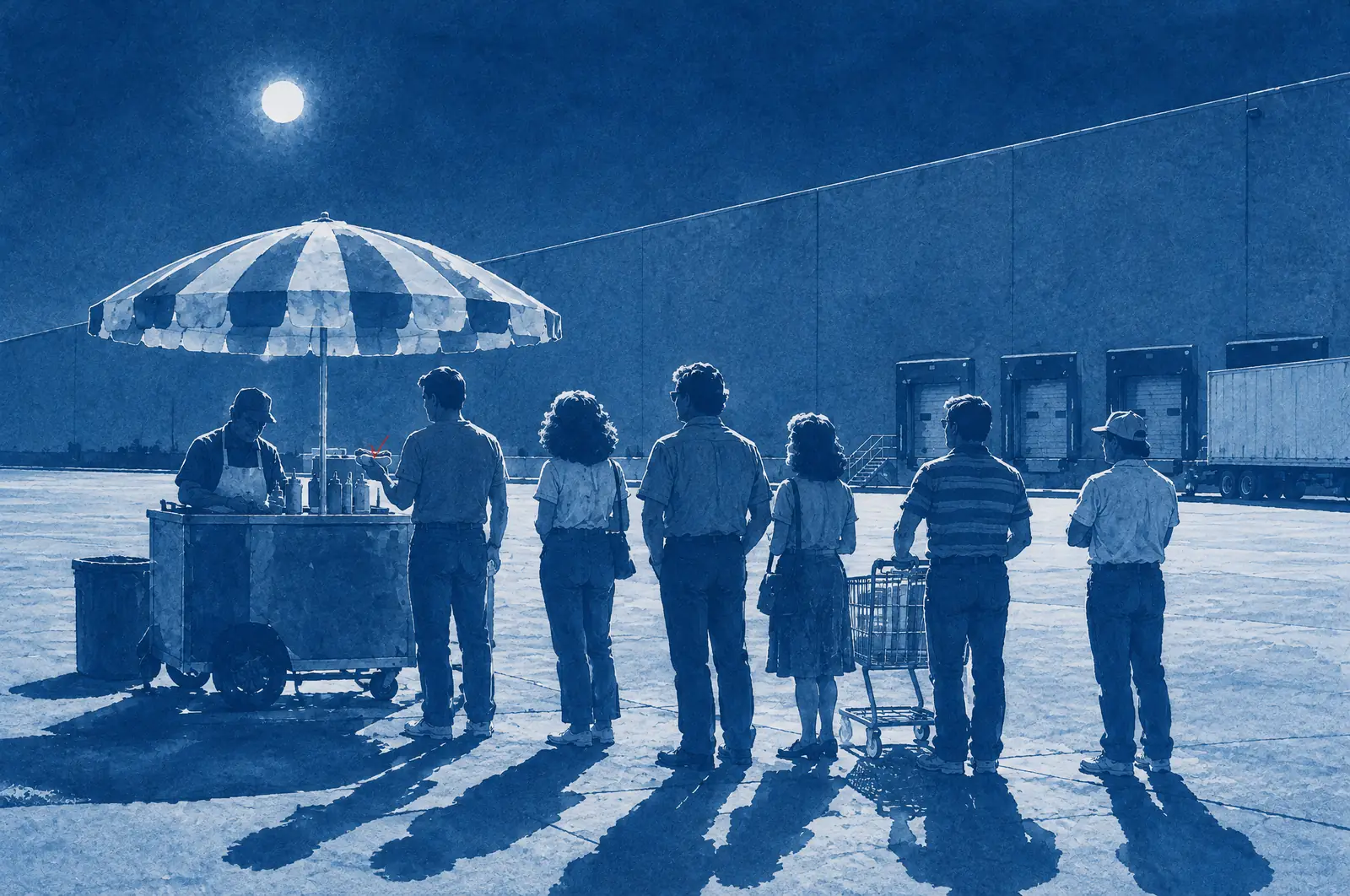
Around 2008 Costco’s chief operating officer tells its founder Jim Sinegal that they cannot keep selling the food-court hot dog and soda for a dollar fifty. Sinegal’s reply, profane and now printed on T-shirts, ends with three words: “Figure it out.” In 1954 Sinegal was an eighteen-year-old stocking mattresses at the brand-new FedMart when Sol Price’s voice boomed at him to put the thing down before he broke his back; asked later what he learned from Price, he said he learned everything. He followed Price to Price Club, founded Costco in 1983 and merged the two a decade later. The combo has cost $1.50 since the cart first appeared outside the San Diego warehouse, when a Big Mac was $1.60; the Big Mac is seven dollars now. Costco sold nearly two hundred million combos in 2023, so every dollar it declines to add is $200 million a year left on the table. Instead it built its own hot dog plants in Los Angeles and Chicago. Asked what a price rise would signal, Sinegal said, “That I’m dead.” The stock is up 28,070 percent since 1987 against the market’s 877; renewals run at ninety percent; the Kirkland house brand alone sells $86 billion a year, more than all of Procter & Gamble, and margins are still capped at fourteen percent. Ries calls this a harder-is-easier mission: a mission aligned with the business model so the company only makes more money by doing more mission, an unwavering ethos, and the habit of figuring it out.
Cloudflare’s mission surfaced at a lunch in Palo Alto when an engineer said he had never worked anywhere he felt he was building a better internet, and the table went quiet. Years later a young French engineer asked whether an encrypted internet was a better internet, and if so why they charged for encryption, their most valuable paid feature. Matthew Prince, the CEO, could not unsee it. Every certificate authority refused to supply millions of free certificates, so one engineer rewrote compression in assembly language and the company traded bandwidth for certificates, and on 27 September 2014 it gave encryption away, doubling the encrypted web overnight. Conversions fell, sign-ups rose tenfold, developers trusted them, enterprises followed, and the company now handles a fifth of web traffic at a value near $75 billion. There are two kinds of hard, Ries says: the depleting kind of a company at war with itself, and the exhilarating kind. Trustworthiness unlocks four magnetic powers: talent, as when 1.5 million people apply for a thousand Cloudflare jobs; alliances, as when a health system nicknamed Darth Vader melts in a meeting with Park; alignment; and loyalty. Then a warning. Price figured out harder is easier at FedMart. He just could not protect it.
A founder pitches Ries autonomous spherical drones that roll, float and fly over farmland, and all Ries can think is how easily they could be weapons. The founder swears he is not building doomsday murder robots, shows a dashboard of acquisition costs and recurring revenue, and mentions proudly that he has just added an ex-Raytheon board member who really understands autonomous systems. He has described exactly how it will happen and has no idea. Most companies, Ries says, are merely mission-hopeful; being mission-driven takes a discipline he calls mission drive, which ensures the company can profit only by achieving its mission. Patagonia is the exemplar. Yvon Chouinard, who forged his own carabiners because the existing ones were not good enough, taught in-house philosophy classes, putting a bag of coffee beans on the table and demanding to know whether it was a quality bean, then asking how a tailored Italian shirt would survive a washing machine. The 1991 catalog told customers that everything the company made polluted and that they should buy less. It turned down an order from L. L. Bean that would have made its year because a three percent discount would weaken its promise, and when its bank demanded it stop making environmental grants during a near-bankruptcy, CEO Kris McDivitt refused and the bank backed down. When buttons fell off, the operations manager bought slower lock-stitch machines at $6,000 apiece without asking. Malinda Chouinard parked a trailer in the lot for a colleague’s colicky newborn in 1983 and by 1985 had opened one of America’s first corporate childcare centers; every mother now returns from leave.
Then the question under every company: fiduciary to whom? Robert Wood Johnson raised wages five percent in 1932 with a quarter of the country out of work, wrote his Credo before Johnson & Johnson’s 1944 IPO, ranking patients first and stockholders last, and had it carved into eight-foot limestone at headquarters. He fired his nephew and then his son to enforce it. He died in 1968, and at a 1975 retreat an executive explained that the company juggled five balls, four white and one red, and only dropping the red one, profit, was fatal. From the back of the room James Burke said he was afraid his friend was wrong: today all the balls are red. As CEO, Burke drilled managers for years on Credo dilemmas, so when cyanide-laced Tylenol killed eight people the company pulled $100 million of product without hesitating. Later leaders let the muscle waste: compliance reviews abolished, bonuses tied to earnings, a phantom recall in which contractors were scripted to buy up defective Motrin and never mention a recall, and decades of baby powder whose own tests sometimes found asbestos, now the subject of more than sixty thousand lawsuits. The mechanism is what researchers call surrogation, the measure replacing the goal: customer-service metrics improved for fifty years while the share of Americans frustrated with it rose from thirty-two percent to seventy-four. Ries proposes holistic metrics instead: count all the value created, verify every fiduciary promise with a number, and build in metrics that fight each other. Patagonia learned this after outsourcing to a hundred factories until it no longer knew who made its clothes and found migrant workers in Taiwanese mills paying $7,000 broker fees and surrendering their passports; now four departments meet weekly, and any one of them can kill a supplier deal with no appeal. A retired Googler tells Ries he is as certain as sunrise that Google will file its next quarterly report on time, and cannot get anywhere near that certainty when asked whether its systems will contribute to a death and the company will choose damage control. Where a company says it cares, look for the massive apparatus behind the claim. If there isn’t one, it is lying.

At dinner after a workshop, one of the company’s ads comes on over the bar, promising a place where scientists and engineers make the world better, and the table goes quiet before someone laughs the short exhale of disbelief. A young engineer admits he sent that ad to his mother when he was hired. The people who make the ads and the people who decide promotions, a colleague says, live on different planets. Ries calls this incoherence, an organization whose rewards contradict its proclamations, eating itself like an autoimmune disease. Netflix’s famous culture deck makes the point with one slide: Enron’s values, integrity among them, carved in marble in its lobby. Nobody takes orders from decoration; people follow what the 1920s theorist Mary Parker Follett called the invisible leader, the common purpose that acts when no manager is present. Ries offers three tools: a culture bank in which every decision is a deposit or a withdrawal of trust, a leader’s guide of named recent stories, and a two-way review that reads the stories gathered in performance reviews as a judgment of the company too. In February 2021 an H-E-B store in Leander, Texas, loses power during a winter storm with hundreds of shoppers in line. After fifteen minutes the cashiers begin waving people through with full carts, and a customer asks who he should pay. Nobody. The manager has decided to let everyone leave with their groceries, and shoppers walk out into the storm in tears. No memo told him to do it; sixteen years of practice did, from Hurricane Rita in 2005, through Harvey in 2017, when the company flew in truck drivers and served 2,500 free meals an hour, to selling eggs below cost for months in 2022. Customers assume the initials stand for Here, everything’s better.

Todd Park’s rule is to make only deposits, which sounds impossible and in fact ends every exhausting argument about which emergency justifies an exception. Duolingo keeps its lore in a public handbook, including the executive it declined to hire after a year of courtship because he was rude to the driver who collected him at the airport. Lore must stay fresh: at GE Ries sat at Edison’s desk and invoked Edison to executives who looked at him as if he were channeling a ghost, and at Walmart someone joked that Sam Walton could not get hired there today. Someone must own coherence, so Ries proposes a department of corporate purpose with the standing of finance, because purpose without power is poetry. GitLab shows what coherence looks like at scale: a four-million-word public handbook that is the company’s operating system, Slack messages deleted after ninety days so that nothing exists unless written down, and twenty-two ways of reinforcing its values; when an engineer deleted six hours of customer data in 2017, the company livestreamed the recovery. Then the sober note. GitLab stays independent because founder Sid Sijbrandij holds supervoting shares, and in 2023 he was diagnosed with a rare bone cancer. No mission should depend on a founder’s longevity.
Ries remembers a café in San Francisco where Jeff Lawson, founder of Twilio, talked through his coming IPO. Investors had accepted a compromise: Lawson’s supervoting shares would guard the mission for seven years, then sunset to one share, one vote. The IPO in June 2016 priced at $15 and nearly doubled on day one; by 2021 the stock touched $443. The sunset came, and 199 days later Lawson was out, pushed by activists holding less than half a percent of the company while revenue stood at fifteen times its IPO level. Every founder, Ries says, hears the same play. At incorporation it is too early for mission protections; at the seed round still too early; at growth stage you don’t want to look different; bundle it with the IPO. Then, at the IPO: you were serious about that? It’s too late. He was once in the room where this happened, watching a CEO insist on structural defenses as his number-one priority and leave, and the door had barely closed before the professionals hired to land the plane started laughing. “He’ll blink,” one said, and they were right. The first protection they laughed away is the public benefit corporation, a two-page filing in Delaware since 2013 that replaces the any-lawful-purpose clause with a stated public benefit and frees directors to weigh it against returns; Anthropic and Patagonia are PBCs. On a panel at the Vatican, Ries noticed that not one of the AI companies represented accepts standard governance; each names a mission guardian, as Google’s founders did with ten votes a share in 2004 and as the Ochs-Sulzberger family does at The New York Times. Founder control works, as when twenty-two-year-old Mark Zuckerberg opened a board meeting by saying they obviously were not selling to Yahoo, but it exacts a toll, hubris on one side and on the other founders who feel like Atlas, unable even to shrug. It should be a bridge to companies that are mission-controlled, not a destination.
The most insidious attack comes from inside the boardroom. J. Robert Beyster founded SAIC in 1969 on a handwritten page whose first principle was to put people first, built it into a $5.9 billion company owned entirely by its forty thousand employees, and filled his board with distinguished independent directors. In 2002 that board decided SAIC should behave more like a public company, forced him into retirement at seventy-nine, took it public without his consent, stripped employee shares of their extra votes within three years and buried a whistleblower, and the company ended up paying $500 million to settle a fraud that swelled one contract from $63 million to $600 million. Before he died, Beyster said he had trusted the wrong people. Independent directors live in their own gravitational field, Ries explains; their careers depend on pleasing the governance class, like judges whose next appointment depends on the prosecutors. He wants a director’s oath with the standing of the Hippocratic one, and a constitutional governance built on a simple idea: no country lets tourists vote. Voting power that grows with holding period, economic shares without votes, employees on the board, steward ownership like REI’s or Vanguard’s.

The test is to delete every founder and investor and ask whether the mission can still defend itself. The John Lewis Partnership passes: seventy-four thousand employee partners, a council that holds the chair to account twice a year, and a flat no in 2023 when the chair proposed selling a stake to outsiders. Costco passes too. Sinegal was in the room when FedMart’s investors turned on Price, so at the 1985 IPO he built what Ries calls a governance fortress: changing the charter needs two-thirds of all shares, not of votes cast, so every abstention is a no, and the rule protects itself. In 2014 activists won seventy-two percent of votes cast and still lost. Governance raters give Costco their worst possible score; $10,000 invested at its IPO is worth about $8.77 million against $151,000 in the index, while Kroger, which did everything the experts asked, has trailed ever since. Ries closes with field notes. Never ask your lawyer what to do; ask for pros and cons, and watch the objection shrink to $2,000 of extra fees. When a nervous founder explained his protections, the lead investor asked whether the mission was what created the value, and if so why they wouldn’t want it protected. And a founder who asked for ten protections, lost his cofounder overnight and kept two was told to stop counting the eight he lost and count the two he would never have had.
A Catholic priest walks into a war-wrecked Basque town in 1941 carrying a wooden suitcase full of books. José María Arizmendiarrieta teaches for thirteen years before launching a single business; in 1956 five of his graduates pool their savings to make paraffin stoves, buy a defunct company in another city for its industrial license, and haul the machinery over mountain roads during holidays when officials are not watching. In 1959 the firm adds a bank, and at its opening the priest gives the town its slogan: your ledger or your suitcase. Invest here, or watch your children leave. Mondragon is now Spain’s tenth-largest business, with seventy thousand employees and €11 billion in revenue, and most people would not recognize it as a company. Most companies, Ries points out, are not what we think: ninety-three percent of McDonald’s restaurants belong to franchisees, Marriott owns barely one percent of its hotels, and IKEA’s trademark sits under a foundation so the brand can never be sold. He calls these constellations, separate entities orbiting a common purpose so tightly they look like one star. Mondragon is a mission-locked constellation of more than ninety worker cooperatives that buy from one another, pay ten percent of profits into a solidarity fund and share a bank whose consultants sit beside struggling managers. When Fagor, a founding cooperative, collapsed in 2013 under €800 million of debt, seventy-five thousand workers took a three percent pay cut for five years, and eighty-one percent of the displaced found new jobs inside the network. Every single-entity company eventually lies to itself, Ries says, as Facebook did about Instagram and teenagers; a separately governed research arm, like the Carlsberg Laboratory that has published everything since 1875, makes that impossible. Constellations encode political philosophies, autocracies and federations and republics, and a founder is less an owner than a lawgiver.
What binds them is gravity itself. On 5 March 1979 Voyager 1 fell toward Jupiter and NASA used the fall as a slingshot that flung it out of the solar system; the same force that drags companies down can bind them to a mission, through long-term intercompany agreements, identical cap tables across every entity, and nested assemblies with defined powers. A movement is under way. Eileen Fisher, who waited tables through college because her father saved tuition for her brother, built a $400 million clothing company, found an IPO road show full of men in suits talking only about money, and in 2006 began selling it to an employee trust. Bob Moore gave Bob’s Red Mill to his seven hundred employees on his eighty-first birthday. But none of these companies ever took outside capital, and Ries considers it a tragedy that so many ethical companies treat investment as corruption. For a center that can hold even with outside shareholders, he reaches for an idea Zeiss adopted in 1885.

You have already done business with dozens of spiritual holding companies, Ries says: every Hershey bar, IKEA shelf, LEGO brick, Bosch drill, Rolex, Zeiss lens, Carlsberg, Green Bay Packers game, Vanguard fund and prescription from Novo Nordisk, and every conversation with Claude. A spiritual holding company is a separate entity, a foundation, trust, non-profit or cooperative, that holds governance authority over one or more businesses to protect their animating spirit in perpetuity, and that, by unbundling power from money, lets them raise capital and even go public without losing themselves. Foundation-owned companies make up at least half of the Copenhagen exchange, and about sixty percent of them survive fifty years against ten percent of conventional firms. Most organizations, he says, are sophisticated zombies reacting to stimuli; this structure gives one an identity that outlives everyone and the capacity to deliberate under pressure.
Anthropic is the fresh example. In 2021 Dario Amodei and colleagues left OpenAI convinced that getting the governance of powerful AI wrong could mean losing control of it, and came to Ries with carefully chosen investors and a culture of safety, feeling vulnerable anyway. He agreed. In 2023 the company established the Long-Term Benefit Trust, holding a golden share with no economic rights that elects a growing share of the board as milestones pass. The curation was soon tested when FTX collapsed and its founder’s early shares were auctioned to strangers; the company has nonetheless grown from fifty people to over two thousand, raised more than $33 billion and reached a $183 billion valuation in September 2025. Grundfos began in 1945 when a Danish toolmaker named Poul Due Jensen built a pump for a farmer who could not find one; in 1975, unwilling to sell, go public or burden his children, he gave majority ownership to a foundation charged first with keeping the company healthy. He died two years later; the foundation owns 87.9 percent, and the company invests five percent of revenue in research. Patagonia came late: in 2017 Forbes put Yvon Chouinard on its billionaires list, which he called one of the worst days of his life, and by 2020 he was threatening to cold-call the other billionaires and sell unless his team found an alternative. In September 2022 all voting stock went to a purpose trust and the rest to a non-profit that spends the profits on the climate; the conversion took five years and $17.5 million in taxes, and the company believed it had invented something nobody had thought of.
Copenhagen, September 2004. Novo Nordisk’s CEO stands before the foundation’s board for the second time in two months, bankers at his side, to present a merger with Serono, the world’s third-largest biotech, that would move the company to Switzerland and make everyone rich. The foundation’s rules require a convincing argument that any such deal is necessary to the company’s competitive position, and the trustees ask whether this really is. They say no. Two years later Serono is sold to Merck, its headquarters shuttered and its research programs gone. Meanwhile, in Novo’s labs, Lotte Bjerre Knudsen is in year thirteen of a program management has repeatedly threatened to cancel. It produces Victoza, then Ozempic, then Wegovy, and in 2024 the company’s value passes $600 billion. The CEO who was refused later became chairman of the foundation that refused him. The next time someone says only a profit motive can be trusted with investors’ money, Ries suggests mentioning the non-profit trustees who made shareholders half a trillion dollars. He lays out five decisions for anyone building such a vehicle, answers the objections one by one, and then asks the reader to zoom out once more, until the whole constellation is a pale blue dot.
Part III: To Bend the Light
Millions of Americans eat safer food because of decisions made in Costco’s boardroom in Issaquah, Washington, and most have never set foot in a warehouse. Costco holds suppliers to safety standards stricter than federal ones, and the pathogen-testing and X-ray equipment a supplier installs to keep Costco’s business tests everything leaving the plant. In 2010 Costco ran 6,925 food-safety audits while the FDA inspected 17,609 facilities; a retailer with nine percent of grocery sales does about thirty percent of the nation’s audit work. Ries calls the gravity an organization exerts beyond its own walls mission transmission, and this is the book’s second turn: having learned to resist gravity, strong organizations can project it. Most do the opposite; the Gates Foundation was once found holding $423 million in oil companies polluting the Nigerian communities whose lungs it was trying to heal. His five multipliers: weigh mission in every transaction, make it the tiebreaker, clear the path for allies as Toyota does by teaching small suppliers its production system, signal with costly commitment, and create recourse. Thomas Friedman told him over a long dinner that trust requires blood on the floor; Airbnb put 9.2 million shares into an endowment for its hosts.
In a nondescript building in Nairobi a young woman teaches AI to recognize emotions. Her employer, Sama, was founded by Leila Janah in 2008 as a non-profit with the motto give work, not aid; in 2019 Janah moved it into a for-profit owned by the non-profit, and died of a rare cancer at thirty-seven less than a year later. Because Sama insisted on living wages it could not win a race to the bottom, so it moved early into labeling data for machine learning and found itself at the foundation of the AI boom, and in 2022 it walked away from content moderation because the work damaged the people doing it. Devoted’s members have formed elder councils that deliver produce in Mesa, Arizona, and host kitchen-table talks in Houston where three older men mentor younger ones who never had fathers.
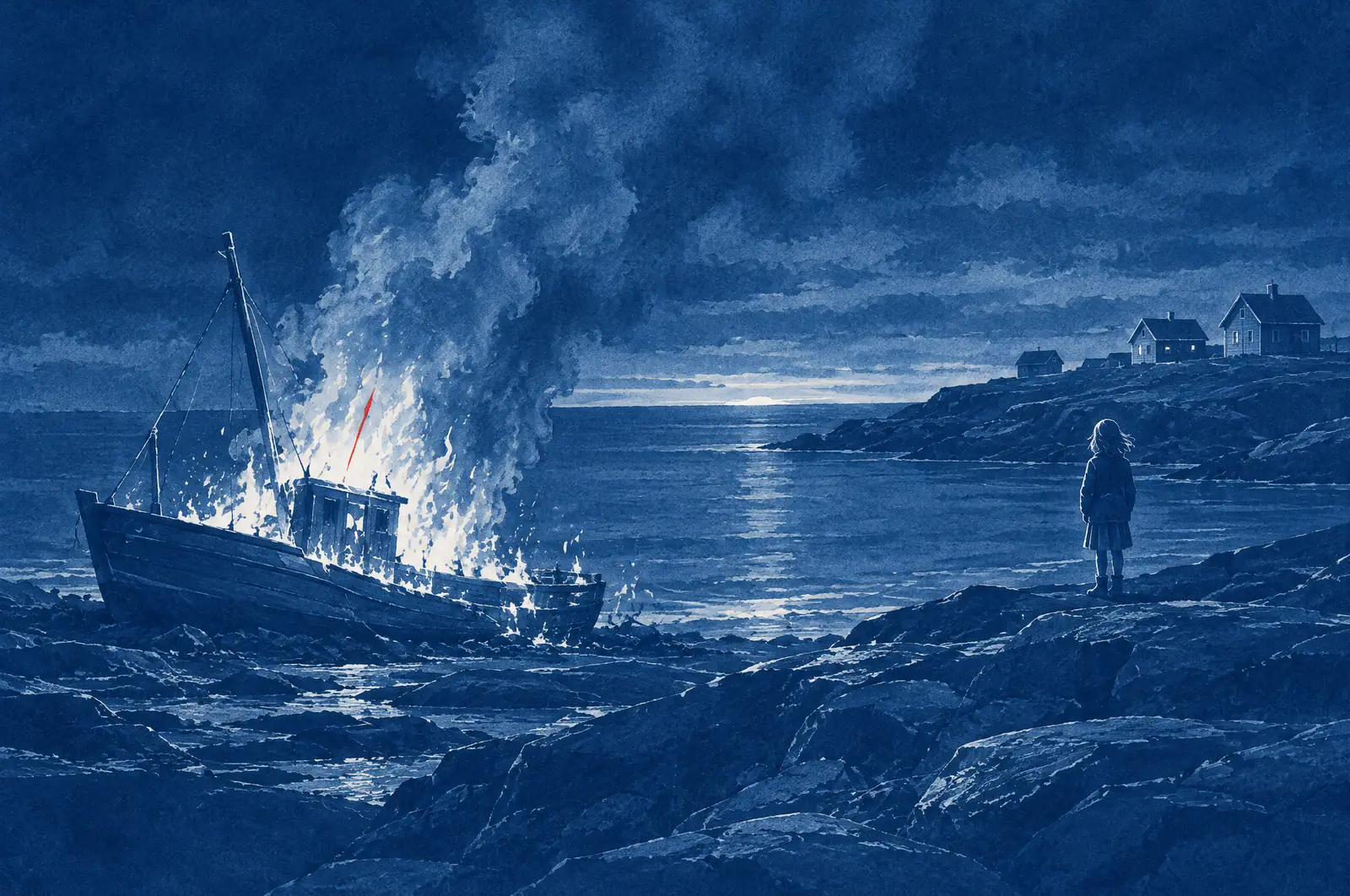
On Fogo Island, off Newfoundland, Zita Cobb’s father watched foreign ships mine the cod in the early 1970s, and in 1975 burned his own boat while she watched, telling her to go away and learn how money works, because otherwise it would eat everything they loved. She made a fortune in telecommunications, came home in 2004 to a population halved, and built Shorefast, whose luxury inn is held so that every dollar of profit stays on the island. And in the Netherlands, three television journalists exposing child labor on cocoa farms grew sick of their own complicity; in 2004 Teun van de Keuken reported himself to prosecutors as a criminal for eating chocolate, and when they declined to charge him the team made five thousand ethical bars under the name Tony’s Chocolonely and presold thirteen thousand in two days. Within seven years it was the best-selling chocolate in the country. It pays farmers more than seventy percent above the standard price, opened its supply chain to competitors on condition they adopt all five of its principles with no cherry-picking, publishes the exact number of child-labor cases its monitors find, and is guarded by a mission lock whose three guardians may take out a full-page newspaper ad against the company if they must.
In 1959 a Volvo engineer named Nils Bohlin invents the three-point seat belt, and Volvo gives the patent away. Ries imagines the boardroom scene nobody tells, bankers mourning the oil well of licensing fees, and explains what CEO Gunnar Engellau saw instead: a standard is the ultimate positive externality, a little bit of Volvo in every car on the road. Volvo’s sales grew nearly four times faster than the industry’s during his tenure, insurers’ claims data proved the belts cut serious injuries in half, and in 1974 American regulators made Volvo’s design the law. Underwriters Laboratories began in 1893 with an engineer inspecting the terrifying wiring of the Chicago World’s Fair, funded by fire insurers who paid for every blaze, and its mark has the three attributes of a good standard: crystal clarity, independent verification, and consequences aligned so that everyone profits by honoring it. Benjamin Franklin worked this out in 1752 when his fire insurer refused wooden houses and Philadelphia rebuilt in brick within a decade.

In 1937 a trucker named Malcolm McLean watched stevedores unload his cotton piece by piece at a New Jersey dock and wondered why the whole truck could not be lifted aboard; he sold his trucking company to pursue it, and in April 1956 the converted tanker Ideal X sailed from Newark to Houston with fifty-eight containers. He then leased his patents royalty-free to the international standards body. Loading costs fell from $5.86 a ton to sixteen cents, ninety percent of world trade now moves in his boxes, and a factory in Vietnam can sell to a store in Ohio. Ries calls it a prosperity cascade: proprietary advantage becomes industry standard becomes law, and each participant gets richer by adopting it. The movement he belongs to has standards of its own. After the founders of the basketball shoe company AND1 watched an acquirer strip out everything they had built in 2005, they led the state-by-state fight for public benefit corporation laws and founded B Lab, whose certification now covers nearly ten thousand companies. A former Anthropic employee named Rune Kvist came to Ries wanting to build the world’s largest insurer to cover AI risk, stuck because insurers cannot price what nobody has measured; talking through standards, he realized he could create one instead and let existing insurers do the rest, and in 2025 his company emerged with $15 million to build it. The internet’s credo, rough consensus and running code, explains how standards win: TCP/IP’s four imperfect layers beat the committee-perfect seven that now exist only in textbooks, and Git took Linus Torvalds two weeks. Steve Jobs said in 1995 that everything around you was made up by people no smarter than you, and you can change it.
Near the last page of The Lean Startup is a throwaway line suggesting that someone should build a long-term stock exchange. Everything else in that book was tried by somebody; not that. For three years Ries asked everyone who might know how one creates a stock exchange and received what he came to call the two-moons look, as if he had proposed a new celestial body. Then a securities lawyer told him it was not hard: you fill out Form 1, the SEC’s first form, two hundred pages that take years and a grilling to complete. It’s just a form. That was when Ries understood he was building not a company but civic infrastructure, the organizations that set the rules others operate within. A banana bought in fifteen seconds carries the imprint of the barcode body, the container standard, food-safety rules, the central bank and a card network. Such organizations set rules or coordinate; they are tiny relative to what they govern, as a seven-member accounting board dictates how trillions are counted and an obscure earth-rotation service adds leap seconds to billions of phones; and trust is their only currency. The New York Stock Exchange began under a buttonwood tree in 1792 as twenty-four brokers agreeing on a scrap of paper to trade only with one another at a fixed commission: a price-fixing cartel, now a marble building.
When infrastructure is not built on purpose it gets built badly: American transit costs eight to twelve times what peers pay, and medical errors remain the third leading cause of death because hospitals have every incentive to settle quietly and none to learn, while aviation cut deaths ninety-five percent by investigating every crash in a culture that names everything and punishes nothing. Three pharmacy benefit managers control eighty percent of prescriptions through rebates that reward the highest list price. A radiologist named Alex Oshmyansky tried to fight them with a non-profit pharmacy, could not fund it, reincorporated as a public benefit corporation and cold-emailed Mark Cuban; Cost Plus Drugs now sells every drug at cost plus fifteen percent and a five-dollar fee, publishes every contract, and prices a multiple sclerosis generic at $39.50 where the old system charged $6,617. Colin Megill built Pol.is in 2012 to find consensus rather than conflict, with statements and votes but no comments; when Uber protests paralyzed Taipei in 2015, twenty thousand participants discovered they agreed on most things, and Twitter later built Community Notes on the same architecture. Building LTSE, Ries says, was the final exam for everything in this book: a five-sided marketplace serving founders, investors, bankers, traders and regulators at once; a trader’s warning, which came true, that one day a big source of trading volume would call to discuss rule changes, and the structure to say no; rigid listing rules that nearly killed the company until they became binding principles each company commits to in public. He stepped aside as CEO in 2022, in part to write this book, knowing the work unfolds over decades. Pull back far enough and the search for the ultimate authority turns upside down. You are not stuck in traffic. You are traffic.
Ries asks the reader to sit with that. The book has been climbing a hierarchy in search of whoever is really in charge, and the answer has been in plain sight: financial gravity works through perception, and you are generating it right now. Companies spend fortunes decoding one thing, your willingness to pay, and every click, purchase and job you take adds mass to the order it supports. The one way to escape measuring willingness to pay is to sell addiction, which is why tobacco, social media and vendor lock-in break the logic of capitalism: an addict cannot consent. Walking away is not futile, because in an age of surveillance your refusal becomes their data and someone’s quarterly objective, and enough uncoordinated refusals form a pattern leaders can see. Ursula K. Le Guin observed that our economic system’s power seems inescapable, and so did the divine right of kings. There is a second book hidden inside this one, Ries says, with every story told from the other side: the recruiting advantage of mission-driven companies is a guide to where to work, the loyalty of their customers a shopping guide, the parable of investors killing the golden goose a playbook for a new kind of fund. Doomers who spend so much energy insisting reform is impossible are trying to shape the gravitational field; your optimism is the fuel the engine burns. He proposes a personal margin cap, a maximum ethical salary: if your work serves human flourishing, prosper without limit; if it does not and you can afford to choose, calculate what you actually need, use each raise to buy back time, build a cushion and leave, or start something. Brian Chesky told him in 2020 that all businesses are built on love and trust, even the mercenary ones. Then he returns to The Professor. Who was the protagonist of that story? The scientists came first; their refusal to accept fuzzy answers created the pressure that sent him looking for help, though they were fumbling with shadows, wielding a power they did not understand. Read the Introduction again, Ries says. You will see it differently now.

A book lives like Merlin, backward, he writes in closing: the words die when they are set down and are born only when someone reads them. Everything in these pages can be used in reverse, and he gives his blessing even to the reader sharpening pencils and knives for a takedown, noting that it need not be correct to advance a career. But perhaps one day, mid-note, that reader wakes as if from a dream into a strip-mined wasteland under an endless sky, where megalithic beasts stride on spidery skeletal limbs and the ground trembles. Among them moves a queen armed with her mother’s golden scythe, striking blow after blow. Follow her gaze and the beasts turn out to be lumbering and half asleep, their sinews made of people doing their bidding, their joints pulled by strings that stretch not only upward but backward in time, to cruel fathers and conquistadors who are not even past. Her scythe is mercy. She looks past the reader to small, brilliant lights darting through cracks in the ground, many of them, like mammals among dinosaurs waiting for their moment. Then she meets the reader’s eyes with a question, and the reader looks down at their own hands: turned up toward the sky, or down toward the dust. The dream ends. Resume your work. Take notes. Thrive. And some weeks or months or years later, the look on her face comes back, and with it the question of what you did next. Well, did you?