It is 1956, in Gilead, a small town in Iowa. Last night the Reverend John Ames told his son that he might be gone sometime. The boy asked where, and why. Ames said, because he is old. The boy put his hand in his father’s hand and said he didn’t think he was very old, as if that settled it. When he thought he was being laughed at, he reached up and put his fingers on his father’s lips. He gave him a look Ames has only ever seen on one other face, his mother’s. It is a kind of furious pride, passionate and stern. Ames is seventy-six. The boy is almost seven. The doctor has a name for what is wrong, angina pectoris, which to Ames has a theological sound. His heart is failing. So he has begun a letter, to be read when the boy is a grown man and his father has been gone a long time.
He has almost nothing to leave them, the boy and his young wife. A few old books no one else would want. He never made money and never thought about it, because it was the furthest thing from his mind that he would one day leave a wife and child. For most of his life he lived alone in this parsonage. He would walk home to a pot of coffee, a fried-egg sandwich and the radio in the dark. Now, at night, he hears his wife and son talking through the wall, and her voice singing the boy to sleep. He tells the boy he still loses his temper over a sticking drawer or a lost pair of glasses. He tells him that his own father, near the end, sent him a letter warning him about the tongue, which the Bible calls a fire. Ames burned that letter in the stove. Fathers and sons, he writes, can know each other to death and still share nothing but loyalty, love and incomprehension.
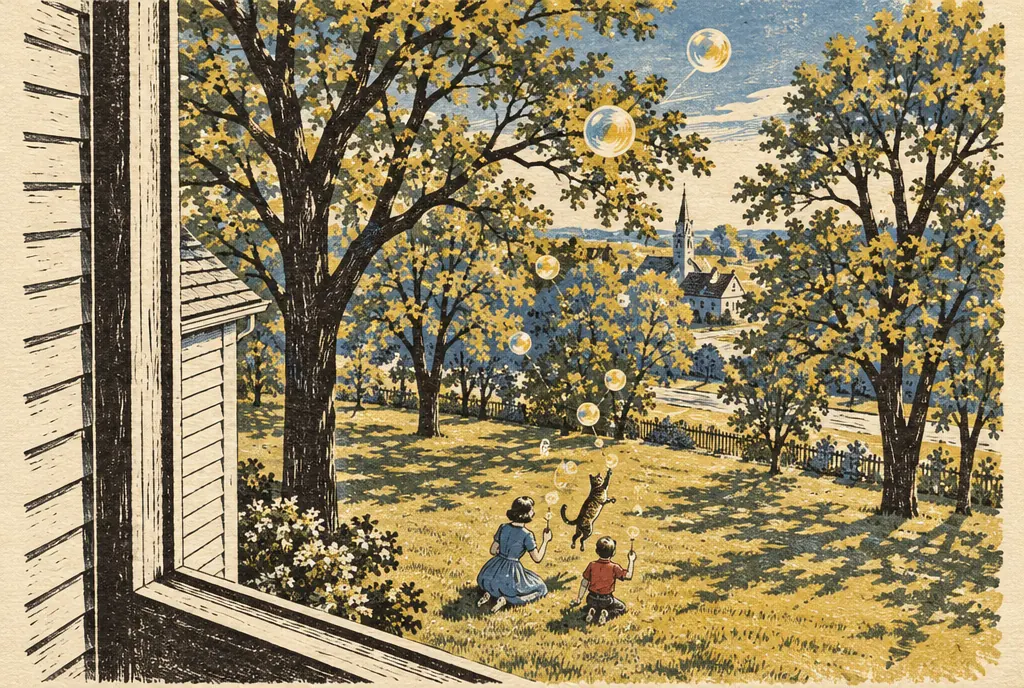
This morning a bubble floats past his study window, fat and wobbly, ripening toward the dragonfly blue they turn just before they burst. He looks down into the yard. There are his wife and son, kneeling on the ground and blowing bubbles at the cat. Her name is Soapy, and she is beside herself, leaping into the air. His wife is in her blue dress and the boy is in his red shirt. Some of the bubbles drift up through the branches and rise above the trees. The two of them are too busy with the cat to see where their bubbles go. His wife tells the boy that his father is writing his begats, and the boy is pleased. So Ames writes them down. John Ames, born in Kansas in 1880, son of John Ames and grandson of John Ames. Three preachers with one name. The grandfather was a one-eyed abolitionist and a visionary. The father was a pacifist. Ames himself has spent nearly his whole life here.
The story he tells first is the oldest. The grandfather had run off to Kansas to be a wandering preacher, and he died there. Ames’s father wrote to churches and newspapers for months to find out where. At last a package came back: the old man’s watch, a battered Bible, and some letters. They were the father’s own letters of inquiry. Father and grandfather had parted in anger, and the father could not bear that it was never mended. So in 1892, when Ames was twelve, the two of them set out, by train, then by hired wagon, then on foot. They got lost. Water was hard to find, and they were so thirsty Ames thought they might die. Gathering sticks into the boy’s arms, his father said they were like Abraham and Isaac on the way to Moriah. A farm woman traded them two boiled eggs and two boiled potatoes for their jerky. Ames can’t stand jerky to this day. She knew where the old man lay. They walked past the graveyard twice. The third time, the father saw a fence post. There in a row of graves was a log marker with nails bent flat into the letters REV AMES.
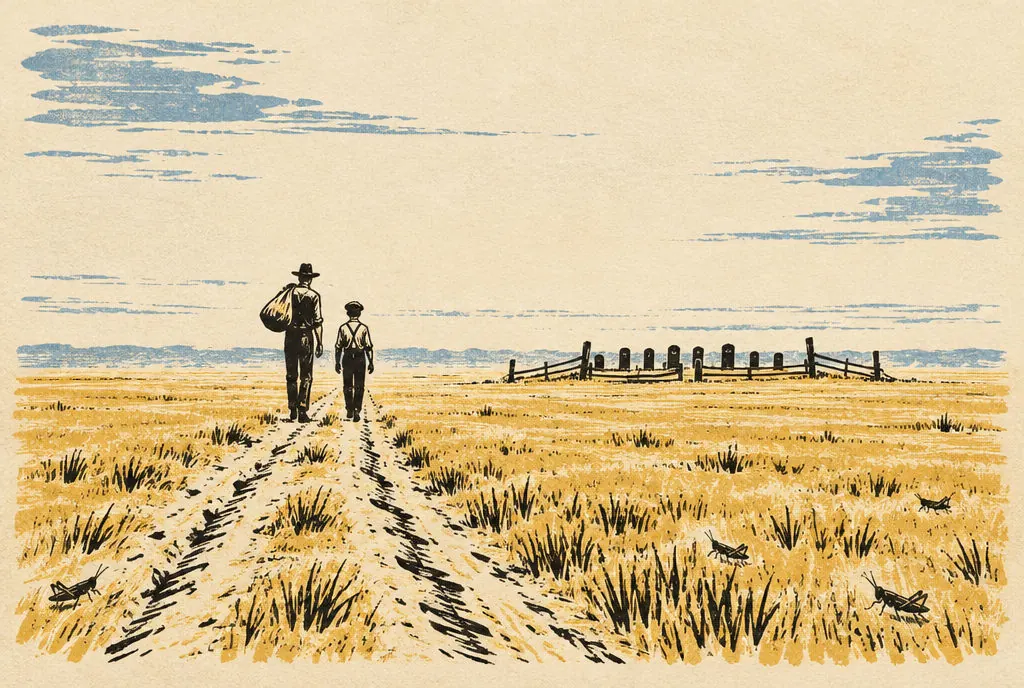
They slept in the woman’s hayloft and ate her cornmeal mush. Before dawn they milked, cut kindling, drew water, and ate fried mush with blackberry preserves, standing on the stoop in the cold dark. Ames loved her like a second mother. Then they went back to the graveyard and worked. They mended the fence. The father borrowed two hoes and weeded every grave, not only his father’s. Grasshoppers flew up around them, snapping like struck matches. They raised the fallen markers. Ames stepped on the small graves of children without knowing it, and he still dreams of it. They planted seeds saved from the garden: bee balm, coneflower, sunflower, sweet pea. Then the father stood by the grave and prayed for a very long time, asking his father’s pardon and the Lord’s. The boy was bone tired. He tried to keep his eyes closed, and at last he looked around. Ames sets down what he saw.
Then I realized that what I saw was a full moon rising just as the sun was going down. Each of them was standing on its edge, with the most wonderful light between them. It seemed as if you could touch it, as if there were palpable currents of light passing back and forth, or as if there were great taut skeins of light suspended between them.
— Marilynne Robinson, Gilead, Picador, 2004
The boy wanted his father to see it. He kissed his father’s hand and said, “Look at the moon.” And the father looked. The grave and the two of them were exactly between the sun and the moon. His father said, “I would never have thought this place could be beautiful.” Walking home in the moonlight, the father said that everybody in Kansas had seen the same thing. Ames took that to mean the whole state was witness to their miracle. Only later did he understand that his father meant the opposite: it wasn’t about them. Once, while they were lost, an old man shot at them for taking a carrot, though the father had left a dime on the stoop. The father cut the carrot into pieces on the crown of his hat like a table and said grace, and the two of them laughed till they cried. They came home after nearly a month, both of them thin, and Ames’s mother burst into tears.
Ames was married once before. Louisa was a childhood friend, and she died giving birth, six weeks early. Ames held their baby girl for the few minutes she lived. He was away for the day, so his friend Robert Boughton baptized her, and named her Angeline. Ames and Louisa had chosen Rebecca. Boughton, a Presbyterian minister, has been his closest friend since boyhood. Ames writes every sermon out in full, and the boxes fill the attic. By his reckoning they would fill two hundred and twenty-five books, up there with Augustine and Calvin. For years he wrote them as if a grown Rebecca might walk in some Sunday and hear them. So he was half ready when, one rainy Sunday in the middle of his prayer, a stranger walked in out of the downpour. She was a young woman, and she watched him with a seriousness that embarrassed him. Six months later he baptized her, and she wept. She is his wife now.
Blessing is real, Ames tells his son. As pious children, he and his friends once baptized a litter of barn kittens by the creek, until the mother cat carried them off by the scruff, mid-rite. He still remembers their warm little brows under his palm. Blessing doesn’t add holiness to a creature. It acknowledges what is already there, and he has felt the power of it pass through him. Then there was Edward, his brother, ten years older, the family prodigy. The congregation took up collections to send Edward to college and on to study at Göttingen. He came home with a walking stick, a huge mustache, a German book on Feuerbach, and no faith. At supper the first evening, their father asked him to say grace. Edward said he could not do it in good conscience. The father left the table and the mother wept. Edward passed young John the potatoes, and then the gravy, and the boy, not knowing what was expected of him, took some.
A few years ago, early one morning after a heavy rain, Ames walked behind a young couple on the way to church. The young man jumped up and caught a branch, and a shower of shining water fell over the two of them. They laughed and ran off, the girl pretending to be annoyed. It is easy to believe, Ames writes, that water was made first for blessing, and only then for crops and laundry. His grandfather, though, believed in a holier poverty. He gave away everything: laundry off the line, blankets off his bed, his son’s saw and nails. Ames’s mother said he was worse than a thief, worse than a house fire. He lost an eye at Wilson’s Creek in the Civil War. When someone remarked on it, the grandfather said, “I prefer to remember that I have kept one.”
Ames remembers his mother ironing when the old man came in to say that folks had come for help. She fished a quarter and two dimes out of the baking-powder can and polished them on her apron. He knew there was more. She had been hiding coins in the lard and the sugar ever since he heard a can rattle, so nickels turned up in the sugar bowl and the fried mush. He stood there holding the coins in his old hand and stared at her with that terrible eye. She crossed her arms over the handkerchief of money hidden in her bodice and stared right back, until he blessed her and left. Afterward she could hardly believe it. She had stared him down. In the end it was loneliness that sent the grandfather back to Kansas, and a fire. Someone heaped brush against the back wall of the Negro church in Gilead and lit it. It was put out with a shovel. That congregation is gone now, moved to Chicago. Their last pastor brought Ames a sack of lilies dug up from his church steps, and they still grow by Ames’s church.
Ames and Boughton grew up together. As boys they sat on the warm tar paper of the henhouse roof, eating sandwiches and watching clouds. Boughton was tall for forty years, and now he is bent, his spine turned to knuckle bones. Once, as boys on that roof, Boughton asked Ames what he would do if he saw an angel. He was afraid he would take off running. Ames reminded him of it recently. Boughton laughed and said he still might want to. Then he said, “Pretty soon I’ll know.” Old Boughton has bad days now. His daughter Glory has come home after a failed marriage to look after him. She brings Ames a magazine and the news that her brother Jack might come home. Ames needs a minute to place the name. The family is anxious; they haven’t heard from Jack lately.
During the Great War, the Spanish influenza came. Ames saw boys drowning in their own blood at Fort Riley. He wrote a sermon saying the deaths were a sign against war. But only a few old women would come to hear it, so he burned it in the stove and preached on the lost sheep instead. It is the one sermon he would gladly have answered for. Mirabelle Mercer, he writes, was not Pontius Pilate.
His loneliness lasted for decades, every winter the same winter. He listened to thousands of ball games on the radio through the static. Pastoral work is a little like that, he thinks. You listen to a person, and you see an incandescence in them, the self shaped like a flame on a wick. When Ames was about ten, his grandfather took him to Des Moines to see Bud Fowler, a great Black ballplayer. There were no runs, no hits and no errors, and a storm ended the game in the fifth. A few weeks later the old man left for Kansas for good.
The grandfather had a vision when he was under sixteen, back in Maine. He had fallen asleep by the fire after a day of pulling stumps, and woke to the Lord touching his shoulder. The Lord held out His arms, and they were bound in chains, the irons worn to the bone. So he went to Kansas to fight slavery. Ames’s father never claimed a vision. He told his son that the Lord would not come to him with His sorrows; it was the times. The grandfather always looked to Ames like a man permanently struck by lightning: ashy clothes, wild hair, one alarmed eye. His old friends squatted on their heels into old age, gaunt as prophets in forced retirement. And the old man’s grave in Kansas, Ames writes, looked like a place where a fire had been smothered.
His wife sees him swaying to a song on the radio one evening and offers to show him how to dance. She holds him, her head on his shoulder, and asks him gently why he had to be so old. He asks himself the same. A few days ago she and the boy came home with flowers from the cemetery. She has been taking him up there, to get him used to the place. The boy had honeysuckle, and he showed his father how to sip the nectar. Ames clowned, pretending to chew the flowers and whistle through them, pretending he had a bee buzzing in his mouth. The boy laughed and laughed. Then he turned serious. He put his hand on his father’s cheek, touched the flower to his lips, and said, “Now sip.” He said, “You have to take your medicine.” So Ames did, and it tasted exactly as it did when he was a boy.

Ames never married again in all those years. Then his wife, when he still hardly knew her, gave him that look of hers, no twinkle in it, and said very softly, “You ought to marry me.” It was the first time in his life he knew what it meant to love another human being. He couldn’t speak, and she walked away. He followed her down the street, not daring to touch her sleeve, and told her she was right. He would. All his lonely years, he now thinks, were a blessed waiting. He still remembers his newborn daughter under his hand, her warmth and her damp hair. He thinks of her at every christening.
The grandfather’s friends liked to tell a story about a settlement that dug a tunnel for runaways, too big and too shallow. A stranger’s big black horse sank into it up to its shoulders, right in the road. They fed it whiskey-soaked oats till it slept, and gave the stranger their best mare to be rid of him. A young fugitive hiding in the store let out one whoop of laughter. He left alone for the North that night. Two days later he stepped out of the dark to thank the men following him with food, asked whether they had got that horse out yet, and was gone.
Now it is summer. The boy and his new friend Tobias jump around in a lawn sprinkler, shouting and stamping. A sprinkler, Ames thinks, is a fine invention: it puts raindrops into sunlight, which nature seldom manages. He remembers playing catch with Edward on a hot, dusty side street in the days after Edward came home from Germany. Edward was careful of his clothes at first. Then his arm came back, and he threw one that stung his little brother’s hand, and laughed. He made a fine leaping catch. A girl brought them two glasses of water. Ames drank his. Edward poured his over his own head, water running off his big mustache like rain off a roof. Then, dripping, he recited a psalm about brothers dwelling together in unity, and the precious oil running down Aaron’s beard. Edward knew every word Ames knew. After that, Ames felt easy about his brother’s soul.
The Boughton house was always full, four girls and four boys. Ames dreaded going in, because it made his own house feel so empty, and Boughton knew it. So they studied their texts at Ames’s kitchen table instead, and Boughton brought a warm supper in a basket. Nothing, Ames writes, is more astonishing than a human face, and an infant’s most of all. His own daughter opened her eyes while he held her and looked into his. When his son was a baby, Ames was frightened of him. He rocked him in his arms and sang, without noticing, a hymn about dark Gethsemane, until his wife asked for something happier. Every morning he wakes like a diminished Adam in Eden, amazed by his own hands. His body, he says, is like Balaam’s ass. It has seen the angel he hasn’t, and is lying down in the road.
Boughton is in high spirits one day, because Jack has written from St. Louis. On communion Sunday, Ames preaches on the words “this is my body.” After most of the congregation has left, his wife brings the boy up the aisle and tells Ames to give him some. So Ames gives his son the bread. In the dark years, he would walk to the church before sunrise just to watch the light come into the room. On sleepless nights he walked every street of town, praying for the people in each house. Once he and Boughton sat on the porch steps among thousands of fireflies, and Boughton quoted Job: man is born to trouble as the sparks fly upward.
Then Jack telephones. Jack Boughton’s full name is John Ames Boughton. He is Ames’s namesake. He is calling from St. Louis, still meaning to come home. Glory brings the news, excited and anxious. Jack is around forty now. He has given his family a great deal of disappointment, and never any grounds for hope. He wasn’t the eldest or the youngest or the best or the bravest of the Boughtons. He was just the most loved. Ames preaches that God’s love has nothing to do with deserving. Yet he finds the same thing irritating in human parents, the way they love the prodigal best. He may tell Jack’s story later, he writes, or he may decide it’s best forgotten. And he tells his own son that he would love him absolutely, even if he turned out badly.
The doctor orders him to avoid the stairs and take a shot of brandy each day. He drinks it standing in the pantry with the curtain drawn, the way his mother drank her whiskey. Ames tells his wife he can’t add a moment to his life. She tells him not to subtract one, either. She brings home from the library a taped-together copy of an old romance, The Trail of the Lonesome Pine, and melts into it. Ames makes scrambled eggs and toasted cheese so she can keep reading.
Before he went west, the grandfather left a bundle at the house, wrapped in an army blanket. When news of his death came, they opened it. There were some once-white shirts, a few dozen sermons, letters, and a pistol from the Kansas days. Ames’s father dug a hole four feet deep and buried the whole lot. Within an hour he dug it up again, took out the shirts and papers, and reburied the gun. A month later he dug the gun up, broke it on a stump with a borrowed maul, wrapped the pieces in burlap, and threw them in the river, well past the usual fishing place.
The father hung the two shirts on the line by their tails, head down, like a deer to be dressed. Ames thought he meant to burn them. His mother took them down. She scrubbed and soaked and bleached and blued them, leaving black stains she called India ink and brown stains that were blood. She ironed them singing, folded them white as marble, and buried them in a flour sack by the fence, under the roses. His parents, Ames writes, were not always of one mind. Asked once whether the grandfather had done wrong, his father said the Lord would judge. There is one photograph of the old man: wild hair, one eye, a crooked beard like a lacquered paintbrush, glaring at the camera as if accused.
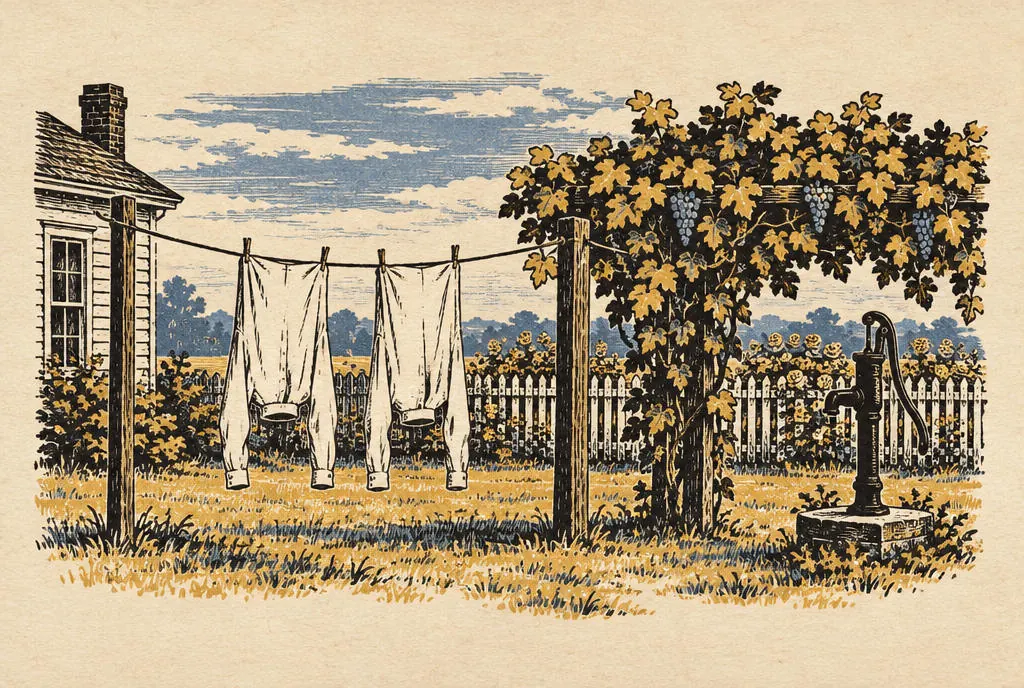
The real break came on a Sunday. Five minutes into his son’s sermon on the lilies of the field, the grandfather got up and walked out. Young Ames was sent after him, and the old man turned that eye on him and said, “Get back where you belong!” After dinner the grandfather came into the kitchen and cut himself a piece of bread to leave with, and the father blocked the doorway. They called each other Reverend. The grandfather had gone to the Negro church, he said, to hear some real preaching. The text there was “Love your enemies.” The father said that was excellent, given the fire someone had just set behind that church. The grandfather put his head in his hands. Disappointment, he said; he ate and drank it, woke and slept it. Then the father stood up, his lips white. He remembered his father walking up to the pulpit in a shot-up, bloody shirt with a pistol in his belt. He had known then, like a revelation, that it had nothing to do with Jesus.
The grandfather said the Lord, standing beside him, was a hundred times more real to him than his son standing there. The father said no one doubted it. Soon after, the old man left. He left a note of four lines. It said that no good had come and no evil had ended, and that this was their peace. Without vision, it said, the people perish. It ended with a blessing. Ames keeps that note in his Bible. He remembers watching his father preach afterward on Abel’s blood crying out from the ground, and loving him with a miserable passion. The father hated war. He had seen Kansas, and gone to the army himself near the end. After the war he went and sat with the Quakers on Sundays, while his own father preached to a church half full of widows and orphans.
Glory brings word that Jack is home and will call in a day or two. Ames is grateful for the warning, so he can prepare himself. Boughton named the boy for Ames, thinking he might have no more sons and Ames might have no child at all. Then one bright morning Ames is on the porch with the newspaper, in his bedroom slippers, his wife among the zinnias, and Jack walks in through the gate with his hand out. He is smiling. He calls Ames “Papa,” the name he used for him as a boy. He introduces himself to Ames’s wife by his full name, and she is plainly surprised. Ames has never told her he has a namesake. The boy comes round the house holding Soapy under the armpits, her ears flat and her eyes patiently furious. Jack calls him “little brother,” and the boy is delighted.
Jack says Ames looks wonderful, a lie first thing. Ames struggles to get up out of the porch swing, a strain on his heart, and Jack lifts him by the elbow. Jack seems far taller than before, as if Ames had stepped into a hole. And as Jack hoists him up, Ames sees a look on his wife’s face and the boy’s that he can’t name and doesn’t want to think about. He remembers her baptism, how she lifted her face into the winter light, and how he could hardly bring himself to touch the water to her brow. She has grown younger with the boy. She has never looked as young as she does this morning. Jack is about her age. Jack can’t stay for coffee. Ames wishes his son could have known him in his strength.
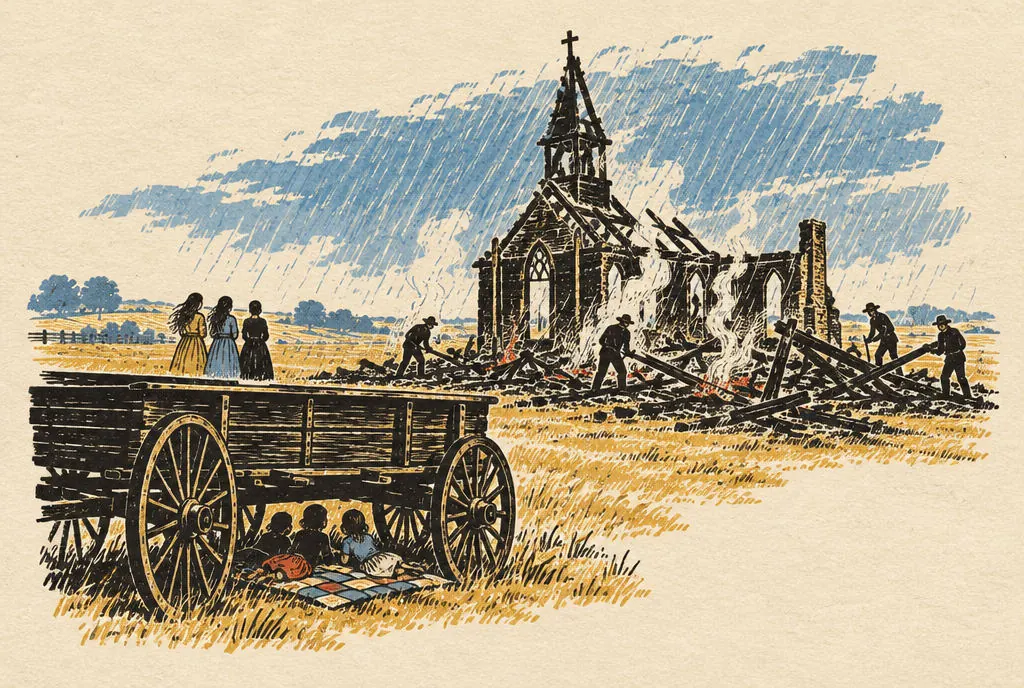
When Ames was very small, lightning struck the steeple of a Baptist church, and it fell into the building at midnight. The day they pulled the ruin down, it rained, a warm rain. Everybody came, as if to a camp meeting or a picnic. The small children lay on a quilt under a wagon playing marbles while the men searched the ashes for Bibles and hymnals. They buried the ruined books in two graves, Bibles in one and hymnals in the other, and the Baptist minister prayed over them. The ashes turned liquid in the rain, and the men were so black with soot you could hardly tell one from another. The women sang and moved gently, almost as if dancing, and even the old women had let their hair down like schoolgirls. Ames’s father brought him a biscuit with soot on it from his hands. “Never mind,” his father said, “there’s nothing cleaner than ash.” The boy thought it tasted like the bread of affliction, and the memory has stayed with him all his life.
Ames remembers how his family would approach the grandfather from his right side, the side of the lost eye, because they felt his visions came from there. His mother would whisper, “The Lord is in the parlor,” and Ames would creep in in his socks to see the old man on the sofa, saying, “I see your point.” Back from the war, Ames’s father found a needlework banner hanging over the communion table, flowers and flames around the words “The Lord Our God Is a Purifying Fire.” Purifying, for war, was the last word he would have chosen. It was what sent him to the Quakers.
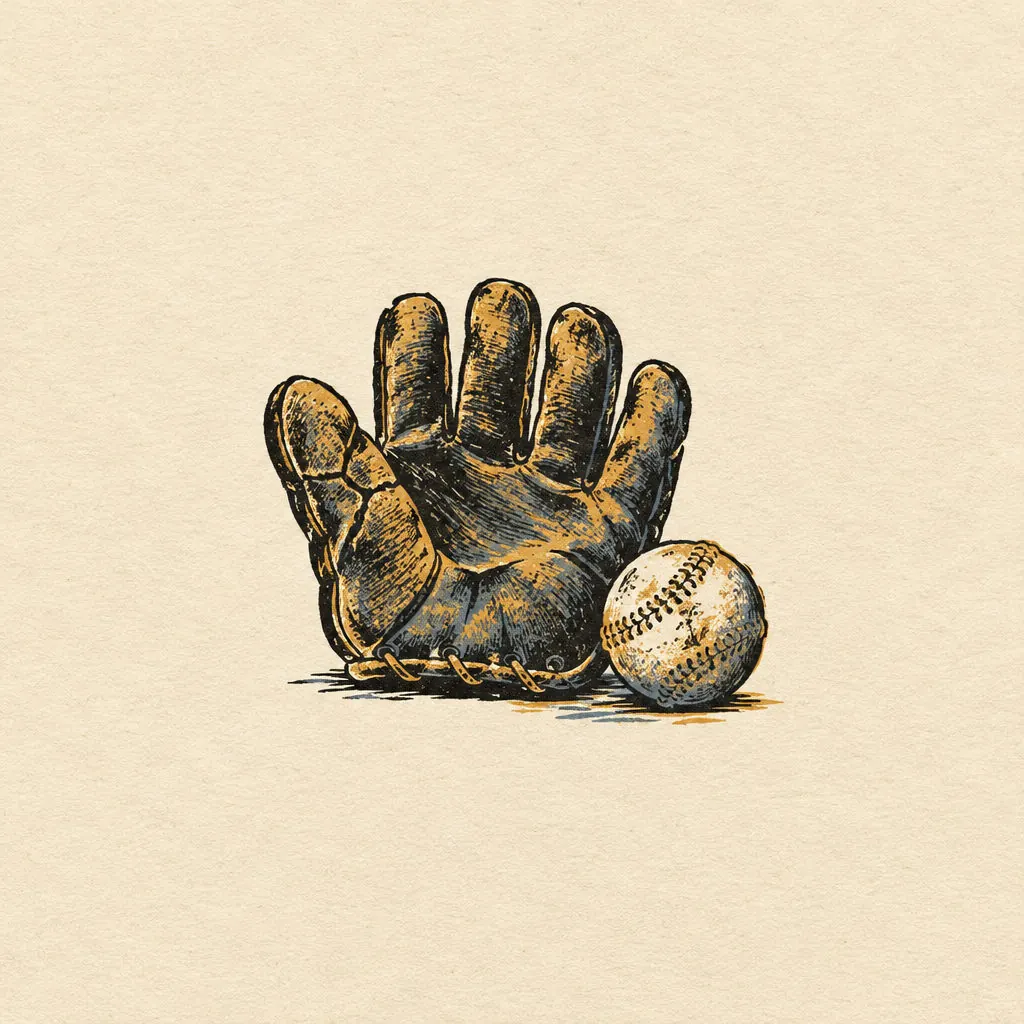
Coming home for lunch one day, Ames finds the boy playing catch in the street with Jack. The boy is wearing Jack’s new mitt, which comes up to his elbow. Jack is using Edward’s old glove from Ames’s desk. Jack pounds his glove, calls a play-by-play of the boy’s fumbles like a man on the radio, and the boy giggles. To look at, Jack is the image of old Boughton. He tells his son the things a father who lived alongside him might never think to mention, the things that matter most. So he tells him the biscuit again. He crawled out from under the wagon and knelt with his father in the rain. He remembers it as if his father broke the bread and put a piece in his mouth, though he knows he didn’t. Here is how Ames puts it.
His hands and his face were black with ash—he looked charred, like one of the old martyrs—and he knelt there in the rain and brought a piece of biscuit out from inside his shirt, and he did break it, that’s true, and gave half to me and ate the other half himself.
— Marilynne Robinson, Gilead, Picador, 2004
That is why, Ames goes on, he remembers that day as communion from his father’s hand. And that is why, on the Sunday his wife brought the boy forward, he broke the bread and fed a bit of it to his son from his own hand. He wanted to give him some version of that memory. Today the boy is lying on his belly in the sun, with Soapy asleep on the small of his back, drawing terrible little pictures. Ames will praise every one of them, because he can’t bear to say anything the boy might remember against him.
The letter turns back to Kansas, and the long walk to the grave. The boy’s shoe soles were worn through, and his socks were full of gravel and blisters. When there was no supper, his father told stories. One was from his own childhood, when he was under ten. He woke one night and saw old John Brown’s mule being coaxed down the church steps in the dark, then four saddled horses, and a wounded man held up between two riders. Then he heard his own father take their horse from the barn and ride away. Inside the church he found blood on a bench and on the floor. It was Saturday. He dragged the bench out back, scrubbed at the stain, and swept up after the horses. Then he found a federal soldier sitting quietly inside, his gun beside him. The soldier called him “little brother,” drank at the well, and walked off, favoring one leg.
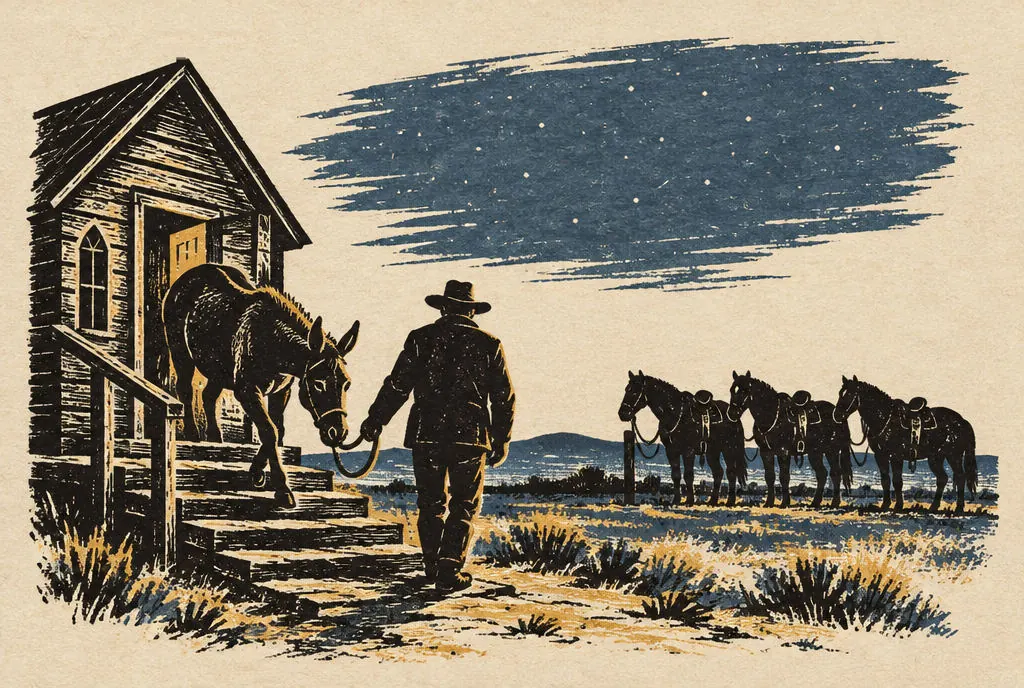
The soldier took a neighbor’s horse. On the road he met the grandfather, ambling home with the gun in his belt and two bloody shirts under his arm. The grandfather had no lie ready, and he had a loaded gun. “I winged him,” he said. The man’s horse bolted, and he fell, and the grandfather left him there. The congregation’s hiding places for runaway slaves had to be protected, he said: hollow walls, hidden cellars and tunnels, even a false-bottomed coffin in the church. The authorities never came, so Ames’s father concluded the soldier had died. He said the relief he felt each day they didn’t come was horrible, and he never forgave himself for not going to look for the man. That night in Kansas, father and son lay in the loft of an abandoned barn among owls and mice and bats. With his head on his father’s arm, the boy felt a pity too deep for any one object. He pitied his mother, the bats and the mice, the earth and the moon. He pitied the Lord.
The trustees will build a new church when he is gone, and Ames’s heart goes on thumping like a cow chewing its cud. Under his window the boy stands up on the swing in his red shirt, flying into the sun and back into the shadow. Then a waltz comes on the radio, and Ames gets up and dances to it alone in his study, waving his arms and turning, carefully. His youth was over before he was done with it. He thinks of Edward and playing catch in a hot street, the weariness in his arms, the whole body leaping for a high throw and knowing the glove is just where it should be. “Oh, I will miss the world!” he writes.
At Boughton’s, Jack and Glory are clearing the old iris beds, and Boughton is only listening to his children’s happy voices. Next Sunday, Ames decides, he will preach on Hagar and Ishmael, the mother and child sent into the wilderness. Praying over it, he has found an assurance. It isn’t only a child’s father who protects it. There are angels in the wilderness too, and springs of water. He needs to bear this in mind. Jack comes by that evening and stays to supper, since the smell of macaroni and cheese forces Ames to invite him in. His wife asks Jack to say grace, and he does it with an elegant simplicity. Ames remembers old Boughton letting himself into this kitchen one night, not long ago, while Ames ate cold meat loaf in the dark. Boughton said, “Don’t put the light on.” They sat there and prayed together, about Jack and for Jack.
Ames is tired of the effort it takes to be cordial with Jack. When he tries, Jack steps back with a little smile, as if to say, so today we are cordial. Ames knows Jack sees through him. His father taught him a teaching that came down from the grandfather. When someone insults you, think of him as an emissary sent from the Lord, with some good intended for you, and the chance to show your faithfulness. It frees you from hatred. The disguise is perfect, Ames adds, because the emissary has no idea. Still, Ames feels he ought to warn his wife and son about Jack. He settles on the least he can say: be wary.
After some bad nights, the congregation gives Ames a television so he can watch baseball. His wife moves his writing things downstairs. He falls asleep in his chair and wakes much better, having missed eight and a half innings, and finds her asleep on the floor, kneeling, with her head against his knees. When she wakes she is as glad to see him as if he had been away a long time. The congregation has sent supper for three: three casseroles, two fruit salads, a cake and a pie, and a bean salad that looks distinctly Presbyterian, so the worry has spread past his own church. You would think he had died. The boy hates foods that touch on his plate, so Ames feeds him bites of each casserole from his own fork, guessing at the woman who made it. The boy keeps saying he still can’t decide, which is his joke. He eats it all.
Coming home from church one day, Ames finds his desk and books moved to the parlor. It was his wife’s idea, but surely Jack did the carrying. Ames searches for this very letter, twice going up the stairs he isn’t meant to climb, and finds it in the bottom drawer, where he never keeps it. It feels like a taunt. That Sunday Jack comes to church. The boy waves him over and pats the pew, and Jack sits down beside him. Ames preaches on Hagar and Ishmael, and on Abraham taking Isaac up the mountain. Both times, he says, the father had to give his child up to the wilderness and trust God to put angels there. Then he says that many fathers in this world mistreat their children, or abandon them. And he sees Jack looking up at him, white as a sheet, and grinning.
Ames finishes his wife’s novel, The Trail of the Lonesome Pine. In it a young girl loves an older man, and stays true to him alone. That turn in the story told him what his wife could not. He reads until nearly dawn and walks to the church. It holds a hoard of quiet, as if every silence that ever entered had stayed. As a child he once dreamed his mother came into his room and sat in the corner chair, calm, with her hands folded. He woke and she was really there. She smiled and said she was just enjoying the quiet. He thinks then about the commandments. The one he never mastered is the last, the coveting, the pang of resentment when others have what you love. He was always better at weeping with those who weep than rejoicing with those who rejoice.
He holds a catechism with himself, calling himself Moriturus, the one about to die. Why does he fear Jack’s influence? The honest answer is this. As he stood in the pulpit, the three of them below him looked like a handsome young family, and his evil old heart rose within him. He felt he was looking back at them from the grave. He doesn’t want to be old, or the shaky old coot his son will barely remember. That morning the boy came with a picture he had drawn. Ames was finishing a magazine article and didn’t look up. His wife said, in the kindest, saddest voice, “He doesn’t hear you.” Not that he didn’t. That he doesn’t.
Ames walks to Boughton’s with the boy, who darts off to catch drifting milkweed seed. Glory brings lemonade. Boughton’s idea of heaven is the world’s splendors multiplied by two. He would go to ten or twelve, he says, if he had the energy. Jack joins them, and Ames works out his age from Angeline’s. She would be fifty-one, so Jack is forty-three. He is gray now, with tired eyes. Ames knows nothing at all of his twenty years away. Ames’s wife comes to call them home, and she worries, he thinks, about the way she talks. Ames loves her old way of saying “It don’t matter.” It meant forgiveness, but it sounded as if she were forgiving all creation, even God. If he multiplied his own splendors by two, he thinks, heaven would be her, and the rain, and the ashy biscuit.
Then, on Boughton’s porch, Jack asks Ames about predestination. It is Ames’s least favorite subject. Are some people born evil, and damned for it, and can’t they change? Ames gives cagey answers, and Jack says so. Old Boughton says Jack should have seen Ames thirty years ago. “I did,” says Jack. Ames’s wife has stayed to listen. Then she speaks. What about being saved, she asks; if you can’t change, there doesn’t seem much purpose in it. She blushes. When Jack offers to go, she says, “No, stay.” Ames suggests Karl Barth. Jack asks whether that is what he gives tormented souls at midnight, and Ames admits to himself that the only one he has prescribed Barth for is himself. Then his wife says, without looking at Jack, “A person can change. Everything can change.” Jack thanks her. That’s all he wanted to know. Walking home, she tells Ames that Jack was only asking a question. Ames writes that defending yourself is often just struggling against your rescuer.
Now he tells Jack’s story. About twenty years ago, when Jack was in college, he got involved with a very young girl from a squalid, desolate family who lived in an isolated house with mean dogs under the porch. Jack had a letter sweater and a Plymouth convertible. There was a baby, a girl. Jack never acknowledged her, but he told his father. Boughton went out there hoping to baptize the child and came home humiliated. Glory and Mrs. Boughton went, and Ames went too, with diapers and clothes and money, for several years. The baby was always too dirty and too small. Asked if he would marry the girl, Jack said only that they had seen her. The child lived about three years. She cut her foot and died of the infection. The Boughtons buried her in their family plot. Her stone says Baby, three years, because her mother never settled on a name.
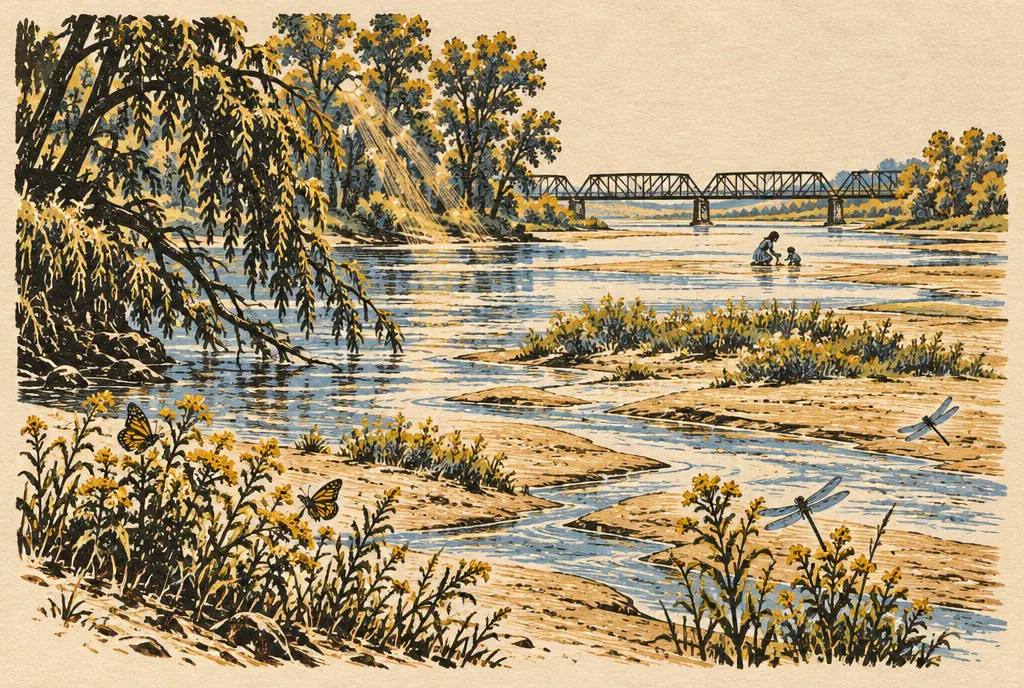
Ames remembers one visit with Glory, to a house just across the West Nishnabotna River. They left the canned ham and canned milk by the fence because of the dogs, parked a hundred yards past the bridge, and walked back to stand on the bridge and watch. It was late summer, the river shallow, its bed half exposed and braided, butterflies and dragonflies on the sandbars like spirits. The young mother, hardly more than a child herself, was trying to dam a rivulet with sticks and mud. Her baby, just walking and without a stitch on, brought her handfuls of mud to help. They splashed water at each other until the baby whimpered, and her mother scolded her. Ames saw what came next.
And she put her arms around her and settled her into her lap, kneeling there in the water, and set about repairing her dam with her free hand. The baby made a conversational sound and her mother said, “That’s a leaf. A leaf off a tree. Leaf,” and gave it into the baby’s hand.
— Marilynne Robinson, Gilead, Picador, 2004
On the way home, Glory said she did not understand one thing in this world. It isn’t Ames’s place to forgive Jack, he writes, since any harm to him was indirect. That one man loses a child while another throws fatherhood away doesn’t make the second man a wrongdoer against the first. And yet, Ames writes, “I don’t forgive him. I wouldn’t know where to begin.” Jack didn’t come home when his mother died. The Boughtons loved that baby because they loved Jack, and she looked just like him.
One afternoon Jack asks if Ames will be in his church study in the morning. Ames hardly sleeps, shaves carefully, and puts on a white shirt. He falls asleep upright in a pew, and Jack finds him there. “I’m very sorry,” Jack says first. He says he envies a man who takes his identity from his father. Ames bristles. Jack gets up to leave, and Ames says, sit down, son, let’s try again. Jack tells him he hasn’t believed anything since he was a small child and thought the Lord lived in the attic and paid for the groceries. He asks about Iowa’s colored regiment in the Civil War, and the Negro families who have since left town, and the old fire at their church. Then he says Barth had little respect for American religion. Ames feels Jack is winning, and that Jack is no happier about it. Daylight is pouring in. Ames says that every book Barth will ever write weighs nothing against this room full of silence and prayer. And then he weeps, from tiredness, to the surprise of both of them. Jack says he can’t tell him how sorry he is, and means it. Ames wipes his face on his sleeve, the way his son does.
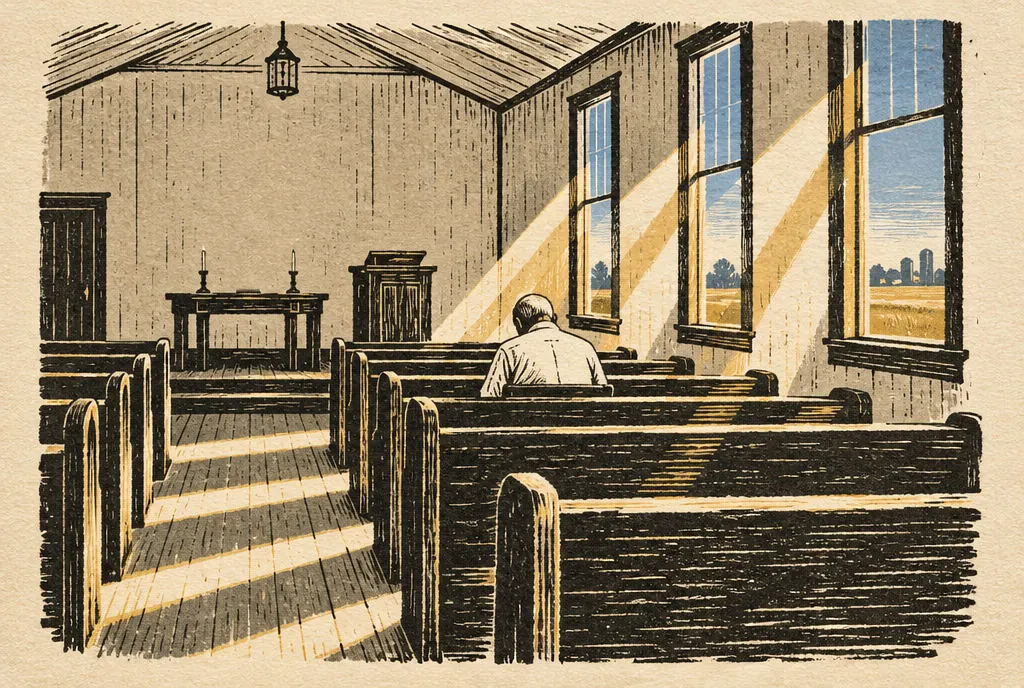
Gilead had its saints once, Ames writes; they just grew old and eccentric. One Fourth of July the town asked the grandfather to speak, as a founder and a veteran. He wore his black preacher’s clothes and told the crowd that the visions of his youth were only dreams now, and Gilead dust and ashes. Few listened. There was a little laughter. The band struck up, and Ames’s father put a hand on the old man’s left shoulder and led him down. Then Ames lists what Jack did as a boy. He set Ames’s mailbox on fire with a paraffin fuse. He painted molasses on Ames’s front steps for the ants. He stole things worth nothing except to their owner: Ames’s reading glasses, his old Greek Testament, and a childhood photograph of Louisa in a velvet case. Ames, by his own account, was never angrier in his life.
Jack’s brothers and sisters, when he was small and ran off, would all go out looking for him, calling him Johnny. Once Ames sat on the Boughtons’ porch while Louisa’s picture was still missing. Teenage Jack sat on the steps with a slingshot, smiling up at him as if they shared a joke, and called out, “Goodbye, Papa!” Ames went home shaking. That is why, he writes, the business with the young girl struck him mostly as mean. Then comes his birthday. He wakes in his chair to the smell of pancakes. His wife has slipped off his shoes and put a quilt over him. There are marigolds on the table and candles in his pancakes. The boy recites the Beatitudes twice, glowing. Beside his plate is the sermon he preached the first time he saw his wife, wrapped in tissue paper and tied with a ribbon. She tells him not to revise it, it doesn’t need it, and kisses the top of his head. So now he is seventy-seven.
He writes a second note of apology and carries it to Jack himself, and Jack, reading it, looks young for a moment. Ames remembers baptizing him. The name was to be Theodore Dwight Weld, after the abolitionist preacher. But at the font, when Ames asked by what name the child should be called, Boughton said, “John Ames,” and said it again with tears running down his face. Ames’s heart went cold. He thought, this is not my child. He has wondered since whether the baby felt the coldness of that christening. Now, writing it down, he sees that it isn’t true that he never warmed to Jack. “John Ames Boughton is my son,” he writes, another, more cherished self. And if Jack is his son, then that child of Jack’s was his daughter, and what happened to her was terrible. History, Ames writes, could make a stone weep.
He remembers a sermon of his father’s, a rare personal one, after the break with Edward. The father confessed that after the war he had gone to the Quakers and left his own father alone. His mother, too ill to come to church for months, heard of it and insisted on going. His sisters carried her up the long road in their arms, taking turns. She was white and shorn, too small for her dress. The eldest, Amy, walked in during the sermon carrying her mother like a half-grown child. The old reverend stopped, finished, gave the benediction, kissed his wife’s forehead and carried her home. Amy told her brother she would hate him till she died if he ever did that to them again. He never did.
One evening Ames wakes from a nap to an empty house. His wife and son are on the porch swing, wrapped in a quilt. “This might be the last mild night,” she says, and rests her head on his shoulder. Jack comes along the road and sits on the steps. Ames dozes, or seems to, and they talk quietly. She was in St. Louis once, looking for work. It is a miserable place to be broke, Jack says. She never found a good place to be broke, she says, and she tried them all. Jack once thought a settled life was what happened to you if you weren’t careful. She says it was the one thing she wanted. She used to look in people’s windows at night and wonder. Jack says that was how he meant to spend this very evening. Then she says, very gently, “well, Jack, bless your heart.” And he says, “Why, I thank you for that, Lila.” It is the only time anyone in the letter says her name. Ames lies awake all night and writes it out. Her hands on his felt like great happiness. If her wondering has been answered for good, it gives him peace.
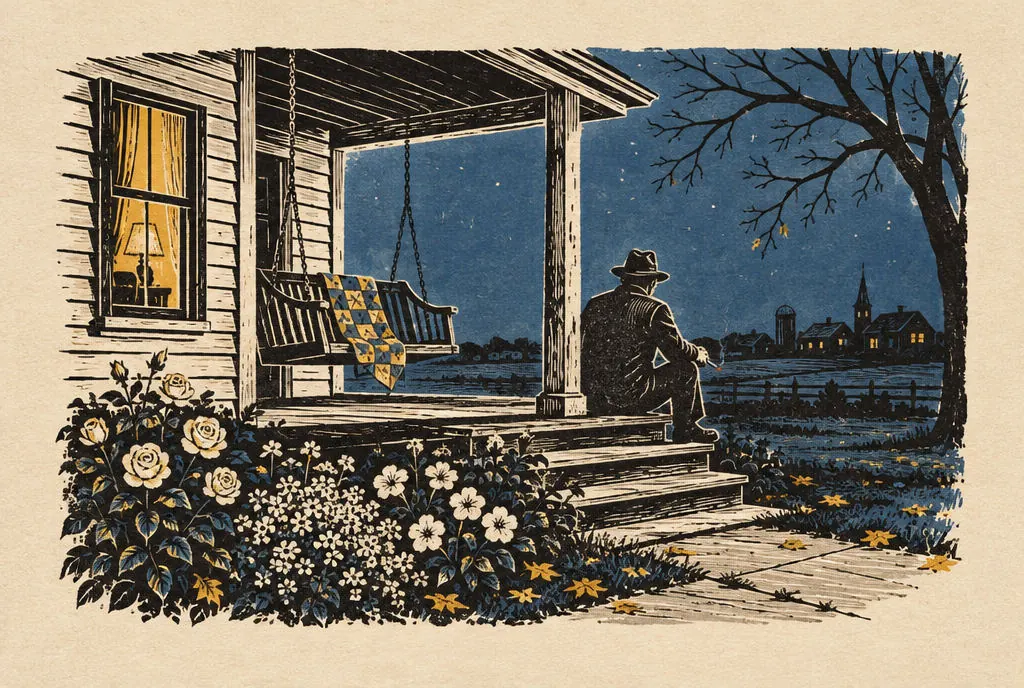
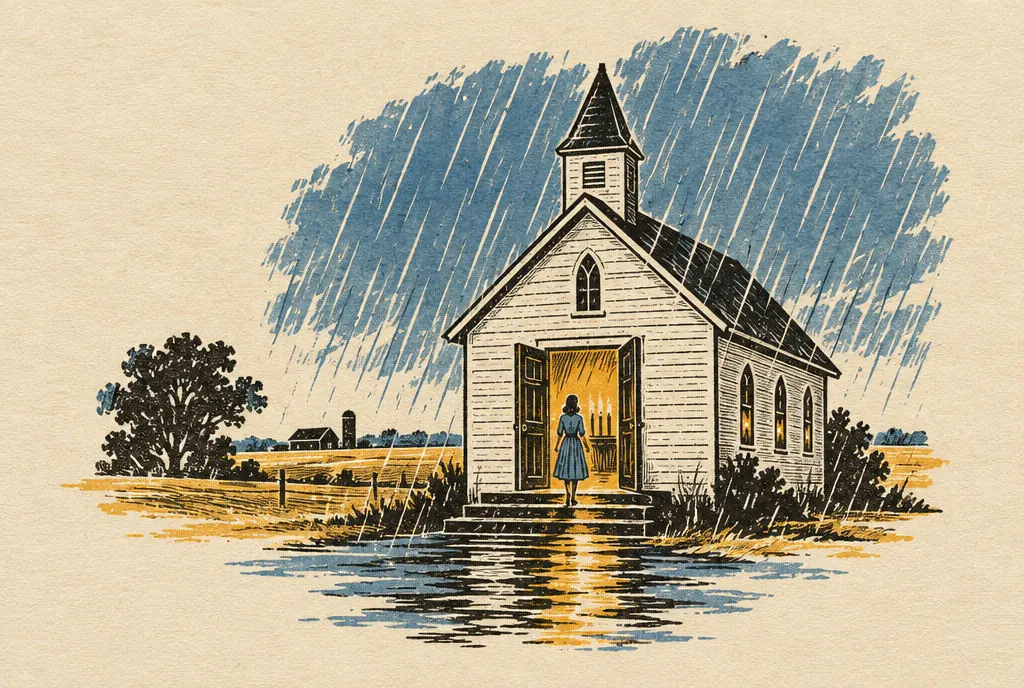
He tells the boy at last how he courted Lila. She first came to church on Pentecost, in the rain, with candles lit and flowers everywhere. She said only, “Good morning, Reverend,” and he forgot to ask her name. He spent the week hoping she would come back, and she did. One Sunday she was absent, and he spent a week resigning himself to the smallness of his life. The next Sunday he went to the barber, put on a new shirt and tried hair tonic, and Boughton met him in the road and chuckled. She asked to be baptized. No one had seen to it when she was a child, she said. Asked about family, she said she had none. Once, outside the grocery store, he nearly ran after her in the street, and broke into a sweat. He was sixty-seven. Then she began coming to the house to tend his garden. One evening by the roses he asked how he could ever repay her. She said, “You ought to marry me.” And he did.
One evening old Boughton sits at Ames’s kitchen table for an hour, then says that Jack is still not right with himself. They had thought he might be married, for a while. Jack walks in and reads the scene exactly. Ames can only manage, “this is some year for acorns!” and Jack laughs outright. That night Ames gathers that Lila and Glory found Jack at the bar.
The next morning Ames is sorting old papers in his church study, dirty and cobwebbed, when Jack comes in wearing his suit and tie. He shows Ames a photograph from a little leather case. It is a portrait of Jack standing behind a seated young Black woman and a light-skinned boy of five or six. “I also have a wife and child,” he says. Her name is Della. They are married in the eyes of God, because the law where they lived forbids it. They have been man and wife for about eight years, and lived together a total of seventeen months, two weeks and a day. The first thing she ever said to him, walking home in a rainstorm with her arms full of papers, was “Thank you, Reverend.” She is a teacher, and she took him for a clergyman. Her father is a minister in Memphis, who stood in his pulpit and preached at Jack about wolves in sheep’s clothing. He told Jack that if he were an honorable man, he would leave her alone. Jack promised, and left. That fall he passed her street and tipped his hat, and she burst into tears. From then on they were man and wife.
Their son is Robert Boughton Miles, a beautiful child, very bright. He is being raised in the church and wants to be a preacher. Two years ago Jack found a job and a house in a mixed neighborhood, painted it, and found rugs and chairs. They had almost eight months there. Then his boss saw them together in the park and told him he had his good name to consider. Jack hit him twice and cracked a rib. The police came that evening, and Jack put his family on the bus to Memphis. He came home, he says, hoping to find a place where they could all live, and to show his father he finally has something he can be proud of. But his father is too old now. Ames says he would love to know the child, and then blunders. Old Boughton, he says, certainly took to that other child, the little girl. Jack goes stark white. At the door Ames puts his arms around him, and Jack lets his head rest on his shoulder for a moment. “I am tired,” he says. “You are a good man,” says Ames. As he leaves, Jack says, “No matter, Papa. I believe I’ve lost them, anyway.”
Ames writes it all down, he says, so the boy may hear one good word about a man he may never hear praised, and see the beauty there is in him. A few days later Ames goes to Boughton’s with money from the bank, a pitiful sum, all the money there is for Lila and the boy. Jack laughs, puts it back in Ames’s pocket, and says he is leaving. He has had the letter he was waiting for. Old Boughton sits in his chair staring at nothing. Glory says the only words he has said all day are “Jesus never had to be old!” Glory has called all her brothers and sisters home, because their father is dying. How could Jack sit among those happy families, Ames thinks, with that sad and splendid treasure in his heart? Ames knows he himself is the elder brother of the parable, the good son who never left, even when his own father left Gilead for the Gulf Coast and urged him to go too. There is no justice in love, he writes, and no proportion.
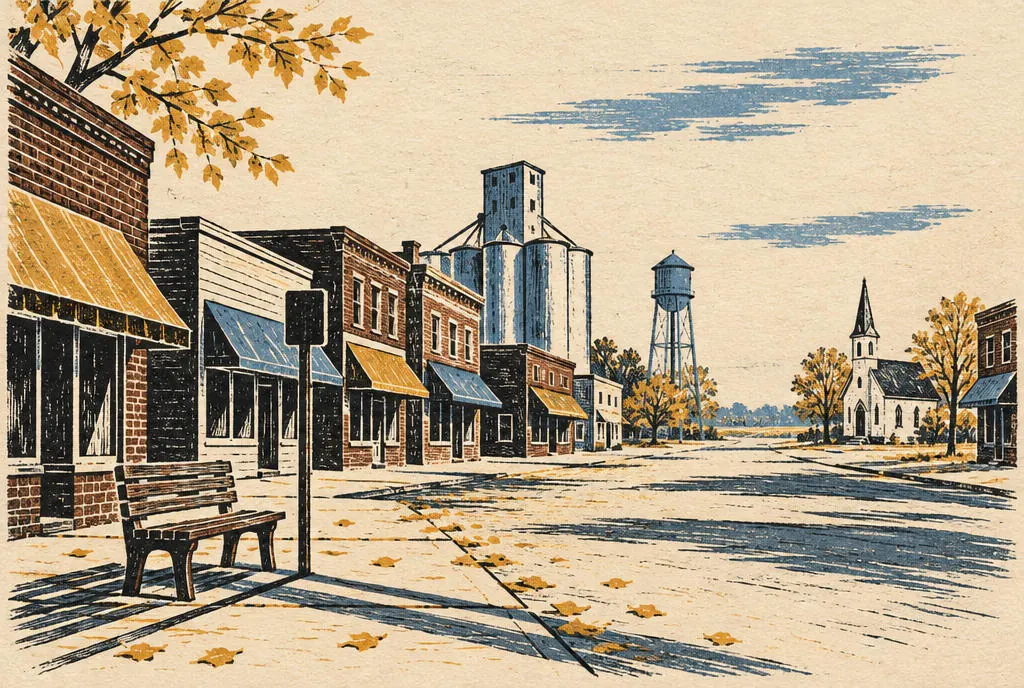
In the morning Jack walks to the bus stop, too thin for his clothes, carrying a suitcase that looks almost empty. Ames walks with him and gives him his old copy of Feuerbach. “I remember this from—forever!” Jack says. Ames tells him that the Greek word for saved can also mean healed, or restored. Passing the church, Jack says he will never see this place again. Ames has to sit down on the bench because of his heart. He offers Jack forty dollars, and Jack takes twenty and gives twenty back. Then Ames says that what he would really like is to bless him. There are a few people on the street. Jack takes off his hat, sets it on his knee, closes his eyes, and bows his head almost against Ames’s hand. Ames gives him the old benediction from the book of Numbers: the Lord make His face to shine upon thee, and give thee peace. Jack keeps his head bowed. Ames tells the rest.
Then, when he didn’t open his eyes or lift up his head, I said, “Lord, bless John Ames Boughton, this beloved son and brother and husband and father.” Then he sat back and looked at me as if he were waking out of a dream.
— Marilynne Robinson, Gilead, Picador, 2004
Jack says, “Thank you, Reverend.” Ames fears he heard that list as everything he no longer is, the exact opposite of what Ames meant. He tells Jack it was an honor. He would have gone through seminary and all the years since for that one moment. The bus comes. Ames tells him they all love him, and Jack laughs and says they are all saints. In the doorway of the bus he lifts his hat, and then he is gone. Lila makes every supper his favorite now, by candlelight, in her blue dress. The boy has outgrown his red shirt. After supper one evening, Ames sits by his old friend’s bed while he sleeps. As boys, Ames used to climb in this very window before dawn to wake him for fishing. He whispers that he blessed that boy of his for him, that he still feels the weight of his brow on his hand. He loves him as much as Boughton meant him to. They had to wait a long time, didn’t they?
Ames will ask the deacons to burn his old sermons, enough for a good fire for hot dogs and marshmallows at the first snow. They mattered, he writes, or they didn’t. In his Pentecost sermon he said the Lord breathes on the gray ember of Creation and it glows for a while, then sinks back. But the Lord is more constant than that. Wherever you turn your eyes, the world can shine like transfiguration. It only takes a little willingness to see, and the courage. “I love the prairie!” Ames writes. He has seen the dawn flood over the land so often, and everything turn radiant at once. Mountains, he thinks, would be an impertinence. This plain town seems to him almost Christlike, being so little regarded. He expects the boy will leave it someday, and that is fine. Then he says what he wants of it for himself.
This whole town does look like whatever hope becomes after it begins to weary a little, then weary a little more. But hope deferred is still hope. I love this town. I think sometimes of going into the ground here as a last wild gesture of love—I too will smolder away the time until the great and general incandescence.
— Marilynne Robinson, Gilead, Picador, 2004
Last of all, Ames prays for his son. He prays that the boy grows up a brave man in a brave country, and that he finds a way to be useful. Then he lays down his pen. “I’ll pray,” he writes, “and then I’ll sleep.”
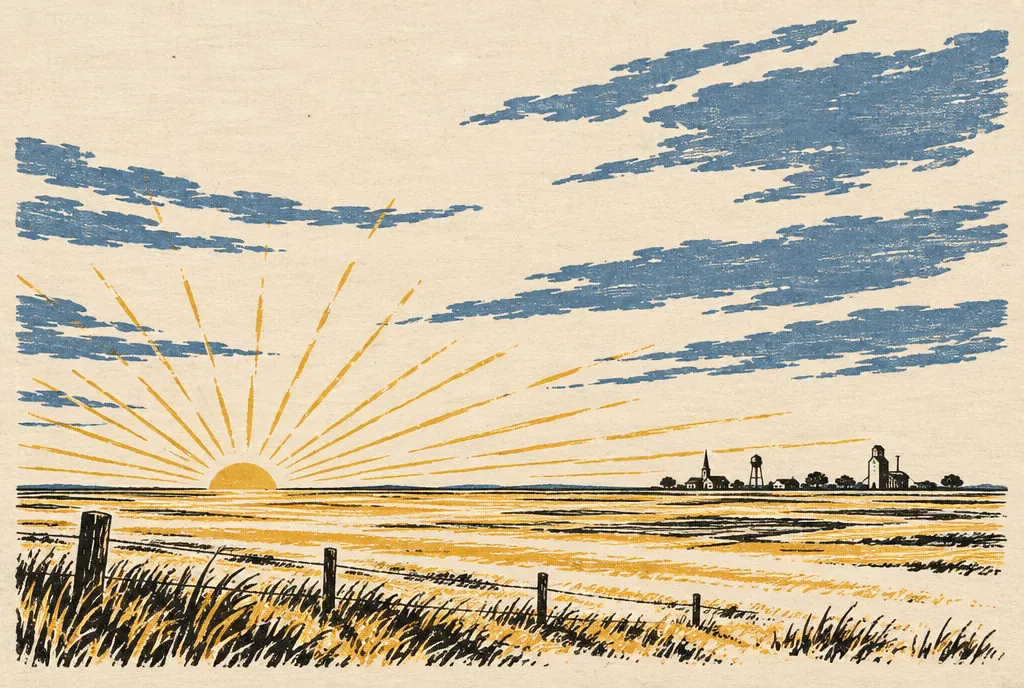
Gilead won the 2005 Pulitzer Prize for Fiction and the National Book Critics Circle Award. Marilynne Robinson went back to the town three more times. Home, in 2008, tells the same summer through Glory and Jack. Lila, in 2014, tells how Lila came to Gilead, and Jack, in 2020, tells the story of Jack and Della in St. Louis.