Three voices stand at the door of the book before its story starts. Paul Valéry, the French poet, tells humankind that its ideas are terrifying and its heart is faint, and that it grows more afraid of blood with every age. Jacob Boehme, a German mystic of the sixteen hundreds, says the life of darkness is no misery, because death is the thing that darkness feeds on. And a newspaper, the Yuma Daily Sun of June 1982, reports that a skull three hundred thousand years old, dug up in Ethiopia, carries the marks of having been scalped. The point lands before the book begins: scalping is as old as we are. Then it begins, with an order to the reader.
See the child. He is pale and thin, he wears a thin and ragged linen shirt. He stokes the scullery fire. Outside lie dark turned fields with rags of snow and darker woods beyond that harbor yet a few last wolves. His folk are known for hewers of wood and drawers of water but in truth his father has been a schoolmaster. He lies in drink, he quotes from poets whose names are now lost.
— Cormac McCarthy, Blood Meridian, Random House, 1992, chapter I
The father has one story, the night of the boy’s birth. It was 1833, the year the stars fell, the Leonids pouring down until he looked up for holes in the sky. The mother died bearing the child, and the father never says her name. The boy cannot read or write, and already there is something in him that wants to hurt. The book gives him no name either. He is the kid, and the narrator sees all of history in his face: “the child the father of the man.” At fourteen he runs away, drifts to Memphis and Saint Louis, and rides a flatboat forty-two days down the river to New Orleans, where he lives over a tavern and comes down at night to fight the sailors. A Maltese boatswain shoots him twice, once in the back and once just under the heart. Healed, he takes a boat to Texas. Now his past is gone, and the narrator asks the book’s first question: whether the world can be bent to a man’s will, or whether his heart is only one more kind of clay. In the spring of 1849, after two weeks of rain, he rides an old mule into Nacogdoches.
The rain has driven a revival into a tent, where the Reverend Green is preaching to a soaked crowd, and the kid stands along the wall. Then a man comes in out of the wet, and the whole tent turns. He is close to seven feet tall and bald as a stone, with no brows and no lashes, small hands, and a face as calm as a child’s. He is smoking a cigar. In a level voice he tells the crowd the preacher is a fraud: never ordained, unable to read, wanted in four states, caught with an eleven-year-old girl, run out of Fort Smith for lying with a goat. A pistol goes off. Then more. Someone slashes the canvas, and the tent folds down on everyone in it like a wounded jellyfish. The kid runs for the hotel, and there is the bald man already at the bar, hats and coins piled in front of him, the drinks on him. Then a man asks him how he came to know all those things about the Reverend Green, and the answer is the judge’s first lesson. He has never been in Fort Smith. He has never seen the preacher or heard his name. In his words: “I never laid eyes on the man before today.” There is a silence in the bar. Then the whole room laughs, and someone buys the judge a drink.
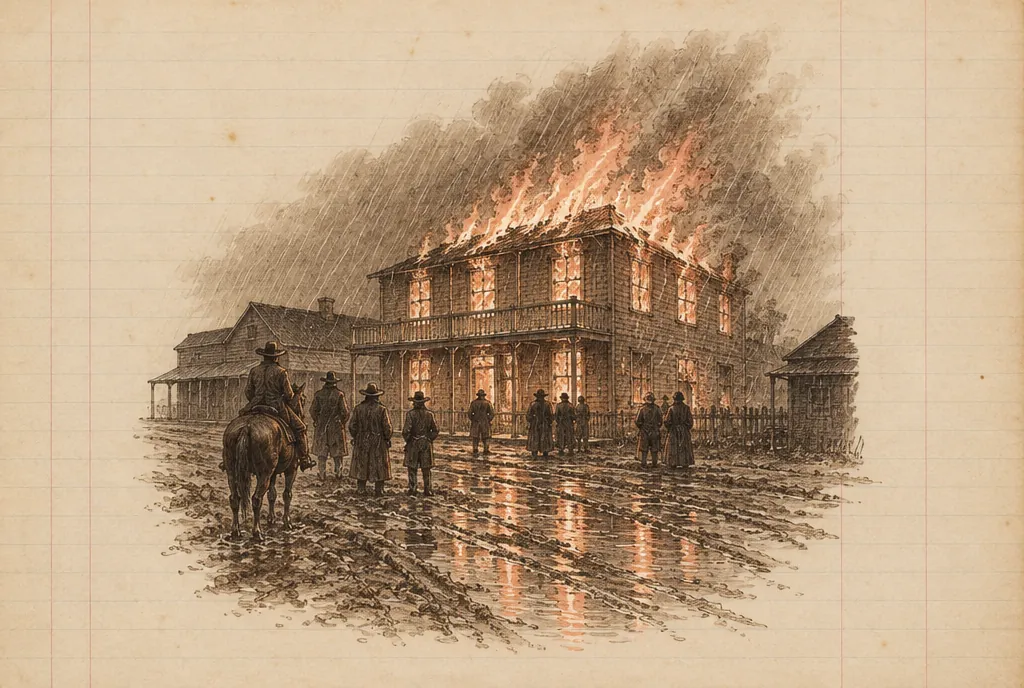
On the sixteenth day of rain the kid is down to two dollars. On the planks to the privy he meets a drunk man coming the other way, and neither will give the path. The kid kicks him. The man breaks a bottle over the kid’s head and comes at his eye with the neck of it, and a third man clubs the kid face down into the mud, where he would have drowned had someone not turned him over. In the morning the mud-caked man is sitting beside him, asking if they are quits, and admitting he had meant to kill him. He has no ears. On his forehead are branded the letters H and T, for horse thief, and an F for felon. His name is Toadvine. Together they set fire to the hotel door of a man called Sidney, who has a grudge against Toadvine, and when he opens it in his underwear Toadvine goes for his eyes and the kid, told to, kicks him in the face again and again while the wall catches. They run out laughing, two figures made of mud, and the hotel burns behind them. The kid takes his mule from a Mexican family’s yard without paying. Passing the fire he sees the judge on horseback among the watchers. The judge turns his horse to see him go, and smiles.
Out on the prairie, with the stars falling all night, he follows a line of smoke to a sod hut and a half-mad old hermit who was once a slaver out of Mississippi. The hermit shows him a dried black thing in his hand. It is a human heart, a Black man’s, and it cost him the two hundred dollars of bounty that was on the man. A man cannot know his own mind, the hermit preaches, because the mind is the only tool he has to know it with. He can know his heart, but he had better not look. In the hermit’s words, “when God made man the devil was at his elbow”: a creature that can make a machine, and a machine to make the machine, and an evil that runs itself for a thousand years with no one to tend it. In the night the kid wakes to find the old man bent over him, almost in his blankets, and by morning the hermit is gone. A cattle drive forty days out of Abilene feeds him and asks him nothing, and when he wakes there is a bag tied to the mule: beans, dried peppers, and an old Green River knife with its handle wrapped in string. On the fourth evening he sees San Antonio de Béxar under clouds the colour of blood, and the first thing to meet him on the road is a deadcart, its three men white with lime, a bell tolling. In a cantina a barman refuses him a drink and draws an old flintlock, and the kid goes over the bar and breaks two bottles over his head and drives the broken neck into his eye. Nobody in the room moves. He wakes in a ruined mission church with his head in torment, with the dead laid along the sacristy wall and a child among them, and tracks the mule to the river and wades in after it, like a wretched candidate for baptism.
He is lying naked under the willows with his rags drying on the branches when a rider hails him, saying he is white and Christian. The rider is recruiting for Captain White, who means to take a company into Mexico. The kid says the war is over. The captain says it is not, and offers a horse and ammunition, no wages, and a share of the land. The captain’s argument is simple, and he gives it with a kind face. Americans won Mexico with their blood and the government gave it back. Mexicans are a mongrel race who cannot govern themselves, and a people who cannot govern themselves will be governed by others. Sonora will be American, and every man who rides with him will have land. The kid asks one question, about a saddle. That evening, drinking in the Laredito with a boy from Missouri called Earl, he is watched by an old Mennonite in the mirror over the bar, who turns around. The army will stop them at the river, he says, and if they get across they will not come back. His eyes are wet. The wrath of God is sleeping, and only men can wake it. “Hell aint half full,” the Mennonite tells them. They curse him out of the doorway. At dawn Earl lies in the hotel courtyard with his skull broken in, and nobody knows who did it. The Mennonite comes back once. The joy, he says, was never in the tavern. It was on the road there.
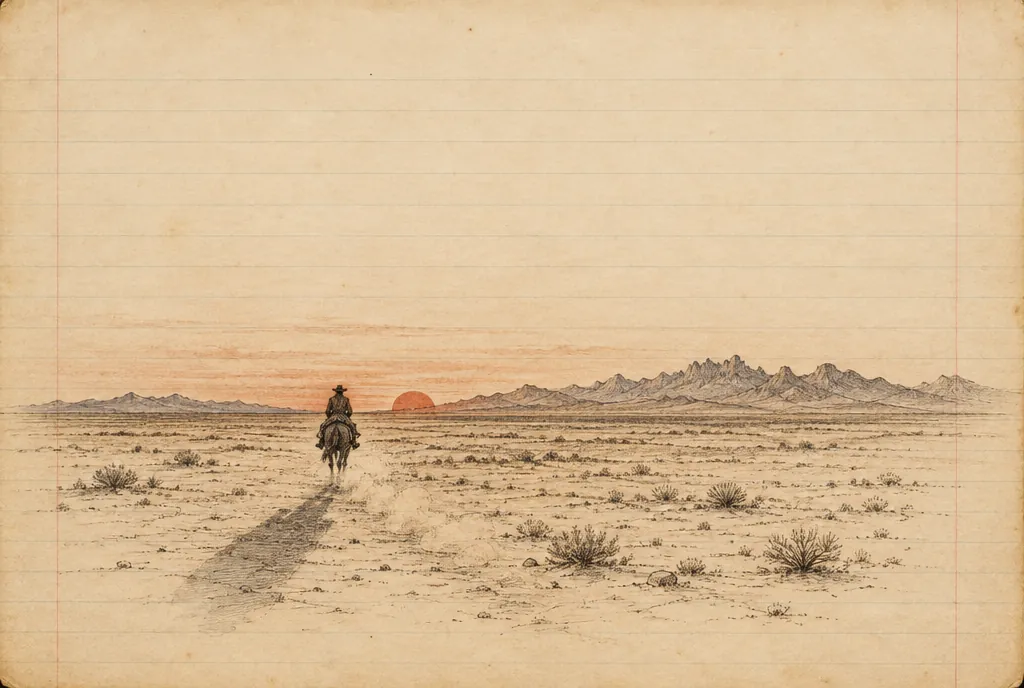
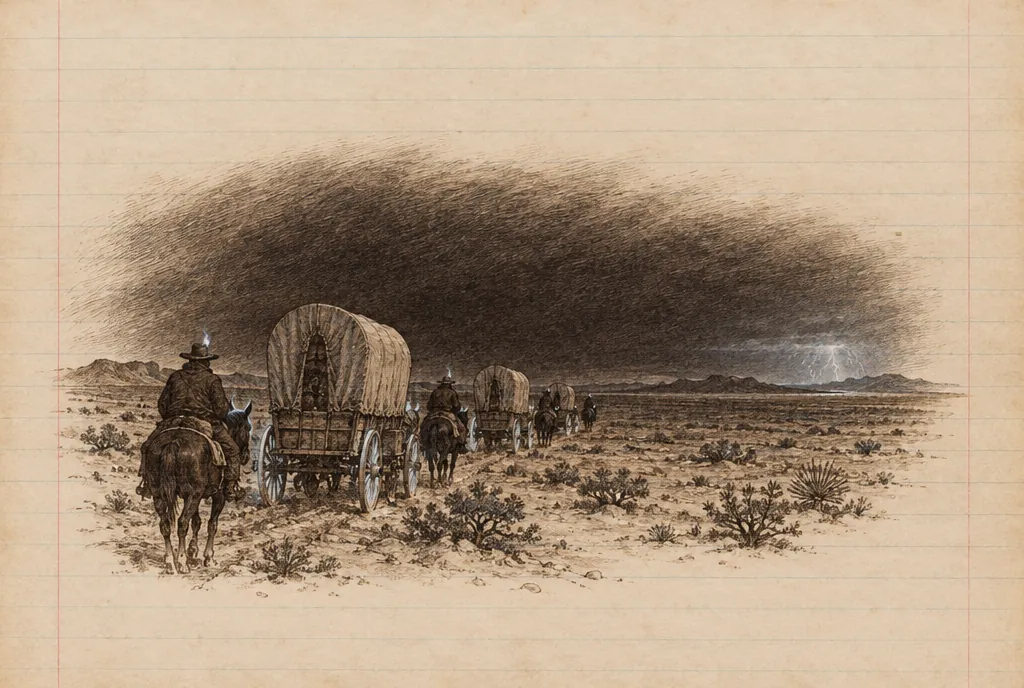
Five days later the kid rides out on Earl’s horse with forty-six men and the wagons, across the Frio and the Nueces, and over the Rio Grande by night into Mexico. Six days out a man sickens and dies, then more, and they dig the graves with the shoulder blades of antelope. The narrator sees a pale sutler riding behind every army that was ever raised, and his name is death. The sun comes up behind them red and pulsing like something alive, and the men ride with their heads down like an army asleep. One night blue fire crawls over the metal of the guns and sits in the horses’ ears and in the men’s beards, and the wagon wheels roll in hoops of flame. A man called Hayward prays out loud, telling the Lord they are dried to jerky down here, and within the hour rain falls in drops the size of grapeshot. Then a cloud of dust rises off the plain, and the captain puts his glass on it. The Mexican guide looks, shakes his head, and is not seen again. It is a herd, thousands of cattle and mules and horses with a few drovers, and the captain calls them heathen stock thieves and promises the men some sport. The herd swings wide. Behind the horses, as the dust clears, rise hundreds of Comanche riders.
Here the book stops breathing and gives the costumed horde in one long sentence, and the retelling can only follow it. They come in looted finery: a stovepipe hat, an umbrella, a bloodstained wedding veil, a coat worn backwards, a conquistador’s armour, shields of mirror shards that throw the sun, bone flutes shrieking. One horse has its head painted red. Arrows come first, then lances. The kid’s horse dies under him. He fires once, then sits in the dust fumbling at his shot pouch while the man beside him dies with arrows in his neck and chest. Riderless horses run bleeding through the smoke. Men are scalped alive. Men are opened and emptied. Dying men are violated where they lie. When it is over, the scalped lie in the dust like maimed monks.
At dark the kid gets up from among the dead, soaked in blood and urine, and walks south by the stars while the wolves move toward the field. In daylight a man called Sproule joins him, his arm torn by an arrow. Eight got away, the captain among them. On the second day they come to a mesquite bush hung with seven or eight dead infants, pierced through the jaw. The book gives them two sentences, and so does this. Beyond it is a burned village, and in its church some forty villagers shot through the roof, the dried blood on the floor cracked into a kind of ceramic with wolf tracks through it. From a mountain at sunset they see a lake, trees, a hawk, a white city, and in the morning there is nothing but a dusty plain. “People see what they want to see,” Sproule says. Mexican riders find them on the road, and the man in front is riding Captain White’s bay horse under Captain White’s saddle. The leader hands the kid his canteen and kicks it out of his hands, and lifts it away from Sproule on the point of his sword. Lost lambs cry, he tells them. “Sometime come the mother. Sometime the wolf.” They stop a family’s cart and climb in and sleep, and the kid wakes in a town with Sproule dead beside him.
Soldiers arrest the kid and lead him through a fair to a glass jar of mescal with a man’s head floating in it, the hair drifting. It is the captain. The kid looks at it and spits. “He aint no kin to me.” In a stone corral he finds three more survivors, and boys on the wall throw stones, and the kid knocks a small child off the wall with a rock the size of an egg. Five days on mules take the prisoners to Chihuahua City, past a cathedral where strings of dried Apache scalps flap on the front among the apostles. In the cellar of the prison a tall man in his underwear comes over and asks if the kid knows him. He has no ears. “I’d know your hide in a tanyard,” the kid says.
The prisoners clean the gutters of Chihuahua on their knees in chains, driven by a gold-toothed overseer whom the Americans call Brassteeth, and Toadvine prays every day that the Lord will keep Brassteeth safe, so that he can kill him himself. Then one afternoon a gang of riders comes in off the road half drunk, in clothes of hide, with huge revolvers and bowie knives, bridles of human hair strung with human teeth, and necklaces of dried ears. At their head rides the judge, bowing to the ladies at the windows, his bared head so white it looks painted. Next day he stands over the gutter in kidskin boots, smoking, and his eye finds the kid, and he smiles, or seems to. Toadvine has the news. The leader is Glanton. The governor, Trias, has given him a contract: a hundred dollars for every Apache scalp, and a thousand for the head of the chief Gómez. Toadvine has signed the three of them on as seasoned Indian killers. Three days later they ride out in a parade, with flowers thrown from the windows, and at the old aqueduct the governor drinks their health and blesses them north.
The gang the kid has joined has two men named John Jackson, one Black and one white, and they hate each other. On the road north the white one keeps dropping back to ride in the Black man’s shadow and whisper to him, and the Black man jerks his horse away as if the shadow were part of his body. Glanton only counts heads. That morning, in a courtyard in Chihuahua, a Prussian merchant named Speyer had opened an army crate of four dozen Colt revolvers, five pounds apiece loaded, and Glanton had tried one on a cat on the wall, which simply vanished. When a dozen Mexican soldiers came to the shooting, the judge led their sergeant round the company for a formal introduction to every man, and in front of the Black Jackson he gave the sergeant a long lecture in Spanish on where men like Jackson supposedly come from. Jackson, sweating, asked three times what had been said, and the judge’s answer is the first of his sermons. Men’s deeds fit into history whether they understand them or not, but it is right that the facts be set down with some third party, a witness. “Words are things,” the judge says. Once you have them they cannot be taken from you, and their power is greater than any man’s ignorance of what they mean.
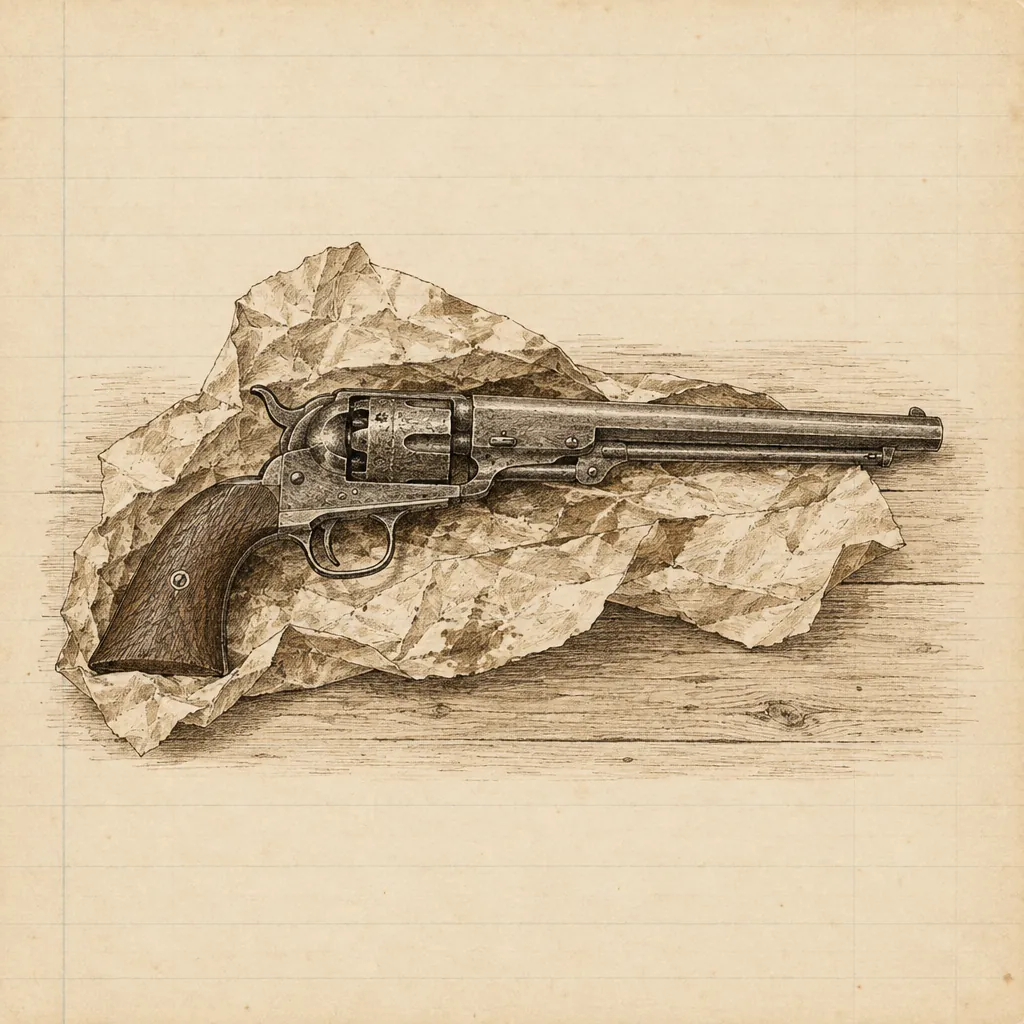
Toadvine falls in with a Welsh convict escaped from the penal colony in Van Diemen’s Land, three fingers on his right hand and a necklace of dried ears round his neck, who goes by Bathcat and offers a bet on which Jackson will kill the other. He backs the Black man. On a windy plateau a family of travelling conjurors who have attached themselves to the company lose their painted tent to the gale, and when they come back Glanton has them read the cards. The old woman sits blindfolded facing the night while her husband holds each card up. The Black Jackson draws the Fool. The kid draws the Four of Cups. Glanton draws a card and it blows out of the juggler’s hand into the dark before anyone can see it, and the old woman chants anyway: the Chariot, reversed, a card of war and vengeance, a cart of the dead full of bones. Glanton pulls his revolver to silence her, and the judge steps straight through the fire and wraps him in his arms. In the square at Janos two Delawares and a man named Webster hold an ancient Apache woman found at a meat camp upriver, too old to walk. Glanton points with his left hand, and when she turns her head to follow it he shoots her through the skull. He tells McGill, the company’s one Mexican, to get the receipt, and McGill takes her scalp.
North of Janos the white Jackson, drunk and barefoot, sits at one of the two fires. When the Black Jackson sits down at it, the white man tells him, with the worst word he has, to go to the other fire, and cocks his revolver and promises to kill him. Any man in this company sits where he likes, the Black man says. Is that the white man’s final say? “Final as the judgement of God.” The Black man looks across at Glanton, who does nothing, and walks off into the dark. The white man uncocks his pistol and sets it down. Then the Black man steps back into the firelight with a bowie knife held in both hands like something from a ceremony, and before Tobin can rise he takes the white man’s head off with one stroke. The blood goes in two arcs into the fire. The head rolls to Tobin’s feet. The body sits on as before, a thin black cigarillo still between its fingers. Nobody says a word. At dawn they ride out and leave him sitting in the ashes with his boots beside him, and within the hour the Apaches hit them on the plain.
Forty or fifty Apache horsemen ride out of the mirage, doubled and upside down in the sky above themselves like an army out of hell, and the kid fires his new pistol slowly and carefully as if in a dream, and the riders pass and melt into the heat. In a basin they find a stagecoach with six horses still in harness and two dead men and a dead boy inside, and Glanton whips the team off, and the coach rattles away across the plain with the dead man swinging from the door until it is gone. Above the abandoned copper mines of Santa Rita del Cobre, Glanton pounds on the door of the old presidio and tells whoever is inside to come out if they are white. Four prospectors have been under siege for three days, eating a rotting mule, and a boy of about twelve crouches glaring in a corner, and nobody can say whose he is. The judge lectures the squatters on the age of the earth, and they quote scripture at him. Books lie, he says. They say God does not lie, and he agrees, and holds up a rock. These are his words: “He speaks in stones and trees, the bones of things.” He wins them all, then laughs at them for fools. In the storm that night he is seen naked on the walls in the lightning, declaiming verse. In the morning the boy is found dead among old bones in a cubicle, naked, his neck broken. The book does not say who. The squatters stand round him with their poor guns like an honour guard, and as the company rides away a dying man sings childhood hymns and curses God by turns.
Deep in the mountains the kid borrows an awl from Tobin, the expriest, to mend a strap, and Tobin, watching his hands, says that God’s gifts are handed out unevenly. Look at the judge. He speaks five languages, dances better than the devil, plays the fiddle better than anyone Tobin ever heard. God speaks in the least of creatures, Tobin says, and no man is shut out from that voice. The kid says he has never heard it. When it stops, Tobin tells him, “you’ll know you’ve heard it all your life.” Nobody hears the horses grazing at night, but when they stop, every man wakes. The kid asks whether the voice speaks to the judge, and Tobin does not answer. Instead he tells how the gang met him. They had left Chihuahua City thirty-eight strong, and after nine days in a cave fighting Apaches they were fourteen, with the powder all shot away and a hundred warriors on their trail. In the middle of the desert at noon, on a single rock, sat the judge, legs crossed, smiling as if he had been expecting them. No horse. No canteen. A bag of pistols and coin, and a rifle with the words Et In Arcadia Ego let into the stock in silver. Glanton gave him one of the last two pack animals, and soon the two of them were riding together talking like brothers, and Tobin still believes they have some terrible covenant between them.
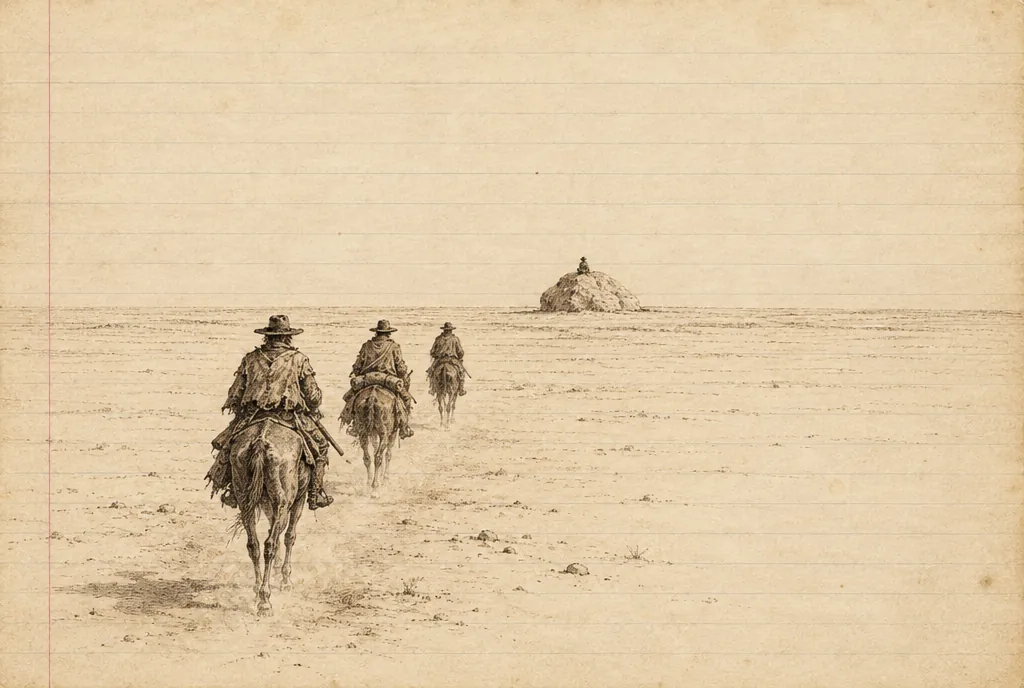
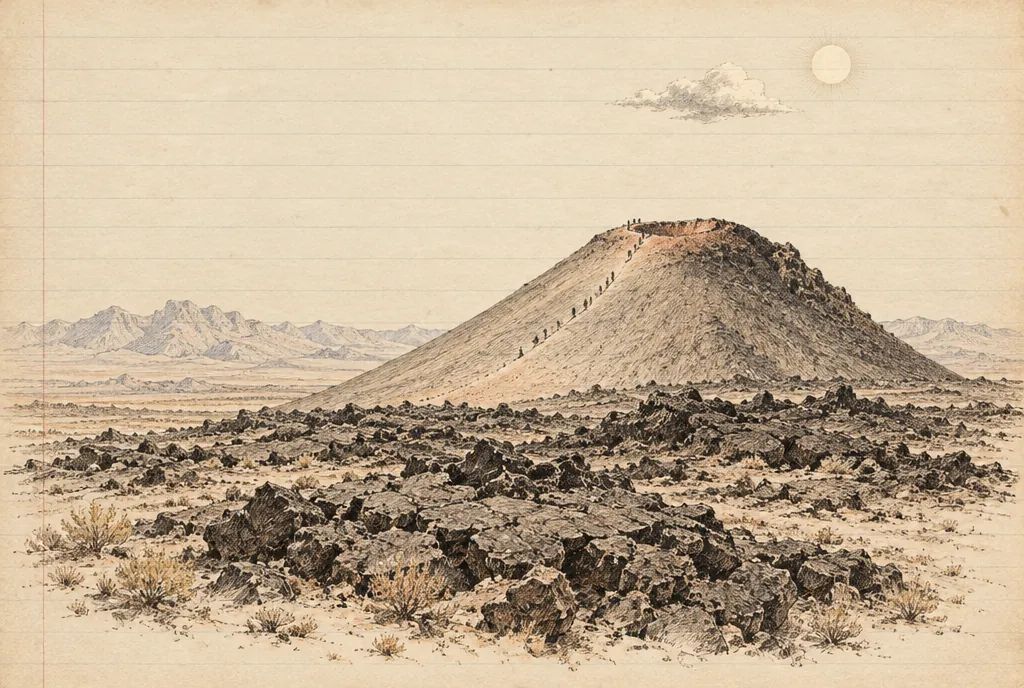
The judge turned them toward a range thirty miles off with the Apaches following at their ease. At dusk he followed the bats to a cave floored with their dung, and the men filled every bag they had with it. When the company circled back to the creek where the judge had stayed behind with one Delaware, they found the two of them sitting naked in the water, and beside them eight pounds of pure saltpetre leached from the cave earth and three pounds of alder charcoal ground fine enough to make ink. The judge led them across a lava field that cut the horses’ hooves to pieces. Eleven of them climbed a volcanic cone, the judge first with his rifle for a staff, the Apaches ten miles behind. On the rim he scraped two pounds of yellow sulphur from the crater lip and mixed it with the charcoal and the saltpetre in a hollow of the rock. Then he urinated into it and shouted for every man to do the same, for their very souls. Every man but Glanton did, while the judge knelt laughing and kneaded it with his bare arms into a black dough and trowelled it thin across the south-facing rocks to dry in the sun. The Apaches found the tracks and started up the slope, racing each other for the kill. A cloud drifted toward the sun and eleven men watched it in silence, and it clipped the edge and passed, and the judge went back to his ledger. The paste dried warm. The men filed past him to fill their horns like communicants. Then he stood up on the rim with a white shirt in his hand, and Tobin tells the kid what happened next.
Well it would have brought tears to your eyes. All dead save me, he called. Have mercy on me. Todos muertos. Todos. Wavin the shirt. God it set them yappin on the slope like dogs and he turns to us, the judge, with that smile of his, and he says: Gentlemen. That was all he said.
— Cormac McCarthy, Blood Meridian, Random House, 1992, chapter X
Tobin finishes the count. Fifty-eight Apaches died on the slope and slid down it like chaff, nine more on the lava, with bets laid on the last of them, shot running at nearly a mile, and not one of those pistols misfired. That was the first time he saw the judge. The kid looks across the fire at the man himself and asks what he is a judge of. Tobin hushes him. The judge will hear, he says. “He’s ears like a fox.”
In the high pine woods a pale grizzly rears up over a log with blood on its jaws, and when Glanton shoots it twice the bear takes the Delaware riding behind him in its mouth and carries him off into the trees, and the lost man’s name is never spoken again. The company camps in a valley of stone rooms under a cliff, where a people called the Anasazi lived and left corncobs and potsherds and rotten ladders, and the judge walks the ruins sketching. At the fire he draws each of his finds, last a steel foot-piece from a suit of Spanish armour three hundred years old, then crushes it into a ball and throws it in the fire, and the rest after it. A Tennessean named Webster asks what the notes are for, and the judge says it is his intention to expunge these things from the memory of man. Webster asks him not to draw him, and the judge’s reply is his creed in a sentence: “What is to be deviates no jot from the book wherein it’s writ.” Someone asks what Indians lived here, and someone says dead ones, and the judge says not so dead. Tobin asks him, seriously, how then a child should be raised. Put them in a pit with wild dogs, the judge says. Then, as his answer to Tobin, he says what the book is named for.
The way of the world is to bloom and to flower and die but in the affairs of men there is no waning and the noon of his expression signals the onset of night. His spirit is exhausted at the peak of its achievement. His meridian is at once his darkening and the evening of his day.
— Cormac McCarthy, Blood Meridian, Random House, 1992, chapter XI
The judge turns to the ruins: these will come again, with other peoples and other sons, and he sits with his eyes like empty slots in a mask, and the men speak quietly, as if not to wake something. In the mescal country at night the judge stands pale and naked on a ledge and raises a hand, and the bats feeding on the yucca flowers scatter, and he lowers it, and they return. The nineteen men ride into the Gileño village and find it ten days abandoned: a child’s straw doll, a crushed one-string fiddle, a necklace of melon seeds. In the last hut a big dog bares its teeth. Brown draws to shoot it and Glanton stops him, kneels in the doorway and talks to it, and tells the men, “I can man anything that eats.” With a piece of jerky he wins it, and it follows his horse out, limping. Two days later the scouts come back on ruined horses. There are fires on a mesa fifty miles south.
For two weeks they ride by night and hide by day. Under a gibbous moon their shadows rear up in the lightning like a third thing riding with them, and the narrator says the nineteen have become one creature, with blank wastes in its soul like the unmapped regions of old charts. The Delawares find the Gileños camped at a shallow lake four hours south, a thousand or more, with women and children. Before dawn they hood the horses with blankets in the willows and Glanton gives his orders: every man for himself, nothing alive left in the camp, no powder wasted on anything that cannot shoot back. “There’s enough to go around,” the judge says. At first light Glanton unhoods his horse like a falconer, and nineteen men ride into a sleeping camp of a thousand. The book gives the next ten minutes in one long page, and this retelling gives it flat. The huts are fired. Women and children are shot and clubbed, the old man waving a pair of white trousers, the Mexican slaves crying out in Spanish, all of them. A Delaware kills two infants against the stones. The dead lie in the shallows like a shipwreck, and the water goes pink on the beach, and men hack at them for scalps and worse. McGill walks out of the smoke run through with a lance, sits down, and Glanton tells the kid to get away from him and shoots him through the head. Webster drops the mounted chief at a quarter mile. Glanton reaches him dying, holds the man’s head between his knees like some reeking outland nurse, and in his eyes, the book says, “there sat each a small and perfect sun.” Glanton puts the head on a lance and waves it like a carnival head. The judge, drinking water with his hat off, says it is not Gómez and will not pass.
They ride south within the hour driving five hundred horses and mules, and in front of the judge on his saddle sits a mute Apache child with half its hair burned off. That night David Brown has an arrow in his thigh and nobody will cut it out, and the judge declines but offers to write him a policy on his life against every mishap save the noose. The kid volunteers. Brown bites his belt. On the fourth push the copper head comes through the back of the thigh, and the kid cuts it off and draws the shaft out, and Brown throws it in the fire and goes to bed. Tobin hisses at the kid that he is a fool. If the point had come loose, Brown would have taken him with him, like a bride to the altar. “God will not love ye forever,” Tobin says. On the third night the judge sits with the child, and the men play with it and make it laugh and feed it jerky, and in the morning the judge is dandling it on his knee. Toadvine walks past with his saddle. Ten minutes later the child is dead and the judge has taken its scalp. Toadvine puts his pistol to the judge’s head and damns him by name. “You either shoot or take that away,” the judge says. Toadvine holsters the gun. The judge wipes the scalp on his trouser leg and walks off. On the twenty-first of July 1849 the company rides into Chihuahua City to music and flowers, with the dried heads of the enemy on poles and the painted horses driven before them, and the boys run among the hooves to look up at the smiling men.
In the courtyard of the governor’s palace the trophies are counted out on the stones: a hundred and twenty-eight scalps and eight heads. The men go to the public baths and turn the water to filth, and the judge undresses last, hairless everywhere, pale as the moon, enormous, with oddly small feet, and sinks to his eyes like a manatee with a cigar behind his ear. The scalps are hung on the bandstand in the plaza and the heads go up on poles above the lamps. Governor Ángel Trias gives a banquet, and the judge arrives last in a new linen suit and sits at the governor’s right, and the two of them talk in a language nobody else at the table knows. Glanton cuts the governor’s speech short, dumps the gold on the table and divides it with his knife. The judge leads the band into the ballroom and dances a quadrille with the ladies, and by midnight there are whores and gunfire and a blind harpist cowering on the table. It goes on like that every night. Someone writes on a wall that the Indians were better. The governor, the book says, is the sorcerer’s apprentice who cannot stop what he called up. On the fifteenth of August they ride out.
At Presidio, on the Texas line, Glanton rides out alone with his dog and looks east toward a wife and a child four hundred miles away that he will never see again, and turns back. At the Hueco Tanks the judge copies the ancient paintings on the rock into his book, and then scrapes one of them off the stone with a flint and leaves a raw scar. Three days later the company rides at dusk into a camp of peaceful Tiguas on the river and kills every soul in it. The night before, Toadvine had said to Bathcat that these people bothered nobody, and Bathcat had only looked at him. Late that night the women who were away come back to the ruin, and among the scalped dead an old woman relights her cooking fire and begins to right the overturned pots. Soon, the narrator says, there will be nothing left to say that these people ever lived here or died here. The gang is paid for the Tigua hair in Chihuahua and rides west into the Sierra Madre under escort, tipping their hats to villagers they will murder within the month. At Nacori an insult in a cantina ends with a drunk knifing one of the company, and then the pistols go to work. When it is quiet Glanton puts his hat on and says, “Hair, boys,” and they scalp them all, twenty-eight inside and eight in the street. Half an hour later a scalped man with a hole in his chest staggers out of the cantina, and asked where he is going, says home. Two days on they scalp a village on the floor of its church, and then a column of lancers in green and scarlet, and they ride into Chihuahua with the villagers’ hair, which passes for Apache. Within a week the bounty is withdrawn and there is a price of eight thousand pesos on Glanton’s head. They ride north as if for El Paso and swing west into the sunset.
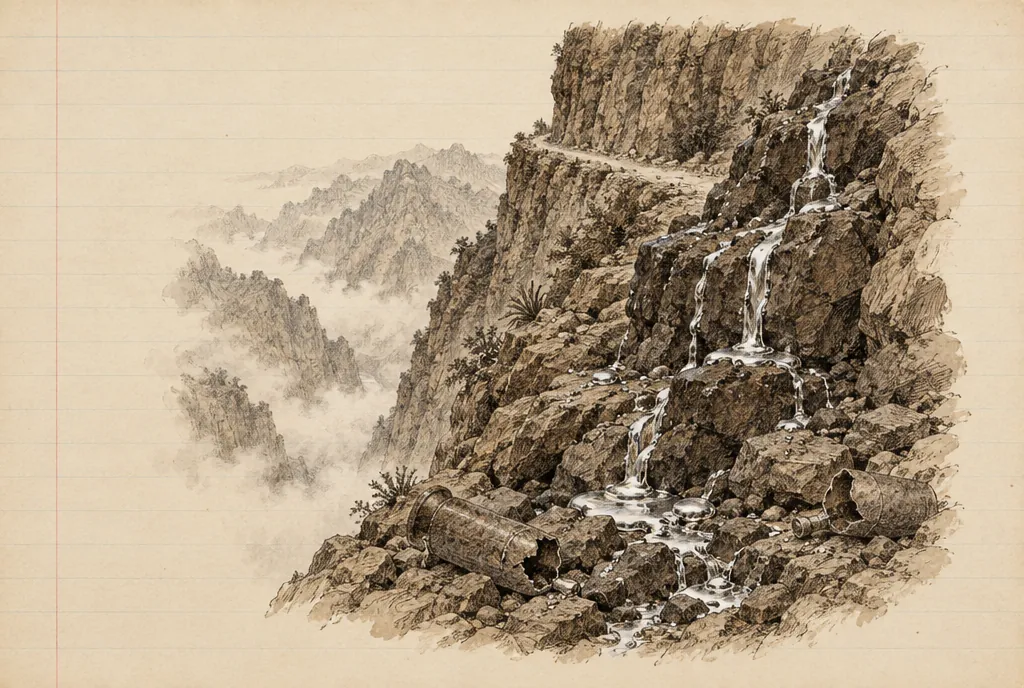
Nine days out the company comes down a cliff trail into the mining town of Jesús María two days before the feast of the dead. The judge dances an old Spanish step in a doorway. On the feast day a straw Christ with painted blood goes by in procession and the children eat sugar skulls, and the judge sits alone with his pockets full of candy skulls, offering them to children who shy away. A little girl is missing, and the town searches the mineshafts. The judge buys two puppies from a boy, pulls a gold coin out of the boy’s ear for them, and throws the pups off the bridge into the river, and Bathcat, pissing off the wall above, shoots them both in the pool. Then Glanton, drunk for days, cuts down the Mexican flag at the barracks, ties it to a mule’s tail and drags it through the square, and a musket kills the mule, and Glanton fires into the crowd and kills an old woman. The company flees the town under fire with six men left behind. On the mountain trail they meet a train of a hundred and twenty-two mules carrying quicksilver to the mines, kill the drivers, and ride some fifty mules off the escarpment, and the flasks burst on the rocks and the mercury runs down the mountain in shining globes, deft as eels.
They go down through jungle gorges full of parrots, and the judge shoots birds with cactus seeds and stuffs their skins and presses leaves and stalks butterflies. Toadvine asks what it is all for, and the judge gives him the creed under all the others. “Whatever in creation exists without my knowledge exists without my consent.” Only when every last thing on earth is routed out and made to stand naked before him will a man be properly suzerain of the earth, a keeper who rules over other rulers. Toadvine says no man can know everything. The judge says a man who believes the world’s secrets are hidden forever lives in fear, and the man who finds the thread of order in the tapestry has, by that act, taken charge of the world. “The freedom of birds is an insult to me,” he says. He would put them all in zoos. On the second of December 1849 they ride through sunflowers taller than a man on horseback into Ures, the capital of Sonora, where the judge strolls in white linen trailed by six serious old musicians.
They leave Ures with a contract from the governor of Sonora for Apache scalps. They wipe out a pueblo on the Nacozari, and two days later General Elías’s cavalry catches them west of Baviácora with five hundred men, and three of the company are killed and seven wounded, four too badly to ride. Glanton holds a lottery. Arrows go into an ocelot-skin quiver, four of them tagged with red flannel, and whoever draws a red one stays behind to kill the wounded. The kid reaches for an arrow, sees the judge watching him, changes his choice, and draws a red one. A Delaware takes two of the other red arrows and kills the two wounded Delawares with a warclub, one blow each. The kid is left with a dying Mexican and Dick Shelby of Kentucky, whose hip is shattered. Shelby begs him to get it over with. He says he would shoot the kid if he could. He cries, asks for a gun, and when the kid lifts him he grabs for the kid’s pistol. “This is a terrible place to die in,” Shelby says. “Where’s a good one?” the kid says. He will not kill him and he will not arm him. He fills Shelby’s canteen and leaves him as Elías’s line comes over the horizon.
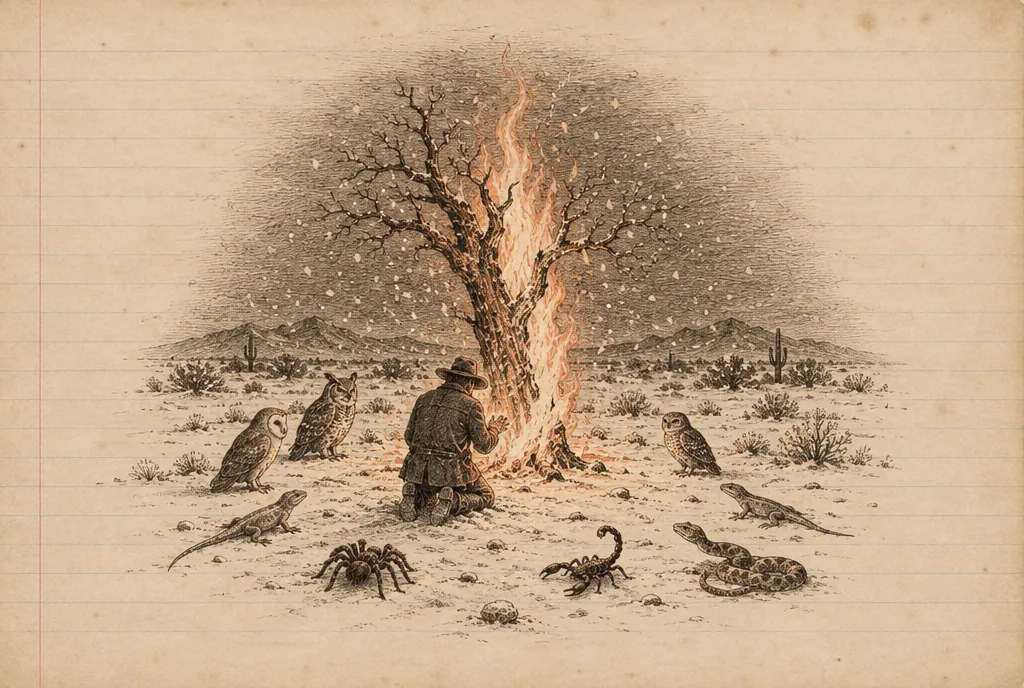
He catches up with Tate, whose horse is lame, and a norther comes down on them with snow. Elías’s scouts find them asleep in the drifts, and the kid bursts out of his blanket, shoots one through the chest with a pistol so clogged with snow it fires a hoop of orange light, and runs into the dark. Tate is not seen again. The kid walks the ridges all night under wheeling stars and meteors with his feet frozen, and at dawn he is the first creature on earth to feel the sun. He goes down through snow and rock all the next night toward the desert, and in the storm he sees a fire. It is a lone tree, set alight by lightning. He kneels to warm his hands. All around him in the ring of its light are the creatures of the desert, owls and tarantulas and scorpions, horned lizards and vipers and Gila monsters, every one of them in truce before the flame, and the kid among them. At daybreak there is glass in the sand where the lightning ran. At noon he finds the company, hollow-eyed and bloodied, four more lost to Elías in the snow, and Glanton’s eyes, the book says, are centroids of murder. He wakes from sleeping in the saddle beside the judge, hatless, wearing a wreath of desert scrub and smiling. In camp the judge picks the weakest horse and calls for a helper, and Tobin warns the kid off, and the kid asks if Tobin thinks he is afraid of him, and holds the rope while the judge kills the horse with a hundred-pound rock. At Santa Cruz, in snow, a boy shuts them into a stable in total darkness, and as the men strip off their wool and hides, static sparks wrap each of them in a pale fire, and the mare shies, and her foal hides its face in her flank.
Outside Tubac they find the missing scouts hanging head down from a palo verde tree over the ashes of a fire, roasted until their brains boiled: the last two Delawares, Gilchrist, and Bathcat, whom Toadvine cuts down. Under the wall of Tucson a hundred Chiricahuas are camped, and when the rifles come up in a standoff the judge talks the moment down. In the plaza of Tucson, in a cage of palo verde poles with a sign offering a look at the wild man for two bits, sits a naked misshapen man smeared with his own filth, and the judge presents Glanton as the leader of an expedition to California taking passengers, and Glanton charges the keeper a hundred dollars in advance. In an eating house the owner, Owens, says he serves people of colour but at a separate table, meaning Jackson. Brown tosses Owens a pistol and tells him to shoot the Black man then. Owens cocks it, and Jackson blows the back of his head off with his own revolver and sits down, and Brown tells the old woman to bring the plates. When a lieutenant called Couts comes to make an arrest, the judge declares himself Glanton’s counsel and swears they were never there. The judge asks the wild man’s keeper if the man is his brother, and he says yes, and the judge grips his skull and feels it like a faith healer. Was he always like that? Born so. Glanton asks the keeper whether he was. In the morning a Mexican girl is gone, with bloody clothes under the north wall and drag marks in the dirt. The book says no more than that.
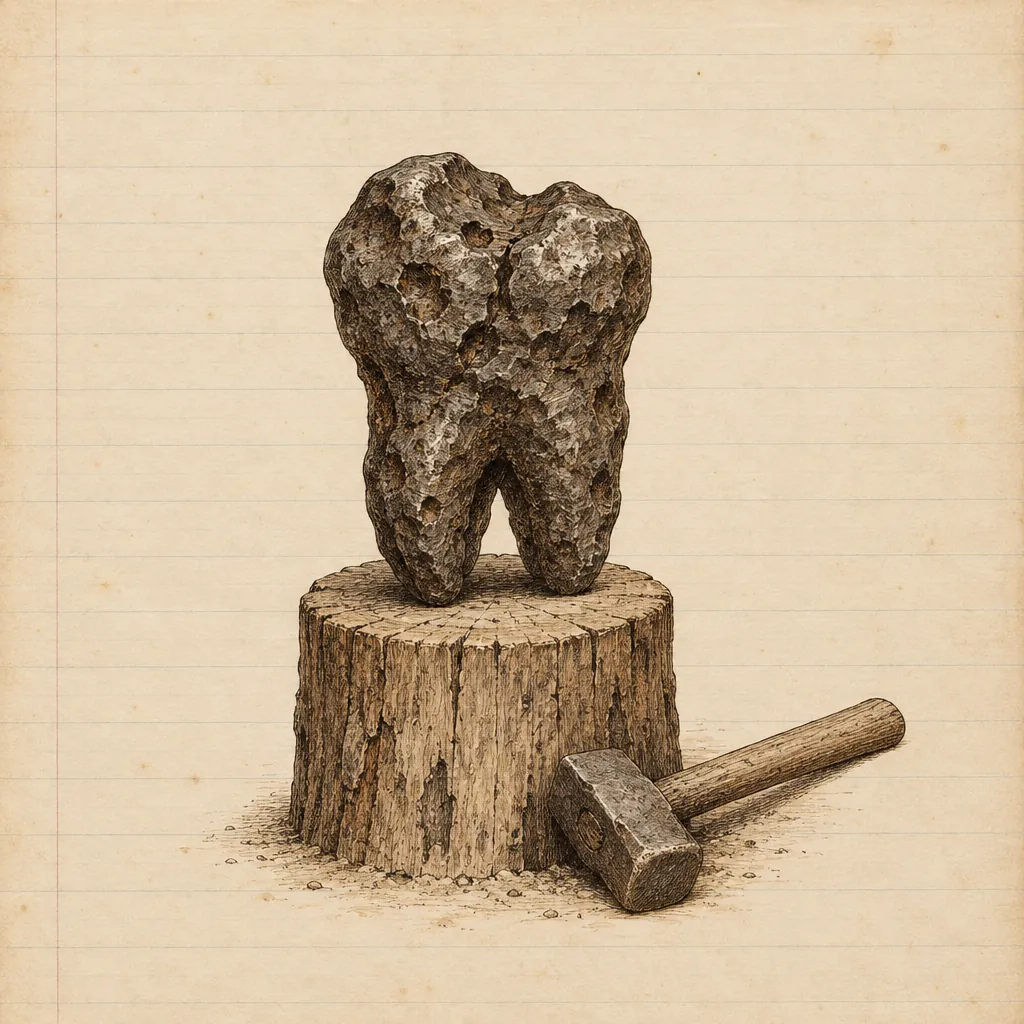
Twenty-one men, a dog and a cart carrying the caged man ride out of Tucson at dusk. At the fire Glanton broods on the dead, the Delawares all gone now, and across the fire the judge writes in his ledger, and Glanton sees the kid watching him. Under a ringed moon with a false moon inside the ring, someone asks the judge about life on Mars, and he says there are no men anywhere but here, and that anything is possible. Then he takes out a coin and sends it circling the fire as if on an invisible tether, and flings it into the dark, and it comes back out of the night with a high faint drone into his hand. Moons, coins, men, he says: the arc of a circling body is set by the length of its tether. They cross a desert of the dead, chains and wagons and mummified horses standing upright with their mouths open to the sun, and an Apache crucified and dried on a cross. In that light, the book says, a man and a rock take on unguessed kinships. The men go grey with dust, and one night the judge cracks an antelope shinbone for the marrow and the talk turns to war. Jackson says that he who lives by the sword dies by it, and Irving says the Bible condemns war and is full of it. The judge answers them both, and the answer is the book’s thesis.
It makes no difference what men think of war, said the judge. War endures. As well ask men what they think of stone. War was always here. Before man was, war waited for him. The ultimate trade awaiting its ultimate practitioner. That is the way it was and will be. That way and not some other way.
— Cormac McCarthy, Blood Meridian, Random House, 1992, chapter XVII
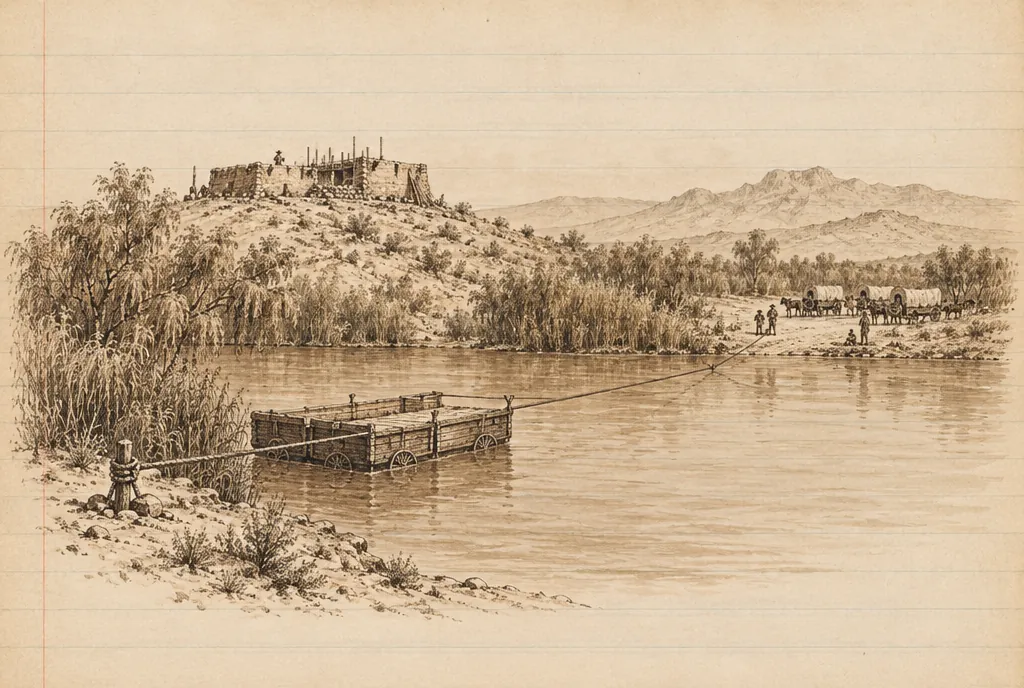
The judge goes on. Men are born for games, he says, and a game is worth only what is staked on it, and every game aspires to war, where the stake swallows game and players alike. Two men gambling their lives have asked the universe for a verdict, and the verdict is absolute. “War is god,” the judge says. Brown says he is crazy. Irving says might does not make right. Moral law, the judge replies, is an invention of mankind, made to disenfranchise the strong in favour of the weak, and history overturns it. Then he turns to Tobin and asks what the priest says. “The priest does not say,” Tobin says. But the priest has said, the judge tells him, by laying down his robes for the tools of war. “Men of god and men of war have strange affinities.” Days later, over a great fossil thighbone, he tells the recruits that the heart wants a mystery. “The mystery is that there is no mystery.” Three days later they reach the Colorado, where a Dr Lincoln of New York runs a ferry made of two wagon boxes at a dollar a head, and in the evening Glanton and the judge ride down to the Yuma camp. The chiefs are Caballo en Pelo, one-eyed, in a wool overcoat and a woman’s silk blouse; Pascual, with a bone through his nose; and Pablo, in a scarlet coat with silver epaulettes and round green goggles. Glanton insults them with the worst word he has. The judge alone greets them with respect.
Before dawn Glanton’s party rides back from the Yuma camp chatting like men from a wedding, having arranged with the Yumas to seize the ferry. The emigrant women find the caged man. A huge red-faced woman called Sarah Borginnis scolds his keeper and learns his name, James Robert, and the keeper says take him, he has done all he can. The women haul the cart to the river singing a hymn, and Sarah takes James Robert by the hand, and he clings to her neck. “Burn that thing,” she says of the cage, and they do. They bathe him in the river, her pale hair floating on the water and her dress ballooning, and she swirls him in her arms like a baby while he watches the fire. Later he wanders naked through the camp to the river and hoots softly and walks in and loses his footing and sinks. It is the judge, naked himself on his night rounds, who wades in and pulls him out by the heels and slaps the water out of him like a great midwife, some rite, the book says, not yet entered in any canon. He carries the sobbing man back into camp and returns him among his fellows.
The doctor who runs the ferry has grown rich by chance and lives in a half-built fort on the west bank with a bronze mountain howitzer that has never been fired, and the judge talks him into loading it in the name of protecting the waiting emigrants. Two days later the Yumas rush the landing as arranged, and Brown swings the howitzer and fires it with his cigar. A dozen fall. Glanton’s riders charge out of the willows, and the Yumas cry out that they have been betrayed. Afterwards the gang walks the field shooting every wounded man through the head and scalping them while the travellers watch. The doctor goes inside and does not come out. Glanton takes the ferry. The fare goes from a dollar to four dollars, then to whatever a purse holds, then to robbery outright: beatings, horses taken, women raped, bodies floating past the Yuma camp. Glanton has enslaved Sonorans to build his walls and keeps a dozen Indian and Mexican girls, some barely more than children. Every day he empties sacks into a trunk with a brass lock, and the book’s inventory of it ends in teeth. In April Brown, Webster and Toadvine ride for San Diego to buy supplies and arrive hearing the sea, and Brown wakes alone in a hut by the beach with his companions in jail. That night in a bodega he pours spirit over a young soldier and lights him with his cigar, and the man runs burning into the street and dies shrivelled up like a great spider. Jailed, he talks a young soldier named Petit into escaping with him, and at first light in the hills shoots Petit through the back of the head, cuts off his ears and adds them to the string.
Glanton rides to San Diego after Brown, hangs the old alcalde from a beam while the man’s wife holds his legs up and begs, finds the jail empty, and rides back to the river alone and drunk against a tide of dying emigrants who warn him of trouble at the crossing. At the ferry a naked Mexican girl is chained to a post by a rawhide collar, and the doctor, filthy and babbling, clutches Glanton’s foot and points up the hill at the judge, who stands wrapped in a cloth over his nakedness, and Glanton kicks him away. At dawn Jackson walks down to the landing, steps onto a scow, and bends to pick up a small coin, and a cane arrow four feet long goes through his belly. He falls into the shallows and a naked Yuma with orange hair and a crimson line down his painted face crushes his head with a club. The Yumas swarm the sleeping fort. They take the doctor’s head. Glanton sits up in a looted brass bed in a tiny clay room, and the chief Caballo en Pelo climbs onto the bed with an axe tasselled with feathers, and Glanton spits a slur at him and tells him to hack away, and the chief splits his head to the throat. In the judge’s room James Robert and a girl of about twelve cower naked in the corner. The judge himself stands naked with the howitzer barrel wrenched off its carriage and tucked under his arm, a lit cigar held over the touch-hole. The Yumas fall back. He puts the cigar in his mouth, picks up his bag, backs out of the door and down into the woods with the fool clinging to his waist. Then they burn Glanton on a bonfire of the gang’s furniture with his dog tied to him, and eight more beside him, and sit smoking while the skulls glow.
Toadvine and the kid run upriver through the cane under arrows and out onto the dunes. The kid has an arrow in his leg against the bone, and he snaps the shaft off a few inches out and will not have it pulled. After a day without water on the wagon road they reach the wells at Alamo Mucho, and there at the well, alone and unarmed, is Tobin. Then across the pan come the judge and the fool, both naked, the judge in a wig of dried river mud and straw, hung about with strips of meat, carrying a small canvas satchel. They drink at the well. The judge offers to buy Toadvine’s hat for a hundred dollars, then a hundred and twenty-five and no questions, and empties the satchel to show a knife and half a bucket of gold coin. “Everything’s for sale,” the judge says. Toadvine sells, and the judge slits the hat to fit his head. Toadvine says he is wanted in California, draws a six-pointed star in the sand and rubs it out, and says a man can run out of country. “It aint country you’ve run out of,” the kid says. Toadvine stays. As the kid climbs out of the pit the judge offers five hundred dollars for the pistol, powder and ball included. Tobin begs the kid to shoot the naked, unarmed man now, swearing the kid’s life is forfeit if he does not, and the judge taps his temple and says the priest has had too much sun, and raises it to seven hundred and fifty. The kid puts the pistol away, and he and Tobin walk west. On the road they pass David Brown riding east toward the well with his rifle across his knees.
At Carrizo Creek, among the bones of thousands of dead sheep, the kid lifts his head from drinking and a rifle ball smashes his reflection in the pool. The judge is dressed now in clothes taken from the men he met at the well, with two horses and two rifles, and the fool squats naked beside him in a hat. Shots go through the lattice of bones, the kid’s pistol resting in a rotten pelvis, and the judge calls out cheerfully that there is water for everyone and that they should be friends. Tobin steps out holding up a cross he has lashed from two ram’s shinbones, chanting, and the judge shoots him through the neck. Bleeding, Tobin tells the kid the horses are the judge’s only bait and that he must kill them or be ridden down. The kid wants to kill the judge instead, and Tobin says he cannot. On his way to the horses the kid finds the fool sitting in a bower of bones, watching him, a creature full of woe, and passes him by. He shoots both horses. From fifty feet away, unseen, the judge tells him to throw the gun out, and says the priest put him up to it, which mitigates, but there remains the question of property. After dark they slip away. By midmorning they see the judge and the fool coming across the plain after them.
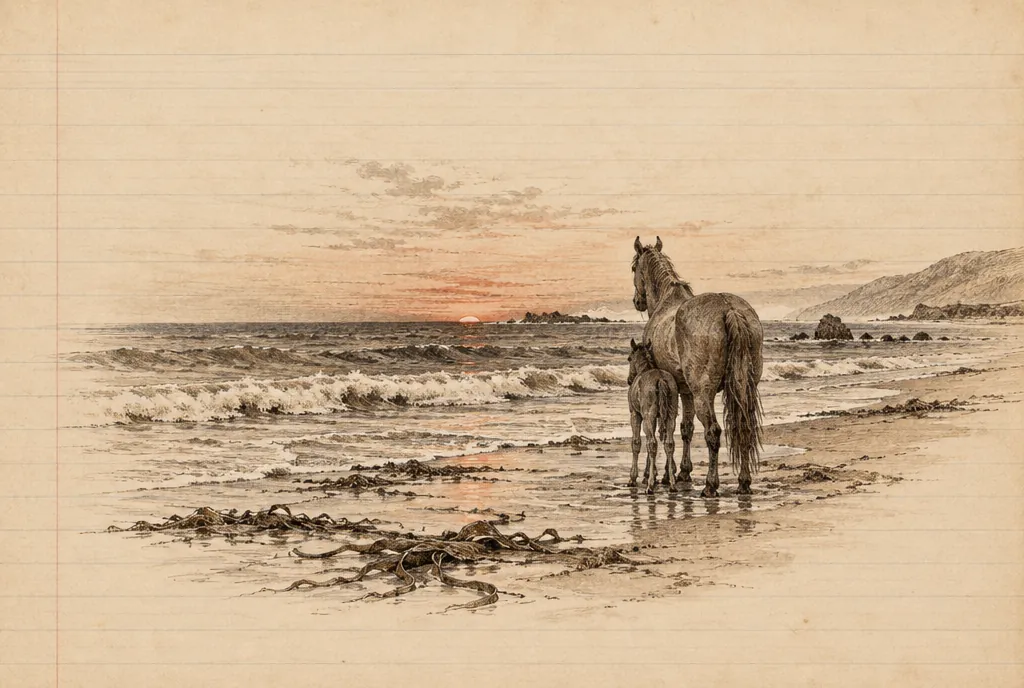
The judge is two miles behind. At a watering place ringed with dead animals the kid sees that the wind is wiping their tracks off the sand, a little ridge forming against his hand and blowing away, and decides to hide. Tobin says you cannot hide from him. “He aint nothin,” the kid says. Tobin had said so himself: men are dust, and the judge is a man. They dig in behind two mules dead in their harness. The judge comes down the slope with the fool on a leather lead, carrying Brown’s two rifles, his clothes in shreds, under a parasol made of rotten hide stretched over ribs with an animal’s leg for a handle, and the fool on all fours sniffs the air like a tracker. He passes within range and goes on. Tobin says the kid will get no such chance again. The kid lowers the hammer. He has four rounds. Then the judge comes back, and from the crest of the ridge he speaks to the empty country. The priest led him here, he says. He will not hide. He is no assassin, and he is no partisan either. There is a flawed place in the fabric of his heart. He alone, of all the company, kept in his soul some corner of clemency for the heathen. Then he walks off through the boneyard and vanishes in the heat. Diegueños give them water, and over the coastal mountains, where grizzly bears graze like cattle, they see far below them the sea. In San Diego at evening Tobin goes to find a doctor, and the kid walks down to the beach, where kelp lies in the surf and a dead seal and the sun goes hissing into the swells. A horse stands at the water’s edge staring out, a colt beside it. At dark he turns back toward the town. When he looks round, the horse is still there with the colt against it, watching, the book says, “out there past men’s knowing,” where the whales ferry their souls through the black sea.
Soldiers arrest him in a tavern that night without asking his name, and in his cell the judge visits, smiling, in a grey linen suit with polished boots and a watch chain and a little silver derringer. He has told the authorities that the kid conspired with the Yumas and caused the massacre at the ferry, and they mean to hang him. You are the one who is crazy, the kid says. It was never me, the judge says. He would have loved him like a son. He coaxes him to the bars and the kid stays against the wall. Then the indictment. The kid came to take part in a work, and set himself up as a witness against his own deeds, and put his own allowances ahead of the judgement of history, and broke from the body he was pledged to and poisoned it. “If war is not holy man is nothing but antic clay.” Each man was asked only to empty his heart into the common pool, and one did not. The kid says it was the judge. “What joins men together,” the judge says, “is not the sharing of bread but the sharing of enemies.” If he had been the kid’s enemy, with whom would the kid have shared him? The priest? He looks at his watch. Even if the kid had stood his ground, what ground was it? Two days later the alcalde lets the kid go. A surgeon takes the arrow stub out of his leg under ether, and under the ether the judge comes to him, and in his eyes the boy sees his own name already entered in a ledger as a thing accomplished. A week later he is on crutches, asking at every door for Tobin. Nobody knows the name.
In Los Angeles in June he goes at dawn to a public hanging and cannot see over the crowd, and two bound men rise to the top of the gatehouse and die. Coming back that evening he sees who they were. Toadvine and Brown. With his last two dollars he buys from a soldier the scapular of ears that Brown wore to the scaffold, and puts it on. The years go by in a paragraph. He carries a Bible he cannot read, and some take him for a preacher. He never sees Tobin again, and hears of the judge everywhere. In the spring of his twenty-eighth year he is guiding emigrants east, and seven days out he leaves them at a well and rides north alone into stone mountains. At dusk a procession of penitents goes past him up a valley, hooded men whipping themselves, a man in a white robe bowed under a heavy cross. The next day his horse balks above a gully, and there the penitents lie butchered, some without heads, the cross pushed over and the man who carried it opened and still bound. In a niche in the rock, upright, kneels an old woman in a faded shawl patterned with stars and quarter moons. He speaks to her gently. He is an American, he says, a long way from home, with no family, and he has travelled and been at war, and he will take her to safety among her people. Little grandmother, he asks her in Spanish, can you not hear me? He touches her arm. “She weighed nothing.” She is a dried shell, dead in that place for years.
In the late winter of 1878 a man crosses the Double Mountain Fork of the Brazos with skim ice at its edges, and the book no longer calls him the kid. He is the man. He shares tobacco with an old buffalo hunter who talks of eight million carcasses between the Arkansas and the Concho. Two years ago he went out from Griffin on a last hunt, six weeks, and found eight animals, and killed them. Every one that God ever made, the hunter says, is gone, “as if they’d never been at all.” He looks at the stars falling. “I wonder if there’s other worlds like this,” he says. “Or if this is the only one.” Three days on, the man rides through blackened land where ragged bonepickers smash the skeletons with axes and heap the bones in windrows ten feet high. Five of them come to his fire at night, young, in skins, with old guns, and ask about the thing at his neck. Ears, he says. Human ears. They insist, with a slur, that they came from runaway slaves, and he says Apaches. One boy, Elrod, fifteen, needles him and says the man would only ever shoot someone asleep or in the back. The man says he was first shot at fifteen, and Elrod has never been shot and is not yet sixteen. The others drag Elrod off, and the man tells them to keep him away, because if he comes back he will kill him. He moves his bedroll away from the fire. Before dawn Elrod is standing at the ashes with his rifle, saying he knew the man would be hid out. From the dark the man says, “I’m right here.” The boy swings toward the voice and fires. The book never shows the man’s shot. At first light the boy lies dead with his hands folded on his chest, and the man tells him, “You wouldnt of lived anyway.” The others make Elrod’s little brother Randall, about twelve, look at the man who has made him an orphan, and Randall trails after the bearers carrying his brother’s hat, and looks back once, and hurries on.
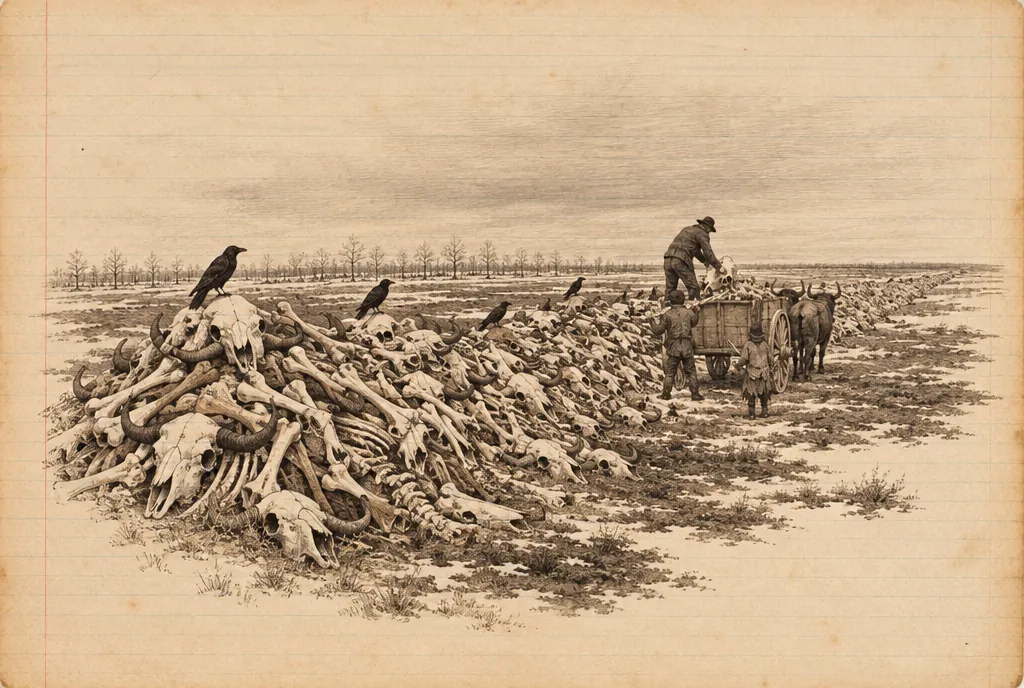
He rides into Griffin in a light rain, past enormous ricks of buffalo skulls, and goes into the last building on the street. Inside, a showman in Tyrolean costume is passing his hat and a little girl in a smock is cranking a barrel organ, and on a candlelit plank stage a bear in a crinoline is dancing. The man drinks a whiskey at the zinc bar, slowly. When he turns, the judge is watching him across the smoke from a table among every kind of man, unchanged after all these years. The man turns back and drinks another. The mirror shows only smoke. Then the showman argues with some men, and one of them draws a long cavalry pistol and shoots the bear through the middle. The bear moans and goes on dancing, faster, in silence, bleeding on the boards. A second shot. It reels, puts its paws to its chest, cries out like a child, dances a few last steps, and falls. The little girl unstraps the organ and lets it crash and cradles the bear’s head in her lap, sobbing. A woman takes the stage to say it is all over, and the judge is at the man’s elbow. “Do you believe it’s all over, son?” he says. They are the last of the true, the two of them, and all the rest have gone under. The man says he is not interested in any dance. He knew the man at once, he says, and the man disappointed him then and disappoints him now, and yet here he is. The man says he is not with him. He never came hunting him. He came for the same reason as any man, a good time.
The judge talks about the dance. The men in this room do not know why they are here, he says. A true ritual needs blood. He asks where yesterday is. Where is Glanton, and Brown, and the priest? Where is Shelby, left to Elías in the desert, and Tate, left in the mountains? Where are the ladies at the governor’s ball, when the man was a hero, and where is the fiddler, and where is the dance? As war is dishonoured, he says, the dance becomes a false dance, but one true dancer always remains, and can the man guess who that is? “You aint nothin,” the man says. “You speak truer than you know,” the judge tells him. Only the man who has offered himself up entire to the blood of war, who has been to the floor of the pit and seen horror in the round and learned that it speaks to his inmost heart, only that man can dance. Even a dumb animal can dance, the man says. There is room on the stage for one beast only, the judge says, and all the others go off one by one into the dark before the footlights. “Bears that dance, bears that dont.” The man goes up with a tiny dark whore, and afterwards she tells him to go and get a drink, and he says he is all right now. Downstairs a circle dance is forming, and Tonkawas stand outside in the mud looking in through the windows. He goes out the back. The rain has stopped and the meteors are falling everywhere toward dust and nothing. Men with lanterns search the lots for the little girl whose bear is dead, and she is lost. He walks down the boardwalk to the jakes, and looks at the stars dying over the hills, and opens the door, and steps in.
The judge was seated upon the closet. He was naked and he rose up smiling and gathered him in his arms against his immense and terrible flesh and shot the wooden barlatch home behind him.
— Cormac McCarthy, Blood Meridian, Random House, 1992, chapter XXIII
That is all the book shows. Later two men walk toward the jakes, and a third, urinating in the mud, says he would not go in there if he were them. The first opens the door. “Good God almighty,” he says, and when the other asks what it is he does not answer and walks back. The second man opens the door and looks in. The book does not say what he sees, and the man is never mentioned again. In the dancehall a second fiddler is tuning up. The music starts and the caller calls and the floor shakes. The last paragraph goes into the present tense. Towering over them all is the judge, naked, dancing, light on his feet, bowing to the ladies, huge and pale and hairless like an enormous infant. He takes a fiddle from a player and dances and fiddles at once, and he is a great favourite. He never sleeps, he says. The last line of the story is his: “He says that he will never die.”
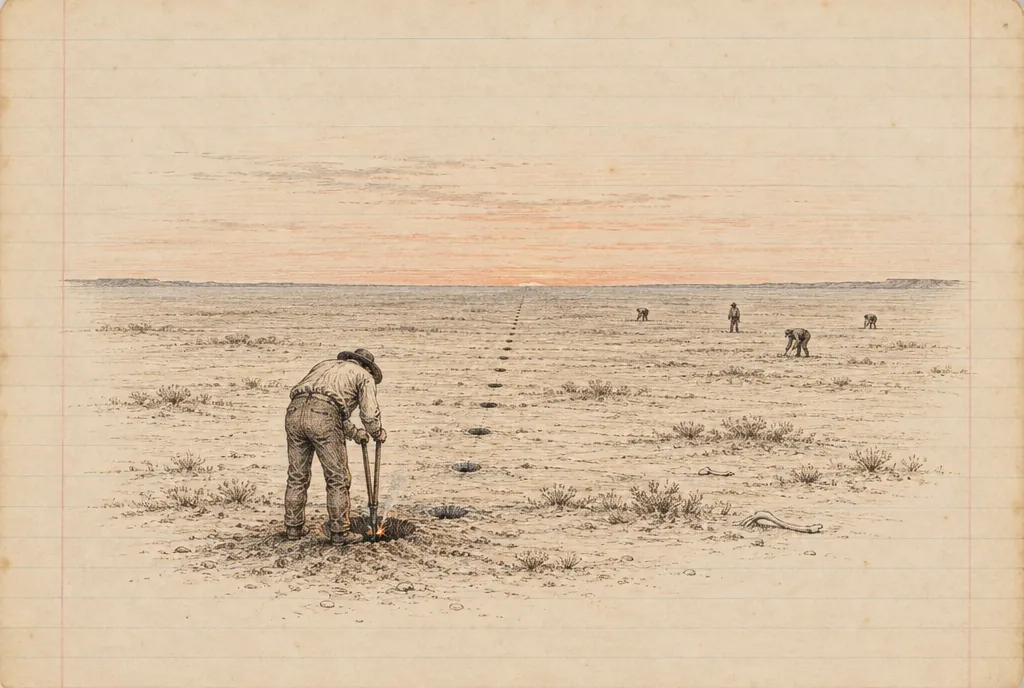
The book’s last page is a single paragraph, after the night, in the dawn. A man is moving across the plain by means of holes he makes in the ground with a tool with two handles. In each hole he strikes fire from the rock with his steel, fire “which God has put there.” Behind him on the plain are the wanderers gathering bones, and others who do not gather anything, moving jerkily like clockwork and crossing his line of holes one by one. The line runs out to the edge of sight, less a search for anything than the proof of a principle, each hole owing its being to the one before. He strikes fire in a hole and draws out his steel. Then they all move on again.