The fantasy always runs the same way. Robert Sapolsky and a team of commandos fight their way into the bunker, burst in, and there is Hitler, reaching for his Luger and his cyanide pill. Sapolsky gets to him first. Then the fantasy turns, and he finds himself planning, in loving detail, what he would do to the man, and notices that his pulse is up, his face is hot, his fists are clenched. This from a man who does not believe in souls or evil, who opposes the death penalty and wants strict gun control. A man who loved laser tag at a child’s birthday party until a pimply kid zapped him over and over. We do not hate violence, he says. We hate the wrong kind, in the wrong context. The same pull of a trigger can be an atrocity or an act of self-sacrificing love. The same touch on an arm can be comfort or assault. That ambiguity is the book’s problem, and its subject is both halves of us: the harming and the caring.
He is a neurobiologist and a primatologist, and his method is to refuse what he calls the buckets, the habit of explaining a behaviour from inside one discipline. So he explains a behaviour by stepping back from it. What happened in the brain one second before? What did the senses feed the brain in the minutes before, and the hormones in the hours and days before? What had experience done to the brain in the months before, and adolescence, and childhood, and the womb, and the genes, and the culture, and the evolution behind the culture? Each level is the product of the ones before it, so to invoke one is to invoke them all. Great scientists who stayed in one bucket did real harm. John Watson promised to make any infant into anything. Egas Moniz won a Nobel Prize for lobotomies. Konrad Lorenz, filmed in Austrian shorts with his imprinted geese trailing him, was an active Nazi who screened Poles of mixed parentage for the Office of Race Policy. And humans are a special case of animal. Sometimes we are just like the others, pumping out the same fear hormone as a bullied fish. And sometimes we are unique: we alone can harm someone by nodding, or by looking away.
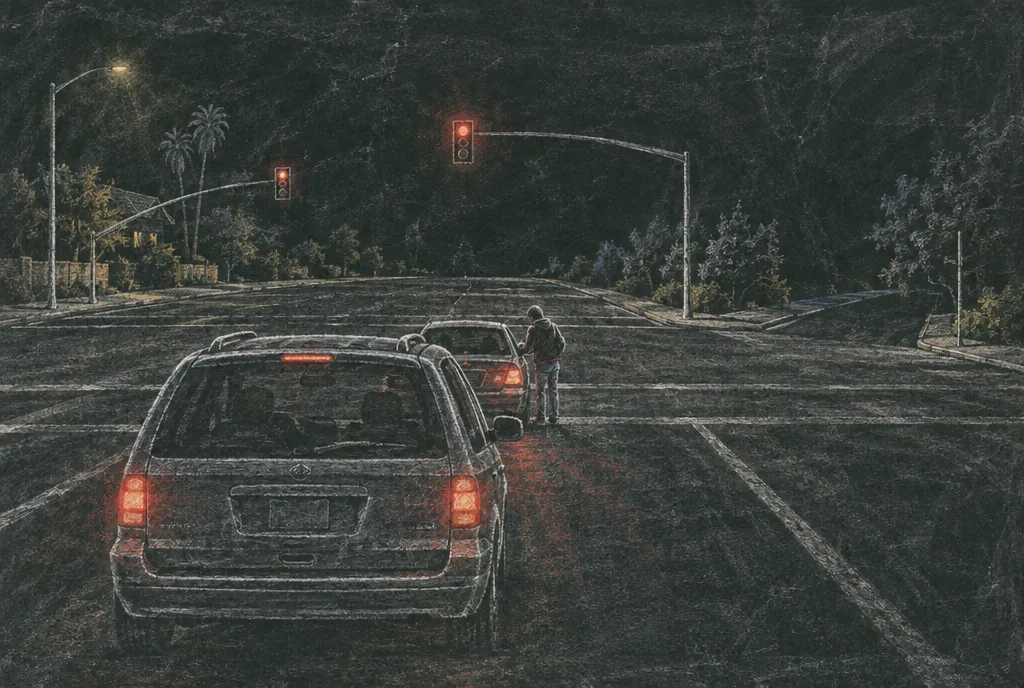
Two examples of that uniqueness close the introduction, and the first involves his wife. They are in the minivan, kids in the back, when a driver cuts them off, plainly out of selfishness. She honks. He flips them off. She announces that they are going to follow him. For a few minutes the man drives evasively, but she stays on his bumper, until both cars stop at a red light they know is a long one, with another car ahead of him. She grabs something from the divider, gets out, pounds on his window, tells him in a venomous voice that anyone who could do something that mean probably needs this, and flings it in. The light turns green. The man’s car signals a very sensible turn and creeps down a side street into the dark at about five miles an hour, looking, if a car can look anything, ashamed. Back in the minivan she allows herself a small malicious grin and tells her husband what she threw.
“A grape lollipop.” I was awed by her savage passive-aggressiveness—“You’re such a mean, awful human that something must have gone really wrong in your childhood, and maybe this lollipop will help correct that just a little.” That guy was going to think twice before screwing with us again. I swelled with pride and love.
— Robert M. Sapolsky, Behave, Penguin Press, 2017, Introduction
Sapolsky’s second example comes from Indonesia. In the mid-1960s a military coup brought in Suharto’s thirty-year dictatorship, and the purges that followed left about half a million dead. The writer V. S. Naipaul, travelling there, heard a rumour that when a paramilitary squad arrived to wipe out a village, it brought a gamelan orchestra along. Eventually he met an unrepentant veteran of a massacre and asked him. Yes, it was true: flutes, gongs, singers, the lot. But why? The man looked puzzled and gave what seemed to him an obvious answer: “Well, to make it more beautiful.” Bamboo flutes and burning villages, set beside a grape lollipop. The biology of how we harm one another and how we care for one another, Sapolsky says, is deeply intertwined, and untangling it is the work ahead.
Before the work can start, the words need settling, and the words are a swamp. Aggression, empathy, altruism, revenge, love: each means something different to each discipline, and each depends on context. A rat that is shocked bites a smaller rat. A baboon that loses to the alpha chases the omega. That is displaced aggression, and it lowers the aggressor’s stress hormones, so giving ulcers can help you avoid getting them. We understand hot-blooded violence, the grieving father who kills, better than the cold kind, and we distrust cold goodness too. At a conference, a Buddhist monk, asked by a scientist whether he ever stops meditating, says that he sometimes does, not because his knees hurt, but as a kindness to his knees. Elie Wiesel said that the opposite of love is not hate but indifference. The biology agrees: in one scanner study, subjects who could bandage an injured person or shoot a menacing alien lit up the same frontal circuitry for both. So the book will not talk about good and evil. It will talk about our best and our worst behaviours.
One second before the act, the brain. It is where every other cause in the book converges, and Sapolsky apologises in advance for the length of the chapter. A rough map helps: an ancient automatic layer for shivering and hunger, a mammalian emotional layer, and the neocortex on top for thinking. Three hubs matter most. The first is the amygdala. Damage it and aggression falls; stimulate it and rage appears. In 1966 Charles Whitman, an Eagle Scout with an IQ in the ninety-ninth percentile, killed his wife and his mother, then climbed the tower at the University of Texas and shot sixteen people dead, wounding thirty-two more. His suicide note asked for an autopsy. It found a tumour pressing on his amygdala. Sapolsky adds the caveats: Whitman had been beaten as a child, beat his own wife, and had been court-martialled in the Marines. And most experts would say the amygdala is about fear before it is about aggression. Joseph LeDoux showed how it learns fear, a tone paired with a shock, and how unlearning fear is not forgetting but new learning, fed in from the frontal cortex. The amygdala has a shortcut from the senses that is fast and sloppy. It is the circuit that sees a cell phone as a gun.
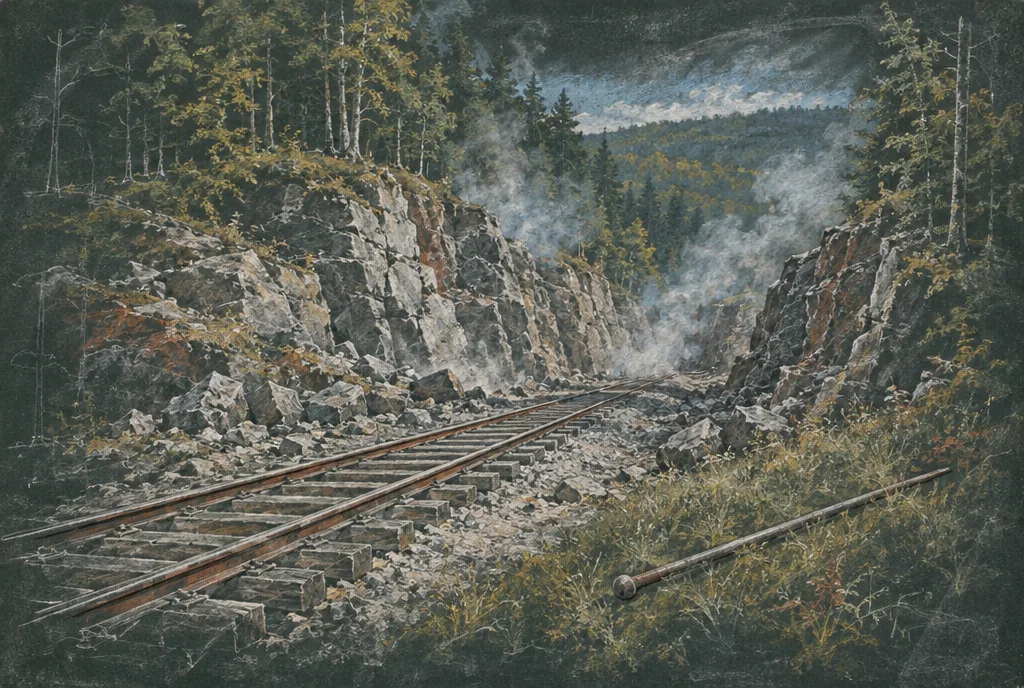
The second hub is the frontal cortex, and Sapolsky’s one-line definition will serve for the whole book: “the frontal cortex makes you do the harder thing when it’s the right thing to do.” Right in a practical sense, not a moral one. It is the last region to mature, and self-control costs it effort, which is why tired people are less kind and more likely to cheat. In 1848 in Vermont, a railroad foreman named Phineas Gage was at work when an accident with blasting powder drove a thirteen-pound iron rod through his face and out of the top of his skull. It landed eighty feet away. He lived. But the steady, even-keeled Gage became profane and erratic, so changed that his friends said he was no longer Gage. The frontal cortex has a cool part that weighs costs and benefits and a part that takes in the emotions. People who lose the emotional part do not become wise. They become Mr. Spock, telling a friend that she has put on weight and defending it as true, and they make terrible decisions. Emotion is not the appendix of the brain. Ask people whether they would pull a lever to divert a trolley from five people onto one, and seventy to ninety percent say yes. Ask whether they would push a man in front of it with their own hands, and seventy to ninety percent say no, because the second question is answered by the emotional circuit.
The third hub is dopamine, and it is not about pleasure so much as about wanting. A monkey has learned that ten presses of a lever earn a raisin, and each raisin releases ten units of dopamine. One day the ten presses earn two raisins. Twenty units. As the two-raisin paydays continue, the response settles back to ten. Now give him one raisin again, and dopamine falls below where it started. Dopamine codes surprise against expectation, and it habituates, which is a problem for a species with cathedral organs and sports cars. The more we consume, the hungrier we get. Worse, the dopamine surges at the cue, not the reward, and it surges most when the reward is uncertain, at a maybe. Dopamine is about the happiness of pursuit, and humans alone can pursue a reward past their own death, for a paradise or for great-grandchildren they will never meet. No warthog diets for swimsuit season. The chapter ends with a warning. It should not take a brain scan to believe a veteran has PTSD. The brain is where behaviour converges, not where it begins.
No brain is an island. In the seconds and minutes before the act, the senses were feeding it, mostly below awareness. For us the dominant sense is sight, and the findings about faces are, Sapolsky says, depressing. Show a face of another race for a tenth of a second and the amygdala reacts, more so in people with more implicit bias. Give the brain longer, and the frontal cortex reins the amygdala in. In 1999 Amadou Diallo, an unarmed West African immigrant in New York, reached for his wallet and four police officers fired forty-one shots. In the lab, a fast brain wave marks the threat and a slower frontal wave says hold on, and the ratio between them predicts who shoots the unarmed. None of this is hard-wired, and later chapters show how to shift it. Other cues are gentler. Pictures of eyes above a bus stop cut litter, and above an office honour box they triple what people pay. A hungry person punishes harder. Claude Steele’s Black graduate student whistled Vivaldi walking home through Palo Alto so that passers-by would relax. In the moments before our biggest acts, we are less rational and less in charge than we think.
Hours to days before, the hormones. Everyone knows the case against testosterone: males do most of the violence, they have more of it, and aggression peaks when it peaks. Within the normal range, a man’s testosterone level does not predict how aggressive he is. What it does is amplify. In 1977 researchers gave testosterone to the middle-ranking male in each group of five talapoin monkeys, number three, say. He did not challenge numbers one and two. He picked on four and five. The hormone turns up the volume on whatever was already playing. It rises when status is challenged, and in most species a challenge is settled by a fight. Then Christoph Eisenegger and Ernst Fehr in Zurich ran the Ultimatum Game, where status comes from being seen to be fair, and testosterone made people more generous. Those who merely believed they had been given testosterone, whatever was in the syringe, made stingier offers. Sapolsky’s line is the chapter’s reversal: “Testosterone makes us more willing to do what it takes to attain and maintain status.” The key point, he says, is what it takes. The problem is not the hormone but the societies that reward aggression.
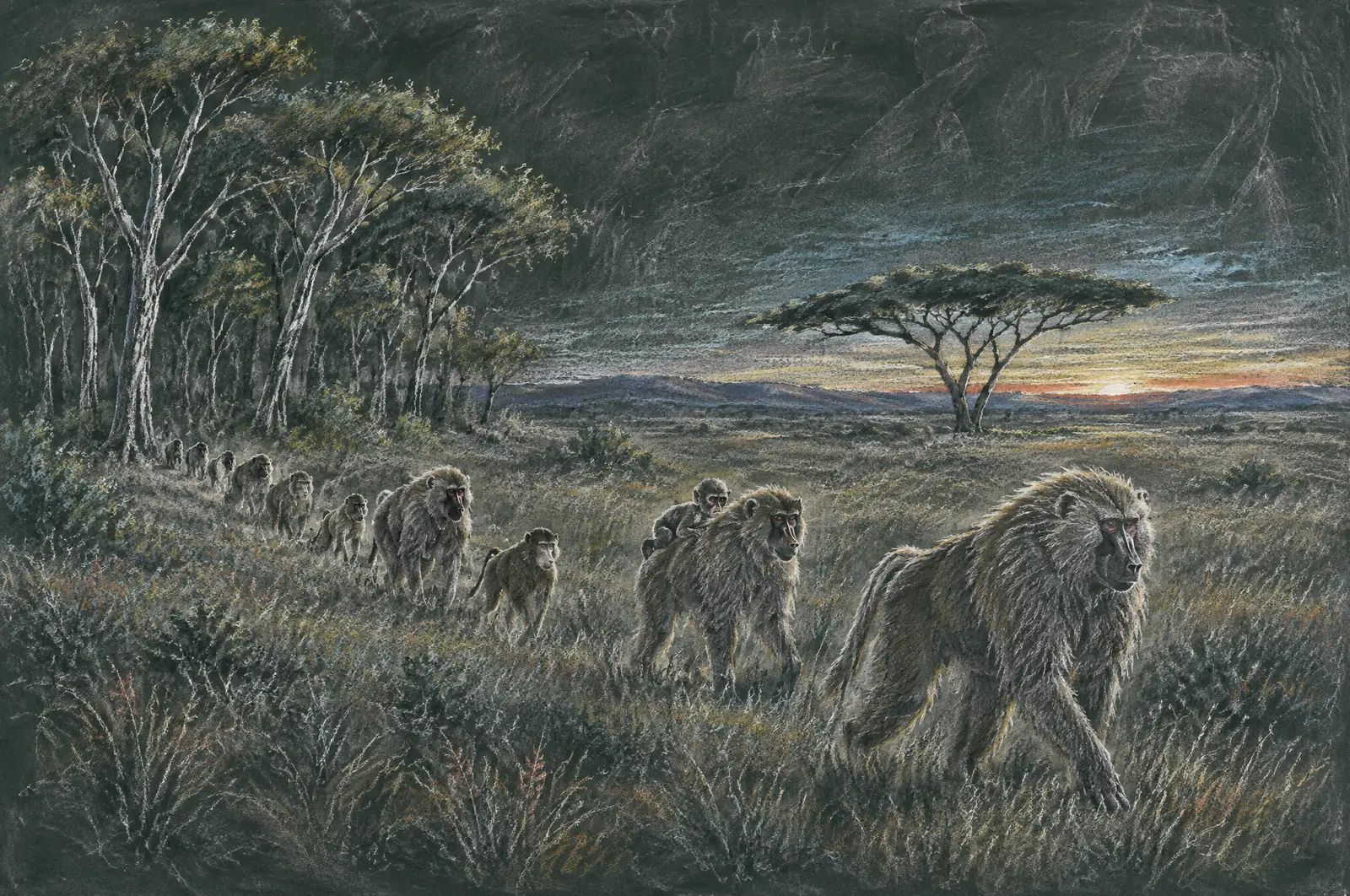
Oxytocin has the opposite reputation, as the hormone of love, and earns some of it. Prairie voles pair-bond and montane voles do not, and the difference lies in how many receptors each has in the brain’s reward centre. Then Carsten de Dreu in Amsterdam found the catch. Oxytocin made people more generous to their own team and more willing to betray the other one first. It made Dutch students more willing to sacrifice a man named Helmut or Ahmed than one named Dirk or Peter. It is not the hormone of love. It is the hormone of loving Us. Stress completes the picture. The stress response saves the zebra and the lion, and ruins the human who runs it for months over a mortgage, making fear easier to learn and harder to unlearn, and narrowing empathy. Among baboons, nearly half of all aggression is displaced down the line. A male loses a fight and chases a subadult, who bites a female, who lunges at an infant, and Sapolsky’s own data show that, rank for rank, the baboons who displace the most have the lowest stress hormones. In humans, an unexpected home-team loss in professional football raises partner violence by ten percent, thirteen if the team was in contention, twenty if the loss was to a rival. Over hours and days, hormones facilitate and amplify. They do not invent.
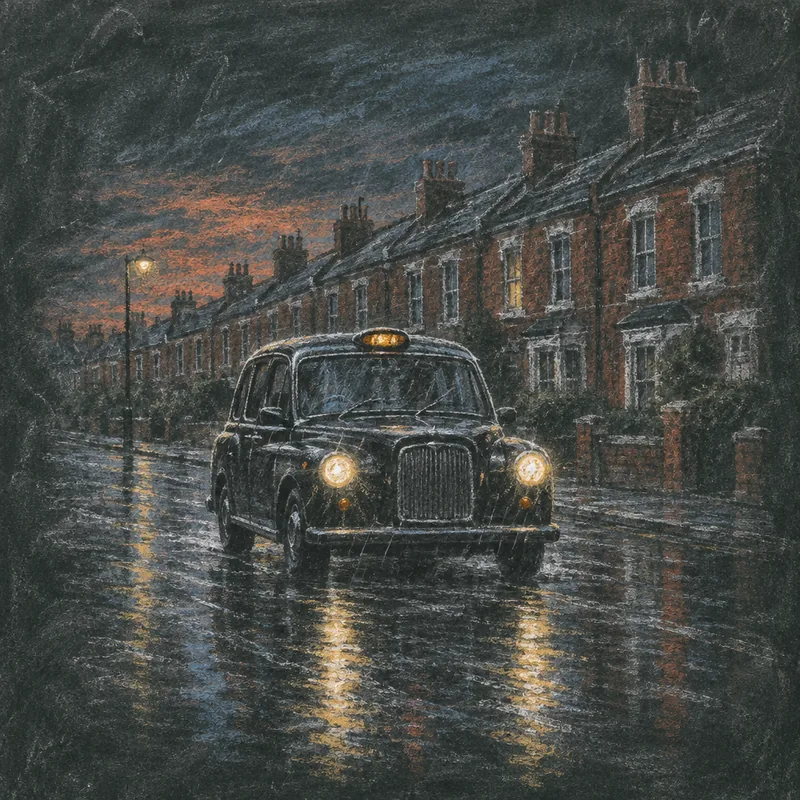
Days to months before, the brain itself was being rebuilt. In 1949 Donald Hebb proposed that memory lives in the strengthening of existing synapses. Experience sprouts new branches too. In blind Braille readers, touch takes over the visual cortex, and Alvaro Pascual-Leone had non-musicians practise a five-finger piano exercise two hours a day and watched their motor maps grow within days, even in those who only imagined practising. And new neurons are born, a fight Sapolsky tells as a saga. In 1965 Joseph Altman at MIT found them in adult rat brains. Dogma said the adult brain made no new neurons, so Altman was dismissed, denied tenure, and left for Purdue. Michael Kaplan in New Mexico extended the work and was crushed by Pasko Rakic of Yale, who told him at a conference, “Those may look like neurons in New Mexico, but they don’t in New Haven.” Kaplan left science. Fernando Nottebohm found new neurons in songbirds that learn a new song each year, and the sceptics called it Fernando and his birdies. Then Elizabeth Gould and Fred Gage showed it in rats, and others showed it in monkeys and in humans: about three percent of the neurons in the hippocampus are replaced every month. Altman, in his late eighties, shrugs. A Hungarian Jew who escaped a Nazi camp learns to take things in stride. London taxi drivers who pass the Knowledge grow the rear of their hippocampus; those who fail do not. Plasticity is value-free, as useful to a safecracker as to a surgeon, and it is finite. What it proves is that people can change, and Sapolsky names his examples: Rosa Parks, Sadat and Begin, Mandela.
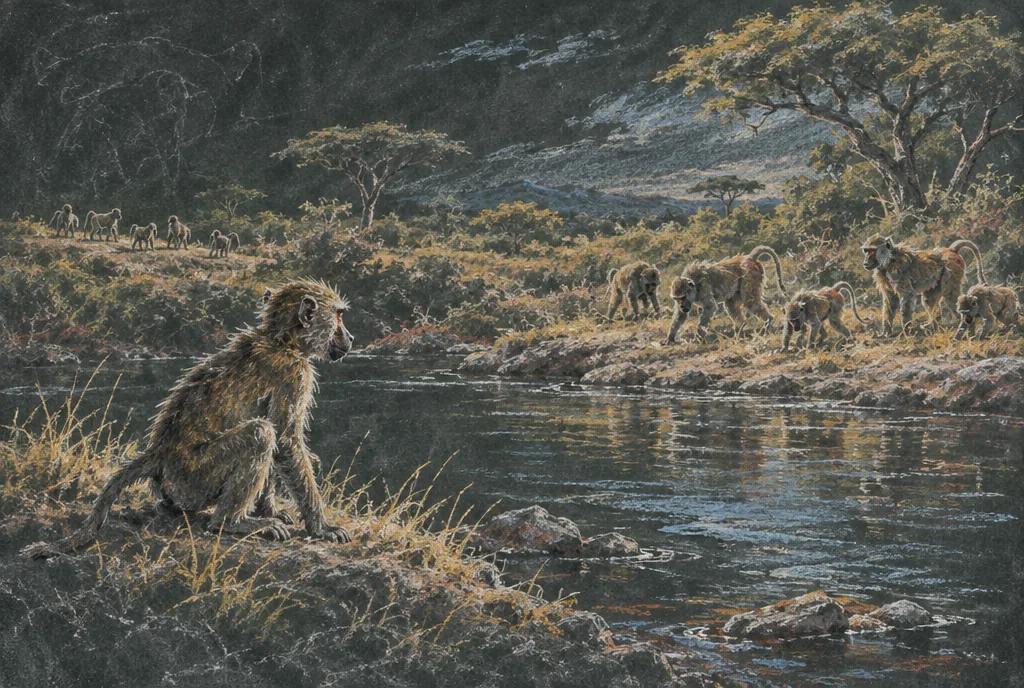
Adolescence breaks the chapter rhythm, because the frontal cortex is not finished until the mid-twenties. That one fact explains why the teenage years are the peak age for killing, being killed, inventing an art form, toppling a dictator and dressing hideously. Meanwhile the emotions run at full volume with half a brake. In California Caverns a twisting thirty-foot descent opens onto a drop of a hundred and eighty feet, and the skeletons at the bottom are always adolescents. But novelty-seeking is not the same as recklessness, and here Sapolsky goes to his baboons. Two troops meet at a stream. The males threaten a little, get bored, and go back to foraging. One adolescent stands at the water’s edge, riveted. New baboons, a whole troop of them. He runs five steps towards them and four back, crosses, sits on the far bank, and scampers home the moment anyone glances at him. He spends more of each day with the strangers, until one night he sleeps there. Nobody pushed him out. He simply could not bear one more day with the monotonous baboons he had grown up with. Violence peaks in the late teens and early twenties, and the best crime-fighting tool, as the saying goes, is a thirtieth birthday. Why would evolution leave the frontal cortex unfinished for a quarter of a century? Because it is the part that has to be shaped by experience. A baboon gets to the top with his teeth and stays there with social skill, and the region that learns that is the one evolution freed from the genes as far as it could.
Childhood, then, and before it the womb. A two-year-old watching an adult’s cookie moved from one box to another cannot imagine that the adult still thinks it is in the first box; a three- or four-year-old can. Sapolsky’s daughter, visiting her old preschool, explains to the class that her new school has swings, and assumes that everyone knows Carolee, because Carolee is the best teacher alive. Theory of mind, succeeding and failing in one breath. In the 1960s Walter Mischel left hundreds of small children alone with a marshmallow and a promise of two if they waited. About a third lasted the full fifteen minutes; the rest averaged eleven. They covered their eyes, sat on their hands, petted the marshmallow. Forty years later, the ones who had waited had better frontal function and lower body weights. What worked was not gritting the teeth but distraction and reframing, which is the book’s refrain about self-control.
And the mothers. Around 1900 doctors warned parents not to pick up a crying baby, and children in the cleanest hospitals, isolated for hygiene, wasted away, while the poor hospitals where nurses still touched the babies did better. Harry Harlow’s infant monkeys chose a terry-cloth mother without milk over a wire mother with it. What a mother gives, Sapolsky thinks, is first the knowledge that she is glad you exist, and then the context: when, where and with whom. His baboons show the lesson being taught. Two females give birth in the same week, one high-ranking and one low. When the infants are a few weeks old, the subordinate’s daughter spots the dominant’s daughter, toddles over to say hello, and her mother grabs her by the tail and pulls her back. That was her first lesson about her place in the world, and twenty years later, as old females, the two were still acting it out. By age five a poorer child has a thinner frontal cortex, and the Romanian orphans of the Ceaușescu years showed shrinkage in almost every brain measure except an enlarged amygdala. Even the womb teaches. Newborns whose mothers read The Cat in the Hat aloud in the last trimester preferred it to other books. And Michael Meaney showed in 2004 that a rat mother who licks and grooms her pups flips a switch on a stress gene that stays flipped into adulthood. Little in childhood determines the adult, Sapolsky says, but almost everything in it changes the odds.
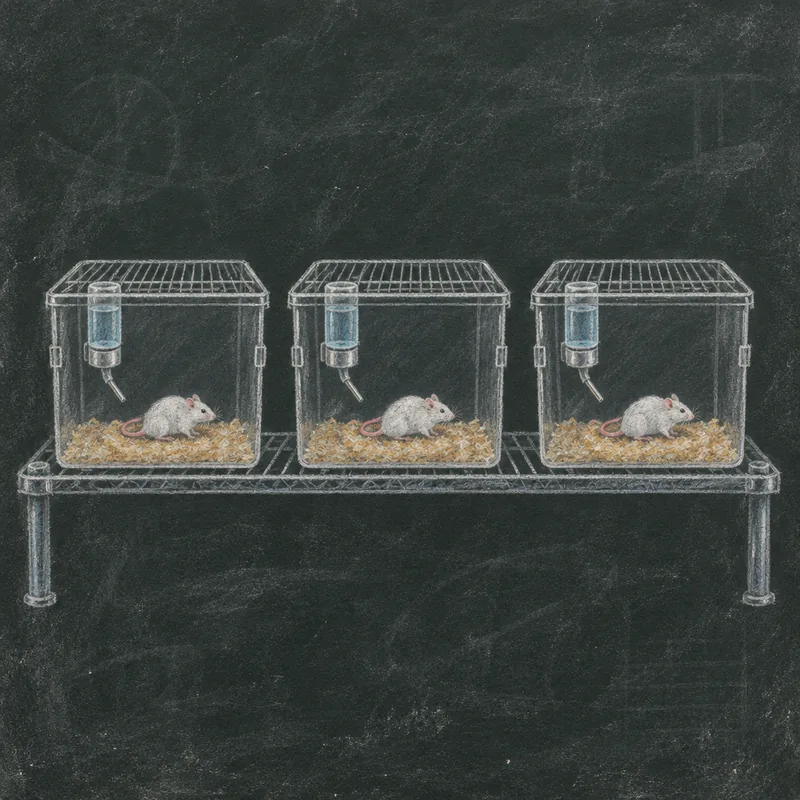
Back further, to the fertilised egg, and the question of what was written there. Genes matter, of course. But a gene does not decide when it is switched on. Ninety-five percent of our DNA codes for no protein, and in it sit the switches, flipped by signals from inside the cell and from the world outside. A gene deciding what to do is like a recipe deciding when to bake a cake. Behaviour genetics works from the top down, with twins. Jack Yufe and Oskar Stohr were born in Trinidad in 1933 to a German Catholic mother and a Jewish father and split up at six months, one raised an observant Jew, the other in the Hitler Youth. Reunited as men, both flushed the toilet before using it. Then the finding that is the chapter in one image. In 1999 three labs, in Oregon, Alberta and Albany, tested the same strains of mice with obsessively identical cages, food, light and handling, down to the brand of gloves. One strain, given cocaine, moved about seven hundred centimetres more in fifteen minutes in Oregon and in Albany, and over five thousand in Alberta. Sapolsky’s picture is identical triplets pole-vaulting in three places after the same training and the same breakfast. “The first two vault 18 feet and 18 feet one inch, and the third vaults 108 feet.” Asking whether genes or environment matter more, said Donald Hebb, is like asking whether length or width matters more to the area of a rectangle. A variant of one gene, MAO-A, became famous as the warrior gene and has reduced at least two murder sentences. Avshalom Caspi followed a cohort to twenty-six and found that the variant tripled antisocial outcomes in people severely abused as children, and predicted nothing in the rest. Sapolsky’s verdict is four words long: “Warrior gene” my ass.
Centuries to millennia before, the culture, and Sapolsky opens with a digression. In 1983 boys outnumbered girls eleven to one in the top percentile of the maths SAT, and testosterone took the credit. Then a study across forty countries found that the more equal a country was between the sexes, the smaller the gap, until in Iceland the girls beat the boys. The deepest divide is collectivist against individualist. Americans draw themselves as the biggest circle in the middle of their social maps. Shown a monkey, a bear and a banana, Westerners pair the two animals and East Asians pair the monkey with its banana. Why? America was settled by restless malcontents who then kept moving west. East Asia was settled by rice, which needs collective labour, and within China the wheat-growing north tests Western, with more patents and more divorce. A variant of a dopamine gene that goes with novelty-seeking is carried by about a quarter of Europeans and one percent of East Asians. Its frequency climbs along the great migrations, highest in the Amazon peoples whose ancestors reached what is now Anchorage and kept walking another six thousand miles.
Herding makes a culture of honour, because a herd can be stolen in a night, and the American South was settled by herders from Scotland, Ireland and the north of England. Richard Nisbett and Dov Cohen sent students down a narrow hallway where a big man bumped them, muttered the word asshole, and walked on. Northerners shrugged. Southerners’ testosterone and stress hormones surged, and their fantasies of violence jumped. Inequality is a culture too, and its violence mostly lands on the poor. If a plane has a first-class cabin, the odds of a coach passenger losing it in air rage nearly quadruple, and they more than double again if coach has to board through it. The victim is the old woman in the next seat, not the man up front. Were we Hobbes’s brutes or Rousseau’s innocents? Napoleon Chagnon claimed that Yanomamö killers had more wives and children, and Douglas Fry showed that the killers were simply a decade older, with the dead young warriors never counted. Sapolsky’s verdict is that it depends on when you look. Among the nomadic hunter-gatherers who fill almost all of our history, lethal violence was common but war was rare, and most of the horrors arrived with settling down. Agriculture, he says, was one of humanity’s great blunders, up there with New Coke and the Edsel. Culture shapes brains and brains shape culture, mostly through the slow frontal cortex, which needs no special wiring to throw a punch but a great deal to learn when a punch is allowed.
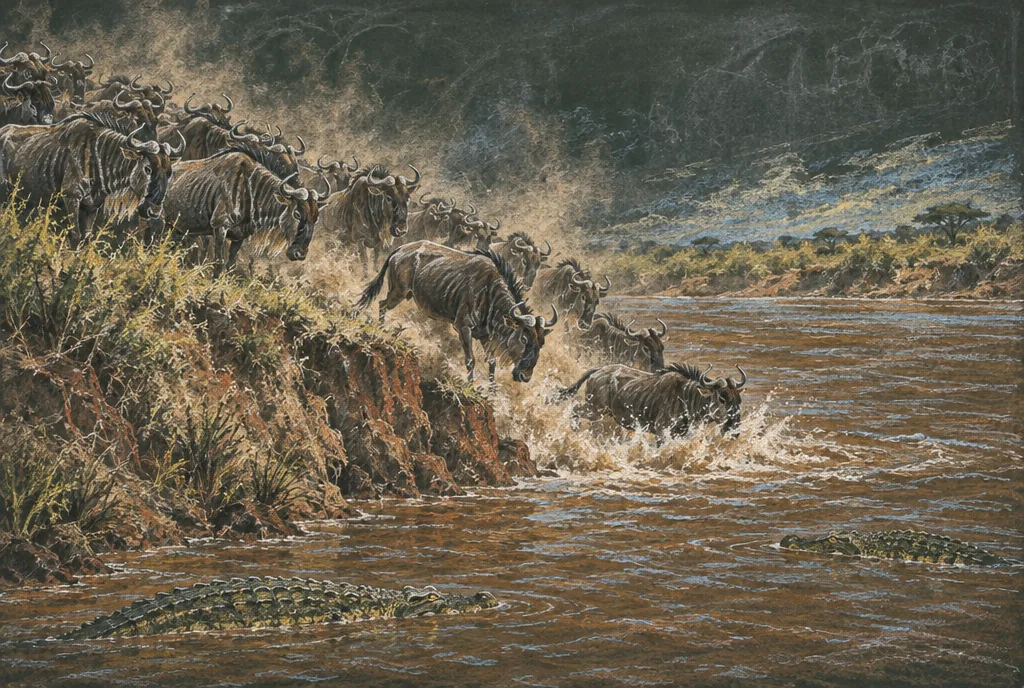
A million years before: evolution. Sapolsky clears the ground first. Evolution is about reproduction, not survival, it has no direction, and the old television idea that animals act for the good of the species is dead. Marlin Perkins on Wild Kingdom would narrate the wildebeest herd at the river: the crocodiles waiting, the herd hesitating, and then an old male leaping in and being torn apart while the others crossed, the noble sacrifice. Look closer at the footage, Sapolsky says, and you see why that wildebeest was in the water. He was old and weak. They pushed the old guy in. Animals act for their own genes. In 1977 Sarah Blaffer Hrdy watched langur monkeys at Mount Abu in India and saw what no one wanted to see. A new male taking over a troop kills the nursing infants, so that the females come back into heat for him. It has since been found in a hundred and nineteen species. Then kin. J. B. S. Haldane is said to have quipped that he would lay down his life for two brothers or eight cousins, and the maths of relatedness runs through everything. Play a vervet infant’s distress call through a speaker and every female looks at that infant’s mother. Among non-kin, cooperation is the Prisoner’s Dilemma. Robert Axelrod invited strategies into a round-robin tournament, and Anatol Rapoport won with the simplest: Tit for Tat. Cooperate first, then do whatever the other player just did. It is nice, it retaliates, it forgives, and it is simple, and it lost nearly every match and won the tournament.
And where are humans? Men are about ten percent taller and twenty percent heavier than women and die a little sooner, which makes us mildly polygynous and profoundly confused, neither chimp nor bonobo. Individual selection shows: Ramses II had a hundred and sixty children, and some sixteen million people descend from Genghis Khan. Kin selection shows: in 1932 a Soviet boy named Pavlik Morozov denounced his father to the state, was killed for it, and was made a martyr with statues and poems. According to the historian Vejas Liulevicius, when Stalin himself was told the story, he snorted: “What a little pig, to have done such a thing to his own family.” Then he turned the propagandists loose. But humans recognise kin by feeling rather than fact. In the Israeli kibbutzim, among nearly three thousand marriages, not one joined two people raised together in the same age group through their first six years. We make strangers into kin and kin into strangers. And there the first half closes. A second to a million years before the act, and no single cause anywhere: only propensities, if-then clauses, circles and loops and spirals and Möbius strips. Not easy, Sapolsky admits. But it matters.
On the set of Planet of the Apes in 1968, the actors in chimpanzee costume and the actors in gorilla costume ate lunch in separate groups. Charlton Heston and Kim Hunter both told the story, and it is where Sapolsky starts on Us and Them. The brain sorts people in fifty milliseconds. Henri Tajfel in the 1970s split strangers into groups by whether they over- or underestimated dots on a screen, and they soon favoured their own. Us gets inflated merits and shared obligations. Them gets threat, disgust and sameness: four out of five alien films since 1902 show the aliens as malevolent, and the insula, the brain’s disgust centre, fires for a rival group as it does for rancid food. The feeling comes first and the reasons after. In France a people called the Cagots were persecuted from the eleventh century for reasons nobody could remember, and in the Revolution they burned the birth records that marked them. But everyone belongs to many Us-es at once, and the lines move in seconds. Mary Wheeler and Susan Fiske found that a face sorted into a category sets off the amygdala, and the same face seen as a person, by asking what vegetable he might like, does not. Sapolsky’s favourite cases come from war. During the Second World War a British party led by Patrick Leigh Fermor kidnapped the German general Heinrich Kreipe on Crete and marched him for eighteen days to the coast, to meet a British ship. On that march, something happened that Sapolsky finds intensely poignant.
One day the party saw the snows of Crete’s highest peak. Kreipe mumbled to himself the first line (in Latin) of an ode by Horace about a snowcapped mountain. At which point the British commander, Patrick Leigh Fermor, continued the recitation. The two men realized that they had, in Leigh Fermor’s words, “drunk at the same fountains.”
— Robert M. Sapolsky, Behave, Penguin Press, 2017, chapter 11
A recategorisation, Sapolsky calls it. Leigh Fermor had Kreipe’s wounds treated, saw him safely to the ship, and the two met again decades later on Greek television. Us and Them cannot be cured, and should not be, any more than stress can. What can be done is to distrust essentialism, to suspect our own rationalisations, to find shared goals, and to individuate: see the person, not the category. And Sapolsky, who spent years alone in a tent in Africa, confesses that his happiest moments have been of belonging to an Us, and that there are Us-es even he would kill or die for.
Within the group there is rank, and animals ritualise it so that they need not fight twice over the same shady spot. The old primatology said the alpha male baboon led the troop. Nonsense, says Sapolsky: the troop follows the old females, who know where the food is, and the alpha defends an infant from a lion only if it is probably his. Rank runs deep in us. Who is more stressed, the top or the bottom? It depends. The executive monkeys with ulcers of 1958 turned out to be an artefact, and the real killer is the middle, responsibility without control. Sapolsky’s own baboons showed subordinates with high stress hormones, high blood pressure and poor immunity, until Jeanne Altmann and Susan Alberts found alphas just as stressed, from all the fighting and consorting. What rank means matters more than rank. Humans add a subordination no other primate has, socioeconomic status, where every step down the ladder is worse for your health, because feeling poor is what wounds. Our politics are temperament in a package: a smelly bin nearby makes people more socially conservative, and judges grant parole about sixty percent of the time just after lunch and almost never just before it.
Obedience runs as deep. Andrew Whiten’s vervets avoided a colour of maize for months after it had once tasted bitter, and newcomers to the troop adopted the rule without ever tasting it. In the early 1950s Solomon Asch found that people would call a short line long about a third of the time if seven others did first. In the early 1960s Stanley Milgram at Yale had volunteers deliver what they believed were escalating shocks to a stranger who screamed and then fell silent. They argued and wept, and sixty-five percent went all the way to four hundred and fifty volts. In 1971 Philip Zimbardo’s Stanford Prison Experiment had to be stopped on the sixth day. Milgram’s and Zimbardo’s studies have been picked apart since, and Zimbardo, Sapolsky’s friend, did more than observe his guards. But the lesson holds, and so does its mirror: some people always refuse. Hutus hid Tutsis. Compliance falls when the authority is far away and the victim is in the room, and rises with small steps, anonymity, and the labelling of the victim as an animal. Firing squads traditionally gave one rifle a blank, so that each man could tell himself he had perhaps not fired the shot, and modern execution machines keep the tradition with two syringes and two buttons, only one of them live. And one ally changes everything. In Asch’s room, a single other dissenter broke the spell. Zimbardo calls it the banality of heroism: those who resist are ordinary people.
Do we reason our way to right and wrong, or feel it? Every society writes its moral rules as reasoned law, which argues for reason. But Jonathan Haidt argues that the intuition decides and the reasoning writes the press release, and the brain agrees: the emotional regions fire first, and people who lose them become coldly pragmatic. Sarah Brosnan and Frans de Waal taught capuchin monkeys to trade pebbles for cucumber, then paid the neighbour in grapes. The cucumber monkey threw it back and went on strike. In the trolley problems the lever is answered by the reasoning circuit and the push by the feeling one. Most of the world’s harm is done by ordinary people who oppose a thing in principle and make an exception this once. Sapolsky confesses his own: hours spent staring at photographs of a dog-meat market, feeling a hatred he knows to be an intuition and an accident of where he was born. The chapter’s payoff is an experiment on cheating. Joshua Greene and Joseph Paxton let people bet on coin tosses they reported themselves. About a third cheated heavily, and in those who cheated and in those who struggled not to, the frontal cortex worked hard. In the people who never cheated, it was quiet. It was not will. It was grace. “There’s no conflict. There’s no working hard to do the right thing. You simply don’t cheat.” The frontal cortex does the harder thing when it is the right thing, and the best people are those for whom the right thing was never hard.
Feeling someone’s pain is not the same as helping them, and the chapter sorts the words. Contagion is flinching at a needle in a stranger’s hand; sympathy is feeling for; empathy is feeling as; compassion is when the feeling becomes an act. Animals have the parts. Rats will work as hard to free a trapped rat as for chocolate, and when they get both they share the chocolate more often than not. A cynic can say the rat only wants the alarm calls to stop, and Sapolsky gives the cynic his line: “Scratch an altruistic rat and a hypocrite bleeds.” The hub is the anterior cingulate, a region whose real job is noticing surprises, and which is, at bottom, self-interested: watching others get hurt teaches you what to avoid. The thinking brain then decides who deserves it. Wealthier people show less of this response, and drivers of expensive cars stop less at crosswalks; make people feel rich and they take more of the candy meant for children. The real question is acting. If you imagine the pain as yours, your heart races, and a racing heart predicts that you will not help. Matthieu Ricard, a French monk with a doctorate from the Pasteur Institute, was asked in a scanner to feel the suffering of others and was very quickly exhausted. Asked instead to feel compassion, his amygdala went quiet and his reward circuits lit up. Our past tuned us to one familiar face in need, so Sapolsky is gentle about the distant millions. Self-serving good is better than no good. And the distance that helps is not cold calculation, which ends in not my problem, but helping made automatic, like telling the truth.
People will kill and die for a cartoon, a flag, a pair of shoes and a song. Twelve people were murdered at Charlie Hebdo in Paris in January 2015. At Gettysburg the flag of the Twenty-eighth Virginia passed from hand to hand as each bearer fell. In Los Angeles in 2015 a nineteen-year-old named Tavin Price was killed for wearing red shoes. And in Philippine karaoke bars, about a dozen people have been killed over renditions of My Way. Symbols are the newest human thing. Language pulled the message apart from the thing, which made metaphor possible, and lying. Sapolsky’s thesis is that the brain, improvising with these new abilities, keeps mistaking the metaphor for the thing. Being left out of a game of catch hurts in the region that registers a stubbed toe. Moral disgust runs through the insula with rotten food. Lie aloud and you want mouthwash; lie on paper and you want soap; and people who get to wash their hands afterwards help less. Evolution is a tinkerer, and it handed the insula a shoehorn and some duct tape. Then the darkest use. In Rwanda in 1994, after the president’s plane was shot down on the sixth of April, about three quarters of the Tutsi population was killed in a hundred days, with sticks and machetes, by neighbours. In the village of Nyange, a Hutu priest named Athanase Seromba sheltered up to two thousand Tutsi in his church and then led the militia that killed them all. The radio called the Tutsi cockroaches, and people went out with a machete in one hand and a transistor radio in the other. Reach the insula with a metaphor and people will kill.
But the same confusion works the other way, through sacred values, which no money can buy and one gesture can honour. When Nelson Mandela met General Constand Viljoen, who commanded a militia of some sixty thousand Afrikaners, he sat him on a comfortable couch, fetched the tea and snacks himself, and made small talk about sport in the Afrikaans he had learned on Robben Island. Viljoen called off his insurrection and stood for election, and when Mandela retired, praised him in Parliament in Xhosa. At the 1995 Rugby World Cup the white team sang Nkosi Sikelel’ iAfrika and a Black choir sang Die Stem. Sapolsky says he could watch that clip all day after writing about Rwanda.
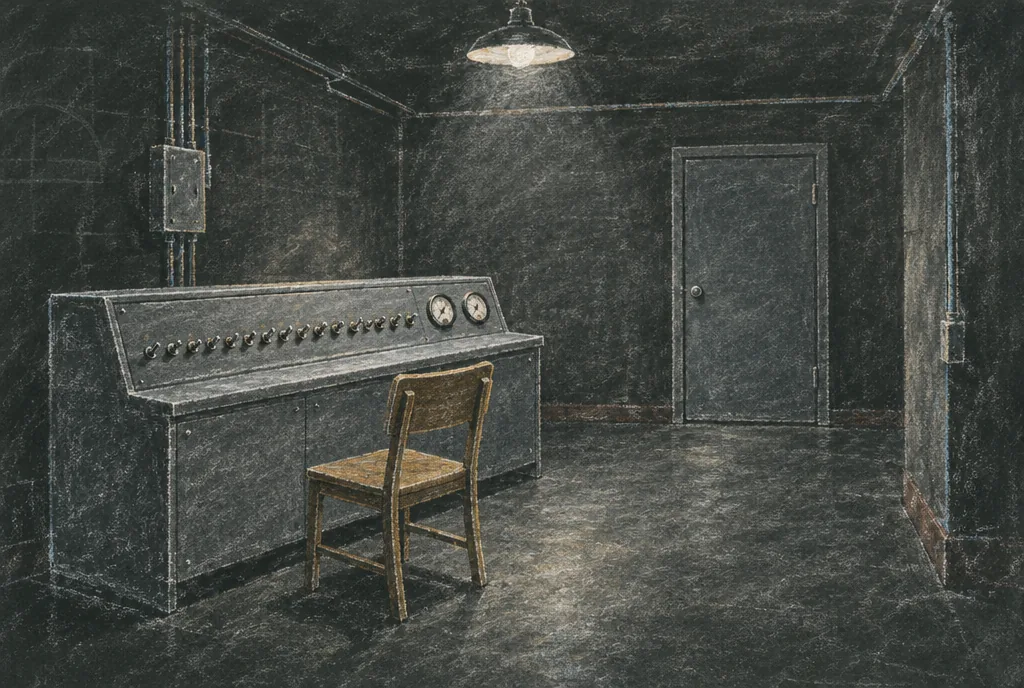
If all of this is biology, what becomes of blame? A foundation once asked Sapolsky for an idea too crazy for anyone else, and he proposed abolishing the criminal justice system. They laughed and held a conference on neurolaw instead. He meant it. Consider Europe in the mid-1500s, more frightened of witches than of plague. The tests were sound: throw her in the water, and if she floats she is a witch, and if she sinks she is innocent, so pull her out quickly. In 1563 the physician Johann Weyer added a reform. Old women’s tear ducts can dry up, so do not burn a woman merely because she cannot weep at the story of the crucifixion. That, says Sapolsky, is what a scientific tweak to an irrational system looks like, and it is all our courts have done so far. In 1457 a court executed a pig for eating a child and acquitted her piglets as too young to be responsible. We have crossed a line since then, and the line is a sentence: “It’s not him. It’s his disease.” Nobody now convicts a man who hits someone during a seizure. The trouble is where the line stops. Most people hold a mitigated free will, in which biology shares the controls with something that is not biology. Sapolsky gives that something a picture: a homunculus in a concrete bunker at a control panel, built of nanochips and vacuum tubes and parchment and your mother’s voice and brimstone and gumption. The law draws its lines at age, where Roper against Simmons in 2005 ended executions for crimes committed under eighteen. It draws them at damage, where no one can say whether the threshold is ninety-nine percent of a frontal cortex or ninety-eight. And it draws them at timing, where Benjamin Libet found the brain preparing a wrist flick half a second before the conscious decision, and Ramachandran answered that we may lack free will but keep “free won’t.”
The deepest line runs between talent and effort. Carol Dweck found that children praised for working hard persist and children praised for being smart give up. We hand talent to biology and keep effort for the self. Wilma Rudolph, one of twenty-two children in a poor Tennessee family, had polio at four and wore a leg brace, and in 1960 she was the fastest woman in the world. That is the kind of story that seems to need a homunculus. So Sapolsky lists what shapes the grit: blood sugar, sleep, the gene variants of earlier chapters, the lead in your childhood tap water, the frightened stranger whose sweat you have been smelling. Effort is biology too. The honest objection is that science explains much and predicts little. A broken leg predicts a limp nearly every time; frontal damage predicts odd behaviour about three times in four and violence less than half the time. That is not less biology. It is many small causes at once, which is what the whole book has been. How will the future see us? In 1487 the Malleus Maleficarum named seizures as a mark of the witch, and over the next centuries something between a hundred thousand and a million people were persecuted under its guidance. Sapolsky imagines a church inquisitor coming home weary one evening in the late fifteenth century, and his wife coaxing him to talk.
“It was a usual day of condemning witches, but this one case bothered me. … I don’t feel sorry for her—no one told her to open wide for Satan. But she had these two beautiful kids—you should have seen them, just so confused as to why their mother was being taken away. Distraught husband also. So that part was hard, seeing them suffer. But it is what it is—we burned her, of course.”
— Robert M. Sapolsky, Behave, Penguin Press, 2017, chapter 16
The man is not a monster, Sapolsky says, and that is the point. The future will look at our courts as we look at that inquisitor. The easy task is to keep protecting people from the dangerous, as we keep a car with faulty brakes off the road. The hard task is deterrence. The nearly impossible one is to give up punishment as a virtue, as a thing deserved, and we have done it once already: people with epilepsy may not drive, and no crowd gathers to watch their licences burn. The mechanic who cannot find the fault does not declare the car evil. Framing damaged people as broken machines, he writes, is “a hell of a lot more humane than demonizing and sermonizing them as sinners.” And a postscript, for the hard part: if there is no free will in our worst, there is none in our best either. At a brunch he and his wife praise their host for choosing such a good pineapple, and he knows the praise belongs to the host’s olfactory genes, culture and money for the overpriced organic market. He cannot imagine living as if free will did not exist. Perhaps keep the myth where it is harmless, and save the hard thinking for when we judge.
War and peace, and Sapolsky doubts he can get away with the title. First the good news. Fifteenth-century Europe had forty-one homicides a year for every hundred thousand people; Europe today has about one and a half, and Iceland, Japan and Singapore a third of one. Steven Pinker credits states, trade and an escalator of reasoning. Sapolsky accepts most of it with a twist: correct for the length of a war as well as the size of the world, and the twentieth century climbs back to the top of the list. Fewer people are violent, but the violent few reach further. Among Palestinians and several other faiths, how often a person prays predicts nothing about support for violence, while how often they attend services predicts it well. It is the communal, not the personal, that turns on Us and Them. Contact between groups works only on equal footing, on neutral ground, with a shared goal. And then individuation, which is where the book’s opening image comes home. Pumla Gobodo-Madikizela, a psychologist on South Africa’s Truth and Reconciliation Commission, spent more than forty hours interviewing Eugene de Kock, the most notorious commander of apartheid’s death squads. At one point, through the bars, she reached out and touched his finger. When she next saw him he thanked her, and told her that it was his trigger hand she had touched.
Beware the manipulation of our empathy as much as of our hatred. In 1990 a girl named Nayirah told Congress of Iraqi soldiers tipping babies out of incubators in Kuwait, and the story, cited by the president more than ten times, turned out to be a public-relations fabrication and the girl the Kuwaiti ambassador’s daughter. Reconciliation, when it comes, is rarely tearful. South Africa’s commission heard more than six thousand perpetrators and granted amnesty to thirteen percent, and few showed remorse. It was pragmatism, a mutual decision not to retaliate, so that a nation could go on working. And we are worse at killing than we think. Of almost twenty-seven thousand muskets recovered at Gettysburg, almost twenty-four thousand were loaded and unfired, and six thousand had been loaded three to ten times by men who kept loading rather than shoot. In the Second World War only fifteen to twenty percent of riflemen fired at the enemy. Training fixed that, to over ninety percent in Vietnam. And drone pilots, who watch a man die on a screen from thousands of miles away and stop for a doughnut on the way home, suffer PTSD at the rates of soldiers in combat.
The possibilities, then, which Sapolsky tells as stories. In the mid-1980s the most aggressive males of his own baboon troop took to raiding the rubbish dump of a tourist lodge. The meat there was tubercular, passed by a bribed inspector, and it killed them. He stayed away for about six years, grieving, and went back only to show the survivors to the woman he was about to marry. The troop he found had two females for every male, little aggression, and adult males grooming one another, a sight more surprising to a baboon-watcher than baboons inventing the wheel. New males who joined from outside learned the culture within six months. If baboons can change, he says, we can. One person can turn a history. Zenji Abe, who flew at Pearl Harbor, spent his later years apologising to survivors and paying for monthly flowers at the memorial, where the bugler Richard Fiske took to playing taps and its Japanese equivalent. And on the sixteenth of March 1968, at My Lai, an American company under William Calley was killing hundreds of unarmed villagers. A helicopter pilot named Hugh Thompson, twenty-five years old, with Glenn Andreotta and Lawrence Colburn in his crew, saw what was happening below him.
He did something of dizzying strength and bravery, something that proves every word in this book about how Us/Them categorizations can change in an instant. Hugh Thompson landed his helicopter between the villagers and the soldiers, trained his machine guns on his fellow Americans, and ordered his crew to mow them down if they attempted to further harm the villagers.
— Robert M. Sapolsky, Behave, Penguin Press, 2017, chapter 17
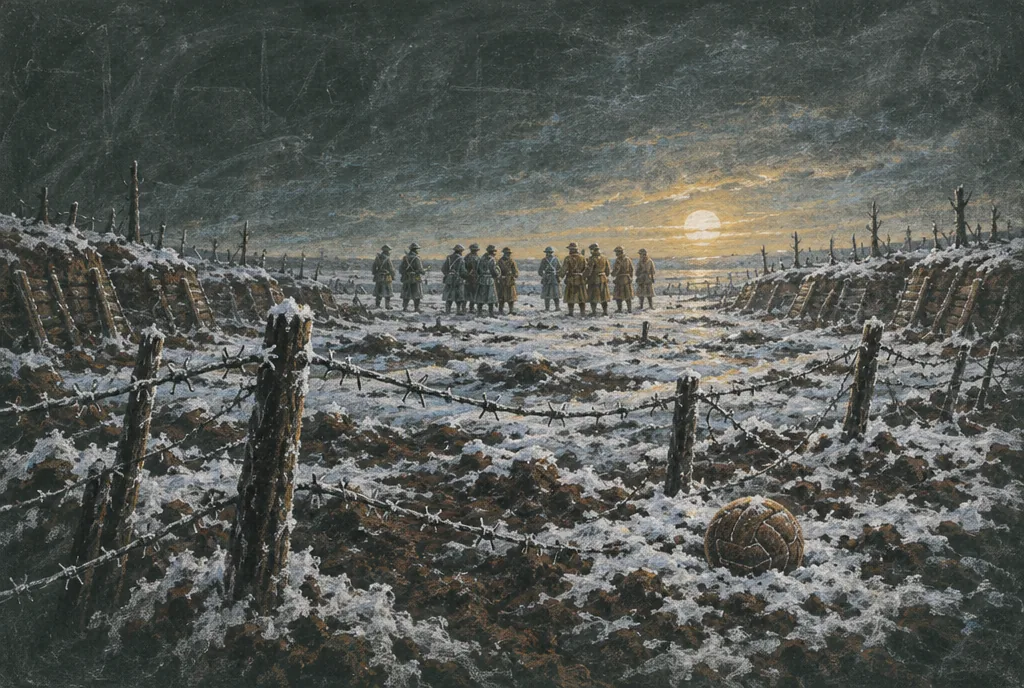
Sapolsky follows it with John Newton, the slave-ship captain who wrote Amazing Grace, and it is the story of nothing happening. At every point where the revelation should arrive, it does not. He is converted and keeps trading in slaves. He leaves the sea and invests in the trade. He becomes a priest and says nothing. Thirty-four years after his last voyage he finally denounces slavery, and lives to see England ban the slave trade in 1807. Thompson’s moment of moral perfection, Sapolsky writes, feels as unattainable to him as being a gazelle or a waterfall. With Newton, he says, it is ten steps forward and nine self-serving ones back, and that is a man he recognises. That is the hope. And there is collective hope, from the trenches. At Christmas 1914 the two sides buried their dead together, sang carols and played football, over the disapproval of a corporal in one unit named Hitler. For the rest of the war the quiet truces that the historian Tony Ashworth calls Live and Let Live went on: no shooting at dinnertime, supply wagons and latrines spared, and a way of proposing a truce without a word. Have your best sniper put a bullet into the wall of an abandoned house, then another into the same spot, and another. He could have aimed at you. The other side’s sniper answers in the same wall, and a truce exists. The hatred Sapolsky feels for today’s killers feels total, and so did the hatred between Americans and Japanese, and more than fifty years later, when one of those two men died, the other wrote a letter of condolence to his grandchildren. Those who forget the truces, and Thompson, and Abe and Fiske, and Newton, he says, are the less likely to repeat them.
Every fact in the book is an average, and the variation is often the interesting part; Sapolsky counted more than five hundred hedges in his own text and thinks he needed more. What recurs is this. Better behaviour works best when it is automatic, and distraction beats willpower. Biology lowers thresholds; it rarely causes. Context, every time. Love and hate are not opposites; indifference is the opposite of both. We sort the world into Us and Them and can be re-sorted in seconds. And most of the world’s misery comes from people who oppose a horror in principle and make an exception. If the book had one phrase, it would be “It’s complicated.” Nothing causes anything; everything modulates something else, and on any big question half the studies seem to say one thing and half the other, until fixing anything can feel hopeless. Sapolsky’s answer is the last thing he asks of the reader.
But we have no choice but to try. And if you are reading this, you are probably ideally suited to do so. You’ve amply proven you have intellectual tenacity. You probably also have running water, a home, adequate calories, and low odds of festering with a bad parasitic disease. You probably don’t have to worry about Ebola virus, warlords, or being invisible in your world. And you’ve been educated. In other words, you’re one of the lucky humans. So try.
— Robert M. Sapolsky, Behave, Penguin Press, 2017, Epilogue
And then the book’s final line, which is its kindest: you do not, Sapolsky says, have to choose between being scientific and being compassionate.
Six years after Behave, in 2023, Sapolsky published Determined: A Science of Life Without Free Will, which takes the argument of the chapter on criminal justice to its end and drops the hedges.